The grassland with nine suns
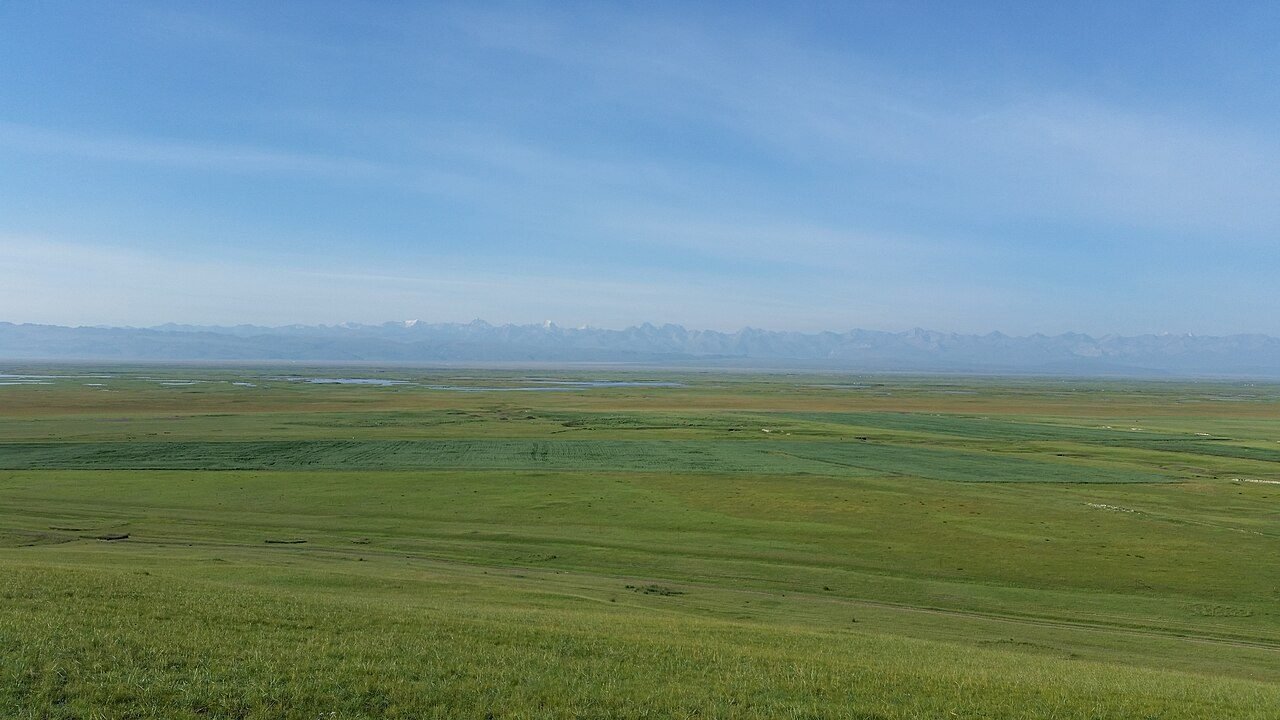
Bayanbulak (巴音布鲁克, Bayinbuluke) sits high in the Tian Shan of southern Xinjiang, and its claim to fame is a trick of light. Where the Kaidu River (开都河) winds across the flat wetland, the bends are so tight and so many that on a still summer evening the setting sun reflects in the water up to nine times. Locals call it the “nine bends and eighteen turns” (九曲十八弯), and the first time I saw the river light up in a row of small suns, I understood why people drive hours of empty road to stand on that viewing platform.
This is a high alpine wetland, about 2,500 meters up, the second-largest grassland in China, and home to swans that nest in the marsh. It is remote, cold even in summer, and worth the effort. This guide covers access, costs, and the sunset that is the whole point. For the food along the way, our Xinjiang food guide covers the naan and grilled meat you will eat in the towns.
Getting there
Bayanbulak is reached from the north via Hejing (和静) and from the south via Korla (库尔勒), both on the rail and road network from Urumqi. The closest airport is in Korla or Urumqi; from Urumqi it is roughly a 6 to 8-hour drive depending on the route, often done as part of a wider Xinjiang loop that also takes in Nalat Grassland to the north. Most visitors come on a multi-day rented car or a tour, because public transport to the grassland gate is sparse and the internal roads are long.
The last stretch from Hejing to the park is mountain road; in spring it can be closed by snow, so check status before you set out. As of 2024 the access roads are paved and in fair condition, but weather closes them without notice. Confirm with official sources or your hotel before a winter or shoulder-season drive.
Inside the park
Entry is about 65 RMB, plus a mandatory shuttle (about 75 RMB) that runs the long internal road from the gate to the main viewing areas, because private cars cannot drive the wetland loop. The shuttle stops at the swan wetland reserve first, where boardwalks let you watch the birds without disturbing them, then continues to the “nine bends” viewing platform, which is the sunset spot.
I arrived mid-afternoon, walked the swan boardwalk, then rode to the platform and waited. The wait is the trip. The marsh goes gold, the river catches the light, and at the right minute the bends fill with reflections. Bring a warm layer even in July; the wind at 2,500 meters cuts cold after sunset, and the platform empties fast once the light fades.
Swan lake and the birds
The reserve protects one of the few swan breeding grounds in China, and in spring and early summer you can see cygnets on the water. Binoculars help; the birds are shy and the viewing is distant by design, to keep the wetland intact. Drones are restricted, as they are across most of Xinjiang’s protected areas, so leave them packed.
Where to stay and eat
There is a small service town at the park entrance with basic hotels (150 to 400 RMB a night) and simple restaurants serving laghman (hand-pulled noodles), grilled lamb, and naan. It is not gourmet, but it is hot and filling after a cold evening. For a wider table, Urumqi to the north and Kashgar to the west are the regional food cities, both far away, so eat what the gateway town offers and save the banquets for the cities.
Turpan, to the east, is the other common anchor on a southern Xinjiang loop and offers the grape-valley and oasis cooking if you are building a longer route. Bayanbulak fits best between the north grasslands and the Tarim basin towns.
When to go
June to August is the season: the grass is green, the swans are nesting, and the roads are open. September turns the wetland gold and thins the crowds. October onward brings snow closures. Days are cool, nights near freezing even in July, so pack as if for mountain country. Our best time to visit China guide has the regional timing, and the high-speed rail guide explains reaching Urumqi as the hub before you switch to a car.
| Item | Cost (approx.) | Notes |
|---|---|---|
| Park entry | about 65 RMB | Covers the reserve, not the shuttle |
| Internal shuttle | about 75 RMB | Mandatory; long wetland road |
| Hotel at entrance | 150 to 400 RMB | Basic, books out in July |
| Urumqi to park drive | 6 to 8 hours | Part of a wider loop |
| Meal at gateway town | 30 to 60 RMB | Noodles, lamb, naan |
Quick facts
- Bayanbulak means “rich spring” in Mongolian and sits at about 2,500 meters
- The “nine bends and eighteen turns” of the Kaidu River show multiple sun reflections at sunset
- It is one of China’s largest grasslands and a protected swan breeding ground
- Entry is about 65 RMB plus a mandatory 75 RMB shuttle
- Best months are June to August; snow closes access by October
- Nights are near freezing even in summer; bring a warm layer
- Drones are restricted across Xinjiang’s protected wetlands
The drive in and where to break it
The approach is long enough that you should plan an overnight rather than a dawn departure. From Urumqi, the common route runs south through Korla (库尔勒), a real city with a good night market and a hotel range, then on to Hejing and up into the wetland. I stopped in Korla for the night, ate the local pear (Korla is famous for a small sweet pear) and a plate of laghman, and felt human before the final climb. From the south, the road from Korla is paved and steady but gains altitude fast, so the drive itself is the acclimatization if you take it in stages.
Inside the park, give the swans their due. The reserve is one of the few breeding grounds for whooper swans in China, and in May and June the cygnets ride on their mothers’ backs in the still water, a sight worth the cold wait. Bring binoculars; the viewing platforms are set back to protect the birds, and the close shots you see online are usually long-lens work, not hand-phone distance. The marsh is fragile, so stay on the boardwalk and do not wade, however tempting the edge looks in the low light.
What to wear and carry
The wetland is cold and windy even in July, so a windproof layer, a hat, and gloves for the sunset platform are not optional. The boardwalks are even and fine for most mobility levels, but the viewing platform at the nine-bend site is a walk from the shuttle stop, so wear shoes with grip. Carry water and a snack, because the gateway town’s restaurants close early and the park has little inside. A power bank matters; the cold drains phones fast when you are shooting the sunset, and there is no charging at the platform. Sunglasses and sunscreen are essential, because the plateau reflection off the water is stronger than it looks, and a burned face ruins the next day’s drive.
Frequently asked questions
Do I need a special permit?
The grassland does not require a tourist permit, but Xinjiang has identity checks at hotels and some road stops, so carry your passport. Border and southern areas have separate rules; confirm current entry requirements with official sources before travel, because they change.
Can I see the nine suns without a tour?
Yes, if you have a car and a driver who knows the road, or on a small group tour from Urumqi or Korla. The shuttle is mandatory inside, and the sunset platform is the only spot for the reflection, so time your arrival for late afternoon.
Is it worth the long drive?
If you are already doing a Xinjiang loop, yes; the sunset is genuinely unusual. As a standalone trip it is a lot of road for one view, so pair it with Nalat or Turpan to make the distance worthwhile.
How cold does it get?
Near freezing at night even in July. Days are pleasant and sunny but the platform wind is sharp after sunset. A jacket and a hat are not optional; I wore both in August.
Are the swans guaranteed?
In nesting season (late spring to early summer) they are common; later in summer the adults molt and are less visible. The river and the wetland are the constant draw regardless of the birds.
Can I camp at Bayanbulak?
Wild camping is restricted near the wetland to protect it. Stay in the gateway-town hotels. The open grassland looks campable but the rules and the cold make the hotels the better call.
How does it compare with Nalat?
Nalat is greener, lower, and easier to reach, with yurt stays. Bayanbulak is higher, wetter, and built around the river-sunset spectacle rather than herding life. The two together make a strong Tian Shan grassland pair.
If you want a Xinjiang loop that includes Bayanbulak’s sunset, the northern grasslands, and the right food stops between them, we can build a custom food-and-travel itinerary through the contact page. The nine suns are the kind of sight you describe for years, and the road there is half the story.
Written by the ChinaTravelFood editorial team.