China high speed rail, the short answer
China’s high-speed network is the best way to move between the country’s big cities, and after a dozen trips over the years I plan most of my travel around it rather than around flights. Trains are punctual, stations sit inside cities rather than an hour outside them, and a second-class seat on a G train costs less than most domestic flights once you count the airport time. This China high speed rail guide covers the routes that matter, what the class letters mean, how to book, and the small habits that make a ride comfortable. Prices and schedules below reflect what I saw on my most recent trip in 2026; treat them as planning numbers and confirm current fares on the official 12306 app or site before you go.
The short version: take G trains for long distances, book early for holiday weeks, arrive 30 to 40 minutes before departure, and skip the food court outside the gates because there is decent food on board. If you want the full booking walkthrough, my guide to China trains covers tickets and seat selection, and the piece on train stations explains how to get through security and find your gate without panic.
How the network is put together
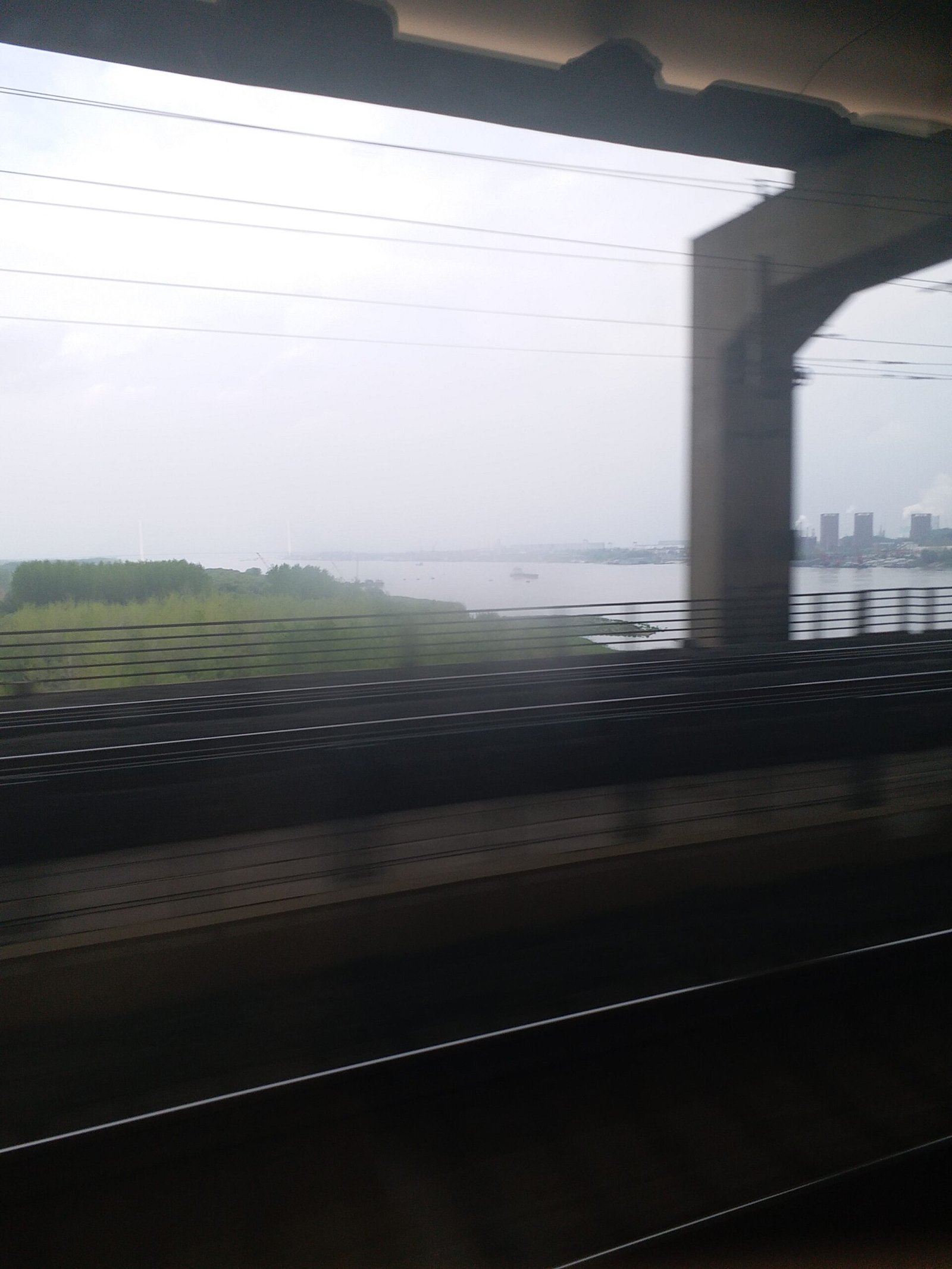
China’s rail system is really two networks stacked on top of each other. The conventional network, built through the twentieth century, still runs everywhere and includes the sleeper trains I cover in the overnight trains piece. The high-speed network, built mostly after 2008, now exceeds 45,000 kilometers of dedicated track and connects nearly every provincial capital plus most large cities. When people say “China high-speed rail,” they mean the second network: the clean white trains with blue or red stripes that slide out of dedicated platforms.
The lines are organized around eight north-south and eight east-west corridors, which is why journeys that look far on a map are often quick by rail. Beijing to Shanghai is about 1,300 kilometers and takes four and a half hours on the fastest train. Guangzhou to Shenzhen is 140 kilometers and takes 30 minutes. Chengdu to Chongqing, once a ten-hour grind, is now 62 minutes. The practical effect for a traveler is that whole regions collapse into day-trip range, and a two-week trip can reasonably include five or six cities without spending half your time in airports.
Train classes decoded: G, D, and C
The letter prefix on your train number tells you what kind of service you’re buying, and it matters more than most first-time travelers expect.
G trains (Gaotie) are the fastest, running up to 350 km/h on the newest lines like Beijing to Shanghai. They stop only at major cities and are almost always the right choice for distances over about 300 kilometers.
D trains (Dongche) run up to 250 km/h with more intermediate stops. They are often 20 to 40 percent cheaper than G trains on the same route and sometimes depart at more convenient times. On some routes, like Beijing to Datong, D trains are the only option because the line does not support the faster speeds.
C trains (Chengji) are intercity commuter services on short corridors like Beijing to Tianjin or Guangzhou to Zhuhai. No assigned seat classes beyond second class, frequent departures, and no real reason to book ahead.
One quirk: the fastest G number is not always the fastest train. A G train with a higher number sometimes skips more stops than a lower-numbered one on the same route, and the 12306 app sorts by duration, not number. Sort by time and pick the shortest.
Five routes worth the fare
Not every line is a highlight, but some rides are part of the trip rather than just transport. These are the five I recommend to friends, with 2026 second-class prices from the routes I checked most recently.
| Route | Fastest time | Second class (approx.) | Why ride it |
|---|---|---|---|
| Beijing to Xi’an | 4 h 20 min | 515 RMB | Crosses the North China Plain and the Qin Mountains; dinner in Xi’an the same evening |
| Shanghai to Hangzhou | 45 min | 73 RMB | Easiest add-on city in China; West Lake by lunchtime |
| Guilin to Guangzhou | 2 h 20 min | 130 RMB | Karst hills through the train windows for the final hour |
| Chengdu to Chongqing | 1 h 02 min | 115 RMB | Two food cities in one day; leave Chengdu after breakfast, eat hot pot in Chongqing |
| Kunming to Dali | 2 h | 145 RMB | Rides along the west shore of Erhai Lake into the old town |
Prices move with demand and fuel surcharges, so use the table for budgeting and the 12306 app for exact numbers. First class on these routes typically runs 35 to 60 percent above second class, and business class is double or more.
Second class, first class, business class
Seating on high-speed trains comes in three tiers, and the honest truth is that second class is fine for almost everyone. Seats are arranged three and two across, with about the same legroom as short-haul economy on a good airline. Nobody fights over the armrest here because every row has its own small table.
First class is two and two across, with wider seats and more recline. On a five-hour daytime run I would happily pay the difference for the extra elbow room, especially on busy routes where the seat next to you might not stay empty. Business class is two and one, with lie-flat pods on the newest trains, meal service, and lounge access at some stations. I have used it twice, both times on overnight-style long runs where sleeping flat mattered, and it was worth it. For a 45-minute hop, it is money burned.
Power outlets exist under most seats on newer trains, usually a standard Chinese socket plus USB. The sockets are sometimes loose, so a universal adapter with a firm plug earns its bag space. My piece on power plugs China covers which adapters to bring.
Booking through 12306 and Trip.com
You have two realistic ways to book. The official 12306 app is the source of truth: it has an English interface, accepts foreign passports during registration, and takes international cards on many routes. The catch is that peak-season inventory can feel sold out instantly there, and the app occasionally hiccups on payment. Register before your travel date, not on the morning you need the train, because passport verification can take a day.
Third-party apps like Trip.com sell the same tickets with a small markup, in a friendlier interface, and sometimes see inventory that appears when you retry. I book through both: 12306 first, Trip.com as backup. Either way you end up with a QR code or a passport-based ticket, and on most routes you can now scan your passport at the gate instead of collecting a paper ticket. Keep the passport you booked with in your hand at the gate; the name match is strict.
Tickets go on sale 15 days ahead and sell out fast around Chinese New Year, the October National Day holiday, and any long weekend. For those windows, set an alarm for the release time and book the moment sales open, or shift your travel day. If you want to avoid the rush entirely, the when not to visit guide lists the dates that turn every train into a standing-room situation.
Station life: security, boarding, luggage
High-speed stations are airports without the queues. You go through a security check at the entrance, bags on the belt, no liquids drama, then find your gate on the departure boards. Plan to arrive 30 minutes before departure on a normal day, and 60 minutes at giant hubs like Beijing South, Shanghai Hongqiao, or Guangzhou South during peak times. Gates close about five minutes before departure, and the staff will wave you off without ceremony if you cut it close.
Luggage is generous. Overhead racks take roller bags, and the space at the carriage ends takes large suitcases. Nobody weighs your bag on high-speed trains, though oversized items are supposed to be tagged. The one real constraint is the gap between platform and train on some older stations: a two-second step up or down, so watch your wheeled bag.
Platforms are marked by color-coded lights over each door, and the announcements are in Mandarin and English. If in doubt, follow the crowd, or show a staff member your ticket and the word “zhan” (platform) from a translation app. A solid translation app belongs in your pocket for exactly these moments; the translation apps roundup lists the ones that work offline.
Eating on board
Every high-speed train has a dining car or a trolley service, and honestly the food is better than its reputation. The dining car sells boxed meals, usually 40 to 60 RMB, with a meat dish, rice, and a vegetable. The trolley walks through with snacks, instant noodles, and coffee. On longer runs I buy the boxed meal once out of curiosity and then bring my own from the station.
Better plan: buy food before boarding. Stations have convenience stores and bakery chains, and hot food courts outside the security line. I usually pick up a steamed bun, a carton of milk, and fruit, then eat on the train while watching the countryside go by. If you care about food more than scenery, plan the whole trip around meals instead; the best food cities list is a good place to start.
Water: the taps in stations and on trains are not potable. Buy bottled water, which costs 2 to 5 RMB everywhere. The broader question of what is safe to drink and eat is covered in my guide to food safety China, which I recommend reading before your first week on the road.
Habits that make rides smoother
A few small things separate a smooth rail day from a frustrating one. Face your seat in the direction of travel if you get motion sick; the seat rotates with the seat-back indicator, and some passengers do not bother to reset it. Keep your phone charged, because you will want it during the tunnel sections on mountain lines. Download your route on a maps app ahead of time, and if you need internet on the move, sort out a SIM or roaming plan before you land; the guide to China SIM card options explains the current landscape.
Delays are rare but happen, usually from weather on exposed lines. The 12306 app pushes delay notices, and refunds for weather cancellations are automatic within a few days. If your connection is tight and the first leg is late, talk to the gate staff on arrival; they can sometimes hold the next train for connecting passengers on the same railway bureau. Last point: sleeper berths on the overnight D and conventional trains are a different product from high-speed seats. If a route is longer than about eight hours, compare the cost of a sleeper with a same-day high-speed run plus a hotel, then choose. My notes on overnight trains compare the two in detail.
Quick facts
- G trains are fastest (up to 350 km/h), D trains are slower and cheaper, C trains are city-hopping commuter services.
- Book on the official 12306 app or Trip.com; sales open 15 days ahead and holiday inventory disappears in minutes.
- Second class is three and two across with a fold-down table; first class is two and two; business class is lie-flat on new trains.
- Arrive 30 minutes before departure normally, 60 at big hubs during holidays.
- Power outlets sit under most seats; bring a firm universal adapter.
- Onboard meals run 40 to 60 RMB; station food is cheaper and better.
- Prices quoted are 2026 planning figures; confirm current fares on 12306 before booking.
Frequently asked questions
Can I buy tickets without a Chinese phone number?
Yes. The 12306 app accepts passport numbers, and Trip.com works with international cards and an overseas phone number. Some travelers report smoother payments through Trip.com for the final step, so keep it as a backup rather than a first resort.
Do I need to collect a paper ticket?
On most routes you can scan the passport you booked with at the gate. Paper tickets are still issued at stations if you want one, and a printed ticket can help if the passport reader fails, so it costs little to grab one when it is offered.
How early should I book around Chinese New Year?
As early as possible. Tickets for the Spring Festival period sell out within minutes of release, which is 15 days before travel. If your dates are flexible, travel two or three days after the holiday starts, when the surge eases.
Are trains accessible for wheelchairs and strollers?
Most high-speed trains have wheelchair spaces and step-free boarding with staff assistance. Strollers are fine in the vestibule areas, and families with small children get priority boarding at many stations. The accessibility guide has the details.
What happens if I miss my train?
You can change to a later train the same day for free once, at the station counter or in the app, as long as seats are available. Missed trains are not refundable, so build a buffer into tight connections.
Is it cheaper to fly?
On paper, sometimes; in practice, rarely once you add airport transfers. Beijing to Shanghai flights can dip under the train price, but the airport runs eat two hours each end. My comparison of train vs flight breaks down when each wins.
Can I bring a bicycle or large luggage?
Large suitcases are fine. Bicycles must be disassembled or shipped as checked luggage, and drones have their own rules, which are stricter than most people expect; read the drone rules China guide before you pack one.
Plan your rail trip
China’s trains reward a plan that strings several cities together instead of flying everywhere. Tell us where you want to eat and what you want to see through the contact page, and we will map a custom food-and-travel route around the lines that are actually worth riding, with train times built into the days rather than bolted on at the end.
Written by the ChinaTravelFood editorial team.