The first cup I drank in a Beijing hutong
My first proper Beijing coffee was a flat white in a courtyard house off Wudaoying Hutong, in 2016, and it cost me 35 RMB. I remember thinking that was absurd. A tea city, the capital of a country that had been drinking leaf water for five thousand years, was charging me three times the price of a bowl of zhajiang noodles for a drink invented by antipodeans. Ten years and a lot of cups later, I can say the scene earned its prices. Not everywhere, and not every shop, but the best baristas in this city pull espresso that stands up to Melbourne or Portland, and the hutongs give them rooms no Western cafe could afford.
This guide covers the neighborhoods where Beijing coffee actually lives, the roasters that built the scene, what to order, and the small practical stuff that trips people up, like paying with a foreign card. Prices are what I paid on my most recent trips in 2025, and they drift, so treat them as ranges.
The neighborhoods where coffee actually lives
Wudaoying and the Lama Temple lanes
Wudaoying Hutong runs parallel to the Lama Temple, one street east of Guozijian Street, and it is the classic starting point. The lane is about 600 meters of grey brick, design shops, and maybe six cafes. It is also the most touristy of the hutong coffee spots, and I still send people here first, because it works. You get the courtyard setting, you can walk off a meal from the Muslim food street nearby, and the coffee is genuinely good.
Go in the morning on a weekday. By 11 a.m. the lane turns into a photo shoot, and by afternoon the outdoor tables are full. The cafes here are small, often five or six tables, and they know it. If you want a seat, arrive before ten.
Yangmeizhu Xiejie and Xisi
West of the Forbidden City, the lanes around Xisi hold some of the oldest specialty shops in the city. Soloist Coffee on Yangmeizhu Xiejie, the slant street south of Xi Chang’an Avenue, is the one people name first. It roasts its own beans, the room is a converted courtyard space, and the staff will actually talk to you about the coffee if your Mandarin holds up. The Ethiopian and Colombian lots I have had there ran 40 to 55 RMB a cup. Bring cash backup, because the older shops sometimes have card readers that prefer domestic cards.
This area is my pick for atmosphere. The lanes are narrow, the planes are tall, and on a weekday morning you are sharing the street with retired guys walking their birds. It pairs well with a walk over to Beihai Park, which is twenty minutes south.
Sanlitun and Taikoo Li
If you want the glossy version, Sanlitun delivers. Taikoo Li, the open-air mall behind the orange-boxed outlets, has a Blue Bottle, a % Arabica, a Peet’s, and a Starbucks among its courts, and the surrounding streets are dense with independent shops. A flat white at % Arabica runs about 42 RMB; at Manner, the Shanghai-founded chain that expanded into Beijing around 2019, an americano is often 15 to 20 RMB, which is the best value in the neighborhood.
I am mixed on this area. The coffee is fine. The prices are the highest in the city. But the crowd is worth watching once: Sanlitun is where Beijing’s fashion and streetwear scene hangs out, and people-watching from a cafe terrace here is its own activity.
Dashanzi and 798
The factory galleries of 798 have cafes in nearly every converted machine hall, and a couple of them are serious. The advantage of a Dashanzi coffee is that it comes attached to an afternoon of art. The disadvantage is that most of these shops live on foot traffic and coast. Order a filter coffee, not a milk drink, because that is where you can tell whether they care. Our guide to the 798 Art Zone covers the galleries themselves if you want to build the whole day out.
Wangjing and the north-east
Wangjing, out past the Fourth Ring Road, is Beijing’s Korean district, and its coffee shops skew toward big, comfortable rooms with serious dessert menus. Fewer hutong romance, more laptop crowd. If you need a table, an outlet, and two hours of quiet to work, this is where I would go.
The roasters that built the scene
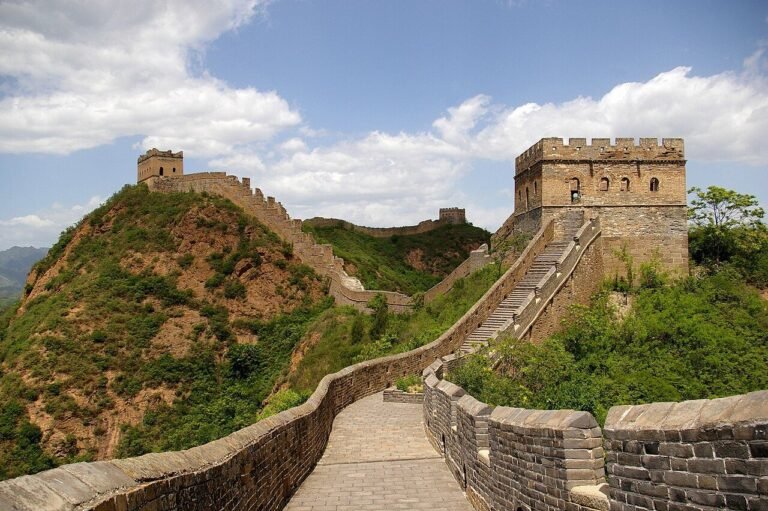
Beijing’s third-wave story starts with a handful of shops that were roasting before the word latte was common. Metal Hands opened in 2015 and quickly became the reference point for the city, with several shops and a roastery. Soloist, the Xisi shop above, was founded by a Beijing local who came back to the city to start it, and it still roasts in-house. Voyage Coffee, founded in 2015, was one of the first to sell its beans in supermarkets and convenience stores, which did more to introduce specialty coffee to ordinary Beijingers than any cafe did. Berry Beans, with locations in the CBD and near the Drum Tower, went viral for a shop at the foot of the Mutianyu Great Wall section, a genuinely strange place to drink a cortado.
The chains changed everything else. Luckin Coffee was founded in Beijing in 2017, built a store network that outnumbered Starbucks in China, collapsed in an accounting scandal in 2020, and then quietly rebuilt itself into a discount-driven giant with thousands of stores. An americano with a coupon runs 10 to 15 RMB, and the app is the easiest way for a visitor to get coffee delivered to a hotel. Manner and Seesaw, both Shanghai companies, opened Beijing stores to compete, and Starbucks and Peet’s hold the mall corners. If you want to understand how fast this happened, the wider story of coffee culture in China is worth reading after this.
What to order, and what it should cost
Chinese cafe menus run the usual espresso drinks plus a few local additions: yuzu sparklers, osmanthus lattes in autumn, and thick milk tea drinks that sit between coffee and dessert. Ordering is in Chinese on most shop menus, though the bigger chains have English. Here is what I usually spend.
| Drink | Where | Price (2025) | Notes |
|---|---|---|---|
| Americano, with coupon | Luckin app | 10 to 15 RMB | Cheapest reliable cup in the city |
| Flat white | Manner | 15 to 20 RMB | Small cups; takeaway only at most shops |
| Espresso or filter | Soloist, Metal Hands | 40 to 60 RMB | Single-origin lots, rotating |
| Latte, hutong shop | Wudaoying area | 35 to 50 RMB | You are paying for the courtyard |
| Osmanthus latte (seasonal) | Most chains | 20 to 30 RMB | Autumn only, roughly September to November |
| Bag of beans, 200 g | Local roasters | 80 to 150 RMB | Roast date on the bag; buy within two weeks of it |
Practical things nobody tells you
Payment is the first wall. Independent shops increasingly take foreign cards, but many still prefer Alipay or WeChat Pay, and the smallest shops may be cash-only. Set up mobile payment in China before you fly; the app also handles delivery from Luckin and Manner, which matters when you find a cafe you like at 9 p.m. and it closes at 8.
Hours are earlier than Western cities. Many hutong cafes open at 9 or 10 and close by 7 or 8. The chains run later. Weekend brunch lines at the famous hutong shops can mean a 30-minute wait for a table, so if you need a seat, weekday mornings are the answer.
English is limited outside the big malls and the tourist core. If you do not read characters, learn two things: 美式咖啡 (meishi kafei) is americano, and 拿铁 (natie) is latte. Pointing works. Downloading a translation app for menus is worth the phone space.
Laptops are welcome in some shops and frowned on in others, and the rule is unwritten and inconsistent. If the shop has more than ten tables, you are probably fine. If it has four, drink your coffee and leave. WiFi is common but not universal, and you will need a local SIM or roaming plan to reach it anyway, since the great firewall blocks many foreign services. Our notes on the apps you actually need in China cover the connectivity side.
Quick facts
- Specialty cups run 40 to 60 RMB; chain americanos with coupons can be 10 to 15 RMB
- Best neighborhood for a first visit: Wudaoying Hutong, near the Lama Temple
- Best for atmosphere and history: the lanes around Yangmeizhu Xiejie in Xisi
- Best for late hours and glossy seating: Sanlitun and Taikoo Li
- Most hutong cafes open around 9 or 10 a.m. and close by 7 or 8 p.m.
- Metal Hands, Soloist, Voyage, and Berry Beans are the foundational local roasters
- Payment: cash, card at bigger shops, Alipay or WeChat Pay everywhere; Luckin and Manner apps give discounts
- Osmanthus and seasonal drinks appear from about September to November
Frequently asked questions
Is Beijing coffee expensive compared with other Chinese cities?
It sits in the middle. Shanghai’s top shops charge more, often 60 to 80 RMB for a single-origin filter, and the hutong premium there is steeper. Smaller cities like Kunming and Chengdu undercut Beijing by a few RMB at the specialty level. For chain coffee, Beijing is the cheapest of the big three because Luckin was founded here and runs aggressive couponing.
Where should I stay if I want to walk to good cafes?
Near the Drum Tower or the Lama Temple, anywhere inside the Second Ring Road on the north side. From there you can walk to Wudaoying, the Xisi lanes, and Shichahai without taking the metro. Our Beijing travel guide has neighborhood recommendations if you want the full picture.
Can I buy beans to take home?
Yes, and you should. A 200-gram bag from a local roaster runs 80 to 150 RMB, and the roast date is printed on the bag, which is the only label that matters. Check your customs allowance before you fly; most countries allow coffee beans for personal use, but quantities vary and the rules differ by destination.
Is there coffee near the Great Wall?
There is a small cafe at the Mutianyu section’s base area, run by one of the Beijing roasters. It is more of a novelty than a destination, the prices are inflated, and the Mutianyu visit itself is the point. Our guide to the Mutianyu Great Wall explains how to do that day trip properly.
Do hutong cafes have toilets?
Most do, but they are squat toilets in older courtyard conversions, and soap is not guaranteed. Carry hand sanitizer. The malls around Sanlitun have Western-style facilities if that matters to you.
What is the best time of year for cafe sitting?
April through June and September through October. Summer in Beijing is hot enough that you will want air conditioning, and winter is too cold for the outdoor tables that make the hutong shops worth visiting. The shoulder seasons give you open doors and mild air.
If you want the coffee walk stitched together with the food, the temples, and the Great Wall, we can help you plan a custom food-and-travel route through the contact page. Tell us how early you wake up, and we will build the mornings around it, because in this city the best cups are poured before the tour buses arrive.
Written by the ChinaTravelFood editorial team.