The short version
Turpan sits in the Turpan Basin of Xinjiang, one of the lowest and hottest places in China, a dry oasis where the Silk Road once funneled caravans between the Tarim and the interior. It is famous for two things: the Flaming Mountains, a ridge of red sandstone that glows in the heat, and the grape valleys, where vines have been grown in the same shaded channels for a thousand years. I went in early October and the grapes were in, the heat had dropped to a manageable 28 degrees, and the contrast between the red cliffs and the green canals was the whole point of the trip. Turpan is not a one-site stop; it is a scatter of ruins, wells, and farms across a wide, flat basin, so a car or a patient bus plan helps.
This guide covers the Flaming Mountains, the grape valleys, the ancient city of Jiaohe, and the travel permits you need for Xinjiang. The food is a reason to go on its own, so pair the sights with the Turpan food and the wider Xinjiang food guide. For more of the region, the Urumqi food guide and the Kashgar old city are the other two poles of a Xinjiang trip.
Why Turpan is odd
The basin floor near Turpan drops to about 154 meters below sea level, the second-lowest land in the world after the Dead Sea, and summer temperatures pass 45 degrees. Nothing should grow there, but a canal system called the karez (underground wells tapping the mountain snowmelt) has carried water under the ground for over two thousand years, keeping the oasis alive and the grapes fat. That engineering is why Turpan is a UNESCO food and heritage site as much as a scenic one. The Silk Road passed through here because the oasis was the only water for days, and the ruins of the kingdoms that guarded it are still in the sand.
The Flaming Mountains
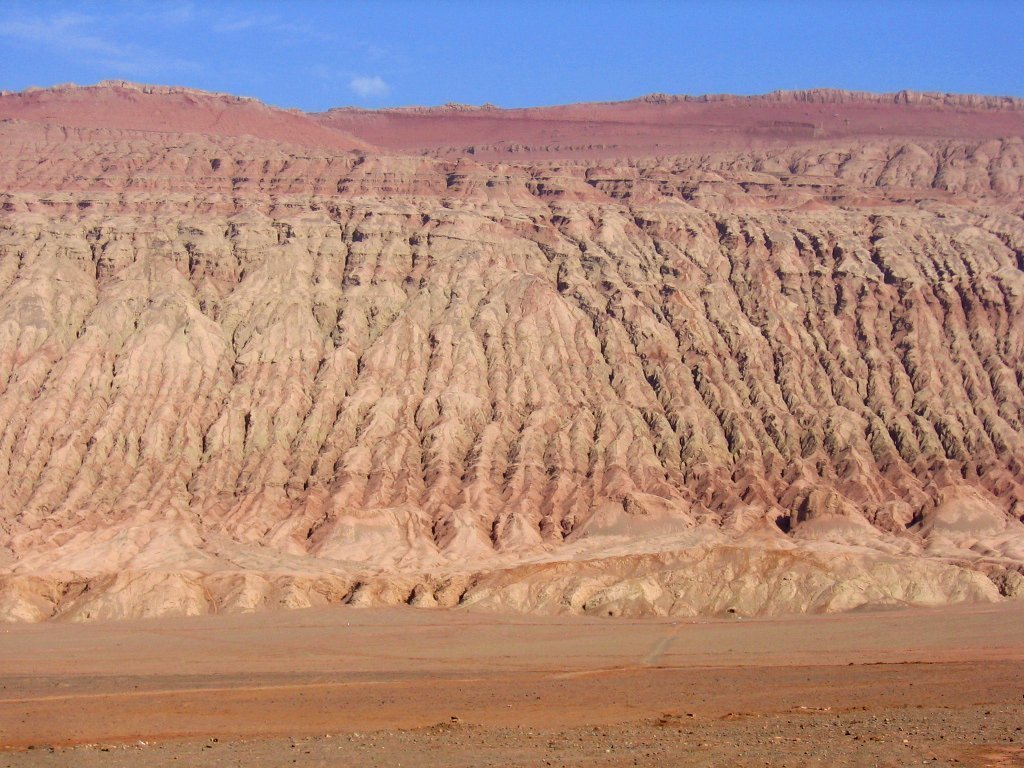
The Flaming Mountains (Huoyan Shan) are a 100-kilometer ridge of red sandstone that runs east-west north of the oasis. They are bare, steep, and the color is real; in the late afternoon they look lit from inside. There is a roadside stop with a giant thermometer and a statue of the Monkey King (from the novel Journey to the West, which sets a chapter here), and that is the tourist front. The better view is from a distance, across the grape fields, where the red wall meets the green. Go early or late; at noon the heat off the rock is brutal and there is no shade.
| Sight | What it is | Time needed |
|---|---|---|
| Flaming Mountains roadside | Red ridge, thermometer, statues | 30-45 min |
| Grape Valley (Putao Gou) | Vine terraces, shade, tastings | 1-2 hours |
| Jiaohe ruins | An abandoned clay city on a cliff | 1.5-2 hours |
| Karez wells museum | Underground canal system explained | 45 min |
| Gaochang ruins | Larger walled city, farther out | 1.5 hours |
| Emin Minaret | Tiled tower in the new town | 30 min |
The grape valleys and the oasis life
Turpan grows more than a dozen grape types, and the Grape Valley is a shaded channel of vine pergolas where you walk under a green roof and taste the fruit off the vine. The raisins (the region dries them on the vine in the hot air) are the export, but eating fresh grapes in October, when the season peaks, is the local pleasure. The valley has Uyghur families selling bread, nuts, and the dried fruit, and a few small restaurants where the lamb skewers come off a roadside grill. This is where the Turpan food scene lives: grapes, raisins, hand-pulled noodles, and the grilled meat that defines the region.
Jiaohe and Gaochang: the dead cities
Jiaohe is the better of the two ruins and the one I would not cut. It is a whole city of mud-brick walls and streets sitting on a mesa between two rivers, abandoned around 800 years ago and preserved by the dry air. You walk the empty lanes and the Buddhist stupa platforms, and because it is open and unshaded, the light at dawn and dusk is the time to be there. Gaochang is larger and farther, with more of its walls standing, but it needs a longer drive and rewards only if you are keen on Silk Road history. Both are fragile, so stay on the paths and do not climb the walls.
Getting there and permits
Turpan has a high-speed station on the Lanzhou-Xinjiang line, about an hour from Urumqi by train, and the station is north of the oasis, with a bus or taxi in. A car for the day is the efficient way to hit Jiaohe, the Flaming Mountains, and the Grape Valley without waiting on village buses. Xinjiang requires the same documents as the rest of China plus, for foreign visitors, a registration at hotels and occasional checks; the rules have shifted, so read the current Tibet and Xinjiang travel permits note before you go and carry your passport at all times. The high-speed rail makes the Urumqi-Turpan-Kashgar spine reachable, but the checks are real and you should plan buffer time.
When to go
April to May and September to October are the windows. Summer is dangerously hot; the Flaming Mountains in July are a test, not a pleasure. Winter is cold but calm and the grapes are gone. The best months to visit China apply, with the Xinjiang note that the basin heat is its own extreme, so aim for the shoulders. Avoid the October National Day week, when the oasis crowds and the trains fill.
Where to base and a sample day
Stay in Turpan town (the new oasis center), not at the ruins. The town has the Emin Minaret, a tiled 18th-century tower that is the easy photo stop, and a night market where the Turpan food comes out after dark: the grilled lamb skewers, the naan fresh off the dome, and the bowls of laghman noodles pulled to order. Hotels here register foreigners as required and the front desks handle the paperwork, so keep your passport handy at check-in. A hired car for the day runs a few hundred CNY and is the efficient way to chain Jiaohe, the Flaming Mountains, and the Grape Valley without the thin village-bus schedule.
A workable single day:
| Time | Stop | Why |
|---|---|---|
| 8-10 a.m. | Jiaohe ruins | Cool, low crowd, best light on the clay |
| 10:30-11:30 | Flaming Mountains roadside | Before the midday heat peaks |
| 12-2 p.m. | Grape Valley, lunch in the shade | Escape the heat, taste the fruit |
| 3-4 p.m. | Karez wells museum | Cool underground, explains the oasis |
| Evening | Town night market | Skewers, naan, and the local scene |
If you have a second day, add Gaochang and the nearby Bezeklik caves, the Buddhist murals in the cliffs east of the oasis. The Xinjiang food guide lists Turpan as a strong stop on the Silk Road food trail, and the Urumqi food guide to the north is the next plate on the same line.
Quick facts
- Turpan is in a basin that drops to about 154 meters below sea level.
- Summer temperatures regularly pass 40 degrees Celsius.
- The karez underground canal system is over two thousand years old.
- Jiaohe is an abandoned clay city preserved by the dry air.
- The region grows a dozen-plus grape types and is famous for raisins.
- Turpan is about an hour by high-speed train from Urumqi.
Frequently asked questions
How many days do I need?
One full day covers the Grape Valley, Jiaohe, and the Flaming Mountains. Two days lets you add Gaochang and the karez museum without rushing. Base in Turpan town and hire a car for the day.
Is it too hot to visit?
In summer, yes for comfort. Go in April-May or September-October. The best months to visit China point holds; the basin is the exception for heat, so avoid July and August.
Do I need a special permit?
Xinjiang has hotel registration and checks for foreign visitors; the details change, so check the Tibet and Xinjiang permits guidance and carry your passport. The entry visa is the same as the rest of China.
What is the food like?
Grilled lamb, hand-pulled noodles, grapes, and raisins. The Turpan food and the Xinjiang food guide cover the skewers, the naan, and the laghman that define the table here.
Can I do it from Urumqi as a day trip?
Yes, by high-speed train, but a day trip is tight for all the ruins. Stay one night in Turpan to catch Jiaohe at good light and eat at the night market.
Is it worth the distance?
If Silk Road history or Uyghur culture draws you, yes. Pair it with the Urumqi food guide and the Kashgar old city for a full Xinjiang arc. If you only want scenery, the Kanas Lake in the north is the prettier stop.
How do I get around the basin?
A hired car for the day is simplest; village buses run but slowly and on thin schedules. The high-speed station is north of the oasis, so budget a taxi or bus for the last stretch into town.
Planning a Xinjiang oasis route
Turpan is best as a one- or two-night oasis between Urumqi and the west, built around Jiaohe at good light and the Grape Valley in season. It links north to the Urumqi food guide and west to the Kashgar old city, with the Xinjiang food guide as the thread through all of it. Tell us your start city, your heat tolerance, and how much Silk Road history you want, and we can set the order so you hit the red cliffs when they glow and the grapes when they are in. The basin is fixed; the route across it is what we shape.
Written by the ChinaTravelFood editorial team.