Yellow Crane Tower Wuhan: Poetry, River, and the Rebuilt Tower
“故人西辞黄鹤楼,烟花三月下扬州” (my old friend leaves west from Yellow Crane Tower, in misty spring he goes down to Yangzhou). If you learned any classical Chinese poetry, it was probably this line, and standing at the tower you feel the weight of a thousand years of students reciting it. I will admit I rolled my eyes at the idea of a rebuilt tower on a busy hill, then spent longer up top than I planned because the Yangtze and the Han meet right there and the scale of the river is humbling.
Yellow Crane Tower (黄鹤楼) in Wuhan is the most famous of the Three Great Towers of southern China, alongside the Tengwang Pavilion in Nanchang and Yueyang Tower. It has been destroyed and rebuilt repeatedly; the current tower is a 1980s reconstruction in a Song-style silhouette. The poetry and the river junction are the real draw, not the modern timber.
The poem, the poet, and why the tower matters
The line everybody quotes is by Li Bai, the Tang dynasty poet who wrote it as a farewell to a friend leaving for Yangzhou. It is taught to nearly every Chinese schoolchild, which is why the tower functions less as a building and more as a cultural shorthand for parting and travel. Standing there, I understood that the site’s power is cumulative: a thousand years of poems, paintings, and now tourist photos stacked on the same hill. The exhibits inside walk through the literary history, and even if your Chinese is thin, the English panels explain enough to get why locals treat the place with affection rather than irony. I found the top-floor display of past tower designs the most interesting part, a reminder that “the” tower has been a dozen different buildings.
Wuhan as a base
Wuhan is a massive, divided city where the Yangtze and Han rivers split it into three towns: Wuchang, Hankou, and Hanyang. The tower sits in Wuchang, on a hill called Snake Hill (蛇山) overlooking the river. Wuhan is also one of China’s great breakfast cities, so time your tower visit around a meal. The Wuhan breakfast scene is reason enough to come, and the tower is the sightseeing bookend.
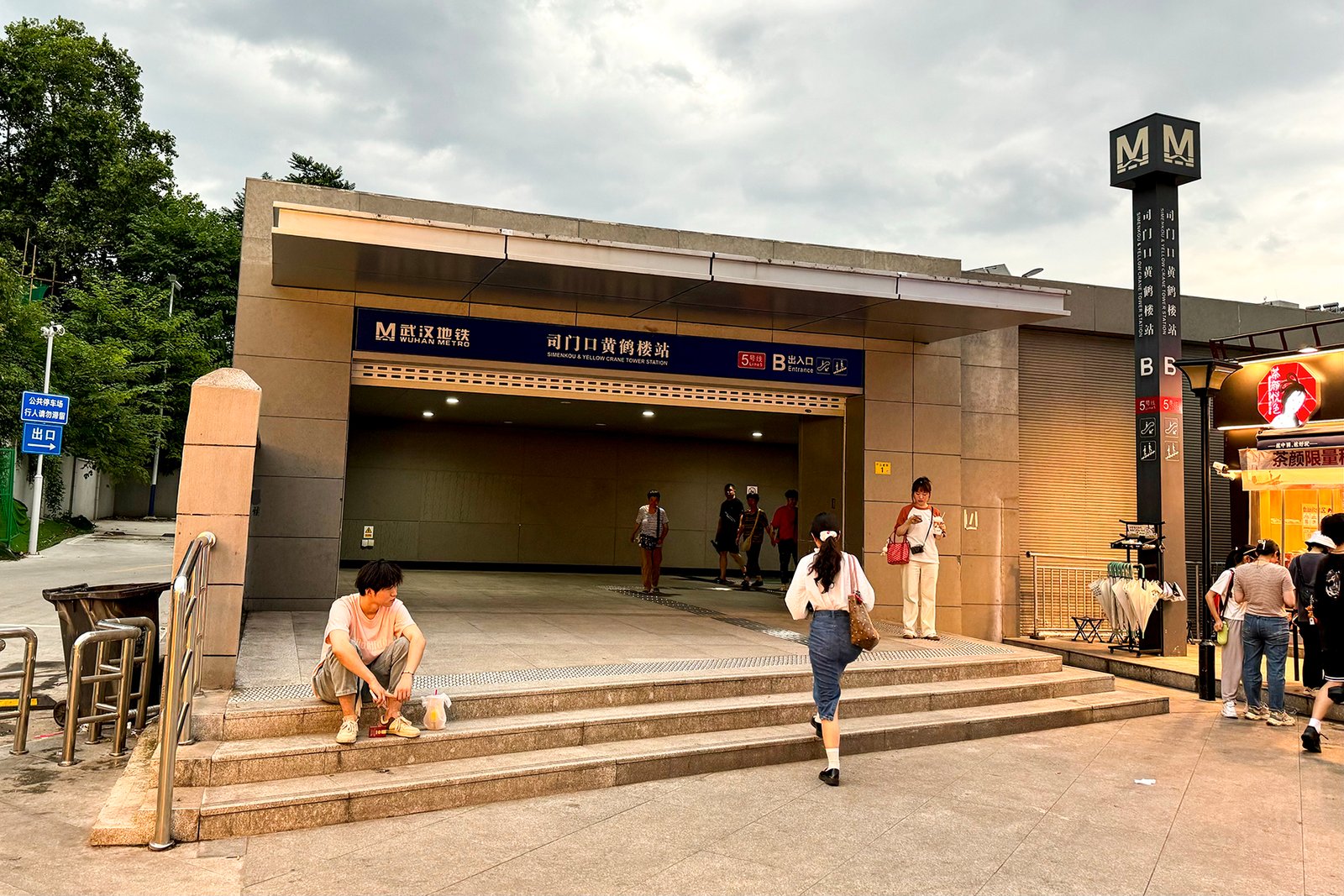
Wuhan is a major rail hub, so getting in is easy. The Chinese train station navigation tips help because Wuhan has several stations and the wrong one means a cross-city metro haul. I arrived at Wuhan station and the tower was a metro ride plus a walk across the river bridge area.
Snake Hill and the surrounding park
The tower sits inside a wooded hilltop park that is worth more time than people give it. Below the tower, the grounds include a bronze turtle-and-crane sculpture (a pun on the tower’s name), a bonsai garden, and a stretch of restored Ming-era city wall that you can walk along. None of it is essential, but the walk down through the trees is pleasant after the climb, and the city wall section gives you a second vantage over the river without the tower ticket queue. I spent twenty minutes on the wall watching cargo ships queue for the bridge and decided the wall was the better free view.
What you see at the tower
The tower is five stories of dark tiled roofs, each level with exhibits on the poem, on past towers, and on Wuhan’s river history. The top floor is the payoff: a railing view over the Yangtze, the long First Bridge, and the city sprawl. I went mid-morning on a weekday and had the upper floor mostly to myself, which is the way to do it.
When to go
The best time to visit China advice holds: spring (March to May) and autumn (September to November) are kindest. Wuhan’s summers are brutal, regularly above 35°C with choking humidity, and I would not wish an August tower climb on anyone. March, the month in the famous poem, is genuinely lovely if you catch the mist.
Food before or after
You cannot do Wuhan without hot dry noodles (reganmian), the sesame-paste breakfast staple sold on every corner. Pair the tower with a morning noodle run and you have a complete Wuhan morning. The area around the tower has tourist restaurants, but a few metro stops away the local spots are cheaper and better. I ate my reganmian at a hole-in-the-wall near the Hanyang side and it cost four yuan and woke me up better than coffee.
A practical Wuhan morning plan
Here is the loop I would run. Be at a breakfast stall by 7:30 for reganmian and a soy-milk, then metro to the Wuchang side and up Snake Hill for the tower opening at 8. Spend ninety minutes on the tower and the wall, then walk down toward the river and across to Hankou for the museums or the metro back. This keeps the heat and the crowds at bay and gives you the city’s two best things, noodles and river, in one morning. If you have a second day, the breakfast guide has enough stalls to fill it.
The Yangtze First Bridge and the river crossing
Right below the tower spans the Wuhan Yangtze River Bridge, the first bridge built across the Yangtze when it opened in 1957, and a piece of infrastructure that still matters. I walked a stretch of it on the pedestrian path and the sheer volume of river traffic below, tugs, barges, and passenger boats threading the piers, gave me a better sense of Wuhan’s role than any museum. You can also take the ferry across to Hankou for a few yuan, which is the old way locals crossed before the bridge and still the most pleasant. The ferry at dusk, with the tower lit behind you and the city lights coming up ahead, is a cheap thrill the tour buses miss.
Wuhan’s other draws
The tower is the headline, but Wuhan earns a second day if you let it. The Hubei Provincial Museum holds the Zenghouyi bells, a 2,400-year-old bronze instrument that still plays, and the nearby East Lake (Donghu) is a huge urban green space with bike paths and a cherry-blossom season that briefly rivals Wuhan’s more famous spring rival. I spent a morning at the museum and an afternoon cycling East Lake and came away thinking the city is underrated as a stop, written off too often as a transit point between Beijing and the south. If your route forces a change of trains here, build in a night rather than sprinting through.
River cruises
The Yangtze at Wuhan is wide and busy, and evening Yangtze river cruises leave from piers near the tower for a lit-up skyline view. I took a short one and enjoyed the bridge lights more than the commentary, but it is a fine way to see the city from the water after the tower.
| Tower | City | Best for | Crowd level |
|---|---|---|---|
| Yellow Crane Tower | Wuhan | Poetry, Yangtze-Han junction | High, especially holidays |
| Tengwang Pavilion | Nanchang | River view, quieter | Moderate |
| Yueyang Tower | Yueyang | Most authentic rebuild | Low |
Quick facts
- Yellow Crane Tower is in Wuchang, Wuhan, on Snake Hill above the Yangtze.
- One of the Three Great Towers of southern China.
- Current tower is a 1980s reconstruction in Song style.
- Best light and lowest crowds: weekday mornings, spring or autumn.
- Reachable by metro; pair with Wuhan’s breakfast culture.
- The Yangtze-Han river junction is the real spectacle.
Frequently asked questions
Is the tower original?
No. Like its sister towers, it has been rebuilt many times; the present one dates to the 1980s. The site, the poem, and the river view carry the history. Go for those, not for antiquity.
How much time do I need?
About ninety minutes including the climb, exhibits, and photos. Add the riverside walk if the weather is good. It is not a full-day destination on its own.
What is the best time of day to visit?
Opening time on a weekday morning for space and soft light. Sunset is pretty but crowded. I preferred the calm of a 9 a.m. climb.
Can I combine it with breakfast?
Please do. Wuhan’s hot dry noodles are a must, and the tower pairs naturally with a morning noodle stop. The breakfast guide maps the best runs.
Is Wuhan worth more than a transit stop?
Yes, a day or two. The tower, the breakfast, the river bridges, and the museums make a solid stop, and it is a major rail hub for onward travel.
How do I avoid the wrong train station?
Wuhan has Wuhan, Wuchang, and Hankou stations. Confirm which one your ticket uses and check the metro. The station navigation guide walks through it.
Planning a Wuhan stop
Yellow Crane Tower fits a central-China route that can run from Wuhan west to the Three Gorges or east toward Nanjing. If you want a custom food-and-travel plan built around Wuhan’s noodles and river, contact us and we will shape the route to your dates.
Written by the ChinaTravelFood editorial team.