Wuhan hot dry noodles in one paragraph
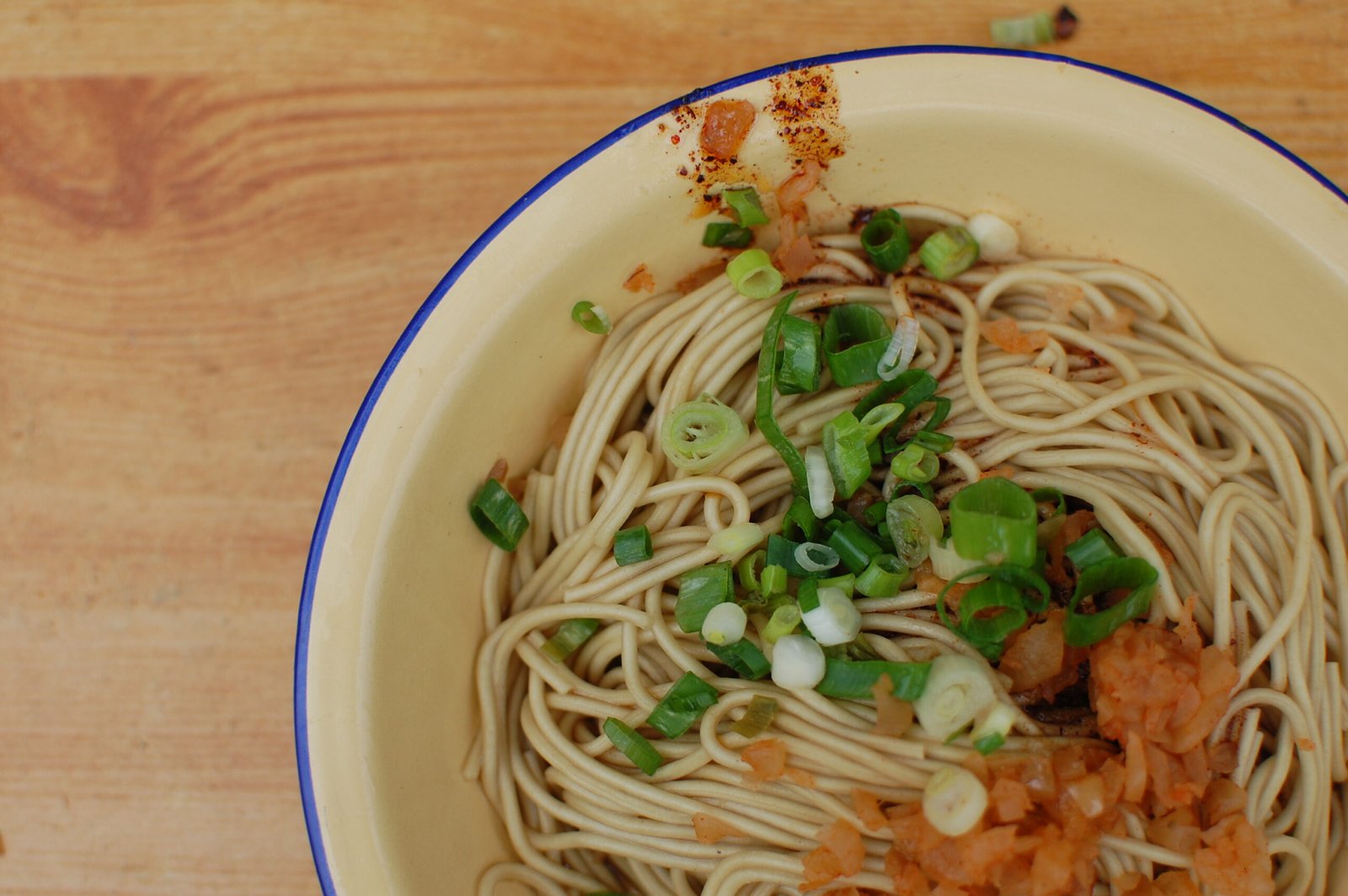
Reganmian, Wuhan’s hot dry noodles, is the breakfast that defines the city. Thin alkaline wheat noodles are boiled, tossed with sesame oil, cooled and dried overnight, then dipped in boiling water the next morning and dressed with a thick sesame paste thinned with soy and sesame oil. Pickled radish cubes, sour cowpeas, and scallion go on top, and the whole thing is mixed hard and eaten in about three minutes, usually standing up. There is no soup, despite the name, and that is the point: the dry dressing clings to every strand. Wuhan people take this bowl seriously enough that they have a verb for eating breakfast, guo zao, meaning to pass the morning, and a trip to the city without a 7 a.m. bowl of reganmian is a wasted morning. This guide covers what the dish is, how it is made, where to eat it in 2026, and the rest of the Wuhan breakfast table that goes with it.
Quick facts about Wuhan hot dry noodles
- Chinese name: reganmian, literally hot dry noodles; the dry refers to the lack of soup
- Noodle type: alkaline wheat noodles, yellow and springy, the same family as ramen noodles
- Key ingredient: sesame paste (zhimajiang), loosened with soy sauce, sesame oil, and a little water
- Standard toppings: pickled radish cubes, sour cowpeas (suan doujiao), scallion, optional chili oil
- Eaten: breakfast, ideally before 9 a.m., standing at a counter or on a plastic stool
- Price in 2026: 6 to 12 RMB a bowl in Wuhan, more at airport and mall versions
- The famous name: Cailinji, the chain that locals measure every other shop against
- Best pairing: egg rice wine (danjiu), a warm sweet soup of egg stirred into fermented rice wine
- Vegetarian status: usually vegetarian, but ask about lard and MSG if you avoid either
- Where to start: a neighborhood stall near a residential block, not the tourist lane
What reganmian is, and what it is not
Foreigners often expect a noodle soup and get something closer to a pasta with a sesame dressing. The bowl arrives dry: a tangle of yellow noodles, a smear of beige sesame paste, and a scattering of pickles. You mix it from the bottom, and the paste, thinned in the bowl, coats the noodles instead of pooling. The texture is chewy, almost bouncy, because the noodles are made with alkaline water, the same trick that gives Japanese ramen and Chinese youtiao their snap. That chew is the entire point, and a shop that lets its noodles sit too long before serving has already failed.
The sesame paste is the other make-or-break element. It is pure toasted sesame seeds ground to a paste, close to unweetened tahini, and it is too thick to use straight from a jar. A good shop thins it with light soy, sesame oil, and sometimes a spoon of the noodle water until it pours like cream. A few shops cut it with peanut paste, which I notice immediately and do not like. The pickles matter more than their role suggests: the sour cowpeas and crunchy radish cubes are what keep the third and fourth bites from feeling heavy, and a bowl without enough pickle is just sesame and starch.
How the noodles are made
The method explains the name. In the afternoon, the shop boils its alkaline noodles, drains them, tosses them with sesame oil so they do not stick, then spreads them on trays to cool and dry overnight. This step, called dan mian, is what gives reganmian its name and its texture. In the morning, the cook takes a bundle of the cooled noodles, dips them in boiling water for twenty or thirty seconds until they are hot and loosened, and drops them into a bowl that already holds the thinned sesame paste and seasonings. The paste goes in first, so the noodles land on top of it and get mixed up through it from below. Toppings follow, and the bowl goes out fast.
Local lore credits the whole invention to a 1930s noodle seller named Cai, whose shop grew into the Cailinji chain, and the timeline is plausible: dried oiled noodles survive a hot Wuhan summer morning better than a bowl of soup does. Whether or not the story is exact, the practical logic is visible in every shop before the sun is fully up, with trays of pale noodles drying on every counter.
The morning ritual: guo zao
Wuhan does breakfast like no other city in China. The custom is called guo zao, passing the morning, and it means eating early, eating on the street, and eating fast. By 6:30 a.m. the good stalls have a line of delivery drivers, retirees, and office workers, each with a specific bowl in mind and a specific stool to sit on. Nobody lingers. The bowl arrives, you mix, you eat, you leave, and the whole transaction takes about five minutes. What surprised me the first time was the sociability of it: strangers argue about which shop’s sesame paste is thickest, regulars get their bowl without ordering, and the stalls run out and close by mid-morning.
The historic names are worth knowing because they anchor the city’s snack culture. Cailinji is the reganmian benchmark. Laotongcheng is the old house for doupi, the stuffed egg crepe. Sijimei is the soup-bun name, and Xiaotaoyuan the one for slow-simmered chicken soup. You do not need to visit all four, but knowing them tells you which counter to join. For a wider look at how the city eats, our guide to Wuhan food and the national picture in Chinese breakfast cover the ground.
The rest of the Wuhan breakfast table
Reganmian is the headliner, but a Wuhan breakfast is usually two or three things, and the supporting cast is what makes the city a food destination rather than a one-dish stop. Here is what to order alongside the noodles, with prices I paid in 2026.
| Dish | What it is | Typical price (2026) |
|---|---|---|
| Reganmian | Sesame-paste dry noodles, the city’s signature bowl | 6 to 12 RMB |
| Egg rice wine (danjiu) | Beaten egg stirred into sweet fermented rice wine, served warm | 4 to 8 RMB |
| Sanxian doupi | Egg-and-starch crepe wrapped around sticky rice, pork, bamboo shoot, and mushroom | 8 to 15 RMB |
| Mianwo | Fried rice-flour ring with scallion, crisp outside and soft inside | 2 to 5 RMB |
| Huanxituo | Fried glutinous rice balls coated in sesame seeds, sweet | 4 to 8 RMB |
| Wuhan shaomai | Local steamed dumplings with glutinous rice, lard, and black pepper | 8 to 15 RMB |
| Hu mijiu | Small glutinous rice balls in fermented rice wine soup | 6 to 12 RMB |
My own order, after enough mornings to have settled into a habit: one bowl of reganmian, one egg rice wine, and if the stall makes good doupi, half a piece to share. That is the local ratio, and it costs 15 to 25 RMB total. The egg rice wine is the part visitors skip and then regret skipping, because its sweet warmth balances the savory sesame paste in a way that coffee does not.
Where to eat reganmian in Wuhan
The famous lanes
Hubu Lane, in Wuchang near the Yangtze waterfront, is the snack street everyone mentions and the one I send no one to first. It is not bad, it is just built for tour buses: the bowls are more expensive and the noodles are thinner than the neighborhood version. It is worth walking through once for the atmosphere, especially in the evening when the whole lane lights up, and it is a reasonable fallback if you are staying nearby.
Where locals actually eat
Liangdao Street, a food street near Wuhan Middle School in Wuchang, has better bowls at better prices, and the mix of students and retirees tells you it is a working street rather than a set piece. Wansongyuan, in the Jianghan district, is the other local stronghold, especially the stretch along Xuesong Road, where the shops serve Wuhan locals rather than visitors from early morning until late. The trick is simple and works everywhere: pick the stall with a queue of people who look like they live nearby, before 8 a.m. Our street breakfast map covers this pattern in other cities, and it is the fastest way to find a good bowl anywhere in China.
The chains
Cailinji has branches across the city, and they are consistent, clean, and open longer hours than the street stalls. I would not make a special trip for the chain when a good stall is nearby, but for a first bowl with no Chinese and no local knowledge, a Cailinji branch removes every risk. You will pay 8 to 15 RMB for exactly the bowl you were hoping for.
Eating reganmian like a local
Mix immediately and mix hard. Sesame paste stiffens as it cools, and a bowl that sits for two minutes clumps into lumps that no amount of stirring will fix. Eat standing or on a low stool, using the wooden chopsticks provided; there is no soup, so there is no spoon and no bowl to lift. Add chili oil if you want heat, but know that the classic bowl is not spicy, and the pickles provide all the sourness the dish needs. Finish with the egg rice wine, leave the empty bowl on the low table, and walk away. Tipping is not part of the transaction, and the counter staff will hand your change back before you have put your wallet away.
If you want to compare the bowl with its soupy cousins, our guide to noodle soups runs from Lanzhou beef noodles to Guilin rice noodles, and reganmian is the dry outlier that proves the rule: Chinese noodles are about the dressing, not the broth.
Reganmian FAQ
Is reganmian vegan?
Usually yes, or close to it. The bowl is noodles, sesame paste, soy, and pickles, with no obvious animal products. Ask about lard, since some shops use it in the paste, and about MSG if you avoid it. The egg rice wine pairing is not vegan, but soy milk is always available instead.
Is Wuhan hot dry noodles spicy?
No. The classic bowl has no chili at all, and heat is optional, added as chili oil at the counter. The flavor profile is nutty, savory, and sour from the pickles, not hot.
Why is it called hot dry noodles if there is no soup?
The dry refers to the noodles themselves: after boiling, they are oiled and dried overnight, then reheated briefly the next morning. The hot refers to serving temperature. The name describes the process, not the finished bowl.
What is the best time to eat reganmian?
Between 6:30 and 9 a.m., when the noodles were dried the day before and the shops are at their busiest. Many street stalls sell out and close by 10 or 11, and the bowls served late are made with noodles that sat too long.
Can I find good reganmian outside Wuhan?
Rarely. The dish depends on fresh alkaline noodles and pure sesame paste, and versions outside Wuhan usually substitute the wrong noodle or sweeten the paste. If you find a shop with a queue and beige paste rather than brown, order it.
How do I order if I do not speak Chinese?
Point at the reganmian and say the name, or show the characters 热干面. The bowl costs under 15 RMB, most shops have picture menus or a ticket system, and the staff are used to pointing. For the wider language picture, our guide to translation apps covers the app that handles this.
Should I visit Hubu Lane?
Once, for the atmosphere, ideally in the early evening. For the bowl itself, a neighborhood stall on Liangdao Street or around Wansongyuan will be cheaper and better.
Planning a Wuhan breakfast trip
Wuhan works as a two-day stop on any longer China route: one early morning on Liangdao Street, one day between the Yangtze riverside and the provincial museum, and a second morning comparing two or three reganmian stalls. It connects easily to the rest of the country by high-speed rail, and schedules change, so confirm current times with official transport sources before booking. If you want this built into a wider itinerary, or you want a breakfast-focused route that adds the best cities China has for early eating, reach out through our contact page and we will help you plan a custom food-and-travel route.
Written by the ChinaTravelFood editorial team.