The tea that made Anxi famous
Walk into any tea shop in China and ask for 铁观音 (Tieguanyin), and you will be handed a small tightly rolled ball the size of a pea. Drop it in hot water and it unfurls into a whole leaf, and the room fills with something close to orchid perfume. That leaf comes from one county in southern Fujian: Anxi (安溪), a hilly, tea-drenched place a two-hour drive inland from Xiamen. Tieguanyin is not a region like Darjeeling or a factory process like a tea bag. It is a cultivar and a craft that grew out of a few specific hillsides, and the best of it still comes from those hillsides.
I have bought Tieguanyin badly more than once: vacuum-packed supermarket bags that tasted like dry grass, and a “twenty-year-aged” cake from a tourist shop that was almost certainly two years old. This guide is the accumulated result of those mistakes, covering the styles, the seasons, the prices, and how to brew a cup that actually tastes like something. Prices are from late 2024; the tea market moves, so treat them as a map, not a promise.
What Tieguanyin actually is
Tieguanyin is an oolong, meaning the leaf is semi-oxidized somewhere between green tea (no oxidation) and black tea (full oxidation). In practice that means the fresh leaves are bruised and shaken in bamboo trays to start controlled oxidation, then heated to stop it, then rolled into the tight pearl shape, then roasted. How far each step goes is where the style differences come from.
The name translates roughly as “Iron Guanyin,” Guanyin being the bodhisattva of compassion, and there are two competing origin stories. In one, a farmer named Wei Yin (魏荫) dreamed of Guanyin pointing to a tea bush under a rock; he found the bush, and named the tea for the iron statue of Guanyin in his village temple. In the other, a scholar named Wang Shirang (王士让) found an unusual bush, made tea from it, and offered it to the Qianlong emperor, who asked after its name and was told it came from under the iron Guanyin. Both stories are almost certainly folklore layered over a longer agricultural history. Nobody agrees which farmer gets the credit, and every Anxi tea seller has a favorite.
The three styles, and what they taste like
Most confusion about Tieguanyin comes from the fact that three different drinks share the name. They differ mainly in how hard the leaf is roasted and how green the processing is.
| Style | Processing | Taste and look | Price range per 500 g |
|---|---|---|---|
| 清香型 (light/aromatic) | Light oxidation, light roast, rolled tight | Pale gold, strong orchid fragrance, crisp and floral | 50 to 500 yuan |
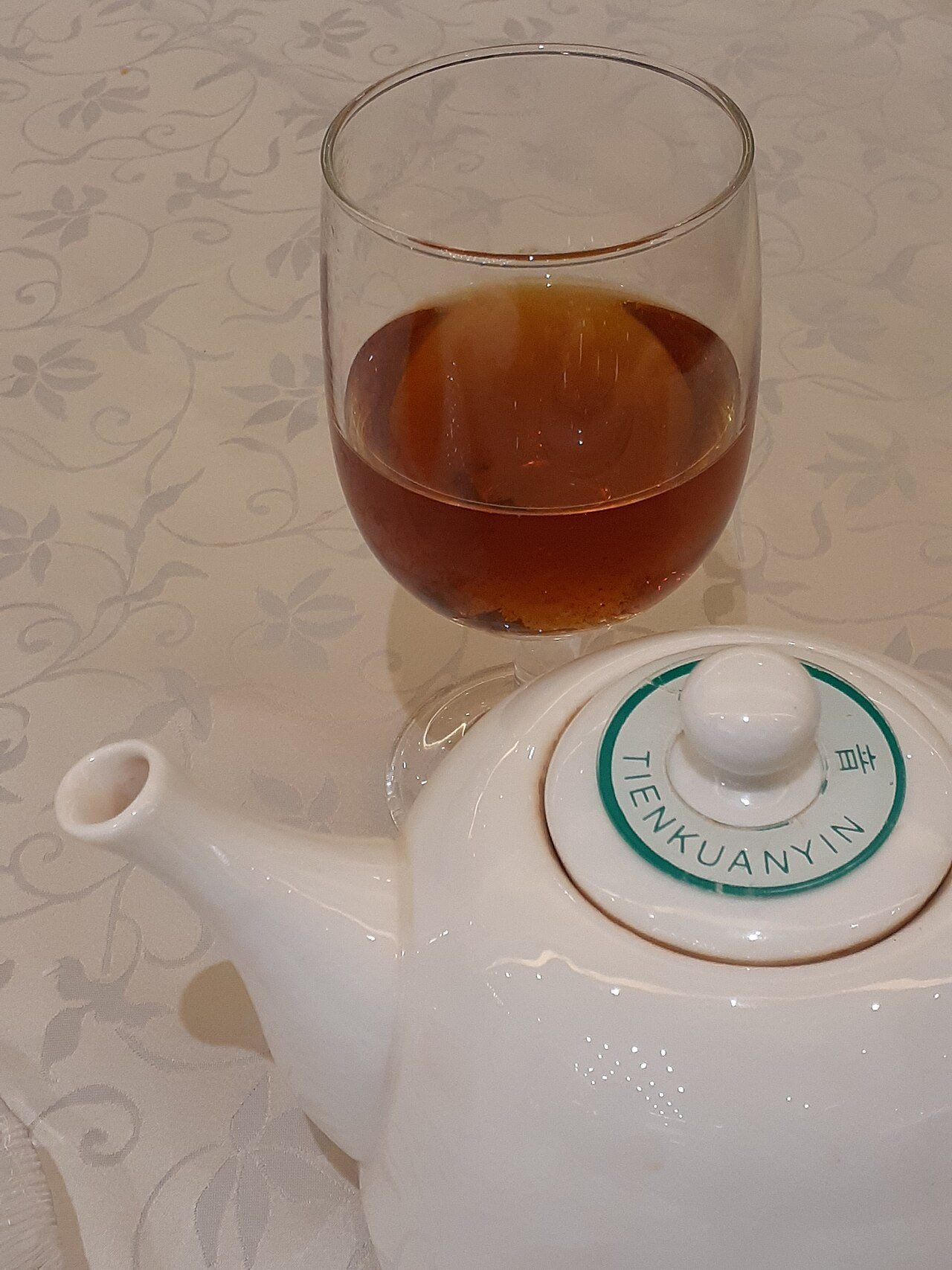
| 浓香型 (roasted/traditional) | Heavier roast over charcoal or electric heat | Darker amber, toasted, fruitier, fuller body | 80 to 600 yuan |
| 陈香型 (aged) | Roasted then stored for years, re-roasted periodically | Dark, woody, medicinal, no floral top notes | 300 to 3,000+ yuan |
The light style dominates the market today. It was pushed hard by Taiwanese processing techniques in the 1990s, and it sells on fragrance alone. The roasted style is what older Fujian drinkers mean when they say Tieguanyin, and it has more of what the trade calls 观音韵 (Guanyin rhyme), a mineral, orchid-tinged aftertaste that lingers after you swallow. Aged Tieguanyin is a niche for people who like the direction pu-erh goes as it ages; it is also the category where fakes are most common, since “aged” cannot be verified by looking.
My own preference is the roasted style in winter and the light style in summer. The light tea is almost too pretty in cold weather, like eating a peach in December. Try both before you decide which one you are.
Seasons matter more than labels
Anxi picks Tieguanyin twice a year, with a third crop nobody brags about. Spring tea, picked late April into May, has the deepest flavor and the highest price. Autumn tea, picked September into October, is the most fragrant, which is why the light style is often made from it. Summer tea is thin and bitter, and mostly ends up in the cheap bags sold by weight at supermarket chains.
If you buy one bag of Tieguanyin, buy a spring crop, drink it within a year, and keep it in the fridge or freezer in a sealed bag. This is the single most useful thing in this article: light-style Tieguanyin fades fast, and most “old” stock sold as fresh is exactly what it smells like, old. The harvest date should be on the bag. If it is not, ask. If the shop cannot tell you, buy somewhere else.
What money buys
- 30 to 80 yuan per 500 g: machine-picked summer or blended leaf, roasted hard to cover thin flavor. Fine for cooking or a big pot at the office. Not the real thing.
- 150 to 400 yuan per 500 g: hand-picked autumn or mid-grade spring leaf from Anxi proper. This is where a home drinker should live. The orchid note is clear and it survives four or five infusions.
- 500 to 1,200 yuan per 500 g: high-mountain (高山) leaf from specific villages, picked early, processed carefully. The difference is texture as much as flavor: the tea coats the tongue.
- Above that: 单株 (single-bush) picks, contest-winners from the county tea bureau’s annual judging, and aged lots. Interesting once. Rarely worth it for a traveler.
Anything labeled “Anxi Tieguanyin” for 9.9 yuan including shipping is not Tieguanyin from Anxi. It is probably a thin oolong from elsewhere, or coarse leaf from outside the county, and it will taste like nothing. The county produces a lot of genuine tea; the trick is not paying luxury prices for it, or discount prices for something else.
How to brew it
Brew Tieguanyin the gongfu way and the leaf opens in stages, which is half the entertainment. Use a small gaiwan or a 100 ml clay pot. Eight grams of leaf fills it roughly a third of the way, and the tight balls need the heat: 95 to 100 degrees Celsius water, straight off the boil.
Rinse the leaf for five seconds and pour that out, then start the clock. First real infusion: twenty to thirty seconds. Second: fifteen to twenty. Third: thirty and climbing. The leaf will hold for six to eight infusions if it is any good, and the third or fourth is usually where the tea tastes like itself. A cheaper bag gives you two flat infusions and then gives up, which is another way to tell what you bought. More on the wider world of brewing in our guide to Chinese tea.
Visiting Anxi
Anxi County sits under Quanzhou’s administration, about 90 minutes by car from Xiamen and two hours from Quanzhou city. The town itself is unremarkable, but it holds the 中国茶都 (China Tea Capital), a wholesale market where you can taste your way through a corridor of shops in an afternoon. The hills around it are the actual point: tea gardens on slopes so steep they look terraced by hand, because they mostly are, still picked by teams of women during the spring and autumn rushes.
Qingshui Rock (清水岩), the cliff temple of the Qingshui patriarch, sits in the hills northwest of the county town and combines a genuine pilgrimage site with the best views over the tea country. April and May are picking season and the liveliest time to visit; October is quieter and the tea is fragrant. If you are building a trip around the tea, the Quanzhou citywalk piece covers the port city that traded this tea for centuries. The wider Fujian tea picture is in our Fujian tea culture article.
Buying without getting burned
Three habits will save you money. First, taste before you buy, always, and insist on brewing it in front of you rather than accepting a flask from the back room. Second, ask for the harvest season and the village; good shopkeepers are proud of both. Third, compare one light-style and one roasted-style tea from the same shop at the same price, because the gap between them tells you how honest the shop is about its roasting.
Buy the ball, not the bag. The rolled form keeps the fragrance for a year or more, while pre-ground or crumbled leaf loses it in weeks. And when you get home, keep it cold and dry, away from the fridge door, where the temperature swings every time someone wants milk. A step-by-step version of all this is in our tea buying guide, and if you want to taste Tieguanyin the way Fujian drinkers do, the Chinese teahouse guide explains the gongfu ritual from the other side of the table.
Anxi is an easy add-on to a Fujian itinerary: a night in Xiamen, a morning at the tea market, an afternoon on the slopes, dinner back in the city. If you want help designing a tea-focused route through Fujian, or fitting a tea-farm visit into a longer trip, get in touch through our contact page and we can sketch something custom.
Frequently asked questions
What does Tieguanyin taste like?
Light styles smell and taste of orchid, with a sweet, yellow-green liquor and a crisp finish. Roasted styles are toastier and rounder, with more body and a mineral aftertaste the trade calls 观音韵. Both should be smooth, never harsh on the throat.
How much should I pay for good Tieguanyin?
For daily drinking, 150 to 400 yuan per 500 g buys genuine hand-picked Anxi leaf. Below 100 yuan you are usually drinking summer crop or non-Anxi tea. Above 1,000 yuan you are paying for specific hillsides and competition grades.
Which style should I try first, light or roasted?
Light, because the fragrance is immediate and it explains the tea’s fame in one cup. Then try a roasted version at the same shop, because the comparison is what teaches you what Tieguanyin is. Many people end up preferring the roasted style in winter.
How do I brew Tieguanyin at home without gongfu equipment?
A mug with an infuser basket works if you keep the ratio high: one tightly rolled ball per 150 ml, water just off the boil, two to three minutes for the first cup, then another minute for the second. You lose the staged unfolding, but not the flavor.
Can I visit the tea gardens in Anxi?
Yes. The China Tea Capital market in the county town and the slopes around Qingshui Rock are both open to visitors, and many shops will arrange a driver. Spring (late April to May) and autumn (September to October) are the picking seasons and the most interesting times to go.
How should I store Tieguanyin?
Sealed, cold, and dry. Light-style tea goes in the fridge or freezer in an airtight bag and is best within a year of harvest. Roasted and aged styles tolerate room temperature in a dark cupboard. Keep both away from coffee and spices; oolong absorbs odor like nothing else.
How is Tieguanyin different from Dahongpao?
Completely different branches of oolong. Tieguanyin is a lightly oxidized, rolled, fragrant tea from southern Fujian, while Dahongpao is a heavily roasted rock tea from the Wuyi Mountains in northern Fujian, with a darker, mineral, almost savory character. Our Dahongpao tea guide covers the other side of the family.
Written by the ChinaTravelFood editorial team.