What Chinese spring rolls are
Chinese spring rolls are thin wrappers rolled around a savory or sweet filling and then usually deep-fried until blistered and crisp. The fried version, chun juan, is the one most travelers know from dim sum halls, but the tradition is wider than that: across China, rolls and pancakes served at the start of spring carry the same name and the same job of wrapping up the season’s first vegetables.
My first proper one came from a Shanghai shop in 2018, a foot-long cylinder of cabbage and pork that shattered when I bit it. I had grown up on the thick, greasy fried rolls sold as appetizers abroad, and the difference was immediate: the wrapper was paper-thin, the filling was barely bound, and the whole thing was gone in four bites. That is the target.
This guide separates the fried and fresh traditions, covers the fillings that matter, explains where the rolls fit in the festival calendar, and shows how to make a decent version at home. Prices and shop details below are from 2024 and 2025 visits; market prices move, so confirm locally.
Fried rolls and fresh rolls, two different traditions
People mix these up constantly, including guidebooks. The two families share a name in translation and little else.
Fried spring rolls, chun juan
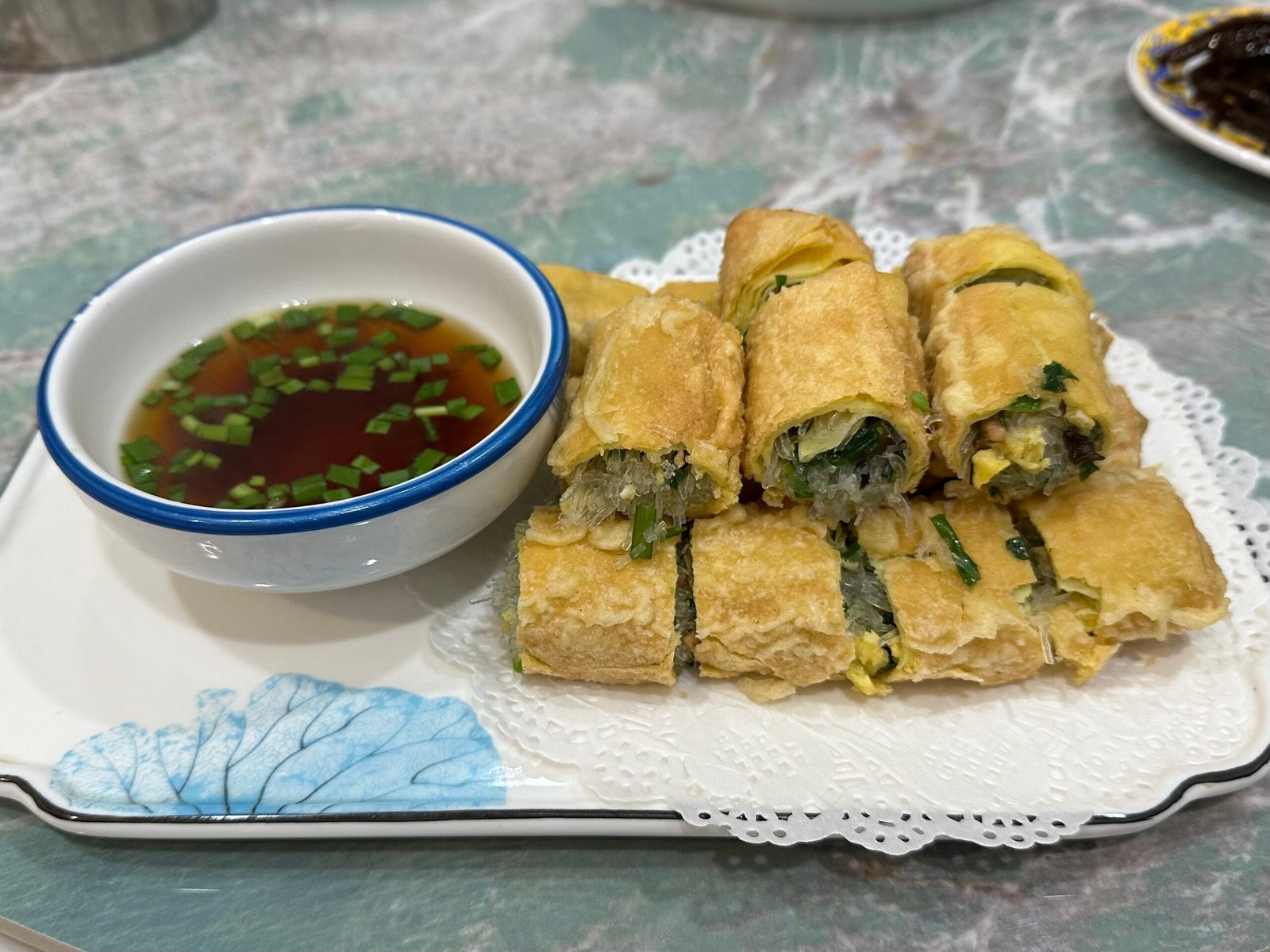
The fried roll is a Shanghai, Jiangnan, and Cantonese institution. A thin wheat wrapper is rolled around a cooked filling, sealed with a dab of starch slurry, and fried at high heat so the wrapper bubbles rather than soaking up oil. In Cantonese dim sum, the standard filling is pork, shrimp, bamboo shoot, and wood ear; in Shanghai, cabbage and shredded pork is the home-style classic. Some shops make a sweet version with red bean paste, served as a dessert roll.
Spring pancakes and fresh rolls
The northern tradition at lichun, the start of spring in early February, is chun bing: a stack of thin pancakes served with separate dishes of filling, which you roll yourself at the table. It is interactive and messy and very northern. In southern Fujian and neighboring Chaozhou, the popiah or run bing is a fresh, unfilled-once-and-folded pancake wrapped around a salad of vegetables, tofu, and egg. Neither is fried, and neither tastes like the fried rolls, but all of them answer the same seasonal impulse.
If you want the crisp restaurant experience, order chun juan. If you want the family-table experience, look for chun bing in Beijing in early February or popiah in Xiamen any month.
Wrappers, fillings, and what makes a good one
The quality of a spring roll is decided before it hits the oil. The wrapper must be thin enough to blister, and the filling must be dry enough not to steam the skin from the inside.
| Style | Region | Wrapper | Typical filling | How it is served |
|---|---|---|---|---|
| Chun juan, fried | Shanghai and Jiangnan | Thin wheat skin | Cabbage and shredded pork, sometimes bamboo shoot | Fried, eaten with vinegar |
| Cantonese fried roll | Guangdong and Hong Kong | Thin wheat skin | Pork, shrimp, bamboo shoot, wood ear | Fried, part of dim sum service |
| Red bean roll | Shanghai and Hangzhou | Thin wheat skin | Sweet red bean paste | Fried, eaten as dessert |
| Chun bing | Beijing and the north | Steamed pancake | Rolled at the table with eggs, vegetables, and meats | Fresh, self-rolled, at lichun |
| Popiah, run bing | Southern Fujian, Chaozhou | Fresh soft pancake | Vegetables, tofu, egg, peanuts, chili sauce | Fresh, folded, eaten by hand |
Two details separate a good fried roll from a mediocre one. First, the filling is cooked before rolling and cooled, because raw filling releases water and splits the wrapper. Second, the oil is hot enough, around 180 degrees Celsius, that the skin sets instantly. A roll that sits in cool oil comes out greasy and floppy, and no sauce rescues it.
Size matters more than restaurants admit. A proper Shanghai roll is thick as a broom handle and eaten in sections; the dainty two-bite rolls served in the West are a different snack wearing the same name.
Why spring rolls belong to the calendar
The rolls are named for the season, not a spring onion. Eating them at lichun and through the New Year period is a way of marking the turn of the year, and the fried shape has made them a small fortune food: the golden cylinders resemble ingots and old gold bars, a comparison you will hear repeated at every New Year table. Our guide to Chinese New Year food covers the wider symbolism, and the Spring Festival food guide lists the other lucky dishes that share the table.
In practice, the rolls do double duty. They are a festival dish in February and a dim sum order the rest of the year. In Guangzhou, they appear on trolleys next to har gow and siu mai without any special occasion, which tells you how far the tradition has drifted from its seasonal roots. The dim sum canon treats them as a permanent member rather than a visitor.
Where to eat them
Shanghai is the home base for the fried roll. Look for shops in the older lanes that fry to order; a good sign is a queue of locals buying them by the piece at four in the afternoon. In 2023, I paid 8 RMB for a single fat cabbage-and-pork roll from a stall near an old fabric market, and it was still too hot to hold.
Guangzhou and Hong Kong do the Cantonese version in dim sum halls, usually two rolls to a plate for 20 to 35 RMB depending on the room. The better halls use visible shrimp and bamboo shoot rather than a gray mince. If you are following the wider Guangzhou dim sum route, order the rolls wherever the trolley is busiest.
Beijing is the place for chun bing in early February, when restaurants around the old city put out pancake-and-filling sets. It is a one-week tradition and easy to miss, so ask locally for lichun specials. Xiamen keeps popiah alive year-round, and the Fujian food tradition around it is worth a slow morning in the old town.
One honest warning for Shanghai: the sweet red bean roll is beloved locally and confusing to newcomers. It is exactly what it sounds like, a fried cylinder of sweet bean paste, and it is best treated as dessert rather than a starter.
Making them at home
Home spring rolls are very doable if you accept two compromises: buy the wrappers and keep the filling dry.
Frozen spring roll wrappers, sold in round stacks at Asian grocers, are the practical choice. Thaw them slowly in the fridge, peel off one at a time, and keep the rest covered with a damp cloth. If you only have egg roll wrappers or phyllo nearby, the egg roll wrappers fry up acceptably close; phyllo does not.
For the filling, cook cabbage or bamboo shoot with shredded pork and season with salt, a pinch of sugar, and white pepper, then drain the mixture in a sieve for ten minutes. Wet filling is the number one failure. Roll them like a cigar: filling in a line near the bottom, fold the sides in, roll tight, and seal the final edge with a slurry of starch and water.
Fry in a small pot with at least three centimeters of oil, two or three rolls at a time, turning until the skin blisters and turns gold. Drain on a rack rather than paper, which steams the bottom. Serve with black vinegar in Shanghai style or with mustard and chili sauce in Cantonese style. If you want the hands-on version with someone correcting your rolling, a dumpling-and-roll session through cooking classes is the fastest route.
They freeze well before frying. Fry from frozen and add a minute to the time.
Quick facts
- Fried spring rolls are called chun juan; the fresh northern version is chun bing.
- The fried roll is associated with New Year and the start of spring, and resembles a gold bar.
- Classic Shanghai filling: cabbage and shredded pork. Cantonese: pork, shrimp, and bamboo shoot.
- Sweet red bean paste rolls are a Shanghai and Hangzhou tradition, served as dessert.
- A Shanghai shop roll costs roughly 6 to 10 RMB; dim sum plates run 20 to 35 RMB.
- Keep the filling dry and the oil hot; those two rules decide the result.
- Fresh versions worth trying: Beijing chun bing in February and Xiamen popiah year-round.
Frequently asked questions
Are spring rolls the same as egg rolls?
No. Egg rolls are a thicker, American-Chinese invention with a bubbled, heavy wrapper. Chinese spring rolls use a thin skin that shatters. They share the idea of a fried wrapper and nothing else.
Are Chinese spring rolls spicy?
Generally not. The Shanghai and Cantonese classics are mild, seasoned with salt, sugar, and white pepper. Chili appears as a dipping condiment in the south, not in the filling itself.
Can I make them without a deep fryer?
Yes. A small, deep pot with three centimeters of oil is enough, and the rolls only need two or three minutes. Reuse the oil twice if you strain it, then discard it.
What is the difference between spring rolls and summer rolls?
Summer rolls are the fresh, rice-paper rolls of Vietnam, and they are not part of the Chinese spring roll tradition. China’s fresh equivalent is the Fujian and Chaozhou popiah, a soft wheat pancake rather than rice paper.
When is the best time to eat them in China?
Around Chinese New Year and lichun in early February for the seasonal versions, and any day of the year for Cantonese dim sum rolls. If your trip misses February, the dim sum halls will still give you the fried tradition.
Are they vegetarian?
The red bean version is, and cabbage-and-mushroom fillings appear in Shanghai shops. Cantonese dim sum rolls usually contain shrimp and pork, so ask. If you eat vegetarian, our guide to Chinese vegetarian dining covers how to ask.
Plan a China food route
Spring rolls are a small dish that opens onto the whole festival calendar, from Shanghai’s fried counters to Beijing’s pancake tables. If you want a route that times your trip for the right markets and dim sum halls, tell us your dates on our contact page and we will build a custom food-and-travel itinerary for you.
Written by the ChinaTravelFood editorial team.