
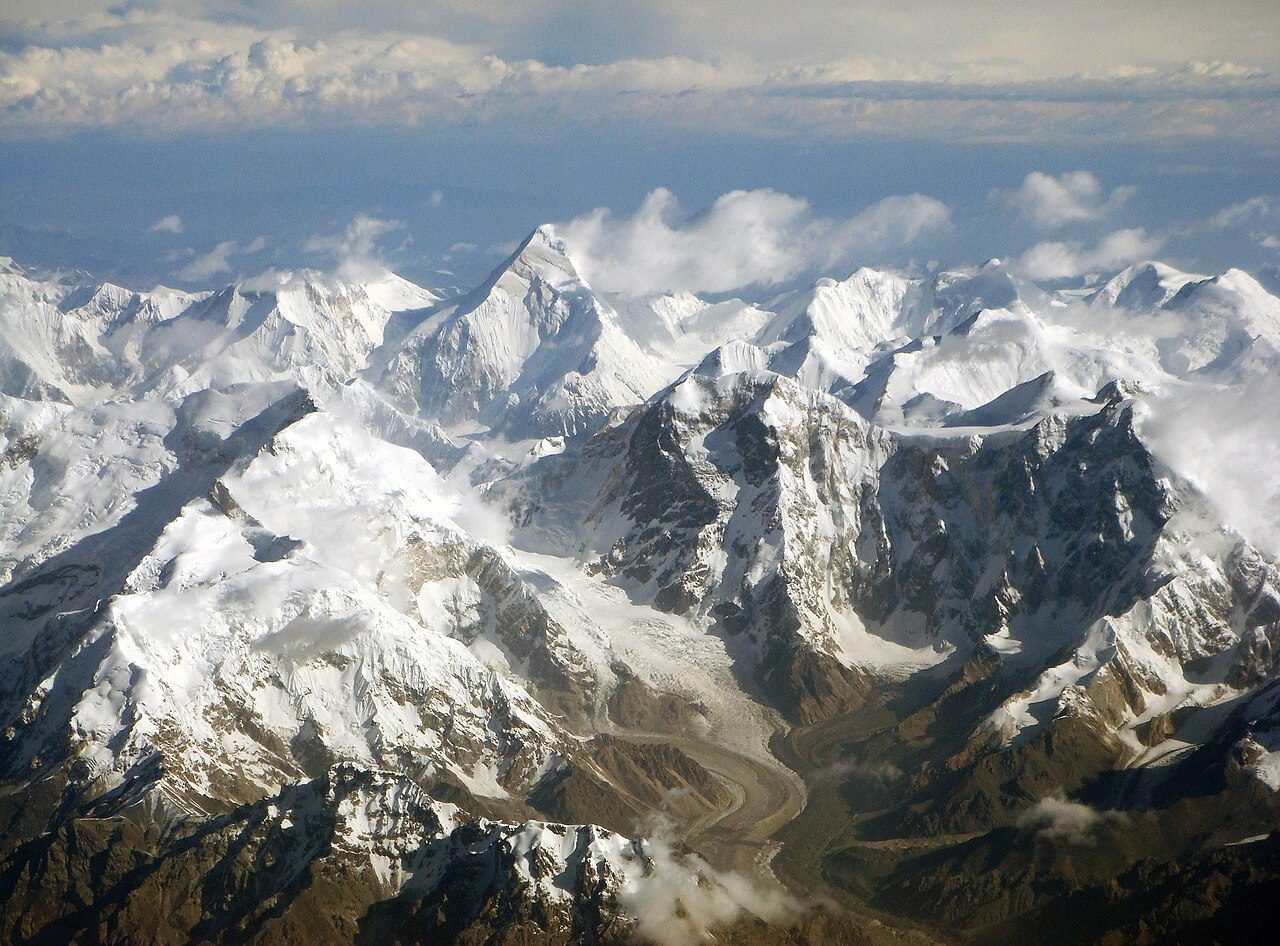
The roof of the Tianshan
Tomur Peak (托木尔峰) is the mountain almost no foreign traveler has heard of, and that is exactly why it interests the few who go. At 7,443 meters it is the highest summit of the Tianshan range, the great east-west barrier of Central Asia, and it sits on the China-Kyrgyzstan border in the far west of Xinjiang. I include it here not because it is easy to reach, it is not, but because it is the wild counterpoint to the famous peaks of the east, and because the approach takes you through a canyon and a desert town that see almost no tourists.
Most visitors will not climb Tomur; it is a serious mountaineering objective requiring permits and experience. But the Tomur area, the national nature reserve and the nearby Grand Canyon at Wensu, is reachable as a remote day or overnight trip from Aksu, and it is spectacular in a raw, undeveloped way. Our Turpan guide and the Kashgar guide cover the better-known Xinjiang stops; Tomur is the deep cut.
Where it is and why it is hard
Tomur lies in the Tomur National Nature Reserve, part of the Xinjiang Tianshan UNESCO World Heritage site inscribed in 2013, which also includes Bogda Peak near Urumqi and the Kalajun-Kuerdening grasslands. The peak itself is guarded by the Tomur Glacier, one of the largest valley glaciers outside the polar regions, and by a ring of 6,000-meter neighbors. Getting to the foot means driving from Aksu (阿克苏) south toward the border, then into the reserve on rough roads that close with weather.
The region is sensitive. It is near a national border, and foreign travelers in Xinjiang already need the paperwork our Xinjiang permit guide describes; some border-zone areas require additional notice or are off-limits without a guide. Do not attempt Tomur independently. Go through a registered Xinjiang operator who knows the current access rules, because they change.
The Wensu Grand Canyon approach
The most accessible taste of the Tomur area is the Wensu Grand Canyon (温宿大峡谷), also called the Tomur Grand Canyon, a red-rock canyon system about 70 kilometers from Aksu city. It is a maze of wind-cut sandstone towers and gorges in rust and orange, reachable by a scenic-area shuttle, with walking trails into the narrower slots. Entry runs around 30 to 60 RMB plus the shuttle, and the light on the red walls in late afternoon is the draw.
This is the realistic Tomur day trip: you will not see the snow peak from the canyon floor, but you will be in the foothills of the range, and on a clear day the high white summits are visible from the canyon rim. It is far less developed than the eastern parks, which is its charm and its challenge; bring water, sun protection, and a local driver who knows the loops, because signage is thin.
Climbing Tomur: the serious version
For mountaineers, Tomur is a glaciated objective first climbed by a Chinese team in 1956, with routes up the north and southwest faces that involve crevasse fields and high camps. Permits come through the sport-climbing authorities and the local forestry reserve, and the window is short, roughly July to August, when the weather is most stable and the glacier is passable. Costs for a supported expedition run into the tens of thousands of RMB with logistics, and it is not a trip to plan casually.
I will be honest that this section is for the few. Most travelers will be content with the canyon and the view, and that is the right ambition for the region. The peak is there, enormous and white on the horizon, and seeing it from afar is enough.
Getting there and the logistics
Aksu is the gateway, reached by air from Urumqi or by the rail and road network across Xinjiang. From Aksu city, the Wensu canyon is about an hour to ninety minutes by car; the deeper reserve and any glacier view require more time and a permitted guide. The nearest major city with international links is Urumqi, covered in our Urumqi food guide, and the wider regional food is in our Xinjiang food guide. Plan this as a side loop from a Xinjiang itinerary centered on Kashgar or Turpan, not a standalone trip.
Tomur at a glance
| Item | Detail | Cost / time |
|---|---|---|
| Tomur Peak elevation | 7,443 meters, highest of the Tianshan | Not climbed by casual visitors |
| Wensu Grand Canyon | Red sandstone canyons near Aksu | 30 to 60 RMB plus shuttle |
| Aksu to canyon | Car from Aksu city | 1 to 1.5 hours |
| Climbing window | July to August | Permit and expedition only |
| Access note | Border zone, guide and permits needed | Use a registered operator |
| Best season to visit area | May to October | Avoid winter road closures |
Quick facts
- Tomur Peak at 7,443 meters is the highest summit of the Tianshan range
- It sits on the China-Kyrgyzstan border in western Xinjiang
- The Tomur area is part of the Xinjiang Tianshan UNESCO site (2013)
- The Wensu Grand Canyon is the reachable, red-rock taste of the region
- Xinjiang border zones require permits and a registered guide for foreigners
- The climbing window is July to August; the area visit runs May to October
- Aksu is the gateway city, linked by air and rail to Urumqi
The glacier and the silence
The Tomur Glacier itself, feeding the Muzart River, is one of the largest valley glaciers outside the polar regions, and it is the source of water for much of the surrounding oasis agriculture, which is why the mountain matters beyond mountaineering. Reaching the glacier terminus requires a permitted trek from the reserve, not a day trip, and the altitude and the crevasses make it a serious undertaking. I did not go that far; the canyon and the distant white wall were enough to convey the scale. What stayed with me was the silence, the red canyon with no other visitors and a horizon of snow, a kind of empty that is rare in a country this populated. If you want China without crowds, the Tomur foothills are a place to find it, and the lack of signage and souvenir stalls is the point.
Aksu as a base
Aksu itself is an oasis city on the southern Silk Road, with a Confucian temple and a quiet Uyghur old town worth a few hours, and it makes a sensible base before the canyon. The city is green and calm compared with the desert around it, and the night market there is a good place to eat the region’s naan and grills before an early start. From Aksu you can also reach the Taklamakan desert edge and the hotter Turpan-bound road, so it works as a hub for the western Xinjiang loop rather than a one-night pass-through. Plan two nights if you want the canyon at a relaxed pace.
Frequently asked questions
Can I visit Tomur Peak as a normal tourist?
You can visit the Tomur area, specifically the Wensu Grand Canyon and the reserve foothills, as a guided day or overnight trip from Aksu. You cannot casually reach or climb the peak; that is a mountaineering objective. Treat the canyon and the distant view as the realistic experience.
Do I need special permits for Xinjiang to go there?
Foreign travelers in Xinjiang already navigate the regional rules described in our Xinjiang permits guide, and border-proximity areas like Tomur may need additional local permission or a guide. Use a registered Xinjiang operator who tracks the current access, because it shifts with security conditions.
What is the best time to go?
May to October for the canyon and the region, with July to August the only realistic climbing window for the peak itself. Winter closes the mountain roads. The red canyon is best photographed in the late afternoon light, whatever the month.
How do I get to Aksu and the canyon?
Fly or take the rail to Aksu from Urumqi; from there a car reaches the Wensu canyon in about an hour and a half. The deeper reserve needs a permitted guide. Our Urumqi guide and the Xinjiang food guide help you build the wider trip around it.
Is the area safe and tourist-ready?
The canyon is safe to walk with a driver, but it is far less developed than eastern parks, with thin signage and harsh desert sun, so carry water and do not wander the maze alone. The border sensitivity means follow your guide’s instructions on where you may go.
How does Tomur compare to other Xinjiang peaks?
It is the highest Tianshan summit and the most remote. The better-known Xinjiang sights are cultural, like Kashgar’s old city and the Kanas Lake scenery, and the Turpan grapes of the Turpan guide. Tomur is for travelers who want the empty, high, and wild edge of the range.
Can I combine Tomur with a Xinjiang food trip?
Yes, and you should, because the canyon is remote and the food is in the cities. Aksu and Urumqi have the naan, laghman, and grills covered in our Xinjiang food guide, and the Turpan stops add the grape-valley eating. Build the peak as a side loop, not the main event.
If you want Tomur and the wider Xinjiang loop planned with the permits and the food stops, we can help through the contact page. The peak is a reminder that China’s greatest mountains are not all the famous ones with ticket offices; some sit at the end of a red canyon that almost no one visits, and that is their reward.
Written by the ChinaTravelFood editorial team.
