The province that taught China to drink
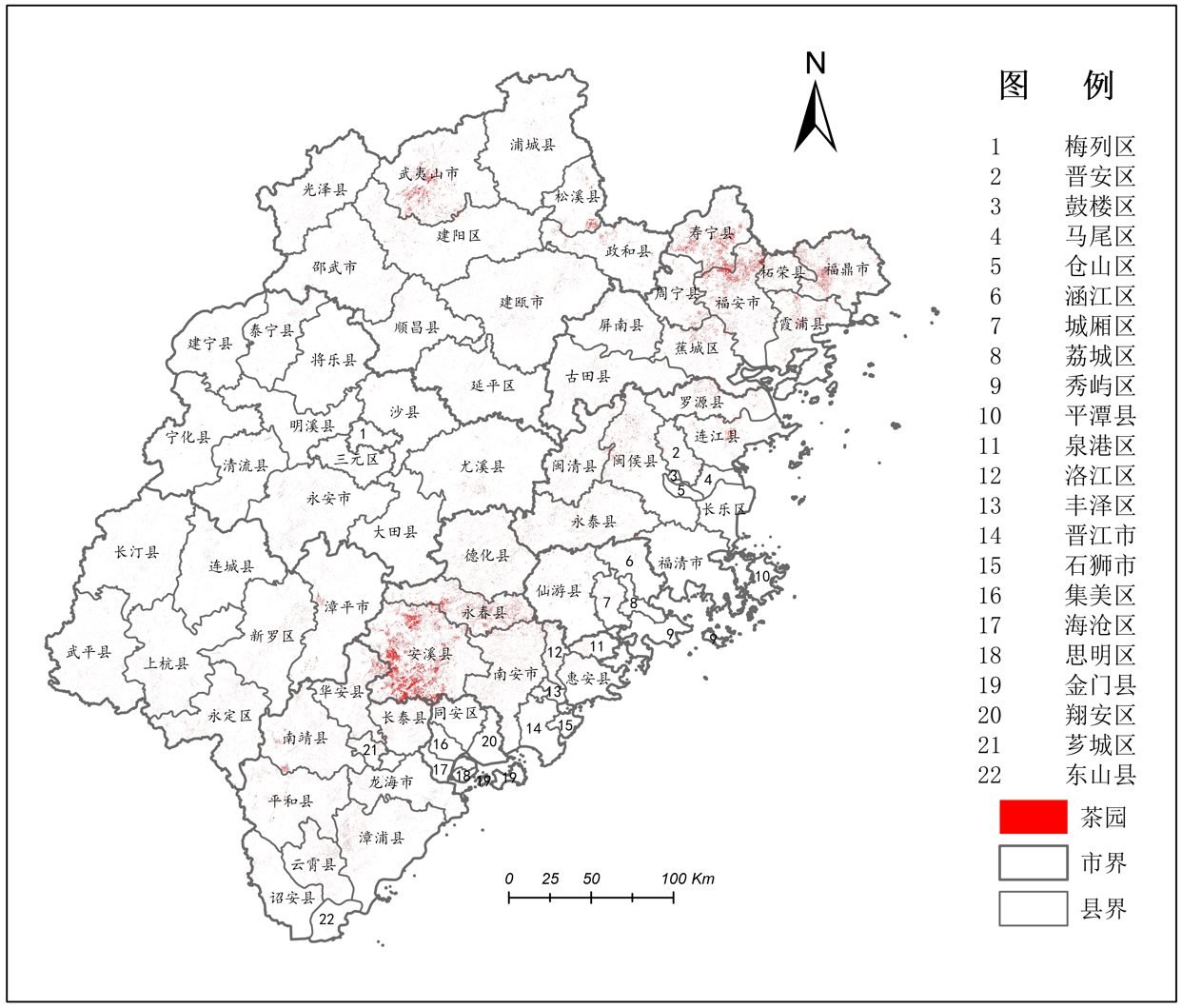
Fujian is a long, mountainous province on China’s southeast coast, and it has an outsized claim on the world’s tea. Oolong was invented here, in the hills of northern and southern Fujian, somewhere in the Ming or Qing dynasties depending on which scholar you believe. The world’s first black tea, 正山小种 (Lapsang Souchong), was made in a village called Tongmuguan inside the Wuyi reserve. White tea, the minimal-processing style that every hip cafe in Brooklyn now sells, has been produced in Fuding and Zhenghe for centuries. And the jasmine tea that Russians drink by the pot came out of Fuzhou’s scenting houses.
I first understood this on a train from Xiamen, watching the hills turn into terraced tea gardens as we climbed inland. The guy across the aisle was carrying a canvas bag of Anxi Tieguanyin for his mother, and he offered me some from a travel gaiwan. That is Fujian tea culture in one gesture: carried around, shared constantly, drunk in tiny cups. This guide maps the province’s tea traditions, the prices to expect, and how to plan a route around them. Prices are from late 2024 and will drift.
Oolong country: south and north
Fujian makes two oolong families, and they taste like different drinks. In the south, in Anxi county under Quanzhou, the style is 清香型: lightly oxidized, tightly rolled into balls, drenched in orchid fragrance. That is Tieguanyin, and the details of styles, prices, and buying are in our Tieguanyin tea guide. Anxi also grows 黄金桂 (Huangjingui, an early-sprouting fragrant variety), 毛蟹 (maoxie, a workhorse leaf used in cheap blends), and 永春佛手 (Yongchun foshou, a large-leaf oolong from neighboring Yongchun county).
In the north, the Wuyi Mountains make 岩茶 (rock tea): semi-oxidized leaves shaken hard, then roasted for hours over charcoal until they turn dark and mineral. That is Dahongpao and its cousins, covered in depth in the Dahongpao tea guide. The regional split matters when you shop: if you want fragrance, buy Anxi; if you want depth and roast, buy Wuyi. Most Chinese drinkers eventually end up with a jar of each.
White tea: the minimal style
White tea is the least processed tea in the world: pick, wither, dry. No shaking, no roasting, no oxidation steps to manage. The leaves simply dry in the sun and air, sometimes over several days, and the result is a pale, sweet, faintly hay-like brew with low astringency. Fuding (福鼎), on the northeast coast, and Zhenghe (政和), inland, are the two historic centers, and they bicker about which one is the true home of the style.
The grades run by picking standard. 白毫银针 (baihao yinzhen, silver needle) is buds only, downy and expensive. 白牡丹 (bai mu dan) is bud plus one or two leaves. 寿眉 (shou mei) is the later, larger-leaf picking, and it is what most people drink daily. Fujian white tea has a folk saying attached to it, “one year tea, three years medicine, seven years treasure,” and the aged-tea market has boomed since the mid-2010s, which also means the fake-aged problem is worst here. If you buy aged white tea, buy it from a named Fuding shop with a stated year, not from a mall counter with a story.
Black tea was born here
Before Assam, before Ceylon, the world’s black tea was Fujian’s. The standard story: in the late Ming, troops passed through the Tongmuguan (桐木关) area during the harvest and tea that could not be processed in the usual way was dried over pine smoke, producing a dark, smoky leaf. Whatever the exact origin, the Wuyi highlands were exporting heavily oxidized tea to Europe by the seventeenth century through the East India companies, under the name “Bohea,” a corruption of the local pronunciation of Wuyi. That is why the English word for the category, black tea, traces back to a mountain valley in northern Fujian.
正山小种 (Lapsang Souchong, “small leaf of the true mountain”) is still made in Tongmuguan, and it splits into the traditional pine-smoked version and the modern unsmoked version, which most export markets prefer. Two other Fujian black teas matter: 坦洋工夫 (Tanyang Congou) from Fu’an, a sweet, tippy black tea that won an award at the 1915 Panama-Pacific exposition, and 政和工夫 (Zhenghe Congou) from Zhenghe county. All three are worth a cup if you like black tea with body rather than breakfast blends.
Jasmine: Fuzhou’s scented export
Fuzhou, the provincial capital, is the jasmine tea capital. The process, 窖制, is a repeated scenting: fresh jasmine flowers are layered with green tea base overnight, the flowers are removed in the morning, and the cycle repeats, sometimes nine times for top grades. Fuzhou’s jasmine is exported in enormous quantity, and a lot of it ends up in Russia and Central Asia, where jasmine tea is the default teahouse drink. If you have only ever had jasmine from a can, the real thing, brewed in a glass so you can watch the leaves move, is a different category of drink.
What each tea costs
| Tea | Type | Home region | Price range per 500 g (2024) |
|---|---|---|---|
| Tieguanyin (Anxi) | Light oolong | Anxi county, south Fujian | 50 to 500 yuan |
| Dahongpao, rock tea | Roasted oolong | Wuyi Mountains, north Fujian | 200 to 2,000+ yuan |
| 白牡丹 white tea | White | Fuding and Zhenghe | 60 to 400 yuan |
| 白毫银针 silver needle | White, buds only | Fuding | 300 to 1,500 yuan |
| Lapsang Souchong | Black | Tongmuguan, Wuyi reserve | 100 to 600 yuan |
| Jasmine (Fuzhou) | Scented green | Fuzhou | 20 to 200 yuan |
These are wide bands because the market spans everything from machine-harvested commodity leaf to competition-grade single-bush lots. For a traveler, the useful anchor is the middle: 150 to 400 yuan per 500 g buys genuine, named-origin leaf in every category, and tasting before you buy is the rule everywhere.
How Fujian people actually drink
In southern Fujian and Chaoshan, tea means 工夫茶 (gongfu tea): a small pot, three cups in a triangle, leaf packed to the brim, infusions timed in seconds, poured for everyone in turn. The first pour is a rinse, not a drink. The host pours until the cups circle back to themselves, and the unspoken rule is that nobody nurses a cup while the pot is still moving.
Tea comes with 茶配, snacks that exist to be eaten with tea: 花生 (peanuts), 瓜子 (sunflower seeds), 蜜饯 (candied fruit), 绿豆饼 (mung bean cakes), and in Xiamen the famous 馅饼 and 酥糖 from shops like 黄则和 and 阿吉仔. On the eating side more broadly, the Fujian food trail covers the region’s kitchens, and the Xiamen food guide covers the coastal city’s snack scene, which runs on tea breaks. Tea competitions, 茶王赛 (cha wang sai, “tea king contests”), are a big local spectacle in Anxi and Wuyi, with winners’ lots auctioned for prices that make outsiders blink.
A tea route through the province
Fujian’s tea regions line up in a rough line, and you can hit them in a week. Start in Fuzhou for jasmine and the old scenting houses. Cross to the coast for Xiamen, then drive inland to Anxi for Tieguanyin country and the Qingshui temple hill. From there, cut north to Wuyishan, the reserve town with the mother trees, the Nine Bend Stream raft, and the tasting rooms of Tianxin village. End in Fuding for white tea and the coastal hills of Taimu Mountain.
Timing: April and May are the spring picking season everywhere, and the best window to see the work. Autumn, September into October, is the second picking in Anxi and the most fragrant tea of the year. Practicalities of arranging visits are in the tea tours guide, and if you want the province’s teas placed in the national picture, our Chinese tea overview does that.
Fujian is the one place in China where a tea-only trip makes sense: four regions, four completely different drinks, all within a day’s travel of each other. If you want help designing that route, or fitting tea stops into a longer coastal trip, get in touch through our contact page and we can sketch something custom.
Frequently asked questions
What is Fujian most famous for in tea?
Oolong, both the light fragrant style of Anxi (Tieguanyin) and the dark roasted rock tea of Wuyi (Dahongpao). The province is also the origin of black tea and white tea, and the center of jasmine scenting.
What is the difference between white tea and oolong?
White tea is just withered and dried, with no oxidation or roasting, so it stays pale, sweet, and delicate. Oolong is semi-oxidized, sometimes roasted hard, so it ranges from floral and green to dark and mineral. They share only the same plant.
Did black tea really come from Fujian?
The category does. The Wuyi highlands were exporting heavily oxidized tea to Europe by the 1600s as “Bohea,” a corruption of Wuyi, and the smoke-dried Lapsang Souchong of Tongmuguan is the direct ancestor of today’s black teas.
Which Fujian tea should a beginner buy?
A mid-grade Anxi Tieguanyin for fragrance, and a medium-roast Wuyi rock tea for depth. Between them they cover the full range of Chinese oolong, and both are drinkable daily at 200 to 400 yuan per 500 g.
Can I visit the tea regions independently?
Yes. Anxi is a 90-minute drive from Xiamen, Wuyishan has its own high-speed rail station and airport, and Fuding is reachable by train along the coast. Homestays and tasting rooms in Tianxin village near Wuyi welcome walk-ins.
How should I store white tea?
Sealed, dry, and away of strong odors. Fresh white tea keeps a year and improves for several; deliberately aged lots want a cool, dark cupboard. Watch for “twenty-year aged” white tea sold cheap, since the aging boom has attracted a lot of relabeled tea.
Is jasmine tea from Fujian the same as the jasmine I know?
It is the original. Fuzhou jasmine is scented with real flowers over multiple nights, so the aroma comes from the flower rather than a flavoring, and the base is usually a decent green tea. Brew it in a glass and the difference is obvious.
Written by the ChinaTravelFood editorial team.