What Qinghai Lake is, in plain terms
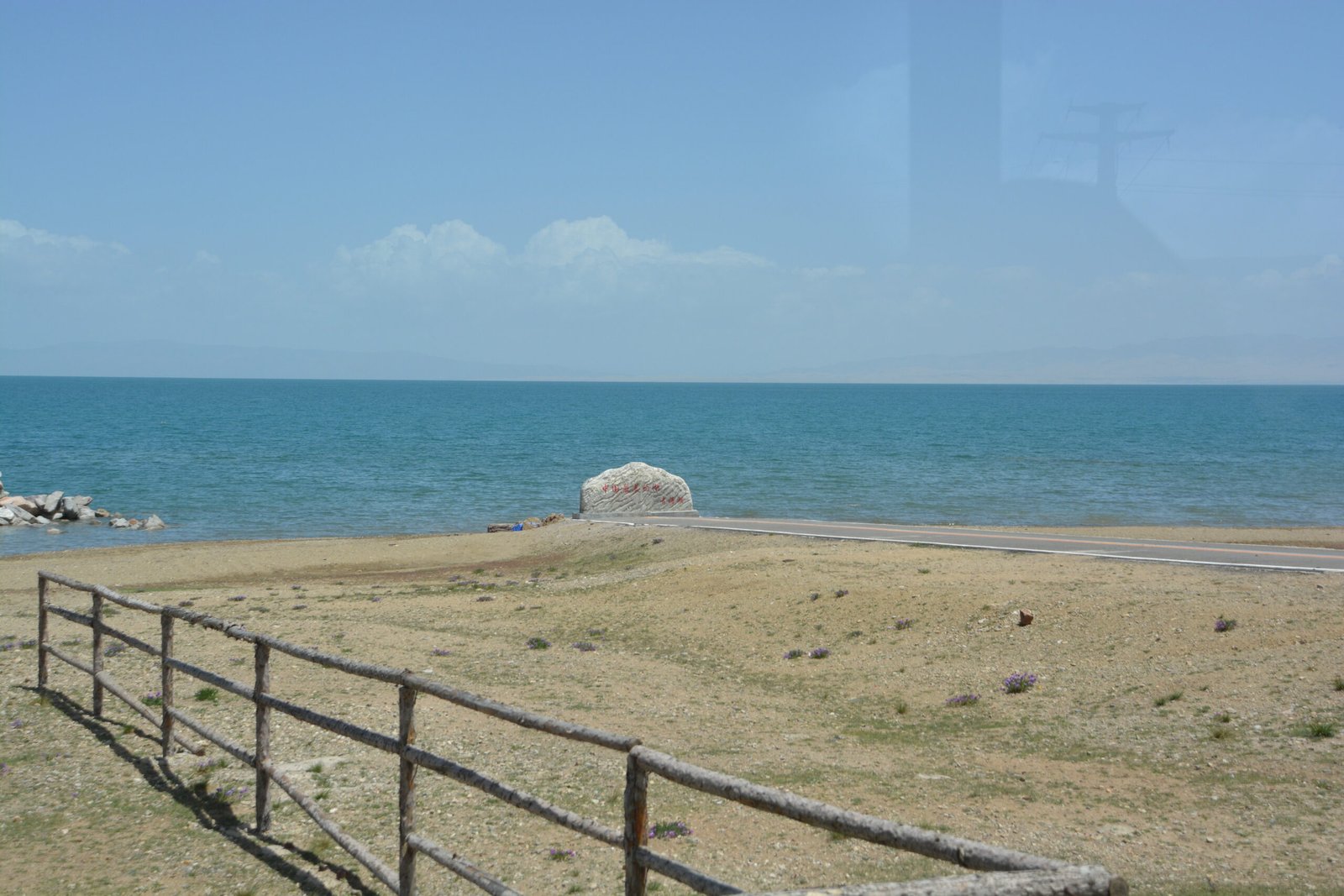
Qinghai Lake is the largest lake in China, a saltwater body of roughly 4,500 square kilometers sitting at about 3,200 meters on the northeast edge of the Tibetan Plateau, two to three hours by road from the provincial capital Xining. The Chinese name translates as “Blue Sea,” and on a clear morning the water earns it: the color runs from steel to cobalt to near-white where salt crusts the shallows. I first stood on the shore at Erlangjian in early July 2019 with my jacket zipped to the chin, squinting into the glare. The place is made of weather more than monuments, and the people who love it come for the light, the gulls, the canola fields that ring the south shore in July, and the odd feeling of standing very high on the roof of a continent.
This guide covers what a first visit actually involves: the month to pick, the ways in from Xining, the shoreline stops worth your time, the lake loop by bicycle, and the altitude and sun questions that nobody warns you about. Prices below are what I saw or paid in 2024 and 2025, and entry fees in China change often, so confirm current numbers through official channels before you book anything.
When to go: the canola window and the bird season
July is the headline month. Fields of rapeseed bloom along the south shore in a band maybe ten kilometers wide, and for a couple of weeks the whole lake wears a yellow collar against blue water and, if you are lucky, snow on the Datong Mountains to the north. Peak bloom runs roughly from early July to the first week of August. That is also when hotel prices on the lake double and the 151 base area gets busy, so book beds in Xining or Jianguo town well ahead if you have fixed dates.
September and October are my quiet favorite. The crowds thin, the air is at its clearest, and the light turns long and gold. The trade is cold nights and a real chance of wind. Bird Island on the northwest shore is most alive from May to July, when bar-headed geese and brown-headed gulls nest on the islets and the viewing platforms fill with spotting scopes; the island is closed for long stretches outside the season to protect the colonies, so check the current open status before you drive out. Winter freezes the lake’s edges and empties the guesthouses; it is photogenic and hard work. For a broader look at how the season stacks up across the country, our piece on the best time to visit China covers the trade-offs month by month.
Getting there from Xining
Almost everyone bases in Xining, a compact high-altitude city with good food, real hotels, and the region’s only airport with many flights. From Xining West Long-Distance Bus Station, buses run to Jianguo town and the 151 scenic area in about two and a half to three hours, roughly 40 to 60 yuan depending on the route and season. They leave through the morning and thin out by early afternoon, so go early and confirm the last return departure before you set out.
The Lanzhou-Xinjiang high-speed line stops at a station named Qinghai Lake, but the station sits well inland from the shore, and you will still need a local bus or taxi for the last stretch. That said, it is the comfortable option if you are arriving by train from Lanzhou, Dunhuang, or points east. A chartered car with driver out of Xining runs about 400 to 700 yuan a day including fuel, which stops making sense for solo travelers and starts making sense the moment you are three people with a full lake loop in mind. Self-driving is straightforward on the G109 ring road, and the lake is a half-day of easy highway from Xining if all you want is the photo.
| Way in | Time from Xining | Cost (2025, yuan) | Good for |
|---|---|---|---|
| Long-distance bus to Jianguo or 151 | 2.5 to 3 hours | 40 to 60 | Budget travelers, no rush |
| High-speed rail to Qinghai Lake station plus taxi | About 1.5 hours to the station, then 30 to 60 minutes more | 60 to 120 total | Comfort, train-based itineraries |
| Chartered car with driver | 2.5 to 3 hours | 400 to 700 per day | Groups, photographers, full loop |
| Self-drive on the G109 ring | 2.5 to 3 hours | Fuel plus tolls | Cyclists with a support car |
The shoreline stops worth your time
Erlangjian and the 151 base
Erlangjian, near what everyone calls the 151 base, is the main ticketed waterfront. The entry fee has hovered around 90 to 100 yuan in recent years, and for that you get wooden walkways out over the water, a small boat option, and the classic postcard view of open lake with fishing-netting platforms. Is it worth the ticket? On a still morning, yes; on a gray windy afternoon, it feels thin. The area around the gate has simple hotels and noodle shops, and it is where the buses drop you.
Bird Island
Up on the northwest shore, Bird Island is the serious wildlife stop. When the colonies are active, the platforms give you close looks at nesting geese and gulls without disturbing the ground nests, and the light in the early morning is the best on the whole lake. Access is by road from the north side, and the seasonal closures are real, not a formality. If birding is the point of your trip, build a day around it and ask locally the week before, because the opening dates shift with the breeding calendar.
Chaka Salt Lake
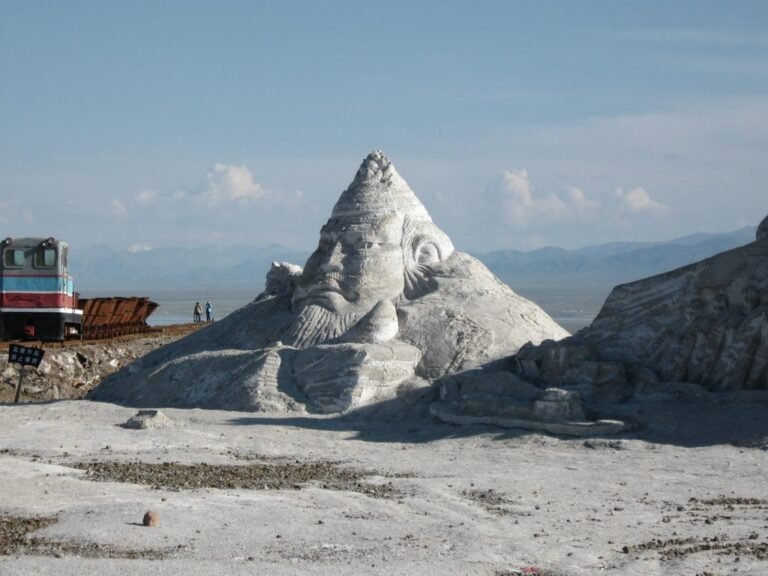
Two hours south of the lake by road, Chaka Salt Lake is the mirror-flat salt flat that appears in half the travel photography from Qinghai. There is a small train from the gate, a plank walk out over the crust, and rental boots for standing in the shallow water. It is touristy and I did not love the crowds, but at 7 a.m., before the buses, the reflections are worth the early start. Go straight there from a night in Chaka town rather than trying to loop it with the main lake in one day.
Heimahe and the south-shore fields
Heimahe, the “Black Horse River,” is the sunrise spot on the southwest shore, a few simple guesthouses, and a jetty for photos when the water is glass. In July the canola fields between Heimahe and Jiangxigou are the reason the month sells out. Nobody charges you to stand on the road shoulder and look, which is the honest way to enjoy them; the formal viewing areas charge a small fee and save you the parking argument.
Cycling the lake: the full 360-kilometer loop
The loop around Qinghai Lake is about 360 kilometers, and the standard version takes four days. I did the east-shore section only, from the 151 base east toward Heimahe and back, roughly 80 kilometers a day, and even that partial version broke me a little in the best way. The wind is the story of this ride: afternoons on the west shore push against you like a hand on your chest, and mornings are the only sane time to cover distance. The annual Qinghai Lake International Cycling Race in July uses the same roads, and the presence of support vehicles that week makes it the easiest time to ride the full circle if you want logistics handled.
| Stage | Distance | Notes |
|---|---|---|
| Day 1: 151 base to Heimahe (east shore) | About 80 km | Canola fields in July; sunrise at Heimahe |
| Day 2: Heimahe to the northwest shore | 60 to 90 km | Rolling pasture; wind picks up |
| Day 3: North shore to Gangcha | About 90 km | Headwind country; grasslands and yaks |
| Day 4: Gangcha back to Xining direction | 70 to 100 km | Final climb over Datong range foothills |
Bikes rent in Xining and at Jianguo for roughly 60 to 120 yuan a day for a basic mountain bike, more for anything decent. The honest advice: bring your own saddle if you ride a lot, carry a windshell even in July, and give yourself a rest day if the forecast turns. This is not the high Himalayas, but at 3,200 meters your lungs notice every climb.
Altitude, sun, and how the body reacts
At 3,200 meters the lake is high enough to matter and low enough that most people shrug it off. The pattern I have seen on trips here: a headache the first night, shallow sleep, and then fine by day two. Go slow on arrival day, drink more water than you think you need, and be careful with alcohol on the first evening, because the combination of altitude and a celebratory drink is how people ruin their second day. If you have heart or lung conditions, or you are nervous, our overview of altitude sickness covers the symptoms worth taking seriously and the ones that are normal.
The sun is the other trap. The air is thin, the light bounces off water and salt, and a cloudy day still burns. Sunscreen, a hat with a brim, and real sunglasses are not optional. The wind deserves respect too; it comes up most afternoons and turns 15 degrees into 5 in minutes.
Food on the high plateau
Food around the lake is simple and meat-forward, which is what you want at altitude. Yak yoghurt is the local signature: thick, tart, sold in tubs, and eaten with a spoon of highland barley sugar. Hand-grabbed lamb, boiled and eaten with the fingers, shows up on Tibetan-style tables, and the roadside Tibetan places usually throw in butter tea, which is an acquired taste worth acquiring. In Xining itself, the Hui Muslim community runs some of the best noodle shops in northwest China, and a bowl of beef noodle soup before the bus north is a fine plan. One thing to refuse: the naked carp, a fish endemic to the lake that is protected and should not appear on your plate. For a deeper look at what the plateau eats across the border, our guide to Tibetan food covers tsampa, yak, and butter tea in more detail.
If you want a comparison stop for scenery, Xinjiang’s Kanas Lake is the other great high-altitude water of the country, forested instead of bare, and the two make an interesting pair in the same trip year. Accommodation on the lake itself is basic, so for a mid-range night, our notes on budget stays in smaller cities translate well to Xining and Jianguo.
Quick facts
- Qinghai Lake sits at about 3,200 meters, and its water is saltwater, not fresh.
- The lake is the largest in China, roughly 4,500 square kilometers at high water.
- Canola fields peak on the south shore in July; Bird Island colonies run May to July.
- The full cycling loop is about 360 kilometers, four standard days.
- Xining is the gateway: bus, high-speed rail, charter, or self-drive all work.
- Sun and wind are the real hazards, more than altitude for most visitors.
Frequently asked questions
Is one day enough for Qinghai Lake?
For the photo and the feeling, yes. A day trip from Xining gets you to Erlangjian and back with a stop at the fields. For the cycling, the wildlife, or the salt flats, budget two to four days.
What is the best month to visit?
July for canola and energy, September or October for clear light and thin crowds. Winter is beautiful and Spartan; the lake edges freeze and many guesthouses close.
Do I need to worry about altitude at 3,200 meters?
Most travelers feel a mild headache and poor sleep on night one, then adjust. Take it easy on arrival day, skip the drink, and descend if symptoms worsen rather than improve.
Can I visit Chaka Salt Lake and Qinghai Lake in one day?
Technically yes with a chartered car, but it is rushed. Chaka is two hours south of the lake, and the mirror reflections need morning light. Two days is the better plan.
Is the area good for family travel?
The lake itself is easy: flat roads, short walks, boats. The cycling is the hard part, and nobody should put a young child on a 90-kilometer stage. For family-specific logistics, our guide to family travel China covers the wider picture.
What should I pack for a July visit?
A warm layer for evenings and wind, strong sun protection, and a windproof jacket. Summer days are mild and summer nights are cold at this elevation.
Planning a Qinghai route
Qinghai Lake sits at the start of the classic Qinghai-Tibet and Silk Road corridors, and it pairs naturally with Xining’s food, Chaka’s salt flats, and, if you have a week, the train west toward Dunhuang or south toward Yushu. Tell us the month you have free, whether you want to ride, drive, or simply look, and how many days you can spare, and we will build the route around the weather rather than against it. The lake rewards travelers who move with the wind instead of fighting it.
Written by the ChinaTravelFood editorial team.