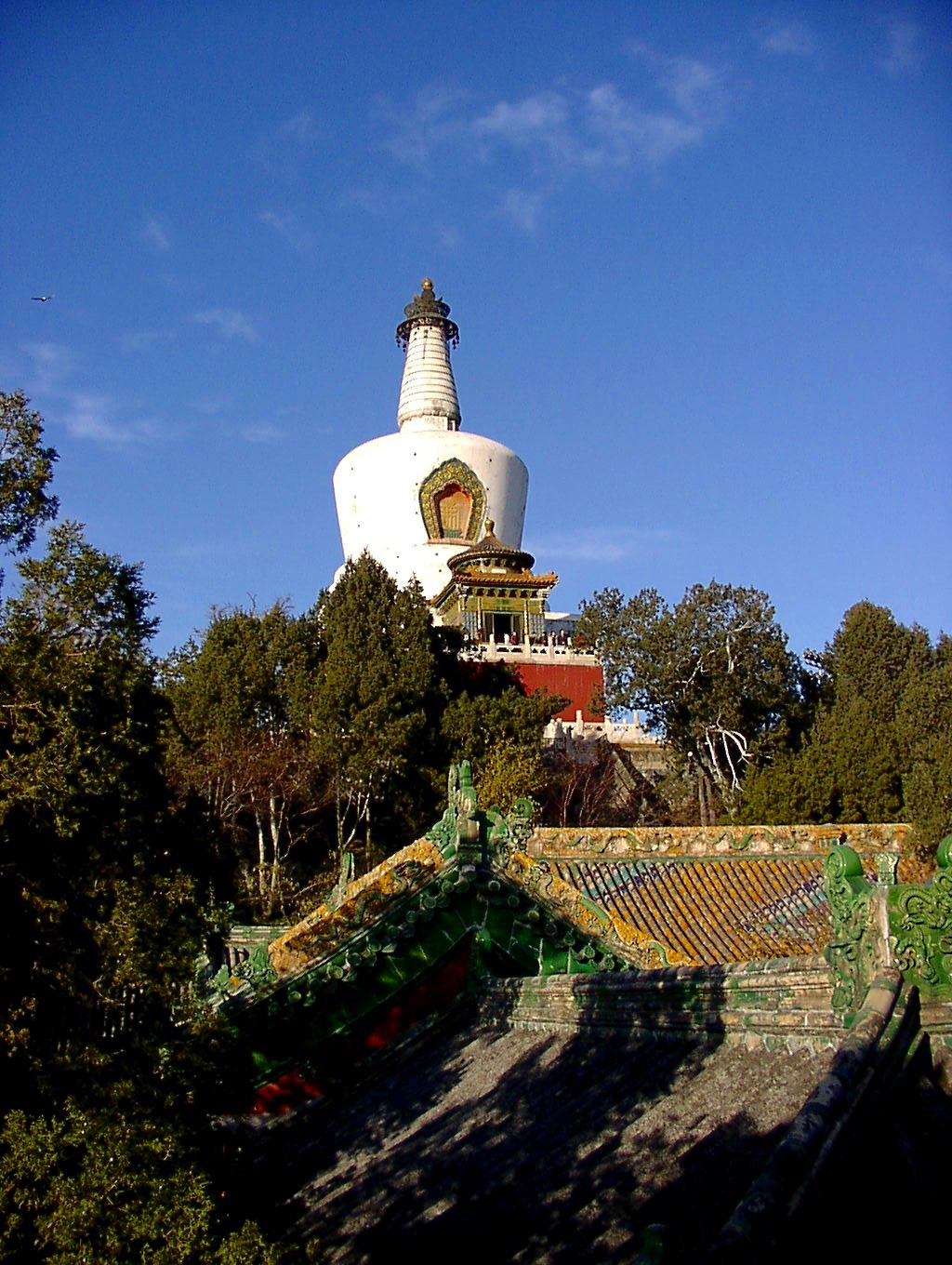
Why Beihai beats the crowded Beijing gardens
Beihai Park is the imperial garden I send people to when they have already done the Forbidden City and want somewhere to breathe. It sits immediately northwest of the Forbidden City, wraps around a lake, and carries a thousand years of layered gardens on top of each other. A Liao dynasty retreat, a Jin dynasty palace lake, a Yuan dynasty imperial park, then Ming and Qing remodeling on top of that, and finally a public park opened in 1925.
The reason I prefer it to the alternatives is simple: it is walkable in a morning, it is central, and unlike the Summer Palace it does not require half a day of transport and crowd management. You can do Beihai at eight in the morning with the locals doing tai chi, then walk into the hutongs for lunch.
Before you go in: the Round City
Most people walk straight past the south gate structure called the Round City, which is a mistake. It is a small fortified terrace sitting outside the main park, and two things inside it are worth the few extra minutes.
The first is a vast black jade bowl known as the Duyushan, made in 1265 for Kublai Khan. It is enormous, dark green, and carved with sea creatures. After the Yuan fell it ended up in a monastery where, according to the story guides love, monks used it to store pickles. It was identified and recovered in the Qing and given a pavilion of its own. Look at the rim and imagine it full of brine.
The second is an old pine tree that the Qianlong emperor is said to have given an official title, on the grounds that it provided useful shade. Naming a tree a marquis is exactly the kind of thing an eighteenth century emperor did, and the tree is still there.
The White Dagoba and Jade Flower Island
The white stupa on the hill is the image everyone associates with Beihai, and it is visible from a long way off. It was built in 1651, during the Shunzhi reign, on the occasion of the Fifth Dalai Lama’s visit to Beijing, and it replaced an earlier hall on the same spot. It is Tibetan in form, around 36 metres tall, and it dominates the island called Jade Flower.
Climb to the terrace below it. The path up is short but steady, with gates, rockeries and small halls on the way, and the reward is the view south over the lake toward the Forbidden City’s golden roofs and, on a clear day, the outline of the city beyond. This is one of the best free-with-entry views in central Beijing.
The dagoba was damaged in the 1976 Tangshan earthquake and repaired afterwards, which is worth knowing because it explains why some of the detailing looks newer than the rest.
The island itself has more than the stupa: rock gardens, the Yuexin Hall, a corridor of stele inscriptions, and the Fangshan restaurant on the eastern side. Give it a full hour rather than sprinting up and down.
The Nine-Dragon Wall and the north shore
On the north side of the island, near the bottom of the slope, is the Nine-Dragon Wall, a glazed tile screen built in 1756. It is about 27 metres long and covered in coloured dragons in relief. There are three famous nine-dragon walls in China, the other two being in Datong and inside the Forbidden City, and this one is the only one that is not part of a palace or mansion. Count the dragons if you want; the number usually quoted includes the small ones on the caps and edges.
Then cross to the north shore. This is where the park relaxes:
| Section | What it is | Why go | Time |
|---|---|---|---|
| Round City | Fortified terrace at the south gate | Kublai Khan’s jade bowl and the titled pine | 20 minutes |
| Jade Flower Island and White Dagoba | The hill and its 1651 Tibetan stupa | The view, and the reason the park looks the way it does | One hour |
| Nine-Dragon Wall | 1756 glazed tile screen | The finest of three in China | 15 minutes |
| Five-Dragon Pavilions | Linked pavilions on the north shore | Sitting by the water, watching boats | 20 minutes |
| Jingxin Zhai | A walled garden within the park | Quiet, few tour groups, good rockwork | 30 minutes |
| Western Heavens | A large hall complex in the northwest | Scale, and usually empty | 20 minutes |
| The lake | Pedal boats in season, ice in winter | The reason to come back in a different month | 30 minutes |
Jingxin Zhai, on the north side, is the one most visitors miss and the one I would prioritise if the park is busy. It is a garden within a garden, with pools, rockeries and a small theatre, and it absorbs people so effectively that a crowded park day still feels quiet inside it.
Boats, ice and when to come
In the warm months the lake fills with pedal boats and larger craft, and hiring one for half an hour is a good way to see the island from the water. Winter turns the lake into one of the city’s traditional skating spots, and while the organised rinks have come and gone with regulations, the frozen lake is still the reason locals come in January.
On timing, my preference is early. The park opens around six in the morning in summer and a little later in winter, and between six and eight you get the regulars: tai chi groups, calligraphers painting on the paving with water, people swimming in the lake in summer, musicians. By ten the tour groups arrive and the character changes.
Autumn is the best season. The willows turn, the light is clean, and the temperature suits walking. Spring brings blossom and crowds. Summer is hot and humid but the lake helps.
Tickets, hours, and getting there
Entry to the park has been cheap by international standards: around 10 yuan in the main season and about half that in the winter months as of 2024, with combination tickets covering the island, the Round City and the smaller halls for roughly twice the base price. Park pricing in Beijing does get revised, so check the current figure at the gate or through your hotel.
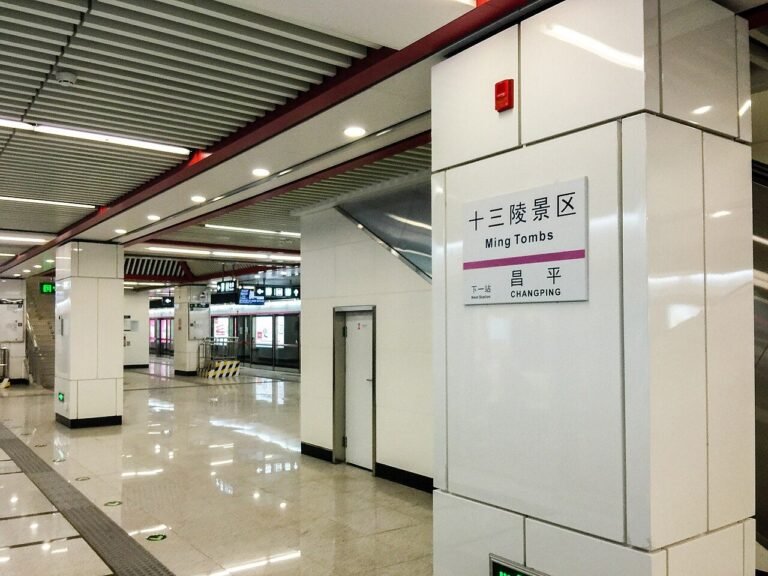
Hours run from early morning to about nine or ten at night depending on season, and the last entry is earlier than closing. The park is easy to reach on the metro: the line running to Beihai North puts you at the north gate, which is the better entrance if you want to start with the quiet gardens. Walking in from the south gate works well if you are coming from the imperial palace quarter or Tiananmen Square.
One practical note: the adjacent Zhongnanhai compound to the south and west is the group of lakes that used to be part of the same imperial complex. It is not open and photography in that direction is not a good idea. Stick to the park.
Eating in and around the park
Inside the park there is Fangshan, the restaurant on Jade Flower Island opened in 1925 by cooks who had worked in the imperial kitchens. It serves the imperial-banquet style of cooking, and it is famous for pea flour cakes, small squares of sweetened pea paste that are far better than they sound. It is a tourist restaurant with tourist prices, and I would go for a pot of tea and a plate of cakes rather than for a full banquet.
Outside is where I would actually eat. The lanes east and north of the park run into Shichahai and the Beijing hutongs, and that is the best food walking area in the old city. Around Houhai you get roast duck places, old snack shops, noodle counters and, in the evening, a lot of bars aimed at visitors that I would skip.
For Beijing specifics, Beijing food covers the neighbourhoods properly, and if duck is on your list, Peking duck explains the difference between the big-name rooms and the neighbourhood ones.
Quick facts
- Location: immediately northwest of the Forbidden City, central Beijing
- Imperial garden since the Liao dynasty; public park since 1925
- White Dagoba built 1651, about 36 m tall, Tibetan stupa form
- Nine-Dragon Wall built 1756, roughly 27 m long
- Entry around 10 yuan in the main season as of 2024, combination tickets about double
- Opens around 6am in summer; early morning is the best time
- Metro to Beihai North for the quieter north gate
- Allow two to three hours at a relaxed pace
- Pedal boats in summer, frozen lake in winter
Frequently asked questions
How long do I need at Beihai Park?
Two hours covers the island, the Nine-Dragon Wall and a walk along the north shore. Three if you add Jingxin Zhai and a boat or a long tea stop. It is not an all-day park.
Is it better than the Summer Palace?
Different, not better. Beihai is central, compact and easy to fit around other sightseeing. The Summer Palace is bigger, further out, and needs half a day. If you only have one, take Beihai for convenience and the Summer Palace if you want scale and Kunming Lake.
Can I combine it with the Forbidden City on the same day?
Yes, and it works well. Do the Forbidden City in the morning, exit the north gate, climb Jingshan for the view over the palace roofs, then drop into Beihai from the south for the afternoon.
Is there an entrance fee for children or seniors?
Concessions exist and vary by age and residency. Check at the ticket window, and bring ID if you think you qualify.
Can I rent a boat?
Yes, in the warmer months. Pedal boats and electric boats operate on the lake and the queues are longest at weekends and on public holidays.
Is the park open in winter?
Yes, with shorter hours and reduced entry price. The lake freezes and the park takes on a completely different character. Dress properly; Beijing winter wind is no joke.
Where is the best photo spot?
The terrace below the White Dagoba looking south across the lake, ideally in the late afternoon. The Five-Dragon Pavilions from the opposite bank is the second one.
Are there toilets and places to sit?
Both, and more of them than you would expect. Tea houses around the lake charge a premium for the location, which is usually worth it once.
Fitting Beijing together
Beihai works best as the hinge between the palace quarter and the hutong neighbourhoods: imperial Beijing in the morning, ordinary Beijing in the afternoon, and dinner somewhere in the lanes. Sequencing that well, and knowing which meals to book and which to walk into, is most of the work of a Beijing trip. If you would like help putting a route together around what you want to eat and see, reach out through the contact page with your dates and how many days you have. We plan custom food-and-travel routes across China.
Written by the ChinaTravelFood editorial team.