What Peking duck actually is
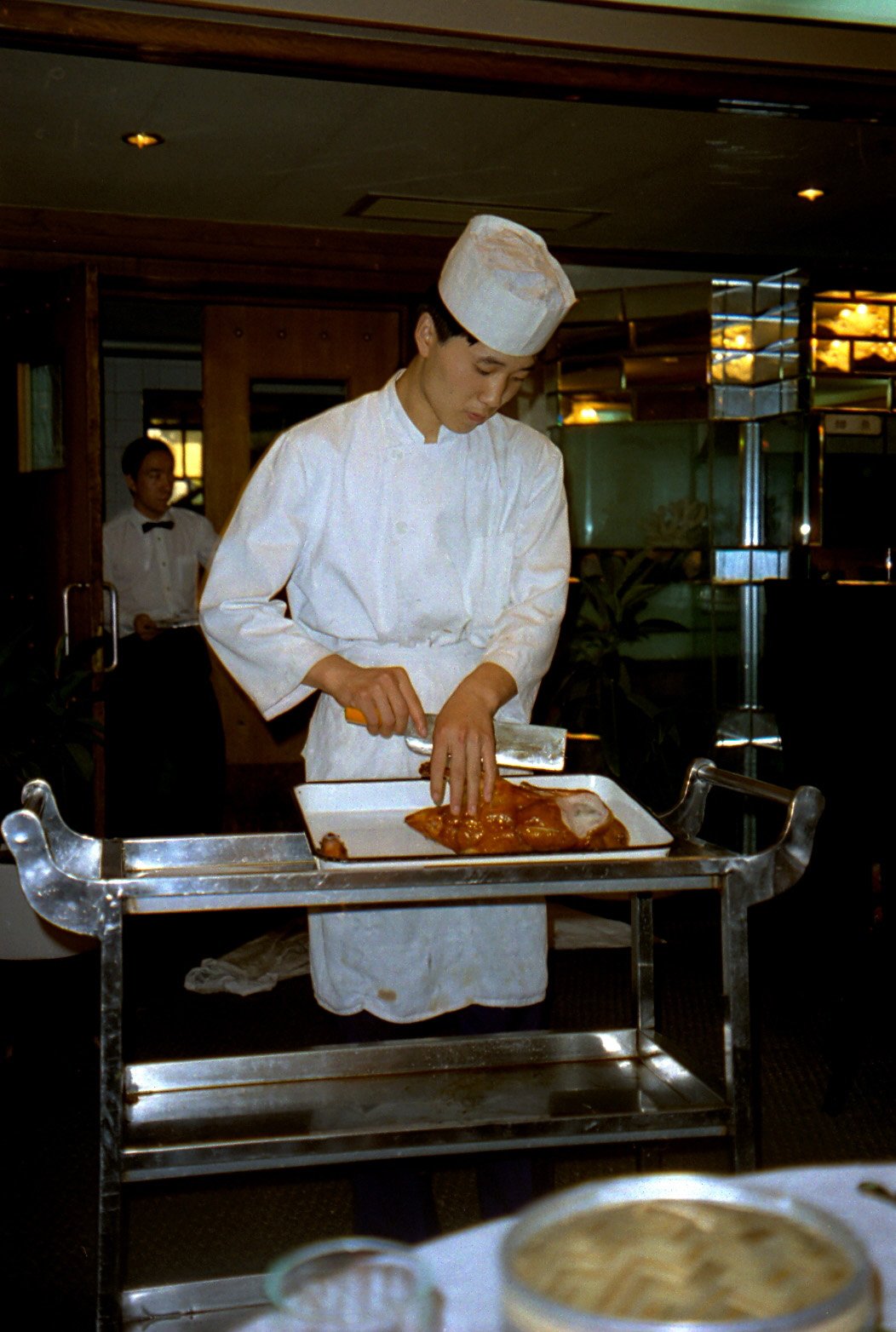
Peking duck is the dish most foreigners name first when you ask what Chinese food they know. Done well, it is not really one dish but a small ceremony: a roasted duck brought to the table, carved in front of you, and eaten by wrapping shards of crisp skin and tender meat in a thin pancake with scallion, cucumber, and a sweet bean sauce. The first time I ate it properly, in a Beijing restaurant with a lazy rotating fan and a carver who treated the bird like a violin, I understood why people travel for it.
The bird itself is a specific strain, raised to put on fat under the skin rather than muscle. That fat layer is the point. During roasting it renders and lifts the skin away from the meat, leaving a sheet of lacquered crispness that shatters when you bite it. The meat underneath stays moist.
A short, useful history
The dish comes from the Ming dynasty, when roasting techniques developed in the area around Nanjing and later Beijing. Two old brands still define the conversation. Quanjude opened in 1864 and built its name on a closed-oven, coal-roasting method that gives the skin a deep mahogany color. Bianyifang claims earlier roots, dating its style to 1416, and uses an open, enclosed-roaster method. Both are tourist magnets today, and both are perfectly good, but they are not the only game in town.
How the duck is made
The steps matter because they explain the price and the wait.
- The duck is inflated with air between skin and flesh so the skin separates as it cooks.
- It is scalded, coated in a maltose syrup, and hung to dry, often overnight, so the skin tightens.
- It is roasted in a hot oven, traditionally fired with fruit wood such as pear or jujube, which adds a faint sweetness.
- At the table a cook carves it, usually into roughly 100 slices, keeping the skin attached to a sliver of meat wherever possible.
Some places also serve the frame afterward as a soup or stir-fry. Ask when you order; not every restaurant includes it.
Eating it the right way
You get a stack of thin pancakes, a dish of mashed scallion and cucumber batons, and a small bowl of sweet bean sauce (tianmianjiang). The move is: lay a pancake flat, dab on sauce, add a few slices of duck with skin, drop on scallion and cucumber, fold the bottom up and roll the sides in. Eat it in two or three bites. Don’t overstuff the pancake or it tears.
A detail I like: at better tables they bring a small dish of white sugar so you can eat a piece of pure crisp skin with sugar, the way old Beijingers do. Try it once before you judge it.
Where to eat it, and what it costs
Prices move, so treat the table as a planning guide and check the current menu when you arrive. These are mid-2024 ranges for a whole duck.
| Restaurant | Style | Rough price per duck |
|---|---|---|
| Quanjude (multiple branches) | Closed-oven, classic, touristy | ¥280-400 |
| Bianyifang | Open-roaster, older method | ¥260-380 |
| Da Dong | Refined, lighter “super lean” duck | ¥400-600 |
| Siji Minfu | Modern Beijing, easier reservations | ¥300-450 |
| Local neighborhood roaster | No ceremony, locals only | ¥120-200 |
For a first visit, a well-run branch of Quanjude or Siji Minfu is the safe choice: you get the carving show and a consistent bird. If you want to eat where Beijingers eat without the show, ask your hotel or a local friend for the nearest neighborhood roaster. Those are often the best value.
Common mistakes
- Ordering too much else. A duck for two people is filling; add one vegetable and maybe a soup and stop.
- Skipping the pancakes’ sauce balance. Too much sweet bean sauce buries the duck.
- Going at peak dinner with no booking. The famous spots fill by 6:30 p.m.
- Assuming all “Peking duck” abroad is the same. The version outside China is often a different bird roasted differently.
Pairing and follow-on dishes
Tea is the standard drink, not wine, though a few modern places push cocktails. If you want to build a Beijing meal around the duck, start with a cold dish like smashed cucumber and finish with a simple noodle. For a wider look at the city’s tables, our Beijing food guide covers the rest. And if you enjoy hands-on eating, the same city does a mean plate of Chinese dumplings.
Frequently asked questions
Is Peking duck the same as roast duck?
Roast duck is the broader category. Peking duck is a specific Beijing style with the air-inflated, maltose-glazed, paper-thin-skin method. Not every roast duck in China is Peking duck.
Can I eat it with chopsticks?
You can, and most people do for the meat, but the pancake roll is easier with your hands once it is folded. If you are unsure, our chopstick guide covers the basics.
How many people share one duck?
A whole duck comfortably feeds two hungry people with side dishes, or three to four if you add more plates. Half ducks are sometimes available at quieter hours.
Is it worth the famous-name premium?
For a first experience, yes, because the carving and consistency matter. After that, a good local roaster will taste just as good for half the price.
What about the fat?
The fat is what makes the skin crisp. If you dislike fatty meat, ask for more leg meat and less belly; the leg is leaner.
When is the best season to eat it?
Autumn and winter are traditional peak times, when ducks are fattest, but a good restaurant serves a good bird year round. It pairs naturally with a trip in the cooler months.
Any etiquette I should know?
Let the carver serve, don’t grab the skin before others, and pace the pancakes. In a city where old hutong courtyards still shape manners, small politeness goes a long way.
Making it part of your trip
Peking duck is a bookend to a Beijing stay: do it once, properly, and build the rest of your eating around it rather than cramming it between sights. If you want a route that strings together the duck, the hutongs, and a few markets without backtracking across the city, tell us your dates and we can sketch it. Good food trips are mostly about sequencing, and this dish rewards being planned around.
Written by the ChinaTravelFood editorial team.