Beijing hutongs in a short answer
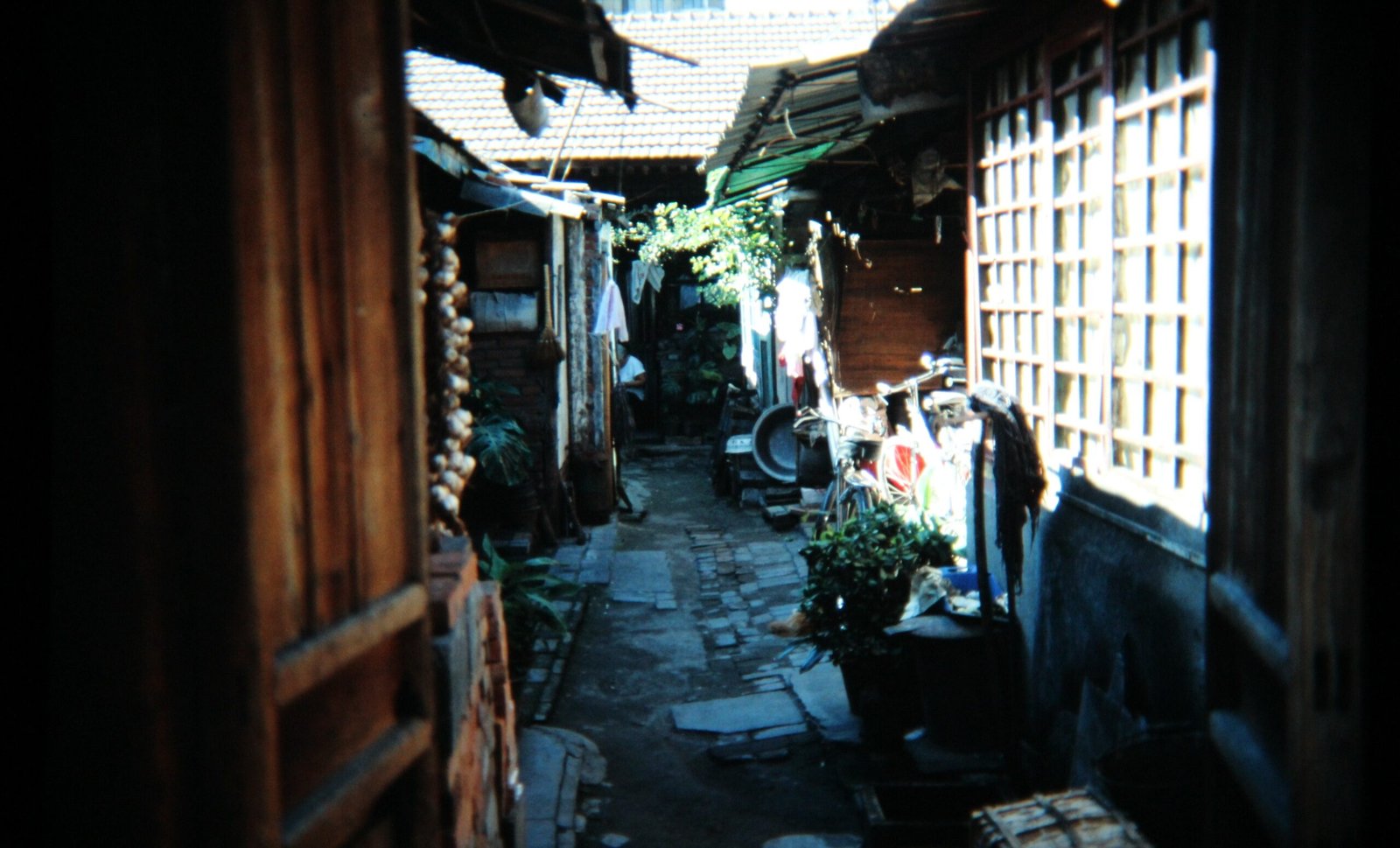
The hutongs are the narrow alleys that lace together the old grid of courtyard houses, the siheyuan, in central Beijing, and they are the best answer to the question of what the city looks like when it is not performing for tourists. When I first stayed in a converted courtyard off Gulou, the soundscape alone told me I was in the real thing: mahjong tiles at dusk, a bicycle bell at six in the morning, and the slap of a broom on brick. The short advice: pick two or three hutong areas, walk them before eight or after four, and spend at least one night in a courtyard guesthouse. Most of the alleys are free to wander, and the best of them need no ticket at all.
What a hutong actually is
A hutong is simply an alley, and the word most likely comes from the Mongolian for water well, a reminder that the grid dates to the Yuan dynasty capital of Khanbaliq in the thirteenth century. What makes the system work is the siheyuan, the walled rectangular courtyard compound: four buildings facing inward around a shared yard, one family per compound in the old days, several families after 1949. The hutongs run between the compounds, north-south lanes and east-west alleys, so the whole old city is a fabric of grey brick walls with the color hidden inside.
Almost everything you see in the best-preserved lanes is Ming or Qing work, rebuilt many times but on the same plan. The grey brick, the sloping tile roofs, the red door frames, and the pair of stone drums by the gateposts are the vocabulary. The city knocked down a great deal of this fabric during the 1990s and 2000s for roads and towers, and the backlash shaped policy since: whole districts are now protected, which is why the lanes around Houhai and the Imperial City still read as a whole rather than as scattered samples.
The neighborhoods worth your morning
Shichahai and the Houhai lakes
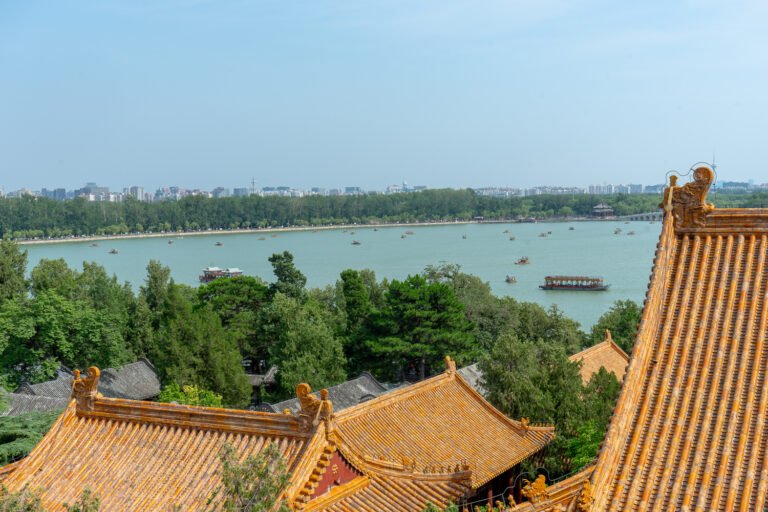
The three linked lakes, Qianhai, Houhai, and Xihai, with the lanes curling around them, are the most atmospheric part of old Beijing. The old prince’s mansion of Prince Gong sits on the west side of the lake and is worth the ticket for its garden and its opera stage; the lanes east of the water hold courtyard hotels, small bars, and the shops that serve them. Walk the lake edge at first light, when the water is flat and the willows are the only thing moving. This is the hutong I send every first-time visitor to.
Nanluoguxiang and the Yandai side streets
Nanluoguxiang is the famous one, an eight-hundred-meter lane of snack stalls and souvenir shops that empties into the Yinding bridge area. It is also the most crowded, and by mid-morning it is a river of people. The fix is the cross lanes: the east-west alleys that cut between Nanluoguxiang and the Di’anmen outer street, where the courtyards are still homes and the doors still carry the old studs. Yandai Xiejie, the Skewed Tobacco Pouch Street, nearby, has the same DNA with fewer crowds.
Guozijian and the Imperial Academy street
The straight, tree-shaded street between the Confucius Temple and the former Imperial Academy is the quietest stretch on this list. The temple holds carved stone tablets recording the Thirteen Classics, and the academy next door was the highest school in the empire for six centuries. Wudaoying hutong, one street east, has the cafes and boutiques that have taken over the better courtyards, and Mao’er hutong nearby hides the Drum Tower behind its walls. Come in the late afternoon when the stone tablets catch the low sun.
Dashilar and the Legation Quarter
South of Tiananmen, Dashilar is the old commercial high street, a run of Qing-era shop fronts with the names still painted in the old style, ending at the revived Qianmen area. Dongjiaominxiang, the former Legation Quarter east of the square, is a different register entirely: Western banks and churches from the 1900s, now embassies and quiet offices behind high walls. Together they show the city as a trading and diplomatic capital, which is the story most hutong walks miss.
A courtyard day
Staying in a siheyuan guesthouse is not the same as walking through one. The rooms face the yard, the windows look onto the brick, and at night the alley goes dark enough to see stars over the roofline. The trade-off is real: old courtyards often share bathrooms down the lane, the walls are beautiful but thin, and the winters are draughty. I would do two nights in a courtyard and the rest of the trip in a modern hotel, which is the compromise most experienced travelers reach.
Mornings are the point. In the lanes around Shichahai you will see the tai chi groups, the dog walkers, the men scrubbing their cars in the alley because there is no garage, and the grandmothers carrying vegetables home from the market. That hour is free, it happens every day, and it does not exist by noon.
Hutong food
The hutong food tradition is the Beijing snack tradition, and it is unapologetically heavy on wheat and offal. Chaogan, the stewed lamb tripe and liver thickened with starch, is the breakfast that divides visitors; douzhi, fermented mung bean milk, is the acquired taste that locals swear builds character; zhajiangmian, noodles with fermented soybean paste and shredded cucumber, is the safe and excellent choice. The proper way to eat them is from a stall with a plastic stool, not a restaurant with a laminated menu.
For the main event, Beijing duck is the city’s signature, and the old-school houses roast over fruitwood in the traditional way; our Peking duck guide covers how it is made and where to eat it well. If your interest runs to the wider Beijing table, the Imperial leftovers and the hutong kitchens overlap more than you would expect, and the best duck houses sit within walking distance of the lanes.
Getting around
The hutongs are walkable by definition, and the subway reaches the edges of the old city easily: Line 6 stops at Nanluoguxiang and Beihai North, Line 5 at Zhangzizhong and Dongsi, Line 8 at Shichahai and Gulou, and Line 2 rings the old walls at Xizhimen and Chaoyangmen. Pedicab tours of the lakes cost a negotiated sum for an hour, and they are worth it for the commentary if you get a driver who talks. Bikes work, though the alleys are narrow and the traffic at the ends is not.
| Area | Nearest subway | Best time | Vibe |
|---|---|---|---|
| Shichahai lakes | Line 8, Shichahai | Dawn or dusk | Atmospheric, bars, courtyard hotels |
| Nanluoguxiang | Line 6 or 8 | Before 9 am | Crowded, commercial, snack lanes |
| Guozijian street | Line 5, Yonghegong | Late afternoon | Quiet, scholarly, cafes |
| Dashilar | Line 2, Qianmen | Morning | Old shops, commercial history |
| Dongjiaominxiang | Line 1 or 2, Qianmen | Weekdays | Colonial-era buildings, quiet |
When to go
September and October are the golden window, when the persimmons turn on the courtyard trees and the air is dry and clear. Spring is short and windy with the odd dust storm. Summer is hot and the alleys bake. Winter is genuinely harsh but has its own following, when the lanes are quiet, the breath shows, and the food is at its most appealing. If you want the old city at its most itself, come on a weekday in autumn, before the Golden Week crowds. Our best time to visit China overview maps the seasons against the rest of the country.
One rule of thumb: the hutongs are a morning and evening experience. Any guidebook will send you at midday, which is exactly when the alleys are emptiest of local life and fullest of heat.
Quick facts
- What: alleys between siheyuan courtyard compounds, grid dating to the Yuan dynasty.
- Best areas: Shichahai, Nanluoguxiang cross lanes, Guozijian, Dashilar.
- Cost: wandering is free; Prince Gong’s mansion and the temples charge entry.
- Stay: at least one night in a courtyard guesthouse.
- Time: walk before 8 am or after 4 pm for local life.
- Food: chaogan, douzhi, zhajiangmian, and Peking duck nearby.
- Metro: Lines 2, 5, 6, and 8 all reach the old city edges.
Frequently asked questions
Are the hutongs being demolished?
The mass demolitions of the 1990s and 2000s are largely over, and the central districts are now under protection, which is why the lanes around Houhai and the Imperial City read as continuous fabric. Individual courtyards are still being rebuilt or gentrified, so what you see changes block by block.
Can I go inside a siheyuan?
The ones that are guesthouses, cafes, or museums are open to you; the family homes are private. A stay in a courtyard guesthouse gets you the closest legitimate look, and some operators run morning tea sessions for guests.
Is Nanluoguxiang worth it?
Once, for the snack stalls and the atmosphere, yes. Go early, eat one thing, then leave for the cross lanes, which are quieter and more representative. It is a stop, not an afternoon.
How do the hutongs connect to the big sights?
The old residential grid wraps around the imperial core, so the Forbidden City is a walk north from the lanes east of Jingshan, and the Temple of Heaven sits south of them in its own park. For a full loop, add the Summer Palace in the northwest suburbs and a day out to the Mutianyu Great Wall.
Is it safe to walk the hutongs at night?
The main lanes are well lit and busy. The side alleys go dark, so bring a phone light and stick to lanes you know. Beijing is a low-crime city by international standards, and the hutongs are no exception.
Do people still live there?
Yes, though fewer each decade as families trade shared bathrooms for apartments in the suburbs. The residents who remain are the reason the morning ritual still happens, and they are worth respecting with a low voice and no photos through doorways.
What should I buy in the hutongs?
Nothing at the tourist stalls. If you want something real, the small studios around Wudaoying and the paper shops near Liulichang sell work by people who use it themselves, and the prices are honest.
Making a hutong morning part of your Beijing plan
The hutongs work best as the bookends of a Beijing day: dawn in the lanes around Houhai, the imperial sites in the middle of the day, and a duck dinner back inside the old walls at night. If you want the morning walks, the subway lines, and the courtyard stays sequenced into one route, send us your dates through the contact page and we will sketch a custom food-and-travel itinerary. The old city is at its best before the traffic starts.
Written by the ChinaTravelFood editorial team.