The Silk Road food trail is a slow eat west
The old trade route from central China to Central Asia is also one of the best eating roads in the world, and you can follow a good chunk of it by train. I rode the line from Xi’an to Kashgar over two weeks and the food changed with every stop: wheat and lamb took over from rice and pork, and the flavors picked up cumin, saffron, and the bread ovens of the Uyghur west. The Silk Road food story is really a story of how China’s northwest met the Islamic world.
The short plan: start in Xi’an for the Muslim Quarter and belt noodles, pass Lanzhou for hand-pulled lamb noodles, detour to Dunhuang for apricots and donkey meat, then push into Xinjiang via Turpan and Urumqi to Kashgar, where the Uyghur table is at its fullest. This is also a halal route, which matters for Muslim travelers and for anyone who wants to understand the region’s kitchens.
Xi’an: the eastern gateway
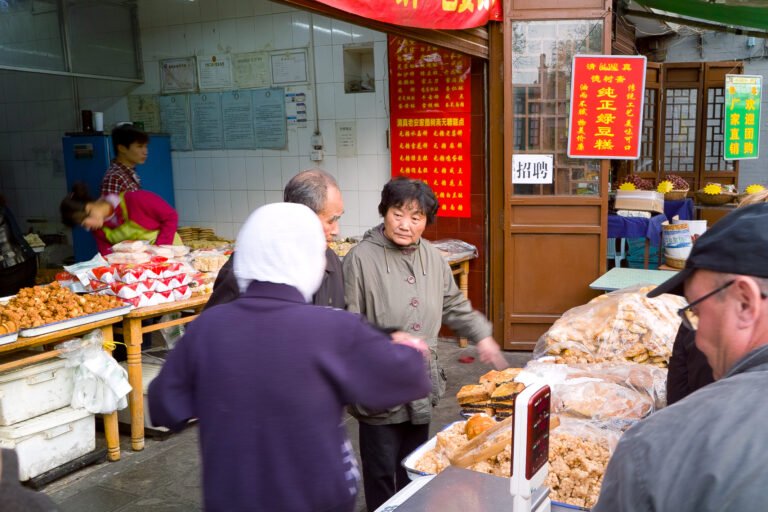
Xi’an is where the Silk Road is said to begin, and its Muslim Quarter is the natural first meal. The Hui Muslim community has cooked here for centuries: roujiamo (flatbread stuffed with stewed pork or beef), biangbiang wide noodles with chili oil, and grilled mutton skewers. The Terracotta Army draws the crowds, but the quarter feeds them. I ate my way down the main drag and then found better, cheaper stalls on the side alleys where locals queued.
Pair the eating with a walk on the Xi’an City Wall at dusk; the contrast of ancient brick and sizzling skewers is the city in one frame.
The stops west, and what to eat at each
| Stop | Signature food | Why stop | Transit note |
|---|---|---|---|
| Lanzhou | Hand-pulled beef noodles (lamian) | Birthplace of the iconic bowl | High-speed train, 3h from Xi’an |
| Dunhuang | Donkey meat, apricots, night market | Mogao Caves plus oasis food | Slower train or flight |
| Turpan | Grapes, raisins, naan, polo | Desert oasis, vineyards | Train into Xinjiang |
| Urumqi | Kebabs, samsa, laghman | Regional hub, big markets | Major rail junction |
| Kashgar | Uyghur naan, mutton, hand pies | Western end, old city | Farthest stop, flight or train |
This is a long haul. Budget at least ten days if you want to actually eat at each stop rather than just photograph the stations. The trains are comfortable; the scenery between Turpan and Kashgar is some of the strangest desert you will see.
Lanzhou and the noodle religion
Lanzhou’s claim is the hand-pulled beef noodle, and the city takes it seriously enough to have standards for the broth, the chili oil, and the pull. A proper bowl is clear beef broth, hand-stretched noodles, a spoon of red oil, and herbs, eaten standing at breakfast. The Lanzhou food scene is narrow but perfect: this one dish, done at a high level, morning to midday. Go early; the best shops sell out by late morning.
Dunhuang: oasis sweets and the caves
Dunhuang is a desert town built around a spring, famous for the Mogao Caves and for apricots and raisins. The night market sells donkey meat sandwiches (lu rou jia mo, a local twist on roujiamo), apricot juice, and grilled lake fish. It is a smaller food stop than the others, but the setting, an oasis at the edge of the dunes, makes the meal.
Into Xinjiang: Turpan and the grape kingdom
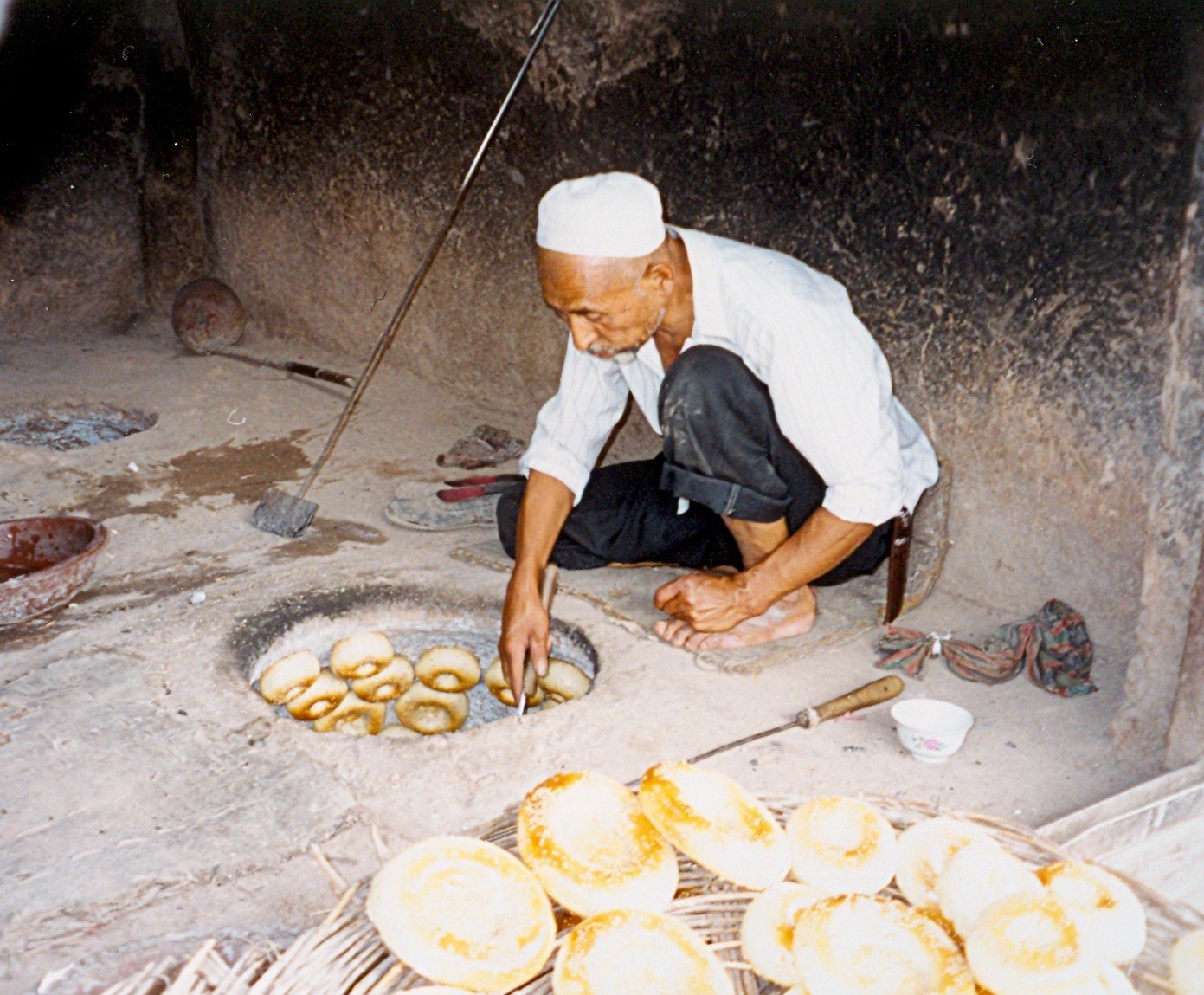
Turpan is furnace-hot in summer and famous for seedless grapes and the raisins dried in its ventilated mud bazaars. The Turpan food includes “polo” (a rice pilaf with carrot and lamb, the Central Asian plov) and flat naan baked in communal ovens. The bread alone is a reason to stop: it is chewy, slightly sweet, and nothing like the steamed buns of the east.
The bread is the through-line
If one food defines the whole trail, it is bread. East of Lanzhou you eat steamed buns and wheat noodles; west of it you eat oven bread. The Uyghur tandoor naan is round, flat, scored, and scattered with sesame or onion, baked against the clay wall of a cylindrical oven. It is sold from street stacks, kept for days, and used to scoop everything. In Kashgar I watched a baker pull dozens out with a hooked stick in minutes. This bread is the edible proof of the route’s westward lean toward Central Asia, and you taste the Persian and Turkic influence in the saffron and cumin versions.
The hand-stretched noodle (laghman) is the other constant, mutated at each stop: soupy in Lanzhou, stir-fried with pepper in Urumqi, topped with a tomato-meat sauce in Kashgar. Follow the noodle and you follow the road.
Spices and the ingredient handoff
The flavor map shifts visibly as you go. Cumin appears west of Lanzhou and grows dominant by Xinjiang, where lamb is rubbed and grilled with it by the fistful. Saffron, caraway, and dried red pepper follow the same gradient. This is the residue of the trade itself: the Silk Road moved spices east and, in return, Chinese wheat and techniques moved west. Eating from Xi’an to Kashgar is a way to taste that exchange without opening a history book. The chili oil of the east gives way to dry-rub cumin of the west, and the change is gradual enough that you notice it only when you look back.
What to drink along the way
Xi’an drinks strong tea and the occasional beer. Xinjiang drinks black tea with milk in the Uyghur style and a lot of local beer (Wusu is the regional lager, famously strong). Grape juice and raisin-based drinks appear in Turpan. I found the milk tea a useful salt-and-energy top-up in the dry heat, and the Wusu a rough but welcome end to a kebab night. Bottled water is easy everywhere; in the desert legs carry more than you think.
Urumqi and Kashgar: the Uyghur table
The Xinjiang food identity is Uyghur, Kazak, and Hui merged: cumin lamb kebabs (chuan’r), samsa (meat-filled pastries baked in the tandoor), laghman (hand-pulled noodle stir-fry), and endless naan. Urumqi is the modern hub with the biggest markets; Kashgar at the far west is the old city where the Kashgar food market on Sundays is a full sensory event, with whole sheep on spits and piles of dried fruit.
Kashgar is also where the route meets the Pamirs and the food leans hardest into Central Asia. If you only go as far as Urumqi, you still get the core; Kashgar is the payoff for the extra distance.
A practical pacing suggestion
Rather than rush, I suggest two nights each in Xi’an and Urumqi, one in Lanzhou, one or two in Turpan depending on the heat, a night in Dunhuang if the caves matter to you, and two in Kashgar for the market and old city. That is roughly twelve days and leaves room for a missed train. The mistake travelers make is treating this as a checklist; the food is better when you let a town’s market dictate the day. Build buffer into the Xinjiang legs, because security checks and long distances eat time you planned for eating.
Quick facts
- The trail runs Xi’an -> Lanzhou -> Dunhuang -> Turpan -> Urumqi -> Kashgar.
- Food shifts from rice/pork to wheat/lamb and bread ovens.
- It is largely a halal route; pork is rare west of Lanzhou.
- Signature: roujiamo, hand-pulled noodles, naan, kebabs, pilaf.
- Budget 10+ days to eat properly at each stop.
- Trains are comfortable; Kashgar is the longest leg.
- Best season: spring and autumn; summers are brutally hot in Xinjiang.
FAQ
Is the Silk Road food trail safe for travelers?
The cities on this route are normal Chinese travel destinations with standard precautions. The China safety guide applies. Western Xinjiang has more checks; carry your passport and permit documents.
Do I need special permits for Xinjiang?
Foreign travelers have faced extra documentation and restricted areas in parts of Xinjiang. Rules change, so confirm current requirements with official sources before you plan the Kashgar leg. The Tibet and Xinjiang permits guide gives the broad picture, but official sources decide.
Is the food halal throughout?
From Lanzhou west, most of it is halal by default because of the Muslim communities. The halal China guide explains how to confirm; Xi’an’s Muslim Quarter is halal, while the rest of Xi’an is mixed.
What is the best season?
April to June and September to October. Xinjiang summers hit 40C in Turpan; winters are cold but clear. The grape harvest in Turpan peaks late summer.
Can vegetarians manage?
Harder west of Lanzhou, where lamb dominates, but naan, noodles, and vegetable pilaf exist. The vegetarian travel guide has phrases; confirm no meat stock.
How do I get from Xi’an to Kashgar?
High-speed train to Lanzhou and Urumqi, then a regular train or flight to Kashgar. The full rail trip is long; many fly the Urumqi-Kashgar leg to save time.
Is Kashgar worth the distance?
For food and culture, yes. The Sunday market and old city are unlike anywhere else on the route. If your time is short, Urumqi gives you most of the Uyghur menu without the extra day of travel.
Plan your Silk Road food route
This trail rewards a loose schedule and a willing stomach. If you want help sequencing the train legs, timing the Turpan grape harvest, and handling the Xinjiang documentation, reach out through our contact page and we will build a food-and-travel plan around your dates and passport.
Written by the ChinaTravelFood editorial team.