Dim sum is a meal shaped like a snack
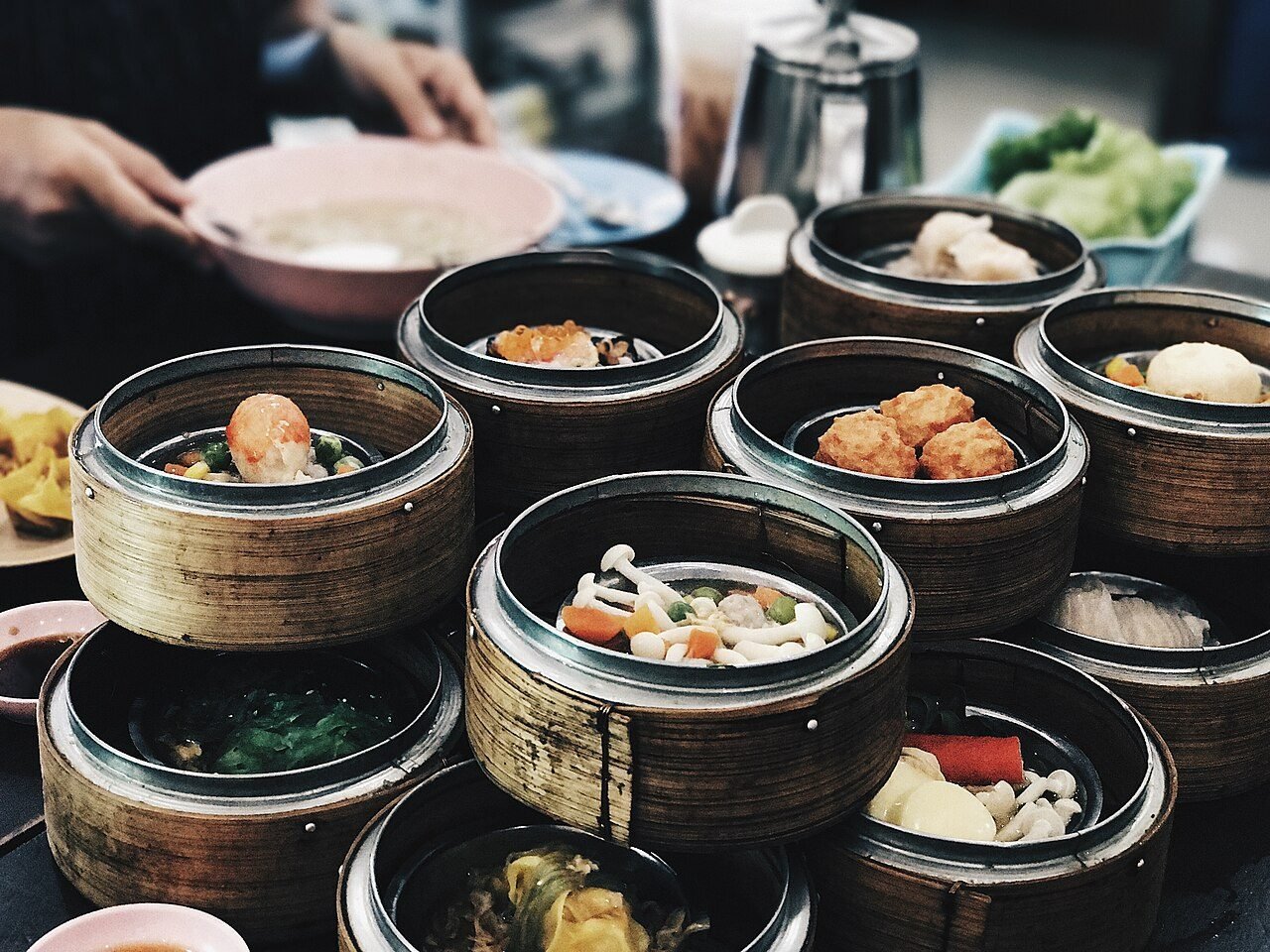
Dim sum (点心) is the Cantonese tradition of small dishes served with tea, eaten in a rolling mid-morning session that is part breakfast, part brunch, part family gathering. The name means “touch the heart,” and the idea is a table of little plates passed around while you talk. When I first sat down to a proper dim sum in Guangzhou I expected a meal and got a social event that lasted three hours; the food came in waves and the conversation never stopped. That is the point. It is the most communal way to eat in China, and the easiest for a visitor to enjoy without speaking the language.
This guide covers how to order, what the carts carry, and the dishes worth reaching for. For the city that does it best, our Guangzhou dim sum trail maps the morning ritual on the ground.
How ordering works: carts or cards
The old way is the trolley. Pushing carts circle the room with steamer baskets and plates; you point, the server stamps your card, and the bill grows by the mark. It is chaotic and wonderful, and the skill is grabbing the cart you want before it rolls past. Newer or fancier places replace carts with a paper menu or a QR code; you tick boxes and the kitchen sends plates. I prefer the carts for the theater and the chance to see a dish before committing, but the menu is easier if your Chinese is zero.
Either way, tea comes first. You pick a tea (oolong, pu-erh, or jasmine) and the pot is refreshed all morning. Our Chinese tea types guide explains the greens and oolongs; for dim sum, a dark oolong or pu-erh cuts the fried food best.
The dishes you should know
Har gow and siu mai
The two tests of a dim sum kitchen are har gow (shrimp dumplings, 虾饺) and siu mai (pork-and-shrimp open baskets). Har gow should have a translucent wrapper that does not stick and a snappy shrimp inside, usually with a small piece of bamboo shoot for crunch. Siu mai is the open-topped one with a dot of crab roe or carrot. These are the ones I judge a restaurant by; if they are tired, I do not order much else.
Char siu bao and the buns
Char siu bao (叉烧包) are steamed buns filled with sweet barbecue pork, the fluffy white ones with a cracked top. They are the comfort bite of the table. The broader bun family is covered in our Chinese baozi buns piece, but the Cantonese version is sweeter and softer than the northern fold. Custard buns (liu sha bao) with a salty egg-yolk center are the modern favorite and genuinely good, molten and rich.
Cheung fun and the rice rolls
Cheung fun (肠粉) are slippery rolls of rice noodles wrapped around shrimp, beef, or youtiao, draped in a light soy sauce. The best are made to order and still warm; the pre-made ones go limp. I always order one beef and one shrimp, and add a plain one with scallion if the kitchen is good.
Egg tarts and the sweet close
The egg tart (dan tat) is the Portuguese-influenced close to the meal, a flaky or puff shell with a just-set custard. The Hong Kong style uses a cookie-like crust; the Macau style a puff. Both are worth saving room for. Mango pudding or sago soup often follows for the sweet tooth at the table.
A dim sum dish table
| Dish | What it is | Steam/fry | Try it if |
|---|---|---|---|
| Har gow (虾饺) | Shrimp dumpling, clear skin | Steamed | You want the kitchen’s test |
| Siu mai (烧卖) | Pork-shrimp open basket | Steamed | You like a savory bite |
| Char siu bao | BBQ pork bun | Steamed | You want comfort |
| Cheung fun | Rice noodle rolls | Steamed | You like soft textures |
| Egg tart | Custard tart | Baked | You saved room for sweet |
| Lo pak go (turnip cake) | Radish cake, savory | Fried | You want something hearty |
| Chicken feet | Braised, soft | Steamed | You are adventurous |
| Congee | Rice porridge | Boiled | You want something plain |
Etiquette at the table
A few habits mark the regular. When someone refills your tea, you tap two fingers on the table, a thanks dating to a Qing emperor’s incognito visit. You pour for others before yourself. And you lift the lid of your pot and leave it askew on the rim when you want more water, a silent signal to the staff. None of it is enforced, but it smooths the room. For the chopstick side of manners, our chopsticks guide covers the grip and the no-stabbing rule that applies here too.
Dim sum and the wider table
Dim sum is the snack face of Cantonese cooking, whose full logic of freshness and light steaming is explained in our Cantonese cuisine guide. It also shares DNA with the soup dumpling tradition up north; the xiaolongbao guide shows how the steamed-pocket idea traveled and changed. And the steamed fish that often ends a big Cantonese meal is its own art, covered in the Chinese steamed fish piece.
Guangzhou versus Hong Kong styles
The tradition is Cantonese at root, but the two centers diverged. Guangzhou dim sum is broader and bolder, with offal and the more adventurous plates (chicken feet, tripe, beef tendons) given real table space, and the carts still rule in the older houses. Hong Kong dim sum is tighter and more polished, leaning on the classics, with many places now using the order-sheet system and a finer hand on the har gow skin. I like Guangzhou for the range and Hong Kong for the refinement; both are worth a morning. Our Guangzhou trail covers the city that still does it the loud, cart-heavy way.
Building a balanced table
The rookie mistake is filling the table with fried and meaty plates and leaving stuffed and greasy. A good dim sum order alternates: start with a steamed pair (har gow, siu mai), add a rice roll and a vegetable bun, then one fried item (turnip cake or a spring roll) for texture, a congee if you want something plain, and close with the egg tart. That spread feeds two or three and covers soft, crisp, savory, and sweet without tipping into heaviness. The carts make it easy to over-order, so I decide the count before the first cart arrives and hold the line.
Steamed, fried, and the health question
Dim sum is often praised as light, and the steamed items mostly are: shrimp, fish, vegetable, and rice rolls carry little oil. The fried and baked ones (turnip cake pan-fried, egg tarts, sesame balls) add the fat and sugar, and the char siu bao carries a sweet pork filling. Eaten as a mixed table with tea, it is a reasonable meal; eaten as a stack of fried plates, less so. I treat the steamed dishes as the base and the fried as the accent, which keeps the session satisfying rather than sluggish.
Quick facts
- Dim sum means “touch the heart,” small dishes served with tea.
- Traditionally a rolling mid-morning meal, not a quick breakfast.
- Order by trolley stamp or by menu; tea is poured first.
- Judge a kitchen by har gow and siu mai.
- Egg tarts close the meal; save a little room.
- Two-finger tap thanks the tea pourer; it is a Qing-era custom.
- Go with two or more people to sample widely.
Frequently asked questions
Is dim sum the same as dumplings?
No. Dumplings (jiaozi) are a northern wheat dish, usually one filling per piece. Dim sum is a whole Cantonese meal of many small dishes, only some of which are dumpling-like. The steamed shrimp har gow looks like a dumpling but the wrapper and the meal context are different.
When do you eat dim sum?
Mid-morning, roughly 9:00 to 11:30, with the peak before noon. Go early for the freshest carts and the full range; by 1:00 the good stuff is gone. I aim for 9:30 and leave by noon full and happy.
How many dishes per person?
About three to four small plates each is a normal session, more if you are a group sharing. The bill is by the piece, so a table of four ordering ten dishes is normal. Pace it; the carts keep coming.
Is dim sum vegetarian-friendly?
Partly. There are vegetable buns, taro cakes, rice rolls, and congee without meat, but many fillings hide pork or shrimp stock. Tell the server clearly and stick to the obvious vegetable items; the egg tarts and custard buns are safe sweet closes.
How much does it cost?
A filling session runs 40 to 80 yuan per person at a standard Cantonese restaurant, more at hotel venues. The carts are often priced by the dish stamp, so watch your card. Cheaper than a Western brunch for far more variety.
Do I need to speak Chinese?
No. Pointing at a passing cart works, and many places have picture menus or a QR code with photos. The tea and the gesture do the rest. A translation app helps only if you want something specific off-menu.
What tea should I pick?
A dark oolong or pu-erh pairs with the fried and meaty bites; jasmine is lighter if you want gentle. Our tea guide has the brewing notes, but at the table just ask for “oolong” and you will be fine.
Plan a dim sum morning
The best dim sum needs a plan: arrive early, grab a table, and let the carts come. If you want a Guangzhou or Hong Kong route that times the morning right and links to the sights, tell us your dates through our contact page and we will sketch it.
Written by the ChinaTravelFood editorial team.