Mantou: plain steamed bread, and why it is better than it sounds
Mantou is the plainest food in China: white wheat flour, water, yeast, steamed into a round dome. No filling, no seasoning, no sauce. It looks like nothing, and for centuries that was the point. Mantou is the northern staple, the equivalent of rice in the south, and the benchmark against which every other wheat food in the north is judged. Travelers walk past it because it is white and boring-looking, and they are wrong. A good mantou, hot from the steamer, is faintly sweet from the wheat, softly chewy, and pulls apart in sheets. Eaten with a spoonful of fermented bean paste or alongside a plate of chili oil, it is one of the great cheap foods of the country.
I ate mantou for breakfast for a month in Datong in 2023, buying them from a street steamer for one yuan each, and I came home a convert. This guide covers what mantou is, how it differs from the filled baozi, how it is made, and what to eat it with.
Quick facts
- Mantou is steamed wheat bread; the same dough with filling inside is called baozi
- A plain street mantou costs 1 to 3 yuan; restaurant and breakfast-shop versions run 2 to 5 yuan
- The north eats mantou where the south eats rice; the staple line runs roughly along the Yangtze and the Qinling mountains
- Traditional dough uses a sourdough starter or lao mianfa (old dough); modern versions use commercial yeast
- Golden mantou, deep-fried and served with condensed milk, is a restaurant dish and a Western-facing one
- Mantou keeps two days refrigerated and freezes well; steam frozen ones straight from the freezer for ten minutes
What mantou is, and what it is not
The name has a folk etymology: the word mantou supposedly comes from “man tou,” barbarian’s head, from a story about a general who used steamed dough heads to replace human heads in a ritual. Historians treat the story as legend, but the word stuck. What is certain is that steamed wheat bread has been the northern staple since wheat farming spread south and west from the Yellow River valley, and by the Ming dynasty, mantou was established as the everyday bread of the north.
The confusion to clear up first: mantou has no filling. The moment you put something inside, it becomes baozi, the filled steamed bun that fuels the country’s breakfasts, covered in the baozi guide. Mantou is the plain loaf, eaten with other dishes rather than standing alone. In a Chinese home, mantou sits in a basket at the center of the table like bread at a Western meal, and diners tear pieces to eat with whatever is on their plates.
How mantou is made
The dough is simple: all-purpose flour, water, yeast, and sometimes a spoon of sugar to help the yeast. The technique is in the fermentation and the steaming.
The dough
Mix flour with warm water and yeast, knead until smooth, then let it rise until doubled. A proper rise gives the crumb its chew; a rushed rise gives a dense, sad mantou. Traditional northern kitchens keep a piece of old dough (lao mianfa) in the fridge and use it as a starter, which gives a slight sourness that commercial yeast does not. That old-dough flavor is what old-timers mean when they say modern mantou “tastes of nothing.”
Shaping
Divide the dough, roll each piece into a smooth ball, and let them rest while you heat the steamer. The seam side goes down; the top should be tight and slightly domed so the surface stays glossy rather than cracking open like a steamed bun. Some shops flatten them into discs, some keep them round, and the shape is regional preference, not a rule.
Steaming
Steam over high heat for 12 to 15 minutes, then, and this is the step people skip, turn off the heat and leave the lid on for three more minutes. Opening the steamer early drops the temperature and collapses the domes. The finished mantou should be white, smooth, and springy to the touch, with a crumb that tears in sheets rather than crumbling.
| Bread | Filled? | Texture | Eaten with |
|---|---|---|---|
| Mantou | No | Dense, chewy, slightly sweet | Any savory dish, chili oil, bean paste |
| Baozi | Yes | Soft, fluffy, moist | Eaten alone as a full meal |
| Wotou | No | Coarse, nutty, dense | Stews, as a historical staple |
| Huajuan | No | Layered, oily, scallioned | Congee, soups |
| Youbing | No | Flaky, pan-fried | Breakfast with soy milk |
What to eat mantou with
Mantou is a vehicle, and the vehicles are regional.
Lao gan ma and fermented bean paste
The default northern breakfast: a hot mantou split open with a spoonful of spicy fermented bean paste or a spoon of lao gan ma chili crisp. It is what college students and travelers eat, and it is genuinely good. The chili crisp tradition is covered in the chili oil guide.
Braised meat sauce
In northern kitchens, mantou is dipped into the sauce of whatever is being served: braised pork, lamb stew, tomato and egg. The sauce soaks into the torn crumb, and the combination is the working meal of the region. If you order a Dongbei restaurant meal, mantou is the starch, and the sauce is the point.
Congee and pickles
Mantou with a bowl of congee and pickled vegetables is the standard light dinner across the north, easy on the stomach and cheap. The congee guide is in the congee piece, and the pickles are in the Chinese pickles guide.
Golden fried mantou
Restaurants in Beijing and Shanghai serve mantou sliced and deep-fried until golden, with condensed milk for dipping. It is a modern restaurant dish rather than a home one, but it shows off what plain dough can do with heat and sugar, and it is the version most Western diners meet first.
Regional habits
The north-south staple line matters more than any other division in Chinese food. North of the line, roughly along the Qinling mountains and the Huai River, wheat rules and mantou is the daily bread. South of it, rice rules and mantou is a breakfast item sold next to rice noodles. The regional cooking differences that follow from this are mapped in the Shandong cuisine guide and the Jiangsu cuisine guide, which sit on either side of the line.
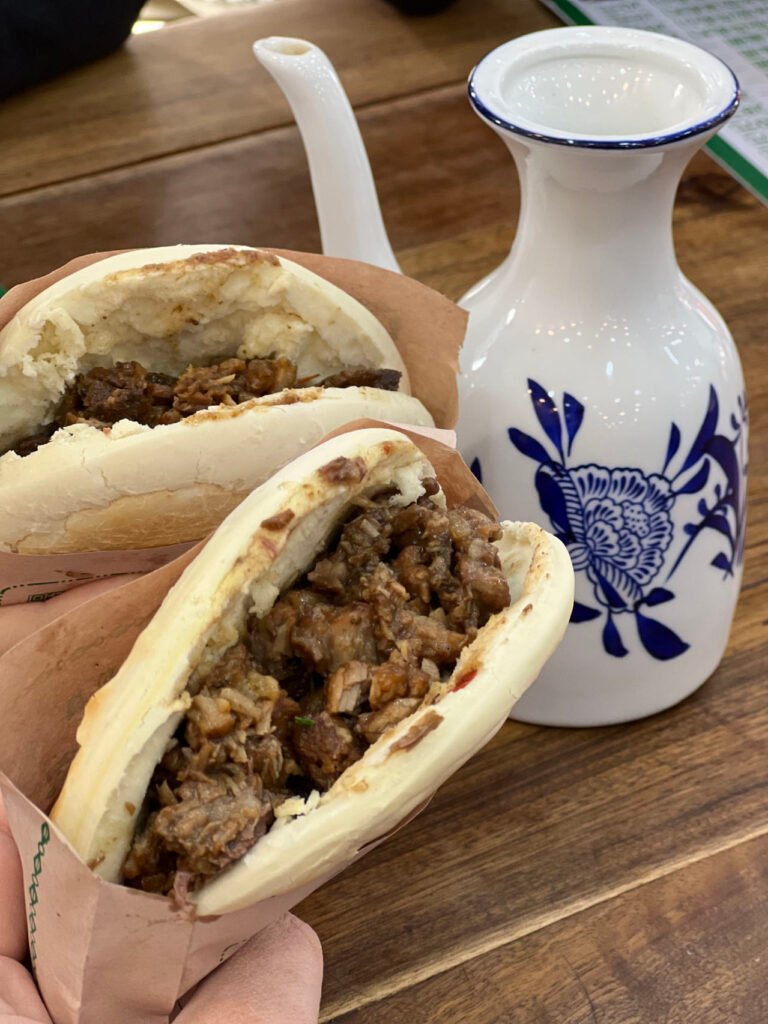
The exceptions are worth noting. Dongbei, the northeast, eats mantou with almost everything, and the region’s rustic cooking, covered in the Dongbei food guide, is the heartland of mantou-eating. Shanxi does a version with oat flour mixed in. Beijing breakfast shops sell huajuan, a scallion-oil twisted mantou, alongside the plain ones. And in the northwest, mantou competes with naan and roujiamo, covered in the roujiamo guide.
Cooking mantou at home
Mantou is one of the easiest Chinese breads, and a first attempt almost always works. The failures are predictable and fixable. Dense crumb means under-risen dough or too much flour; give it time and keep the dough soft, softer than bread dough. Cracked tops mean the steamer lid dripped condensation; wrap the lid in a cloth. Yellow, rubbery results mean you used baking powder instead of yeast, or you reused baking powder that died; check the date. And if your kitchen is dry, cover the shaped balls with a damp cloth while the steamer heats, because a dried skin turns leathery.
One upgrade that matters: a spoon of sugar and a spoon of oil in the dough. The sugar feeds the yeast and gives a faint sweetness; the oil softens the crumb. Neither makes it cake-like. The plain steamed bread stays plain, just better.
Frequently asked questions
What is mantou made of?
Flour, water, and yeast. That is the whole ingredient list for the plain version. Some recipes add a small amount of sugar to help fermentation, and traditional northern versions use a sourdough-style old dough starter for a slight tang.
What is the difference between mantou and baozi?
Mantou is plain steamed bread with no filling; baozi is the same dough wrapped around a filling, usually pork, and eaten as a complete meal. They share a dough and a steamer, and the difference is the filling.
Is mantou vegan?
The plain version is, since the ingredients are flour, water, and yeast. Watch for lard or milk in restaurant versions and in the fried golden mantou, which is often brushed with condensed milk on the side. Plain steamed mantou from a street steamer is safe.
How do you eat mantou?
Warm, torn into pieces by hand, alongside savory dishes. Northerners dip it in meat sauce, spread it with fermented bean paste or chili crisp, or eat it with congee and pickles. It is a staple bread, not a standalone snack.
Can I freeze mantou?
Yes, and it is the practical reason to make a batch. Cool them completely, bag them, and freeze for up to two months. Steam from frozen for 10 to 12 minutes, and they come back close to fresh. Microwaving makes them rubbery; always re-steam.
Why is my homemade mantou dense and yellow?
Dense usually means the dough did not rise enough or was too stiff; keep it soft and give it a full rise. Yellow can come from old baking powder or from steaming with a lid that dripped alkaline water; use fresh yeast and wrap the lid in a cloth.
What does mantou taste like?
Mild, slightly sweet from the wheat, and faintly yeasty, with a chewy, layered crumb. It is not sour or salty. The flavor is subtle enough that what you eat it with matters more than the bread itself, which is why the sauces and stews of the north define the meal.
Where can I buy good mantou in China?
Any breakfast shop in a northern city, where the steamers run all morning and a mantou costs one or two yuan. Supermarkets sell packed versions, which are acceptable for travel but firmer. For the best version, eat one within minutes of the steamer opening.
Plan your own northern food trip
The wheat-eating north is a different culinary country from the rice south, and mantou is the entry point. If you want a route that runs from Beijing’s breakfast shops through Shanxi knife-cut noodles to Dongbei home cooking, tell us your dates through the contact page and we will draft a custom food-and-travel itinerary around the staple breads of the north.
Written by the ChinaTravelFood editorial team.