
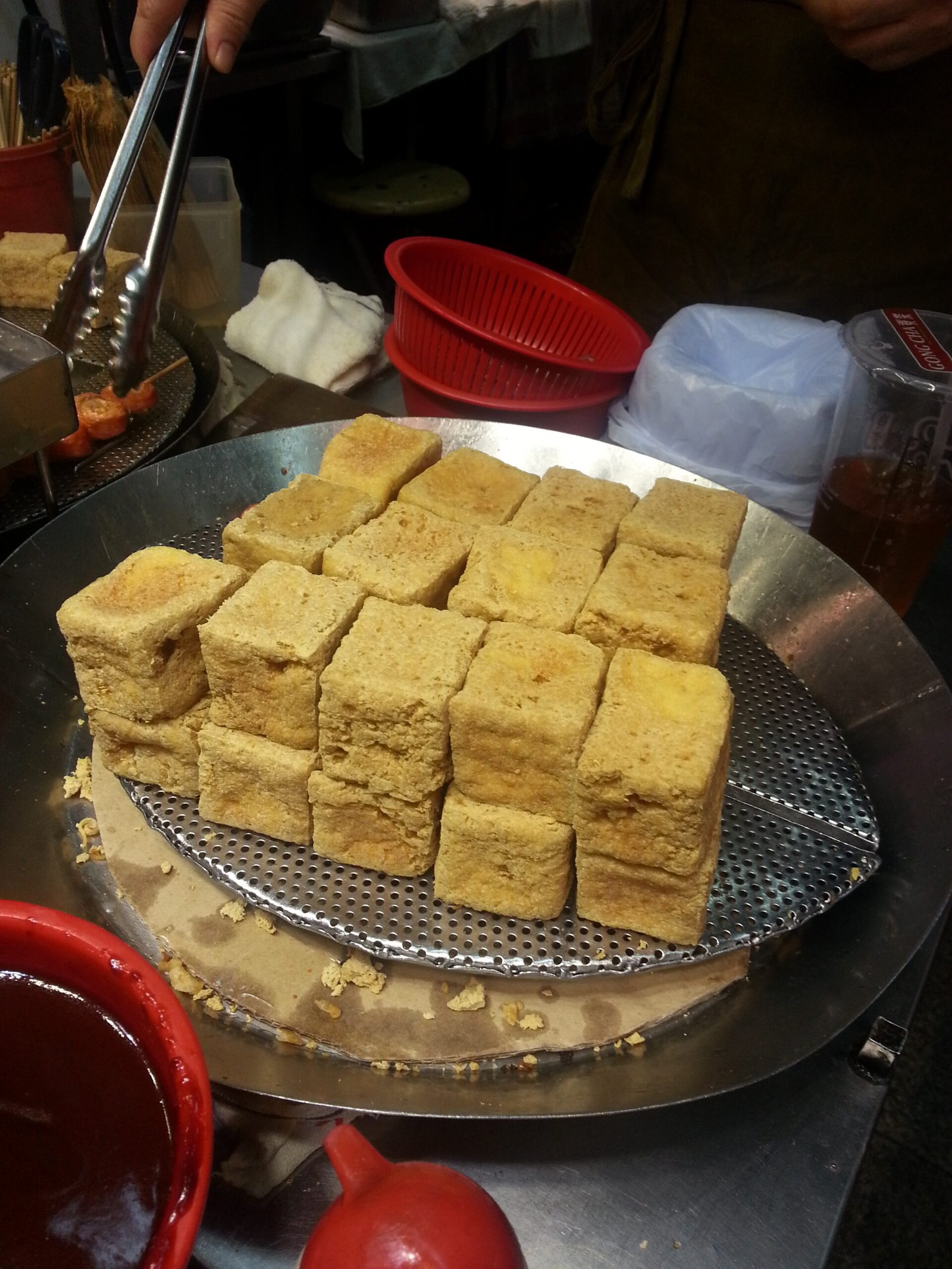
What stinky tofu is and why it smells so strong
Stinky tofu is fermented tofu, blocks of soybean curd left to culture in a brine of vegetables, herbs, and sometimes fermented milk or meat until they develop a sharp, sewage-like odor. The smell is the headline; the taste is milder than the aroma suggests. I first met it at a night market in Taipei, where the vendor pulled glossy brown blocks from a deep fryer and the whole lane filled with a funk that made me hesitate. One bite changed my mind: the inside was steamy and savory, closer to a ripe cheese than anything off-putting.
The short answer: stinky tofu is tofu fermented in a pungent brine, then fried, steamed, or braised. The odor is intense but the flavor is gentle, umami-rich, and a rite of passage for travelers in China and Taiwan. Skip it and you miss one of the region’s most talked-about snacks.
How it gets its smell
The fermentation is what separates stinky tofu from plain tofu. Makers soak cooked tofu in a brine that often includes bamboo shoots, amaranth greens, mustard greens, and old fermenting liquid, sometimes aged for months. Bacteria and yeasts break the proteins down into volatile compounds that smell like a mixture of old socks and strong cheese. The longer the brine, the deeper the funk. Home recipes exist but the brine is hard to control, which is why almost everyone buys it from a specialist.
The key microbes are strains of mold and bacteria that the maker cultivates in the brine, much like a cheese cave cultivates its rinds. A shop with a decades-old mother brine, passed down or topped up over years, produces a rounder, less aggressive funk than a quick commercial batch. That is why two stalls three streets apart can taste completely different. The science is close to blue cheese: controlled spoilage that humans learned to love. The Chinese record of fermented tofu goes back many centuries, and stinky tofu is the loudest branch of that family.
A traveler’s first encounter
I want to be honest about the learning curve. On my first night in a Taipei market I watched a group of teenagers buy it without flinching while I held my breath, sure I was about to see someone regret a decision. The vendor lifted a block from the oil, split it open, and steam poured out smelling of a barn. I tried a corner. The crust gave way to a center like warm cream cheese with a salty, almost meaty edge. By the third bite the smell had faded into background noise, the way a strong cheese does once you commit. My advice to nervous travelers is to go with someone who already eats it, order one portion to share, and take the smallest bite first. The worst case is that you dislike it; the likely case is a new favorite snack.
Regional styles across China
Stinky tofu is not one dish. The treatment changes by region, and the version you love in one city may not match another.
| Region | Preparation | Texture and taste |
|---|---|---|
| Taiwan (night market) | Deep fried | Crisp outside, creamy inside, served with pickles and sweet chili |
| Changsha, Hunan | Fried, then braised | Softer, sourer, often with chili and broth |
| Shanghai and Jiangnan | Steamed or braised | Soft, wet, eaten with rice or in a bun |
| Guangdong | Steamed | Mildest, almost like a savory custard |
Eating it on the street
The classic setting is a Chinese street food stall at night. In Taipei the standard is fried stinky tofu with a scoop of pickled cabbage, garlic, and sweet-spicy sauce. In Changsha food stalls, the blocks are fried and then dropped into a spicy braise, so you get a wet, sour bite that locals line up for. Prices are low: a serving ran about 30 to 60 New Taiwan dollars in Taipei markets in 2024, and 8 to 15 yuan in Hunan.
Ordering is simple. Point at the frying basket, hold up fingers for portions, and say “yi fen” (one serving). Most stalls have picture boards. If the smell is too much at the counter, step back a few meters; the aroma travels farther than the taste.
Condiments matter as much as the tofu. Taiwanese stalls pile on pickled mustard greens and a sweet, garlicky chili sauce; Hunan vendors ladle spicy broth and cilantro over the top; Shanghai steamed versions come with a light soy and sesame dip. I suggest trying it plain first to learn the base flavor, then with the full topping on a second piece. The plain block tastes of fermented soy and cream, while the sauced version is a louder, saltier snack. Both are worth knowing.
Is it vegetarian or vegan
Plain stinky tofu is soy and brine, so it fits a plant-based diet, and our Chinese vegetarian guide lists it as a temple-friendly protein in many areas. The catch is the dipping sauce: some vendors stir in shrimp paste, oyster sauce, or meat stock, especially in coastal cities. If you avoid animal products, ask or watch what goes on top. The tofu itself is usually clean.
Where to find the best versions
For a traveler, the easiest reliable encounters are night markets in Taiwan and the snack streets of Hunan and Shanghai. Our street food map points to the cities where stinky tofu is a headline act, and a visit to a local wet market in the early morning will often turn up a tofu maker with a bucket of brine out back. That is where the serious stuff lives, far from the tourist frying carts.
Specific spots worth a detour: the Raohe and Shilin night markets in Taipei for fried versions with thick pickles; the Huangxing Road snack street in Changsha for braised blocks that locals eat standing up; and the old lanes of Shanghai near Yuyuan for steamed, gentler plates. In Hong Kong, the Mong Kok curry-flavored stinky tofu has its own following. None of these require reservations; you join a queue, pay cash or scan a code, and eat on the spot.
Nutrition and the health angle
Stinky tofu keeps the protein of soy and adds probiotic value from fermentation, though the frying step adds fat. A single fried serving is not a health food, but as an occasional street bite it is no worse than fries. The brine is high in sodium, so people watching salt should treat it as a rare treat. Travelers concerned about general food safety can read our notes on food safety in China before diving into any night-market food. The short version: busy stalls with fast turnover are safe, and the high heat of frying handles the rest.
Quick facts about stinky tofu
- It is fermented tofu, not rotten; the process is controlled.
- The smell comes from breakdown of proteins into volatile compounds.
- Taiwan favors fried; Hunan braises; Shanghai and Guangdong steam.
- It is usually vegan but watch the dipping sauce for shrimp or meat.
- A serving is cheap, often under 15 yuan on the mainland.
- The taste is milder and more savory than the odor promises.
Frequently asked questions
Does stinky tofu taste as bad as it smells?
No. The aroma is far stronger than the flavor. Most first-timers describe the taste as savory, cheesy, and mild, with the smell doing most of the scare work.
Is it safe to eat?
Yes, when bought from a busy, established stall. The fermentation is intentional and the high-heat frying or braising kills surface germs. Avoid a bucket of tofu that looks slimy or smells of rot rather than ferment, which is rare at proper vendors.
Can I make it at home?
You can, but the brine takes weeks and smells up the whole kitchen. Most home cooks buy prepared stinky tofu from an Asian market and just fry or steam it. The fermenting part is best left to professionals.
Why is it called stinky?
The English name is a direct translation of the Chinese “chou doufu,” meaning foul-smelling tofu. The odor is the defining trait, so the name leans into it.
Which region makes the strongest version?
Hunan’s wet, braised style and the aged brines of older Taiwanese shops are the boldest. Guangdong’s steamed version is the gentlest and a good starting point for the nervous.
Is it gluten free?
The tofu is gluten free, but soy sauce and some braising liquids contain wheat. Plain fried tofu with a simple chili dip is the safest bet for gluten avoidance.
What should I drink with it?
A cold soy milk or iced tea cuts the funk. In Taiwan, vendors often sell a sweet basil-seed drink alongside. Avoid beer if the smell already bothers you; it makes the aroma more noticeable.
Try it on a night market crawl
Stinky tofu is best approached as a dare you end up liking. If you want a route that strings together the right night markets and snack streets, from Taipei to Changsha, tell us your comfort level on our contact page and we will help you plan a custom food-and-travel route.
Written by the ChinaTravelFood editorial team.


