
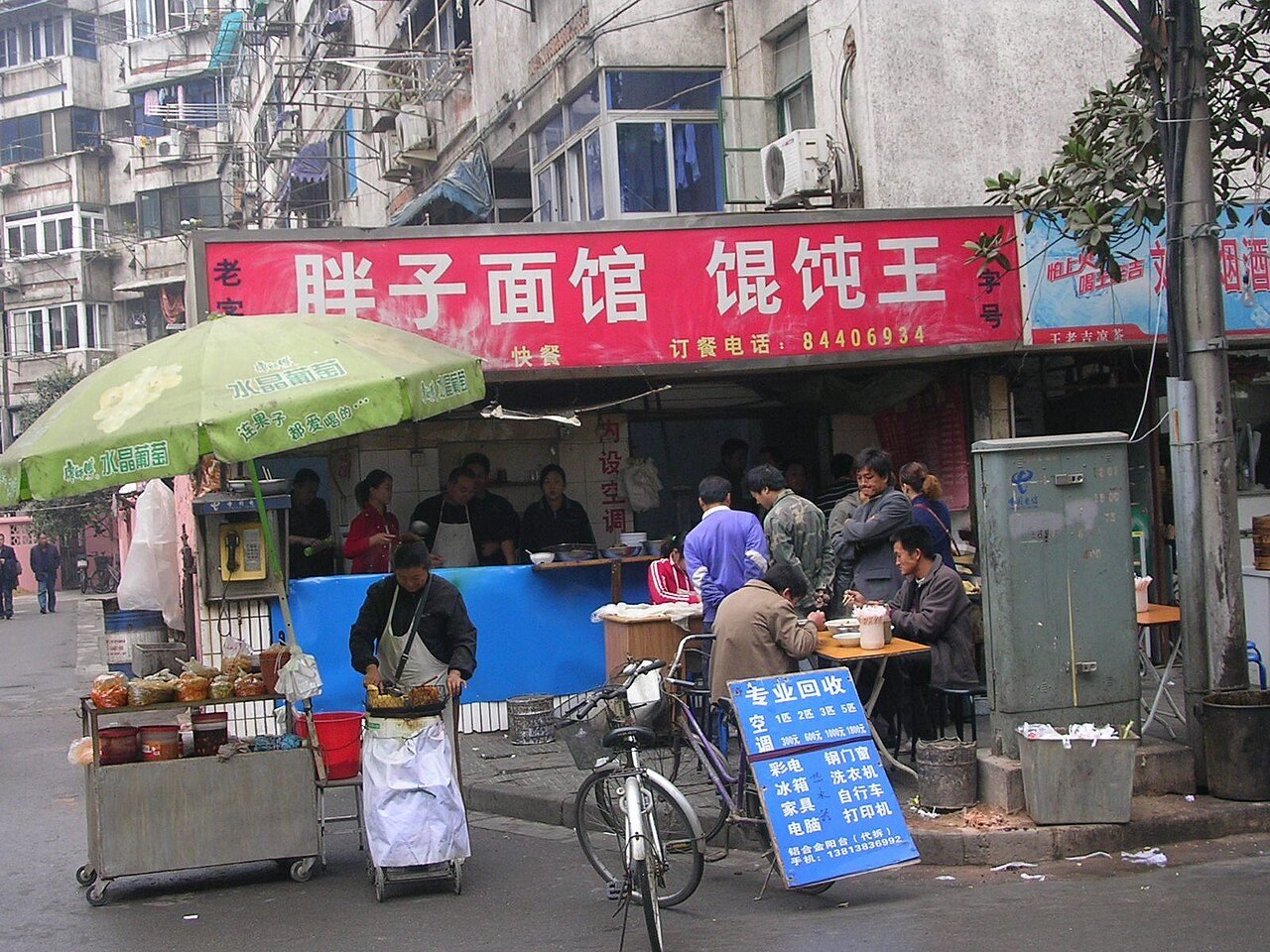
Nanjing snacks politely
The first thing I ordered in Nanjing was a bowl of 鸭血粉丝汤 (duck blood vermicelli soup), and the first thing I thought was: this does not taste like anything else in China. It tastes like duck bones that have been simmered all night, with a soft block of duck blood, fried tofu, and vermicelli soaking it up. No chili. No fireworks. Nanjing food works on broth and restraint, which surprises people who assume every Chinese city food street is a chili contest.
This guide walks the Nanjing food streets that earn their reputation: the Qinhuai River belt, the rebuilt lanes of Laomendong, the Nanjing Impressions teahouse on Shiziqiao, and the lunch alleys near Xinjiekou. Prices come from a spring 2024 visit and will drift; treat them as a ballpark.
Qinhuai River: the classic belt
Confucius Temple and the Qinhuai River (夫子庙秦淮河) are the postcard, and the snack belt around them is where the city’s old food names cluster. Walk the streets east of the temple and you will pass 奇芳阁 (Qifangge), famous for 鸭油酥烧饼 (duck-fat sesame crackers) and 麻油干丝 (shredded tofu in sesame oil); 永和园 (Yongheyuan), a 淮扬点心 house with 蟹壳黄 crab-yellow pastries; 莲湖糕团店 (Lianhu), where the 桂花糖芋苗 (osmanthus taro) and 赤豆元宵 (red bean rice balls) come in four colors; and 蒋有记 (Jiangyouji), the beef potsticker shop that locals queue at.
These names are tied together as the 秦淮八绝, the “eight wonders” pairing eight old shops with their signature snacks. It is a marketing label, but the food behind it is genuine. The honest caveat: this stretch is tourist central. Come at 8 or 9 am for the breakfast version, or after 8 pm when the lanterns are lit and the tour buses have gone. The boat rides on the inner river are pleasant but optional; the food is the reason to be here.
Laomendong: the old street that survived
Laomendong (老门东) sits south of Confucius Temple, along the eastern foot of the old city wall near Zhonghua Gate. Where much of old Nanjing was flattened, this pocket of lanes was rebuilt brick by brick, and today it holds the best snack density in the city with a fraction of the tour-bus chaos.
What to work through: 蒋有记’s 牛肉锅贴 (beef potstickers, about 1.5 yuan each, crisp-bottomed and soupy), 小郑酥烧饼 (Xiaozheng’s flaky sesame pastry, 3 to 5 yuan), 蓝老大糖粥藕 (sweet lotus root stuffed with glutinous rice in porridge), and 陆氏梅花糕 (plum blossom cakes, molded into a flower shape and filled with red bean, 8 to 12 yuan). There is also a Deyunshe comedy theater in the lanes, which tells you something about how the district has been repositioned. Evenings are busier than afternoons; the sweet shops keep late hours.
Shiziqiao and the Nanjing Impressions show
Shiziqiao (狮子桥) near Xuanwu Lake was Nanjing’s first dedicated food street, and it is where 南京大牌档 (Nanjing Impressions) turned old-Nanjing teahouse theater into a chain. The room is dressed like a 1930s teahouse: wooden benches, brass kettles, staff in period clothes, and folk performers working the tables. It is theater, and it is good theater.
The food holds up better than the concept suggests. Order 美龄粥 (Meiling congee, soy milk and glutinous rice porridge), 糖芋苗, 天王烤鸭包 (a soup bun flavored like roast duck), and 清炖狮子头 (clear-braised lion’s head meatballs, the Huaiyang classic done properly). A meal runs 40 to 70 yuan per person depending on how many plates you accumulate. If the Shiziqiao flagship has a wait, the chain has branches across the city; the wait list is shorter at the mall locations.
Mingwalan and the lunch crowd
Mingwalan (明瓦廊) is a narrow lane south of Xinjiekou, and at 12:15 pm it is a wall of office workers. This is where Nanjing eats lunch, and the specialties are heavier than the river belt’s snacks.
Two shops carry the street. 易记皮肚面 (Yiji pi du noodles) does the local specialty: thick noodles in a pork-bone broth with 皮肚 (fried pork skin), 猪肝 (pork liver), and a spoon of chili oil, around 25 to 30 yuan for a large bowl. Next door, 金宏兴 (Jin Hongxing) sells the city’s most argued-over 盐水鸭 (salted duck) by the quarter, roughly 30 yuan, with people phoning in orders from across town. Come hungry, come early, and do not expect anyone to speak English.
If you want zero tourists, take the metro east to 三七八巷 (Sanqi Ba Alley), a working-class lane near Yuhuatai that became a local favorite when food bloggers found it around 2020. It is short, it is scruffy, and the shops sell the same food Nanjing families actually eat on weeknights: 安庆馄饨, 贵州米线, 蜜汁藕, and grilled fish. Prices are two thirds of the river belt. Nobody will ask where you are from.
The Nanjing table, decoded
| Dish | What it is | Typical price (2024) | Where to try it |
|---|---|---|---|
| 盐水鸭 (yanshui ya) | Salted duck, the city’s signature, served cold | 25-35 yuan per quarter | Jin Hongxing, Han Fuxing |
| 鸭血粉丝汤 | Duck blood, tofu, vermicelli in duck broth | 15-25 yuan | Hui Wei, Yadebao chains |
| 牛肉锅贴 | Pan-fried beef dumplings, crisp bottom, juicy top | 1.5 yuan each | Jiangyouji, Laomendong |
| 皮肚面 | Noodles with fried pork skin in pork broth | 25-30 yuan | Yiji, Mingwalan |
| 梅花糕 | Flower-shaped wheat cake with red bean filling | 8-12 yuan | Lushi, Laomendong |
| 糖芋苗 | Taro in osmanthus brown-sugar syrup | 8-12 yuan | Lianhu, Qinhuai belt |
| 美龄粥 | Sweet soy milk and glutinous rice porridge | 10-15 yuan | Nanjing Impressions |
On buying 盐水鸭: the big old names are 韩复兴 (Han Fuxing, an 1800s house that does halal-style duck), 章云板鸭 (Zhang Yun), and 金宏兴. Buy it by weight, ask for it chopped, and eat it the same day. Vacuum-packed versions sold at tourist shops are a different animal, salted harder and shipped from nowhere near Nanjing. If a shop lets you taste a slice first, it has nothing to hide.
Practical notes
- Best season: March to May and October to November. Summers are furnace-hot, and the plum blossom and maple seasons add scenery to the meal.
- Timing: the Qinhuai belt is a morning-and-evening scene; Mingwalan is a lunch scene that fades by 2 pm; Laomendong runs all afternoon into the night.
- Crowds: the Qinhuai Lantern Festival around Lunar New Year is magnificent and shoulder-to-shoulder. Avoid the Confucius Temple lanes in the first week of October.
- Getting around: Metro Line 1 to Sanshanjie for Confucius Temple, Line 3 to Wudingmen for Laomendong, Lines 1 and 2 to Xinjiekou for Mingwalan.
- Spice level: low. Nanjing is a Jiangnan kitchen; chili oil is on the table but optional.
- Budget: 100 to 150 yuan per person covers a full day of grazing across three streets.
A one-day Nanjing food plan
Morning belongs to Laomendong: potstickers, a sesame cracker, a plum blossom cake, all before 10 am. Walk the city wall at Zhonghua Gate to work up an appetite. Lunch is a big bowl of 皮肚面 on Mingwalan, then the afternoon at 南京博物院 (Nanjing Museum, the real one in the east of the city) or Purple Mountain. Dinner is the full Nanjing Impressions set on Shiziqiao, followed by a slow walk along the Qinhuai River with the lanterns and the boat songs. Details on the wider area are in our Nanjing travel guide and the Jiangsu cuisine overview. For city-to-city comparison, see the Chinese street food map, the roundup of Chinese night markets, and the Nanjing Confucius Temple guide for the sight itself.
Nanjing is the stop on a China food trip where your palate gets a rest. No burn, no shouting. Just duck broth, sweet syrup, and a pastry made in the shape of a flower. If you want help fitting Nanjing into a longer food-and-travel route through the Yangtze delta, get in touch through our contact page and we can sketch something custom.
Frequently asked questions
What is Nanjing famous for eating?
盐水鸭 (salted duck), 鸭血粉丝汤 (duck blood vermicelli), 牛肉锅贴 (beef potstickers), and a long list of sweet snacks like 糖芋苗 and 梅花糕. It is an old imperial and exam-city cuisine, lighter and less spicy than Hunan or Sichuan.
Is Hubu Alley or Confucius Temple the better food area?
That comparison is Wuhan’s Hubu Alley; in Nanjing the equivalent tourist stretch is the Confucius Temple and Qinhuai River belt. It is worth one evening for the atmosphere and the old shop names, but Laomendong and Mingwalan are where the food is better.
Where can I buy salted duck to take home?
Han Fuxing, Zhang Yun, and Jin Hongxing all sell vacuum-sealed portions at their main shops. Ask for it to be chopped (斩好), buy the same day you fly, and check your airline’s rules on carrying cooked meat across borders before you buy a kilo.
How much does dinner at Nanjing Impressions cost?
Around 50 to 70 yuan per person if you order moderately, and it is easy to run past 100 if you keep clicking dishes. The 美龄粥 and 天王烤鸭包 are the two things I would not skip.
Is Nanjing food spicy?
No. This is Jiangnan cooking: sweet-savory notes, soy and sugar, sesame oil, duck fat. Chili oil sits on the table for people who want it, but the base flavors are mild.
What is the best time of day for the food streets?
Breakfast and late evening on the Qinhuai belt, lunch on Mingwalan, and any time from mid-afternoon in Laomendong. Nanjing’s food streets are not late-night cities the way Changsha is; most shops wind down by 9 or 10 pm.
Can I eat vegetarian on Nanjing food streets?
Yes, more easily than in most Chinese cities. 糖芋苗, 赤豆元宵, 梅花糕, and the糕团 shops give you plenty of meat-free options, and vegetable noodles are easy to order at 皮肚面 shops by saying 不要肉.
Written by the ChinaTravelFood editorial team.


