
More than the famous noodle
Ask a traveler about Shaanxi (陕西) food and you get one answer: biangbiang noodles, the belt-wide belt of dough from Xi’an (西安). They are worth the hype, and we cover them in their own biangbiang noodles piece. But Shaanxi is the cradle of wheat in China, the eastern end of the Silk Road, and a Muslim Hui stronghold, so the table runs far deeper than one thick strand. On my last Xi’an trip I ate my way through a week and barely repeated a dish.
The province sits where the Loess Plateau meets the Wei River plain. Cold winters, hard wheat, and a thousand years of caravan traffic built a cuisine that is salty, sour, and unafraid of fat. If Sichuan is about the tingle and Canton about the fresh, Shaanxi is about the grain and the vinegar. Get comfortable with that and the menu opens up.
Liangpi: the cold skin you will crave
Liangpi (凉皮) is cold wheat or rice starch noodles, sliced into ribbons and dressed with soy, black vinegar, chili oil, and a smear of sesame paste. The version from Hanzhong (汉中) is thin and chewy; the Xi’an style is wider and topped with steamed bean sprouts and a wheat gluten nugget called mianjin (面筋). A bowl at a street shop costs 6 to 10 yuan and makes a perfect breakfast or mid-afternoon cooler in summer.
The trick is the chili oil, which in Shaanxi is more aromatic than fiery. A good liangpi vendor fries his pepper flakes in hot oil right there, and the smell pulls you in from a block away. I have stood in line at a shop near the Muslim Quarter for a bowl that honestly beat the famous restaurants.
Yangrou paomo: break the bread, earn the stew
Yangrou paomo (羊肉泡馍) is the dish that divides visitors. You are given a round of dense flatbread, bing (饼), and you tear it into pea-sized bits. The smaller and more even your pieces, the better the broth soaks in, and locals judge you by your crumb. Hand the bowl back; the cook simmers it with mutton broth, sliced lamb, and scallion. A solid bowl runs 25 to 40 yuan.
I tore my first bowl badly, chunks the size of grapes, and the waiter quietly redid it. The second time, small and patient, the stew came back silky. The lesson stuck: in Shaanxi, the prep is part of the meal. Paomo houses near the Bell Tower are tourist-weighted; the ones where old men read newspapers over their bowls are the real thing.
Youpo mian and Qishan saozi mian
Youpo mian (油泼面), oil-splashed noodles, is the quieter cousin of biangbiang. Wide noodles are boiled, topped with chili flakes and scallion, then a ladle of near-smoking oil is poured over to sizzle the spices. No meat required, though some add it. The drama of the pour is half the fun, and the taste is pure wheat-and-heat.
Qishan saozi mian (岐山臊子面) is the regional pride from Qishan county west of Xi’an. A small bowl of thin noodles in a sour, bright-red broth dotted with bits of pork, tofu, and egg ribbons. The sourness comes from local Qishan vinegar, which is sharper and fruitier than the famous Shanxi aged醋 (cu). The Chinese vinegar guide explains why that regional difference matters; here it defines the bowl.
The Hui Muslim table
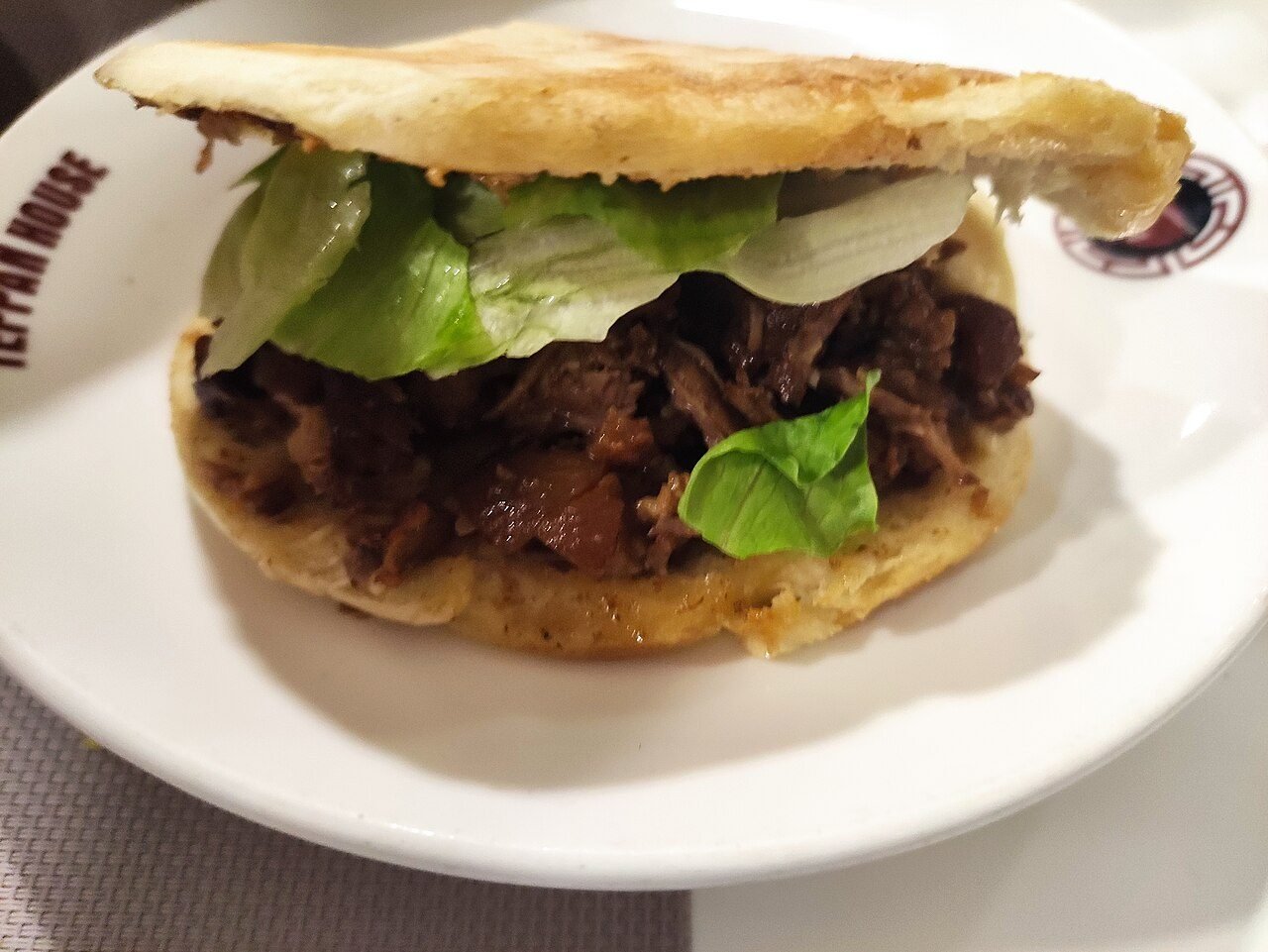
Xi’an’s Muslim Quarter and the wider Hui presence give Shaanxi a halal layer you do not find in neighboring wheat provinces. The Xi’an Muslim Quarter is the obvious stop, but the daytime Hui stalls around the old city walls serve the everyday versions. Roujiamo (肉夹馍), the “Chinese hamburger” of chopped braised pork in a clay-oven bun, is Hui in origin and covered in our roujiamo recipe, but in Xi’an you should eat it fresh from a street burner, not make it at home.
Also look for hulu ji (葫芦鸡), a whole chicken fried crisp and served hanging from a hook like a lantern, and various lamb skewers that nod to the Silk Road. The Muslim influence is why Shaanxi food travels well for halal eaters; our wider halal route covers the Xi’an-to-Xinjiang thread.
A Shaanxi eating table
| Dish | What it is | Price (2024) | Where to find it |
|---|---|---|---|
| Liangpi cold noodles | Starch ribbons, vinegar, chili oil | 6 to 10 yuan | Street shops, breakfast |
| Yangrou paomo | Bread torn into mutton broth | 25 to 40 yuan | Paomo houses near Bell Tower |
| Youpo mian | Oil-splashed wide noodles | 12 to 18 yuan | Noodle shops citywide |
| Qishan saozi mian | Sour pork-noodle soup | 10 to 15 yuan | Qishan-style shops |
| Roujiamo bun | Braised pork in oven bun | 8 to 14 yuan | Muslim Quarter, Hui stalls |
| Zenggao | Steamed sticky rice with dates | 5 to 8 yuan | Breakfast carts |
Breakfast and sweets
Shaanxi mornings run on carbs. Beyond roujiamo, there is zenggao (甑糕), layers of glutinous rice, red bean, and date paste steamed in a wooden mold, sold by the wedge for a few yuan. Hot soy milk, doujiang (豆浆), cuts the sweetness. For a savory start, guan tang bao zi (灌汤包子) soup dumplings burst with hot broth; bite the top, sip, then eat.
The province also makes huanggui chou jiu (黄桂稠酒), a faintly alcoholic fermented rice drink, sweet and low-proof, served warm. I tried it once and found it closer to a dessert soup than a beer, which is exactly how locals treat it.
How Shaanxi fits the noodle map
If you want the big picture, our Chinese noodle map places Shaanxi among the wheat-noodle north, distinct from the rice noodles of the south and the pulled styles of Gansu. Shaanxi’s gift is the width and the vinegar. Once you taste the sour snap of a Qishan bowl, you can tell a Shaanxi kitchen from a Sichuan one blindfolded.
My order of attack in Xi’an
Day one: a roujiamo and liangpi lunch, then paomo dinner where you actually tear the bread small. Day two: youpo mian at a hole-in-the-wall and zenggao for breakfast. Save a Qishan saozi mian for when your palate wants sour over spicy. And walk the Muslim Quarter once at night for the show, but eat your best meals where the locals line up at noon.
We plan Xi’an food crawls that hit these spots in the right order and pace, including the tearing technique for paomo. Tell us your spice tolerance and how many noodles you think you can handle, and we will build the route.
A half-day eating walk in Xi’an
If you have one free afternoon, walk it. Start at Yongxing Fang (永兴坊), an older-style food street east of the wall where roujiamo and liangpi stalls line a courtyard, then move to the Muslim Quarter near the Bell Tower for the evening skewers and the biangbiang theatrics. In between, the shops around Shuyuanmen (书院门) sell the glutinous zenggao and quiet tea. I like to do the walk hungry, tasting one item per stop rather than sitting for a full meal, so you cover six or seven dishes in two hours. The stretch from the Small Wild Goose Pagoda to the wall is flat and walkable, and the food gets more local the further you drift from the main tourist drag.
Quick facts
- Shaanxi is China’s wheat heartland; the food is salty, sour, and vinegar-forward.
- Beyond biangbiang: liangpi, paomo, youpo mian, and Qishan saozi mian are essentials.
- Qishan vinegar gives the local noodles their signature sour snap.
- The Hui Muslim community adds a halal layer centered on the Muslim Quarter.
- Most signature dishes cost under 20 yuan as street food.
Frequently asked questions
Is Shaanxi food very spicy?
Less than Sichuan. The chili oil is aromatic, not burning, and the dominant note is sour from vinegar. You can eat most dishes mild by asking for less oil.
What is the difference between biangbiang and youpo mian?
Both use wide noodles, but biangbiang is a full topped dish with meat and vegetables, while youpo mian is simpler: boiled noodles with chili and scalding oil poured over. Youpo is the quicker, lighter cousin.
How do I eat paomo properly?
Tear the bread into small, even pieces, the size of a pea. Hand it back for simmering. The finer your tear, the better the broth soaks in. Locals genuinely judge the crumb.
Is Shaanxi food halal-friendly?
Yes, strongly. The Hui Muslim community runs much of the street meat trade, especially around the Muslim Quarter. Roujiamo and lamb skewers are halal by default there.
What does Qishan vinegar taste like?
Sharper and fruitier than the dark aged vinegar of Shanxi. It gives saozi mian its bright sour edge. It is a condiment, not a dipping sauce, in most dishes.
Can vegetarians eat in Shaanxi?
Partly. Liangpi, youpo mian (no meat), and zenggao work. Paomo and roujiamo are meat-based. Ask clearly, since lard and broth appear in unexpected places. Our vegetarian guide helps.
Where is the best paomo in Xi’an?
The old paomo houses near the Bell Tower and the shops where older locals read the paper over their bowls. Avoid the flashy tourist-front places in the Quarter for the actual bowl.
How much should I budget per day for food?
Shaanxi street food is cheap. A full day of noodles, a roujiamo, liangpi, and a paomo dinner runs 60 to 90 yuan per person. Sit-down dinners with beer add 50 to 100 yuan.
Written by the ChinaTravelFood editorial team.
