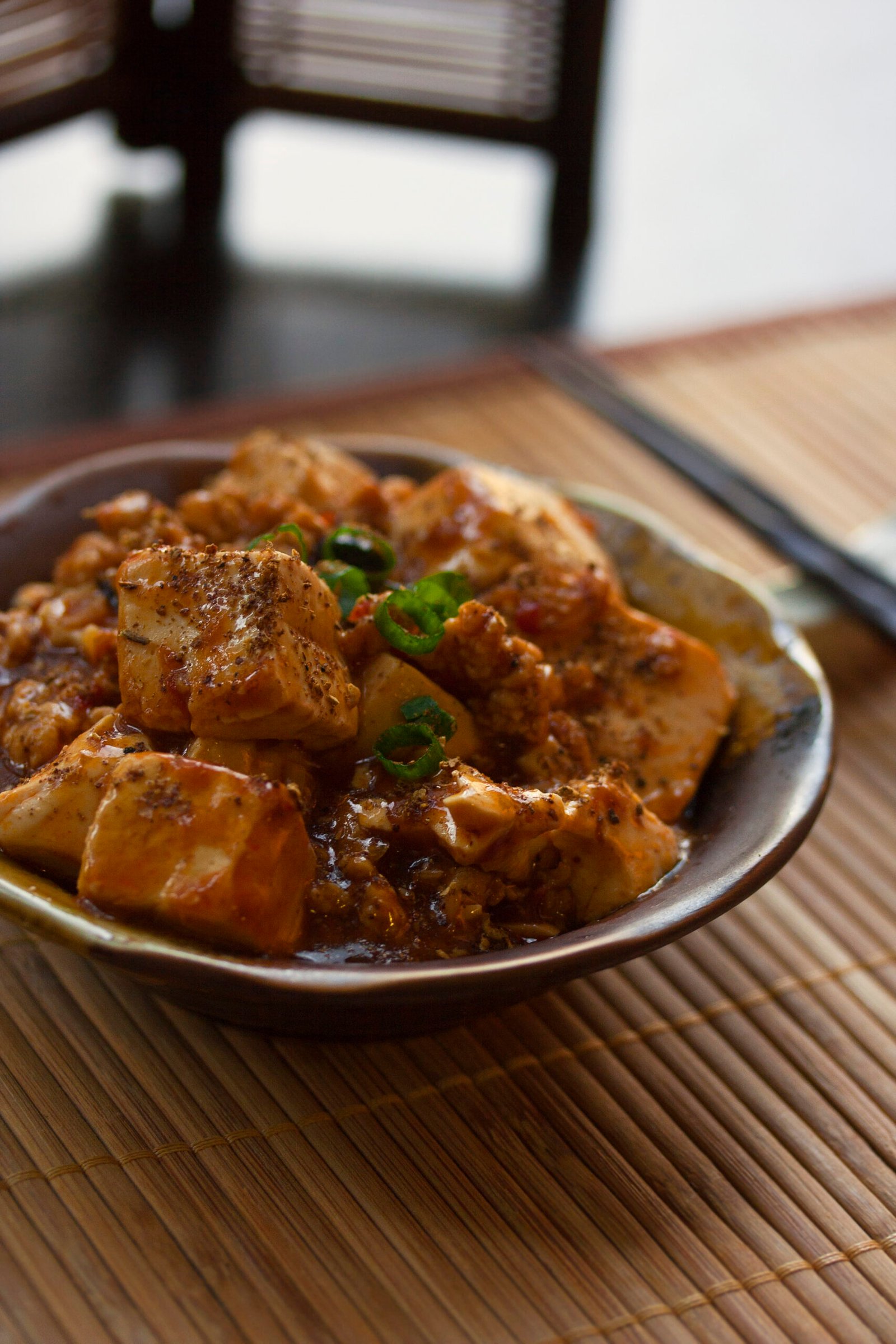
What mapo tofu really is
Mapo tofu is the dish I point people to when they say Sichuan food is just “spicy.” It is not. The version born in Chengdu around the 1860s layers two sensations that have no real English name and no easy substitute: mala, the numbing tingle of Sichuan peppercorn wrapped around the heat of chili. Soft cubes of tofu sit in a thin, oily, brick-red sauce with a little ground pork, and the whole thing arrives bubbling in a clay bowl. When I first ate it at a cramped Chengdu stall, the numbness crept up my lips before the burn did, and I understood why the dish has survived 150 years.
The name is plain. “Ma” means numb, after the pockmarked (mazi) wife of the inn keeper who is said to have cooked it for laborers hauling goods through the area. “Po” is the respectful term for an older woman. So “mapo” is literally “pockmarked old lady.” The dish is humble in origin and still cheap to make, which is part of its staying power. You do not need special equipment, just the right two peppers and the patience not to rush the sauce.
A bit of history worth knowing
The standard story places the dish at the Chen Mapo Tofu restaurant in Chengdu’s Qingyang district, opened during the late Qing dynasty. Cooks there built a recipe around tofu, cheap meat, and the pantry of the region: doubanjiang (fermented broad bean and chili paste), fermented black beans, and the local peppercorn. The dish traveled because it was good and because it was cheap, and because Sichuan cooking prizes exactly this balance of mouthfeel and heat.
Over the last century the recipe hardened into what chefs now call the “seven traits”: numbing, spicy, hot (in temperature), fragrant, tender, fluffy (the pork should stay loose, not clumped), and the sauce should be reddish and glossy. That last point matters. A good mapo tofu is not a soup and not a dry stir-fry. The sauce should cling and shine.
The two peppers that make it work
If you remember one thing, remember this: chili gives heat, Sichuan peppercorn gives the tingle. They are not the same plant and they do not substitute for each other. For the chili side, use a good doubanjiang, the fermented bean paste from Pixian (Pi county), which carries both salt and a deep fermented fruitiness. For the tingle, use whole Sichuan peppercorns, toasted and ground fresh. Pre-ground peppercorn loses its perfume in weeks, so buy whole and crush what you need.
For where to eat the dish in its home city, our Chengdu food guide maps the neighborhoods where the pepper is used in everything from noodles to rabbit, and where you will find the oldest mapo counters still cooking the original style.
Ingredients and the home recipe
This serves two as a main with rice, or four alongside other dishes. The amounts are flexible; taste as you go.
- 1 block (about 400g) soft or silken tofu, cut into 2cm cubes
- 150g ground pork (or beef; some Chengdu versions use neither)
- 2 tablespoons Pixian doubanjiang
- 1 tablespoon fermented black beans, rinsed and chopped
- 1 tablespoon chili flakes or chili oil base
- 1 teaspoon whole Sichuan peppercorns, toasted and ground
- 2 cloves garlic, minced; a thumb of ginger, minced
- 1 spring onion, sliced thin
- 1 cup stock or water
- 1 tablespoon cornstarch mixed with 2 tablespoons water
- Cooking oil, and a splash of Chinese cooking wine if you have it
Steps. First, bring a pot of lightly salted water to a bare simmer and slide the tofu in for a minute, then drain. This firms the cubes so they hold shape and knocks off the raw soy smell. Second, heat oil in a wok over medium heat and fry the pork, breaking it apart, until it loses its pink and picks up a little color. Third, push the meat aside and add the doubanjiang, black beans, garlic, and ginger; stir the paste in the oil for a minute until it darkens and smells toasty. Fourth, pour in the stock, add the tofu gently, and simmer for three or four minutes without stirring too hard. Fifth, swirl in the cornstarch slurry to thicken. Sixth, finish with the ground peppercorn and spring onion, and serve at once over rice.
The common failure is stirring like a stir-fry and smashing the tofu to paste. Treat the cubes like eggs. A fish slice or broad spoon works better than a spatula here.
Heat level and how to dial it
Real Chengdu mapo is ferocious. Most home cooks, and most restaurants outside the province, tone it down. If you are new to the style, cut the doubanjiang to one tablespoon and add the peppercorn at the end so the tingle stays bright. If you want it hotter, add a spoon of chili oil at the finish rather than more doubanjiang, which would make it too salty.
A table of common adjustments:
| If you want… | Do this | Watch out for |
|---|---|---|
| Less numbness | Use half the peppercorn, add at the end | Losing the signature trait |
| Less salt | Rinse black beans, use low-sodium stock | Doubanjiang is already salty |
| More body | Add 50g more pork | Sauce gets heavier |
| Vegetarian | Skip pork, use mushroom stock | Add a dash of soy for depth |
| Glossier sauce | One extra teaspoon of cornstarch | Turning it to glue |
What to eat with it
Mapo tofu is salty, oily, and loud, so the supporting dishes should be quiet. Plain steamed greens, a plate of fried rice to soak up sauce, or simple cucumber salad all work. In Sichuan homes it is one of several dishes on the table, never the only thing. Beer is the common drink, though many locals reach for a weak yellow liquor. Tea cuts the oil better than anything.
For a fuller picture of Chinese snacking beyond Sichuan, our Guangzhou dim sum trail shows a completely different logic of small plates, steamed rather than sizzled, which is a useful contrast if you are building a multi-region food trip.
Where to try the real thing
Chengdu is the home ground. The original Chen Mapo Tofu restaurant still operates and leans old-school and very numb; expect to sweat. Newer spots like those in the city’s food streets serve cleaner, milder versions for visitors. In North America and Europe, Sichuan restaurants in big cities usually have it, but quality swings hard depending on whether they use real Pixian paste. Ask if you can; a place that cannot name its bean paste is probably using a generic chili sauce.
If you want another iconic bite to compare the texture against, the xiaolongbao is the Shanghai answer to a perfect mouthful, and the Peking duck guide covers another dish where the eating technique matters as much as the cooking. And if you are planning to fly to Chengdu to eat this properly, our China visa guide walks through the paperwork before you book the ticket.
Quick facts
- Origin: Chengdu, Sichuan, late 1800s.
- Signature traits: numbing (ma) plus spicy (la) from two different peppers.
- Core pantry: Pixian doubanjiang, fermented black beans, Sichuan peppercorn.
- Texture goal: soft tofu, loose pork, glossy clinging sauce.
- Best drink with it: plain tea or a light beer.
- Vegetarian version is easy; skip pork, use mushroom stock.
Frequently asked questions
Is mapo tofu very spicy?
It can be. Authentic Chengdu versions are hot and numb at once. Home cooks outside Sichuan usually soften both the chili and the peppercorn, so ask or adjust to taste.
What kind of tofu should I buy?
Soft or silken (嫩豆腐) for the classic loose texture. Firm tofu holds shape better but loses the melt-in-mouth quality that defines the dish.
Can I make it without Sichuan peppercorn?
You can, but then it is not really mapo tofu; it is chili tofu. The tingle is the point. Buy whole peppercorns and grind them fresh.
What is doubanjiang and can I skip it?
It is fermented broad bean and chili paste, the salty, funky backbone of the sauce. Do not skip it. Pixian (Pi county) brand is the standard to look for.
Why does my sauce turn out watery?
You likely skipped the cornstarch slurry or did not simmer long enough. Also, drain the tofu after its hot-water bath so it does not weep into the pan.
Is it the same as the mapo tofu at American Chinese buffets?
Often not. Buffet versions tend to be mild, sweet, and thickened with tomato or sugar. The real dish is saltier, oilier, and far more aromatic.
How do I eat it politely in a restaurant?
Spoon it over your rice rather than lifting the bowl. Like the xiaolongbao, it is a hands-on dish where the technique is part of the pleasure.
Making it part of your trip
Mapo tofu is a small, cheap entry point into a cuisine that rewards curiosity, and Chengdu is the place to eat it surrounded by the smells it came from. If you want a food route that strings together the right neighborhoods, the markets, and a cooking class where you make this dish yourself, tell us your dates and we will sketch it. A good Sichuan trip is mostly about sequencing the heat so your mouth gets a rest between meals.
Written by the ChinaTravelFood editorial team.
Mapo Tofu: A Quick Reference and Where to Eat It
To summarize what makes mapo tofu worth the small effort: it is a Chengdu dish built on numbing Sichuan peppercorn and fermented doubanjiang rather than heavy sauce. The texture of the tofu and the freshness of the ground peppercorn at the end are what separate a good bowl from a forgettable one. If you master this single dish, you have effectively learned the grammar of Sichuan cooking.
For the pantry side, the two bottles that matter most are aged doubanjiang and a good Chinese sauce like soy; the peppercorn should always be toasted and ground fresh. If you want the regional context, our Chinese condiments guide lays out the rest of the shelf.
Eating mapo tofu in China is its own pleasure. Chengdu and Chongqing serve versions from gentle to tongue-numbing, and a proper regional cuisine crawl will show you how much the dish varies block to block. Our Hakka food guide is a useful comparison if you want to see how other regional kitchens handle tofu.

Frequently Asked Questions (added)
Is mapo tofu healthy?
It is high in protein and not deep-fried, but it is salty and oily. Using soft tofu, lean meat, and less oil makes a weeknight version that is reasonably balanced.
Can I freeze mapo tofu?
Not well — the tofu weeps and the sauce breaks. It is best eaten the day it is made, though leftovers reheat acceptably if you loosen the sauce with a splash of water.