What is roujiamo and why it earns the name Chinese hamburger
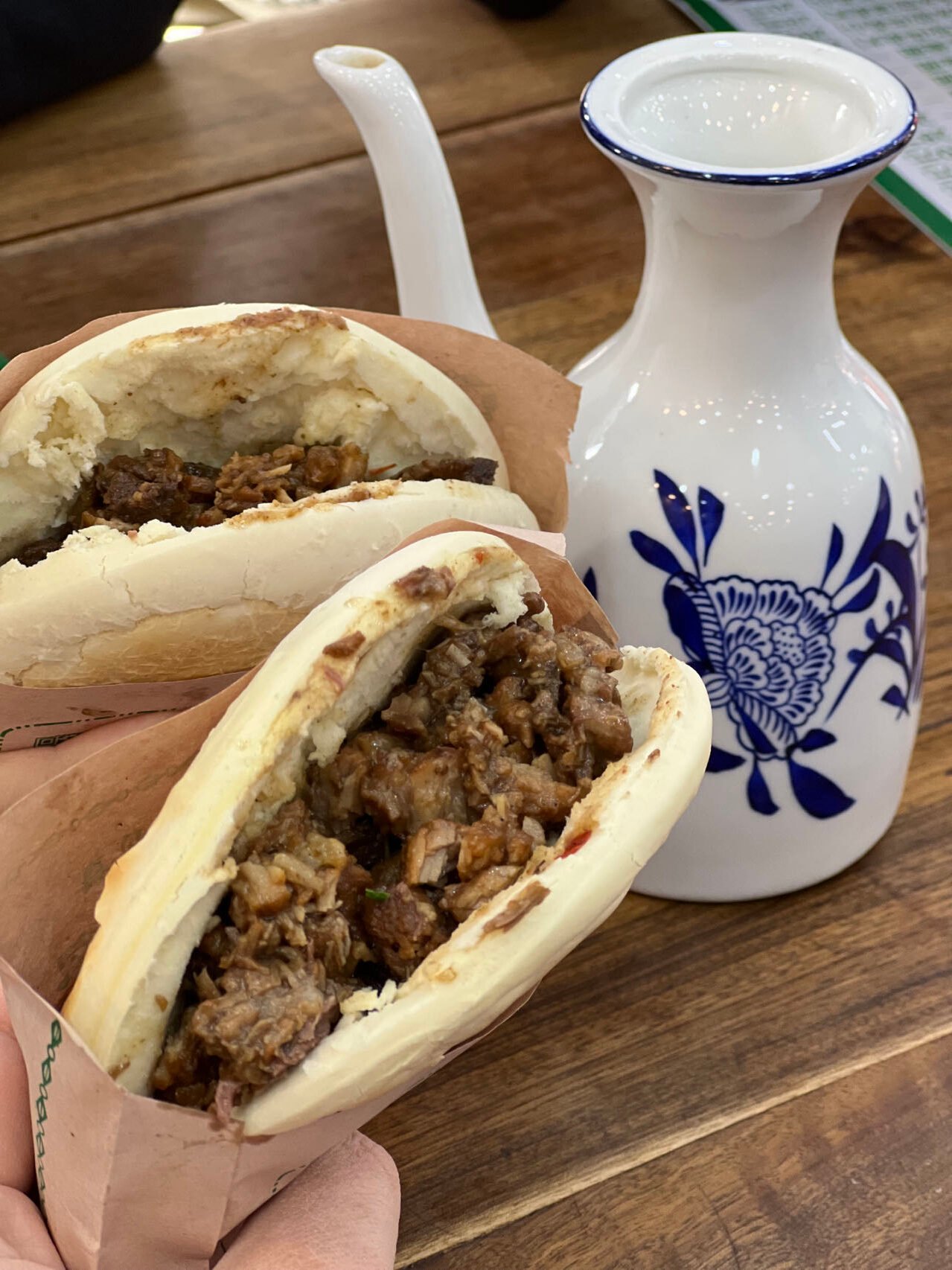
Roujiamo is a street food from Shaanxi province, centered on the old capital of Xi’an, made of chopped braised pork stuffed inside a round, oven-baked flatbread called baijimo. The name literally reads “meat in a flatbread,” and vendors have sold it in the city for well over a thousand years. When I ate my first one near the Xi’an Muslim Quarter on a cold March evening, the bread was still warm from the clay oven and the pork inside was slick with rendered fat and cumin. It tasted nothing like a Western burger, but the hand-held convenience was the same.
The short version: roujiamo is China’s oldest fast food, a portable sandwich of slow-cooked meat and crisp-chewy bread that you can buy for a few yuan on almost any Xi’an corner. It is the dish I tell every first-time visitor to the city to try before the terracotta warriors.
The two breads: baijimo and the baked version
The bread makes or breaks the sandwich. Traditional baijimo is made from a stiff wheat dough, pressed flat, and baked against the walls of a small cylindrical clay oven (a tongo) until it develops a blistered, faintly charred crust and a hollow, layered interior. A good baijimo cracks when you press it and gives a rough, satisfying crunch.
The dough itself is plain: flour, water, salt, and sometimes a little baking soda, with no fat or sugar. The character comes entirely from the oven and the hand of the baker, who slaps each disc against the hot wall and turns it with long iron tongs. Northern wheat is high in gluten, which is why the bread stays chewy rather than crumbly. If you buy one that feels light and hollow, that is the sign of a proper bake.
Some shops, especially outside Shaanxi, use a softer pan-fried bun or a griddle cake. That version is easier to make at home but loses the signature texture. If you are judging authenticity while traveling, look for the blistered oven-baked round rather than a soft sesame bun.
The meat: province by province
In Xi’an the classic filling is pork, braised for hours with soy, ginger, star anise, and a heavy hand of cumin and Sichuan peppercorn. The cook chops it with a cleaver right in front of you, mixing in some of the jelly-like braising fat so the filling stays moist. In the Muslim quarter the meat is often lamb or beef, halal-style, seasoned with cumin and chili rather than pork fat. Both are worth trying; the lamb version has a gamier, smokier edge.
| Style | Meat | Seasoning | Where to find it |
|---|---|---|---|
| Traditional Han | Pork | Cumin, soy, star anise | Citywide in Xi’an, older shops |
| Muslim quarter | Lamb or beef | Cumin, chili, no pork | Xi’an night market and Beiyuanmen |
| Homestyle | Pork belly | Gentler spice | Home kitchens, few restaurants |
A home recipe for the meat
You can make a credible roujiamo at home without a clay oven. The meat is the part that rewards patience.
Ingredients
Take 800 grams of pork belly with some lean, 3 tablespoons soy sauce, 1 tablespoon dark soy, 1 thumb of ginger sliced, 4 cloves garlic, 1 star anise, 1 cinnamon stick, 1 teaspoon cumin seeds, a pinch of Sichuan peppercorn, and water to cover.
Method
Blanch the pork in boiling water for five minutes, then rinse. Put it in a pot with all the seasonings and enough water to submerge. Simmer gently for two hours until a chopstick slides in easily. Remove the meat and chop it fine with a cleaver, then stir back a few spoonfuls of the reduced braising liquid and the soft fat. Keep it warm.
Making the bread at home
For the baijimo, mix 300 grams of bread flour with 180 milliliters of water and a pinch of salt into a stiff dough. Knead for eight minutes and rest for thirty minutes. Divide into four balls, roll each into a disc, and press a thumbprint in the center. Bake on a dry cast-iron skillet over medium heat, turning often, until both sides blister and the inside is cooked through, about six minutes total. If you have a very hot oven, finish them directly on the rack at 220 Celsius for two minutes to crisp the crust.
Slice the warm bread open, pile in the chopped meat, and eat at once. The contrast of crisp bread and soft, fatty meat is the whole point; a cold roujiamo is a sad thing.
Where to eat roujiamo in Xi’an
The Muslim Quarter (Beiyuanmen) is the obvious stop, but the queues there are long and the price is inflated for tourists. Locals in my experience point to smaller shops along the side streets off Dongmutou and the alleys near the Xi’an City Wall south gate, where a good roujiamo runs 8 to 15 yuan in 2024. Fanji and Lao Bai Jia are names that come up often, though quality varies by branch. Buy one, then climb the wall and eat it looking over the old city. That combination is a better memory than any single restaurant.
Roujiamo next to other Xi’an street food
Roujiamo is rarely eaten alone. The same vendors usually sell biangbiang noodles, the belt-wide belt noodles dressed in chili oil, and Chinese BBQ skewers of lamb dusted with cumin. If you want a wider sweep of what the city snacks on, our street food map lays out the regional picks across China, with Xi’an near the top of the list. For a full day plan that pairs the food with the city’s main sights, the Terracotta Army guide is the natural companion read.
A practical note for travelers: order the roujiamo first, then step aside from the counter to eat it while it is hot, because the bread goes soft within a few minutes of being filled. I made the mistake once of carrying two back to a table thirty meters away, and by the time I sat down the crust had surrendered to the steam. Buy one, eat it, then buy the next. The queues move fast anyway.
How to spot a good roujiamo stall
Not every stall in the tourist quarter is worth your yuan. Look for a stack of baijimo warming near the oven rather than pre-cut bread sitting open to the air. Watch whether the cook chops the meat to order with a cleaver and mixes in the braising fat; a bowl of pre-chopped meat that has been sitting out is a small warning. The best stalls have a short, steady line of locals, not just tourists with phones. Price is a rough guide too: if a roujiamo costs 30 yuan in the Muslim Quarter, you are paying for the location, not the quality. Walk two streets back and the same thing drops to 10 or 12.
Quick facts about roujiamo
- Roujiamo dates back roughly 2,000 years to the Qin and Han eras around Xi’an.
- The bread, baijimo, is baked in a clay oven, not fried.
- Traditional filling is pork; the Muslim quarter uses halal lamb or beef.
- A street roujiamo costs about 8 to 15 yuan in Xi’an as of 2024.
- The meat is chopped with fat mixed back in, so it stays juicy.
- Eat it hot; the bread loses its crunch within minutes of filling.
Frequently asked questions
Is roujiamo spicy?
Usually mild. The pork version is savory with cumin and a faint tingle from peppercorn; the Muslim-quarter lamb version can carry chili, but you can ask for less. It is not a blow-your-head-off dish.
What is the difference between roujiamo and a burger?
The bread is a baked wheat flatbread, not a soft bun, and the filling is chopped braised meat with fat rather than a ground patty. The eating experience is closer to a filled pita than a cheeseburger.
Can I get a halal roujiamo?
Yes, in Xi’an’s Muslim Quarter the lamb and beef versions are halal by default. Elsewhere, ask whether the shop uses pork; many do.
Can I make it without a clay oven?
Easily. A dry cast-iron skillet gives a good crust, and a hot oven finish crisps it further. The meat is the part that needs time, not special equipment.
How long does the braised meat keep?
The pork keeps in the fridge for three to four days and tastes better the next day. Reheat with a splash of the braising liquid so it does not dry out.
Is roujiamo gluten free?
No. The bread is wheat, and the braising sauce uses soy. People avoiding gluten should skip it.
Where else in China can I find it?
Most big cities have a Shaanxi restaurant or a Xi’an noodle shop that sells it, but the version in Xi’an itself is the benchmark. Outside the province, quality is uneven.
Build a Xi’an food crawl
Roujiamo is the gateway to Shaanxi’s street table, but the city has far more to eat than one sandwich. If you want a route that links the Muslim Quarter, the city wall, and the warrior pits with the right snack stops in between, reach out through our contact page and we will help you plan a custom food-and-travel route.
Written by the ChinaTravelFood editorial team.