A taxi driver, a wrong turn, and four words
I once took a taxi in Chongqing to an address I had written on a card, handed it over, and sat back. The driver looked at it, said something I did not follow, and set off. Twenty minutes later we were on the wrong side of a river, going up. What fixed it was not an app, though I had one. It was being able to say ting che, pull over, and then zai nali for where is it, and then holding up my phone with the map on it. Four words and a screen, and we were sorted in two minutes, with the driver apologising for a road closure I had not known about.
Transport is where a small amount of Mandarin earns the most, because it is the part of travel where you are moving, tired, and usually on a clock. Apps handle ticketing. They do not handle a platform change announced over a loudspeaker, a bus conductor asking for cash, or a driver who wants to know which entrance. This guide covers the phrases for airports, trains, metro, taxis, buses, and the road, plus the ones you need when something goes wrong.
For the mechanics behind the phrases, our guide to navigating Chinese train stations covers the layout and the queues, and the high-speed rail guide covers classes and how the system works. For getting around within a city, getting around Chinese cities is the companion piece.
Airport arrivals
Most of the airport transaction is in English or is handled by signs. The gaps are at the taxi rank and the transfer desk.
| Pinyin | Means | When you need it |
|---|---|---|
| Wo yao qu … | I want to go to … | Base phrase. Add a place name or show a card |
| Qu shiqu zenme zou? | How do I get to the city centre? | Transfer desk, information counter |
| Chuzuche zai nali? | Where are the taxis? | After baggage claim. Follow the signs too |
| Ditie zai nali? | Where is the metro? | Most big airports have one |
| Jichang daba | Airport shuttle bus | Cheapest option in many cities |
| Duo chang shijian? | How long does it take? | Ask before committing to a route |
| Wo de hangban shi … | My flight is … | Check-in, transfers, delays |
| Zai jidian dengkou? | Which gate? | Boarding passes vary, and gates change |
One habit worth building: carry your hotel address written in Chinese on paper as well as on your phone. Drivers over about forty often prefer the paper, and it survives a dead battery. Every hotel will write it for you, and every hotel has a card with it printed at the front desk.
More on the airport-to-city question in our airport transfer guide for China, which compares metro, taxi, and shuttle by city.
Trains: the ticket hall and the platform
Chinese train stations are large, busy, and mostly run on signage and ID checks. The counter conversation is short.
Buying a ticket at the window
- Wo yao mai piao, I want to buy a ticket.
- Qu … de piao, a ticket to somewhere. Name the destination and the date.
- Jintian / mingtian, today / tomorrow.
- Yi zhang erdengzuo, one second-class seat. Deng ji is class: yideng is first, erdeng is second, shangwu is business.
- G/ D/ K che, the train type. The letters on the board are the ones that matter: G is the fastest high-speed, D is slightly slower, and the numbered trains without a letter are conventional.
- Haicheng / wancheng, morning / evening. Useful for narrowing a search.
- You meiyou piao? Are there tickets left?
- Wo yong huzhao, I’m using my passport. You will need it, and the counter will want it physically.
The window staff deal with hundreds of people an hour and appreciate brevity. Destination, date, class, passport. That is the whole exchange. Everything else is better handled in the app, which is covered in our guide to booking China train tickets.
On the platform and on board
- Ji hao yuetai? Which platform?
- Zhege zuowei zai nali? Where is this seat?
- Dui bu qi, wo de zuowei Excuse me, this is my seat. Useful when someone is sitting in it, which happens.
- Qing rang yi xia Please let me through.
- Zheli keyi fang xingli ma? Can I put luggage here?
- Dao le ma? Have we arrived? Better: ask how many stops remain, hai you ji zhan.
- Xia yi zhan shi nali? What is the next station?
- Wo yao xia che I need to get off. Blunt and effective when the aisle is blocked.
Platform announcements are in Mandarin and English on major routes, and the screens are in characters plus pinyin on many lines. Watch the screen, not the loudspeaker. Our train station guide explains the flow from entrance to platform, including the security check and the ID gate, which is the part that catches first-timers out.
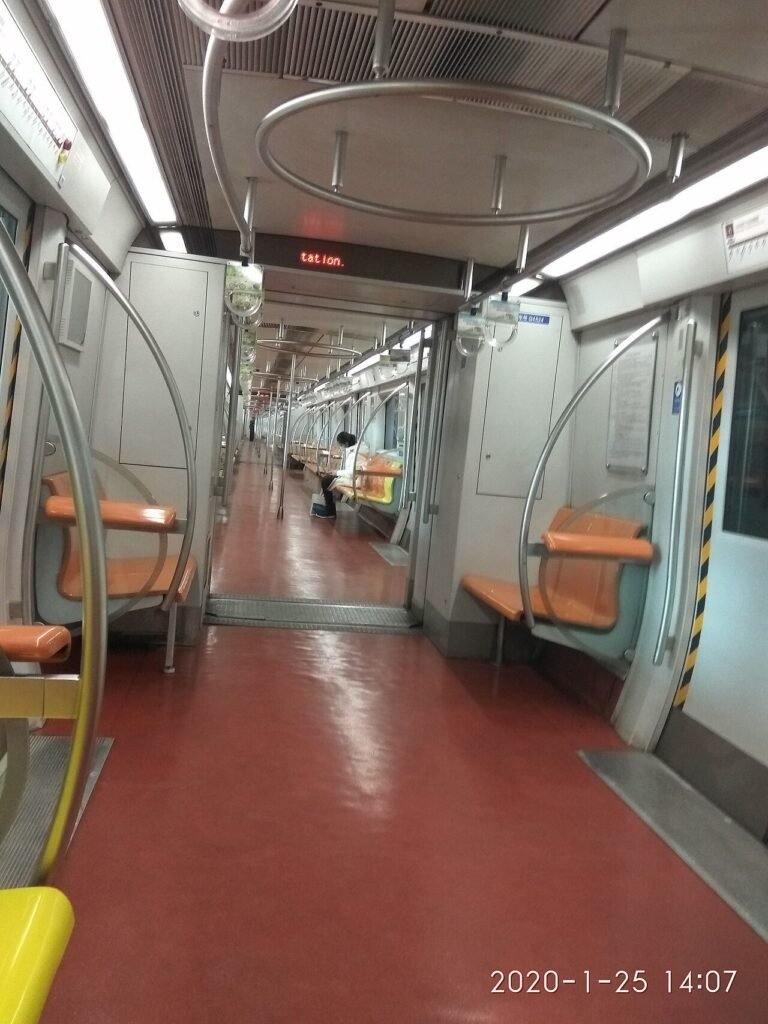
Metro and city transport
The metro is the easiest thing in China to use badly, and it is also mostly signage. The conversation you will have is at the gate or the security bag check.
- Ditie zhan zai nali? Where is the metro station?
- Mai piao / mai dan chengche Buy a ticket. Most people now use an app or tap a card.
- Qu … zenme zuo? How do I get to somewhere?
- Huan cheng Transfer. Ji hao xian means which line. Zai nali huan cheng means where do I change.
- Chukou Exit. Stations have lettered exits, and choosing the wrong one can cost ten minutes.
- Zhe tang che dao … ma? Does this train go to somewhere?
- Rang yi xia Excuse me, letting someone know you are passing.
Announcements on board name the next station and the transfer lines. Listen for the word huan cheng followed by a line number, which means the doors are opening at an interchange. Our Beijing subway guide and Shanghai metro guide go through the specifics of those two networks, which between them handle most first-time arrivals.
Taxis and ride-hailing
The two useful phrases here are the destination and the modifier.
- Qing qu zheli Please go here, with the phone or the card.
- Qing zou … lu Please take such-and-such road. Only if you know the city, but drivers respond well to it.
- Bu yao zou gaosu Don’t take the expressway. Sometimes you want this, sometimes the toll is worth it.
- Qing da biao Please use the meter. Rarely necessary in cities, occasionally necessary at stations and airports.
- Ting che Pull over / stop here.
- Zai zheli ting Stop right here.
- Wo fu xianjin / shua ka I’ll pay cash / by card. Almost nobody pays cash now.
- Qing deng yi xia Please wait a moment. Useful if you are running into a building.
With ride-hailing, the driver will usually call you rather than text, and the call is often just two sentences: where are you, and I am at the location. The phrases you need are wo zai zheli, I’m here, and ni zai nali, where are you, and wo zai lukou, I’m at the intersection. Drivers cancel quickly if they cannot find you, so answer the phone.
Our taxis in China guide covers hailing, fares, and the scams worth knowing, and the Didi and ride-hailing guide covers setting up the app with a foreign card.
Buses and long-distance coaches
Less used by visitors, occasionally unavoidable in smaller places.
- Duoshao qian yi ge ren? How much per person?
- Zhe che dao … ma? Does this bus go to somewhere?
- Ji dian kai? What time does it leave?
- Zui hou yi ban che ji dian? What time is the last bus? Ask this before you go somewhere remote.
- Dao le qing gao su wo Please tell me when we arrive. This one has saved me more than once on rural routes.
When something goes wrong
Short, calm, and in this order:
- Ting bu dong I don’t understand.
- Qing man yidian Please speak more slowly.
- Qing bang wo Please help me.
- Wo mi lu le I’m lost.
- You ren hui shuo yingyu ma? Does anyone speak English?
- Qing xie xialai Please write it down. Often the fastest route to a solution.
- Wo de dongxi diu le I’ve lost my things.
- Jiao jingcha Call the police. Only for genuine emergencies, alongside the national number 110.
Having your destination written down is the single highest-value preparation for all of this. Our China trip documents checklist includes an address card as a standard item, and it is the one travellers most often skip and later wish they had.
Quick facts
- Wo yao qu plus a place name is the universal base phrase for any journey.
- Carry your hotel address written in Chinese on paper, not only on your phone.
- Ting che means stop here, and it works in taxis, buses, and with drivers.
- Chukou means exit. Metro stations are lettered, and picking the wrong one costs time.
- Huan cheng means transfer or change lines.
- Train classes are yideng, erdeng, and shangwu. Say yi zhang erdengzuo for one second-class seat.
- Wo yong huzhao means I’m using my passport, which is what ticket counters need.
- Zui hou yi ban che means the last bus or train. Ask it before going somewhere remote.
Frequently asked questions
Do taxi drivers in China speak English?
Almost never. Use the address card, a map app with your destination pinned, or ride-hailing with the destination entered in the app, which removes the conversation entirely. This is the main practical argument for setting up Didi before you need it. See our ride-hailing guide for China for the setup.
How do I tell a driver to use the meter?
Qing da biao. In cities the meter is standard and drivers use it without being asked. The places to insist are taxi ranks at airports, stations, and tourist sites, where drivers sometimes propose a flat fare. If a driver refuses the meter, get out and take the next car, which is a completely normal response.
What do I say at a train ticket counter?
Destination, date, class, passport. Wo yao mai piao, then the destination, then yi zhang erdengzuo, then hand over your passport. Booking in the app is much less stressful and is covered in our train ticket guide.
How do I ask which platform?
Ji hao yuetai. The departure boards show platform numbers, and they are usually only posted shortly before departure, so do not panic if yours is blank. Watch the screens rather than listening for announcements.
What if I’m on the wrong train?
Find a conductor and say wo shang cuo che le, I got on the wrong train. They deal with this constantly and will tell you where to change. Train staff on high-speed services are used to helping and generally will find someone who speaks some English.
How do I ask for the last train or bus?
Zui hou yi ban che ji dian. Ask this before an evening trip out of town, not after dinner, because in smaller places the answer can be early and there may be no alternative.
Is the metro signed in English?
Yes, in every city I have used. Station names, line numbers, and exit letters all have English, and the onboard announcements are bilingual. The trouble is not language, it is choosing the right exit, which is covered city by city in our city transport guide.
What should I do if I get lost?
Show your address card. That is the whole plan, and it works. Failing that, go into a shop, a hotel lobby, or a metro station and ask at the desk, where there is usually someone with some English. Our China safety guide has the wider context on getting help.
Wo yao qu, ting che, zai nali, ji hao yuetai, and qing bang wo. Plus the address card in your pocket. With those, you can get anywhere in China and recover from most of what goes wrong on the way.
If you want transport and food routes planned around your actual itinerary, get in touch through the contact page.
Written by the ChinaTravelFood editorial team.