Do you actually need travel insurance for China?
Short answer: no law requires it, and I still would not board a plane without it. China does not demand proof of insurance at the border the way the Schengen zone does, and I have never once been asked for a policy document at Beijing or Shanghai immigration. What China does have is a medical system where a foreigner with no local insurance, no local bank app, and no Mandarin is expected to pay first and argue later. That gap is what you are buying against.
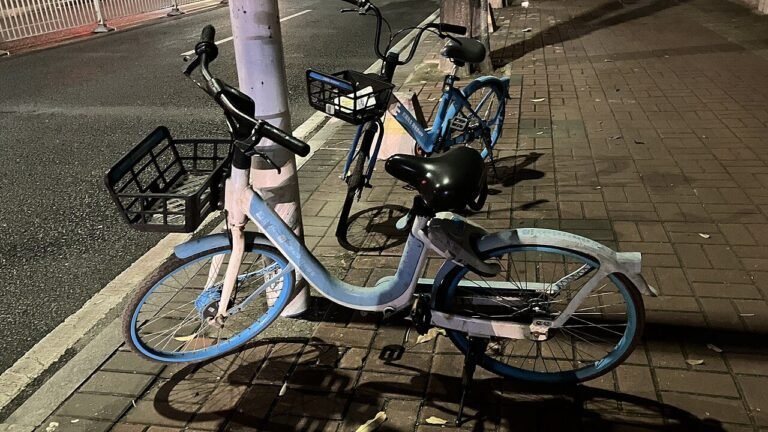
I learned this the ordinary way. A friend broke a wrist on a rented e-bike in Yangshuo in 2019 and spent four hours in a county hospital filling paper forms, paying a deposit in cash, and calling an insurer in another time zone while a nurse held up an X-ray and waited. The bill was small by American standards. The logistics were not. Everything below comes from that kind of ordinary mess, not from a disaster story.
What China’s hospitals are actually like
China has two tiers of care that matter to a visitor, and the difference between them is enormous.
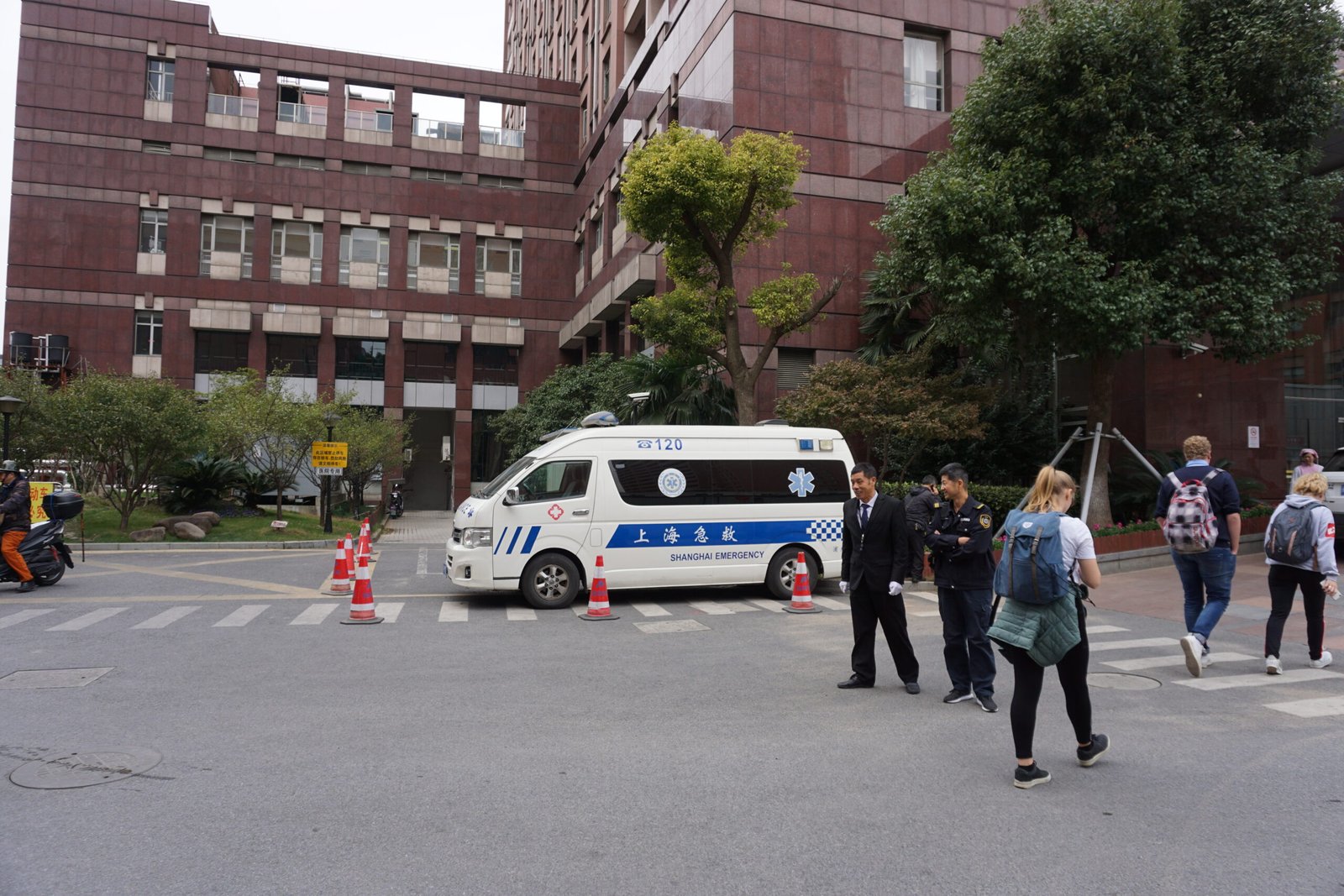
Public hospitals are where most Chinese people go. They are fast-moving, crowded, and relatively cheap. A standard outpatient consultation plus basic tests at a city public hospital often runs to a few hundred yuan, which is tens of dollars rather than hundreds. The friction is not the price, it is the process: registration desks, queue numbers, floors separated by function, and very little English outside the international-class hospitals in Beijing, Shanghai, Guangzhou, and Chengdu. You will be paying a deposit up front in many places, sometimes before treatment starts.
International and private clinics are the other tier. Places like Beijing United Family, Shanghai SinoUnited, or the international departments attached to big teaching hospitals have English-speaking staff, appointment systems, and prices that look Western: a few hundred to well over a thousand US dollars for an uncomplicated visit with imaging. These are the facilities most travel insurers have direct-billing relationships with, which is worth checking before you buy.
The honest trade-off: public hospitals are not bad medicine. Some of the surgery I have seen done in Chinese teaching hospitals was done by doctors who perform the same procedure dozens of times a week. They are just hard to navigate alone, and they are not where you want to be while on the phone with an overseas claims line.
The coverage that actually matters in China
Most policies sold online are designed for European package holidays. China pushes on a few specific pressure points, so read for these.
| Coverage | Why it matters in China | What to look for |
|---|---|---|
| Emergency medical | You are a cash patient at every door | At least $100,000; $250,000 if you will be anywhere remote |
| Medical evacuation | Serious cases get moved to Beijing, Shanghai, Hong Kong, or home | $250,000 minimum, and “to your home country” wording, not just “nearest adequate facility” |
| Repatriation of remains | Unpleasant to think about, brutal to arrange and pay for | Included in most decent policies; confirm the number |
| Adventure activities | Hiking, cycling, skiing, and high altitude are routinely excluded by default | Named activities or a specific adventure add-on |
| Trip delay and interruption | Typhoons on the southeast coast and winter snow in the north cancel trains and flights every year | Delay trigger of 6 hours or less, per-day cap you can live with |
| Baggage and electronics | Phones, laptops, and camera gear | Per-item limits, which are far lower than the total |
| 24/7 assistance line | Someone who can speak to the hospital in Chinese | A real number, collect or reverse-charge, staffed by people who can arrange direct billing |
Baggage cover is the part I weigh least. It is slow, it is paperwork-heavy, and the per-item caps are usually below the cost of anything you actually care about. Buy the medical side well and treat baggage as a bonus.
Exclusions that bite travellers in China
This is where people get hurt, because the activities that make a China trip worth taking are exactly the ones listed in the small print.
Altitude and the Tibet plateau
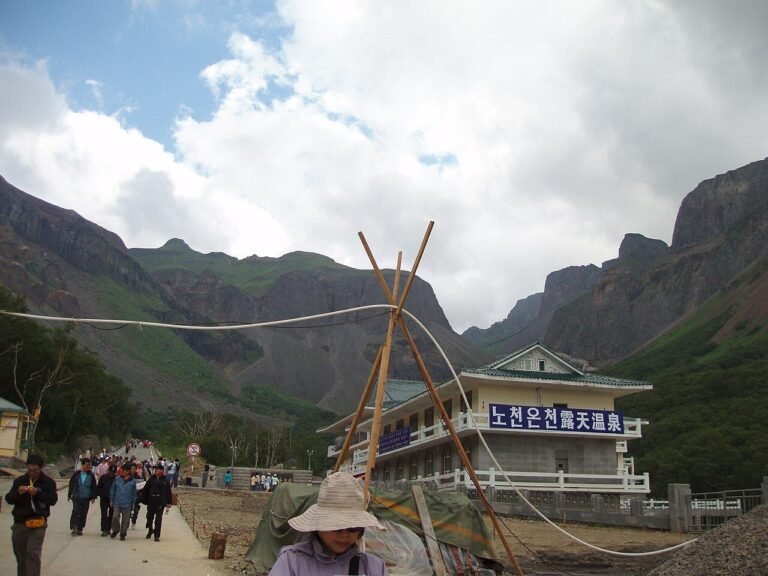
Lhasa sits at roughly 3,650 metres, and the standard overland route to Everest Base Camp crosses passes well above 5,000 metres. Many policies treat anything above 3,000 or 4,000 metres as mountaineering, or exclude “altitude sickness” as a pre-existing-style condition. If your route includes the plateau, buy a policy that names altitude coverage explicitly, and read our notes on altitude sickness before you commit to an itinerary. You will also need the paperwork described in Tibet permits, and the agencies arranging it will sometimes ask about your insurance.
Hiking and the Great Wall
The unrestored sections are the reason hikers go: Jiankou, parts of Huanghuacheng, the long ridge walks at Jinshanling. They are also steep, loose underfoot, and hours from a road. A policy that covers “walking and hiking on marked trails” and excludes “trekking above 2,000 metres” or “off-trail activity” may not respond to a fall on a wall section that is, by definition, off-trail. Ask the insurer in writing.
Skiing and winter travel
Resorts near Harbin and in Xinjiang have grown quickly, and ski cover is almost always an add-on. So is ice climbing, snowmobiling, and anything involving a snowmobile. If you are going for the Harbin Ice Festival and plan to add days on a slope, buy the winter sports rider.
Rented e-bikes and scooters
Electric scooters and e-bikes are how a lot of travellers get around smaller cities and county towns. Most travel policies exclude any two-wheeled motorised vehicle, and some exclude any vehicle where you do not hold a local licence. In China you generally need a Chinese licence to ride a motorbike legally, and the rental shops rarely explain that. My advice: do not ride one, and if you do, accept that you are riding uninsured.
Pre-existing conditions
Standard wording excludes anything you were treated for in the look-back window, usually 60 to 180 days before you bought the policy. If you have a condition, buy early enough to take the waiver most insurers offer, and keep the medical questionnaire honest. A denied claim because of an undisclosed condition is the single most common failure I have seen.
How payment works on the day
Assume you pay first. That is the working model in almost every Chinese facility, public or private, for a walk-in foreigner.
Carry a physical card and some cash. Chinese hospitals take UnionPay, and increasingly Alipay and WeChat Pay, but the overseas-card versions of those apps can fail at a hospital POS terminal for reasons nobody on the ward can explain. I keep about 2,000 yuan in cash in a money belt on a long trip purely for this scenario. Then call the insurer’s assistance line before you pay if the bill looks large. Once direct billing is set up, the hospital bills the insurer; once you have paid and walked out, you are filing a claim from a hotel room with a stack of receipts.
What to collect at the time, because getting it later is close to impossible: the itemised bill with the hospital’s official stamp, the diagnosis in writing, any imaging reports, the discharge summary, and a receipt showing payment received. Photograph everything. Ask for English where it exists; the big city hospitals can produce an English summary on request.
For anything serious, the number you want first is the emergency line, covered in emergencies China, and the second call is your insurer. The general safety picture, including the scams that target people in exactly this state, is in China safety.
What a policy costs in 2026
These are the rough bands I have seen quoted for travellers from North America and Western Europe. Treat them as orientation for 2026 and get your own quote, because age, trip length, and destination country move the number more than anything else.
| Traveller | Trip length | Typical premium range (USD) | Notes |
|---|---|---|---|
| Healthy adult under 40, cities only | 10 days | $40 to $80 | Basic medical and evacuation are enough |
| Adult 40 to 60, mixed itinerary | 2 to 3 weeks | $90 to $180 | Add trip interruption; check the pre-existing waiver |
| Any age, includes Tibet or Xinjiang | 2 to 3 weeks | $140 to $260 | Altitude and evacuation cover are the point |
| Winter sports or long hikes | 1 to 2 weeks | $120 to $220 | Adventure rider usually adds 20 to 40 percent |
| Annual multi-trip | Year | $200 to $450 | Worth it only if you will cross a border three or more times |
| Family of four | 2 weeks | $180 to $350 | Children are often free or heavily discounted on family plans |
The cheapest policy I would ever buy for China has a $100,000 medical limit and a $250,000 evacuation limit. Anything lower is a false economy, because evacuation is the exposure that can reach six figures, not the stitches.
Quick facts
- China does not require visitors to hold travel insurance, and border officers rarely ask for proof.
- Public hospitals are cheap but expect a deposit up front and bring cash; international clinics cost Western prices and speak English.
- Medical evacuation cover matters more than medical cover. Air evacuation from a remote province can cost tens of thousands of dollars.
- Altitude, hiking off marked trails, skiing, scooters, and e-bikes are the usual exclusions. Buy riders for what you will actually do.
- Save the insurer’s collect-call number offline, not just in the app.
- Collect stamped itemised bills and a written diagnosis before you leave the hospital.
- Buy early if you have a pre-existing condition, so a waiver is available.
- Your policy does not replace the practical preparation in vaccinations China.
Frequently asked questions
Is travel insurance mandatory to enter China?
No. As of 2026 the standard tourist visa and the visa-free transit schemes do not list insurance as a document requirement, and I have never been asked to show a policy. Some group tour operators, especially for Tibet, ask for it as their own condition. Confirm current entry requirements with the Chinese embassy or visa centre for your country before you fly, since rules on visas and transit have changed several times in recent years.
Does my domestic health plan cover me in China?
Almost never beyond emergency-only reimbursements at out-of-network rates, and usually not at all outside your home country. US Medicare does not cover you abroad. Most employer plans offer limited foreign emergency coverage. Check the specific wording for “outside the United States” or “worldwide emergency” before assuming anything.
Do credit card travel policies work?
They are better than nothing and weaker than a real policy. Card cover usually has lower medical limits, requires you to charge the trip to that card, excludes evacuation in some cases, and treats adventure activities narrowly. I use card cover as a backstop to a standalone policy, never as the only layer.
What about evacuation from Tibet or Xinjiang?
This is the scenario to over-insure. Distances are huge, the nearest adequate facility may be in Chengdu, Urumqi, or Beijing, and a medically equipped air transfer is expensive. Look for wording that evacuates you to your home country if medically necessary, not just to the nearest acceptable hospital, and make sure altitude is not carved out.
Will a Chinese hospital treat me without payment up front?
Emergency departments are obliged to stabilise patients, but in practice a deposit is requested early and administrative pressure to settle the bill is real. International clinics will work with an insurer’s guarantee of payment. That is why the 24/7 assistance line is the most valuable part of the policy.
Are adventure activities covered by default?
Rarely. Skiing, snowboarding, scuba diving, mountaineering, and trekking above set altitudes are standard exclusions that require a rider. Even ordinary hiking may be limited to marked trails, which rules out much of the unrestored Great Wall.
How do I file a claim from outside China?
Most insurers now accept a photo upload in an app. You will need the itemised stamped bill, proof of payment, the medical report with diagnosis, and often a claim form signed within a set number of days. File before you fly home if you can, and keep digital copies of everything in two places.
Is trip cancellation worth it for a China trip?
Yes, more than most people expect. Typhoon season closes airports along the southeast coast, winter snow disrupts rail in the north, and Golden Week reshuffles everything. Cancellation cover only helps if you buy it shortly after booking the trip, not the week before departure.
What should I do if I get sick in a small city?
Call the assistance line first and let them locate a facility, because they will often redirect you to a larger city hospital that can bill them directly. Then go. Do not try to self-diagnose into a tier-1 hospital in a provincial capital if the insurer has already arranged somewhere else.
Plan a China trip with the boring parts handled
Insurance is one of the unglamorous pieces of a trip that has to work before you land. If you are sketching a route and want help matching the itinerary to the right cover, the right season, and the right food stops, tell us your dates and what you like to eat on our contact page and we will put together a custom China travel and food plan for you.
Written by the ChinaTravelFood editorial team.