Twenty lines and a city that got smaller
Shanghai’s metro is the largest urban rail network in the world by route length, somewhere north of 800 kilometres across roughly twenty lines, and the first time I used it I got on going the wrong way because I read the platform screen as a list of stations rather than a direction. That mistake cost me eleven minutes. Every subsequent trip on the same network has cost me about four yuan.
The system is clean, fast, comprehensively signed in English, and genuinely easy once you know four things: how the fare works, how to pay without a Chinese bank account, how to pick the right exit, and where the rush hour will ruin your morning. Everything below is those four things plus the specific stations and airport connections worth knowing.
For the wider transport picture in Chinese cities, our city transport guide covers buses, bikes, and taxis alongside metro, and the Shanghai travel guide covers where the stations put you in relation to what you want to see.
How the fare works
Fares are distance-based and cheap. A short hop starts at around 3 RMB, most central journeys run 4 to 6 RMB, and a long cross-city trip or a run out to Pudong Airport tops out around 9 or 10 RMB. Transfers between lines inside the paid area are included in the single journey fare, which means you do not pay again when you change.
The important mechanic: you tap or scan in, and you tap or scan out. The gate does not open on the way out unless the fare is settled, either because your card or code covers it or because you insert the token.
| Method | How | Pros | Cons |
|---|---|---|---|
| Single-journey token | Buy at machine with cash or card, insert at exit gate | No setup, no account | Queue at machines; keep the token |
| Alipay transport code | Enable the transit QR in Alipay | Works once Alipay is set up with your card | Requires the Alipay setup in advance |
| Shanghai Metro app | Download, register, generate a QR code | Official, reliable, in Chinese | Chinese interface; needs a phone number |
| Physical transport card | Buy at any station, top up with cash | Works on buses, ferries, and taxis too | Deposit, and you have to queue to top up |
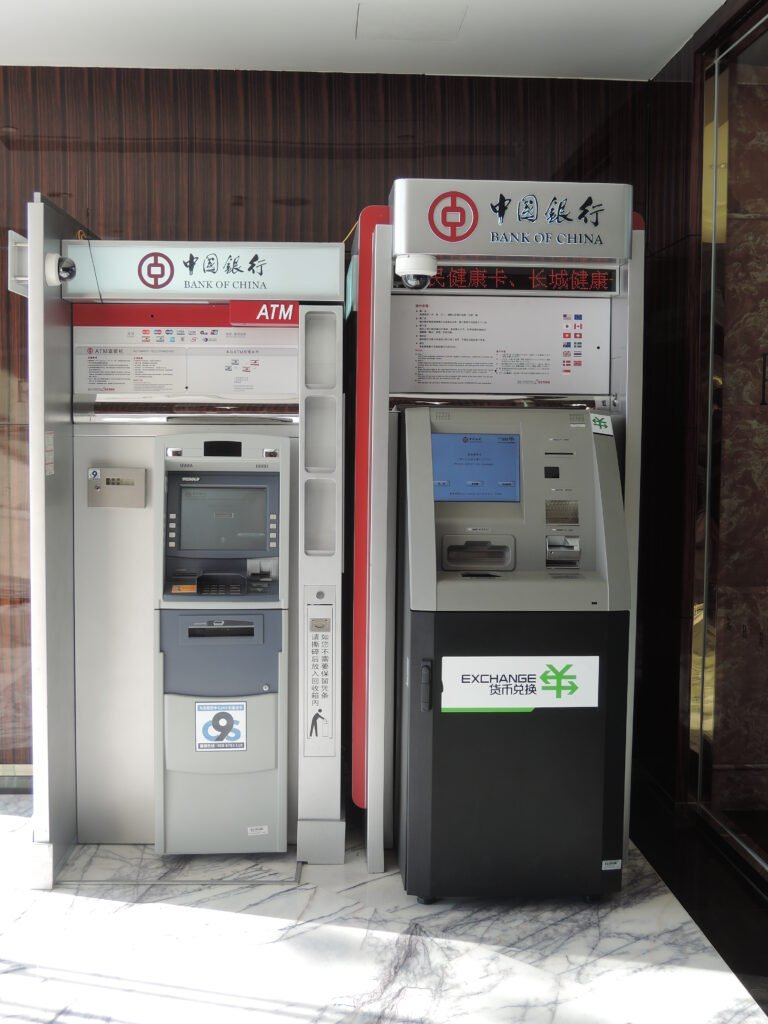
| Contactless bank card | Tap a UnionPay card, or some Visa/Mastercard | Nothing to set up | Foreign card support is inconsistent |
| Digital transport card in Apple Wallet | Add a Shanghai transit card to your phone | Tap and go, no internet needed | iPhone only, and setup is fiddly |
My recommendation: set up Alipay with your foreign card before you fly, enable the transport code, and carry a small amount of cash as backup for the token machines. That covers everything. Our payment guide for China walks through the Alipay setup, which is the single most useful piece of trip preparation for a Shanghai visit.
Reading the system
Each line has a number and a colour, and every station has a numeric code, which is useful when you are looking at a network map on your phone. Trains display the terminus, not the line number, so check that the destination on the front of the train is the direction you want.
Onboard announcements are in Mandarin and English, and they announce the next station plus the interchange lines. The phrase to listen for after the station name is the transfer information, which tells you which lines you can change to there. Watch the doors: they open on the left or the right depending on the station, and the display says so.
Exits are numbered in Shanghai, not lettered as in Beijing, and they are signed with what is at each one. Picking the wrong exit at a big interchange can add ten minutes to your walk, so check the exit board in the concourse before you go up. At People’s Square, which has around twenty exits, this genuinely matters.
Stations worth knowing
- People’s Square, Lines 1, 2, 8. The geographic and psychological centre. Shanghai Museum is here, Nanjing Road pedestrian street starts here, and the exit numbering is a maze.
- Nanjing East Road, Lines 2, 10. For the pedestrian street and, a short walk north, the Bund. Our Bund guide covers the walk.
- Lujiazui, Line 2. Pudong, the skyline, the observation decks, and the elevated walkway that makes the area navigable on foot.
- Jing’an Temple, Lines 2, 7, 14. The temple, the shopping, and good access west.
- Xujiahui, Lines 1, 9, 11. A big interchange in the southwest with several large malls and a decent amount of eating.
- South Shaanxi Road, Lines 1, 10, 12. The French Concession edge, tree-lined streets, and the best walking in the city.
- Shanghai Railway Station, Lines 1, 3, 4. Conventional and some high-speed services.
- Hongqiao Railway Station, Lines 2, 10, 17. The high-speed hub and the airport. Very large.
Our Shanghai food neighborhoods guide maps the eating to these stations, which is the most useful way to plan a day here: pick a line, ride out, eat, walk back.
Getting to and from the airports
Shanghai has two airports, and they are not close to each other.
Pudong, PVG
- Maglev. Pudong Airport to Longyang Road in about eight minutes at a top speed of 430 km/h, which is the fastest commercial train service in the world. Around 50 RMB single, with a discount if you show a boarding pass, and around 80 for a return. Longyang Road is on Lines 2 and 7. It runs at reduced speed outside certain hours, and it does not run late. Worth doing once for the novelty, and genuinely useful when you are in a hurry.
- Metro Line 2. Pudong Airport to central Shanghai, roughly 70 to 90 minutes, around 8 RMB. Slow, cheap, reliable, and goes all the way across the city.
- Airport buses. Several routes to key points, around 20 to 30 RMB, and useful if you have heavy luggage and a hotel near one of the stops.
- Taxi or ride-hailing. Roughly 150 to 250 RMB to central Pudong or to the Bund depending on traffic, and 45 to 90 minutes. See our Didi and ride-hailing guide for setting up the app.
Hongqiao, SHA
Much easier. Lines 2, 10, and 17 all serve Hongqiao, which is also the high-speed rail station, so you can arrive by air and leave by train in the same building. Central Shanghai is about 40 minutes and around 5 RMB.
For a full comparison including the shuttle options by city, see our airport transfer guide for China.
Rush hour, and how to avoid it
Weekday peaks run roughly 07:30 to 09:30 and 17:30 to 19:30, and Line 2 at those hours is genuinely packed, along with Lines 1 and 9. If you have flexibility, travel between 10:00 and 16:00 and the difference is dramatic.
Queueing is not a Shanghai habit, so stand your ground politely at the platform markings and let people off before you get on. People do move aside for anyone obviously unfamiliar, and the whole thing is less aggressive than it looks from the platform.
Bag security is at the entrance to most stations, with an X-ray and sometimes a bottle check. It is fast and it is why the gates are not the bottleneck. Eating is discouraged onboard, drinking water is fine, and the no-smoking rule is absolute.
Last trains and late nights
Most lines stop running somewhere between 22:30 and 23:30, earlier on some branches. Check the last train time for your specific line before a late dinner, because Shanghai is a genuinely late city and the gap between the last metro and the first one is longer than you expect. Taxis and ride-hailing are easy after midnight and not expensive across short distances.
There is no all-night service. If you are out late in the French Concession, the walk back is often pleasant and the taxi ride is cheap.
Day trips by metro
Two that work without a car. Zhujiajiao, the canal town on the western edge, is reachable on Line 17 and takes about an hour from central Shanghai, and it is covered in our Zhujiajiao guide. Closer in, Line 11 runs out toward the north and connects to other water towns with a bus link.
Quick facts
- Shanghai has roughly twenty metro lines and more than 800 km of track, the largest network in the world by length.
- Fares run about 3 to 10 RMB, distance-based, with free transfers inside the paid area.
- You scan or tap both in and out. The exit gate will not open otherwise.
- Exits are numbered, not lettered. Check the exit board before you go up.
- Pudong Airport is served by the maglev, about eight minutes to Longyang Road, and by Line 2, about 70 to 90 minutes.
- Hongqiao Airport, the railway station, and Lines 2, 10, and 17 are all in the same complex.
- Weekday peaks are roughly 07:30 to 09:30 and 17:30 to 19:30. Line 2 is the worst of them.
- Last trains run around 22:30 to 23:30. Check your line.
Frequently asked questions
Can I use the Shanghai metro with a foreign credit card?
Directly at the gate, sometimes, but do not rely on it. The reliable routes are the Alipay transport code, which works once you have linked an international card inside Alipay, a single-journey token bought with cash, or a Shanghai transport card topped up with cash. Our payment guide for China covers the Alipay setup in detail and it is worth doing before you land.
Is the Shanghai metro signed in English?
Fully. Station names, line numbers, exit numbers, and onboard announcements are all bilingual, and the network map has an English version. Shanghai is the easiest major Chinese city to navigate by metro without any Mandarin.
How much is a metro ride in Shanghai?
About 3 RMB for a short trip up to around 9 or 10 RMB for a long cross-city journey or the run out to Pudong Airport. Transfers between lines are included in the single fare. There are also day passes sold at some stations; check current availability and price at the ticket office, as these have changed.
Is the maglev worth it?
Once, yes. It is the fastest commercial train in the world, it takes about eight minutes, and the experience of watching the speed display pass 400 km/h is worth the fare. For practical purposes, Line 2 gets you further into the city for a fraction of the price, and the maglev only reaches Longyang Road. Take it if you are in a hurry or curious, not because it is the efficient option.
How early does the metro start?
First trains are generally around 05:30 to 06:00 on most lines, which is early enough for almost any flight except the very earliest departures from Pudong. For those, book a taxi the night before and confirm with your hotel.
Can I take luggage on the metro?
Yes, and people do it constantly. There is no luggage allowance and no extra charge. The constraints are practical: the gates, the stairs at older stations, and the crowds at rush hour. If you have large bags, avoid the peaks and look for the wide gate.
What should I do if I get on going the wrong way?
Get off at the next station, cross to the other platform, and come back. It costs nothing and nobody thinks anything of it. Check the terminus displayed on the front of the train before boarding, which is the habit that prevents this.
Is there a metro card worth buying?
If you are staying a week or more, or you plan to use buses and ferries as well, the physical transport card is convenient and works across modes. For a short visit, the Alipay code or single tokens are simpler. The card requires a deposit and a queue to top up.
That is the whole preparation. Link your card in Alipay, enable the Shanghai transit code, download an offline map, and learn which line number runs past your hotel. After that the city is about four yuan wide. If you want a Shanghai plan built around where you are staying and what you want to eat, contact us through the contact page.
Written by the ChinaTravelFood editorial team.