Suzhou eats quietly, and that is the point
The first breakfast I ate in Suzhou was a bowl of noodle soup at 6:40 a.m. in a shop with four tables, where the owner floated a thin white noodle in clear broth and topped it with braised duck slices without asking what I wanted. There was no menu in English, no picture on the wall, and nothing on the table except vinegar and chopsticks. The bill was 12 yuan. That is the Suzhou food experience in one bowl: restrained, slightly sweet, and quietly confident.
Suzhou’s reputation abroad rests on gardens and canals, but the city’s cooking is the older claim to fame. For a thousand years this was the place wealthy officials retired to, and they brought chefs with them. The result is a Jiangnan table that leans on freshwater fish, river shrimp, lotus root, and a sweet-savory balance that visitors from the west sometimes read as “dessert for dinner.” It is not. The sugar is a seasoning here, not a sugar rush, and once your palate adjusts you start noticing its absence in other cities.
This guide walks the streets and markets where that food actually lives: Pingjiang Road for the postcard version, Shantang Street for lanterns, Guanqian for the classic restaurants, Shiquan and Fengmen Hengjie for what locals buy, and the Yangcheng Lake crab season that turns October into a city-wide event. Prices are from 2024 and 2025 visits; check current rates yourself. For the wider city context, our Suzhou travel guide covers gardens, canals, and crowds.
Quick facts
- Suzhou is 25 minutes from Shanghai by high-speed rail; the old town is compact and walkable
- Signature flavors: sweet-and-savory sauces, freshwater fish, river shrimp, lotus root, and rice wine
- Hairy crab season at Yangcheng Lake runs roughly mid-October to late November
- Breakfast shops open by 6 a.m. and often sell out by 9; lunch service can end by 1:30 p.m.
- Most snack streets are free to walk; a full food day costs 80 to 150 yuan per person
- The gardens close by 5 p.m. in low season, so eat first and garden later, or the reverse
Pingjiang Road: the postcard that earns it
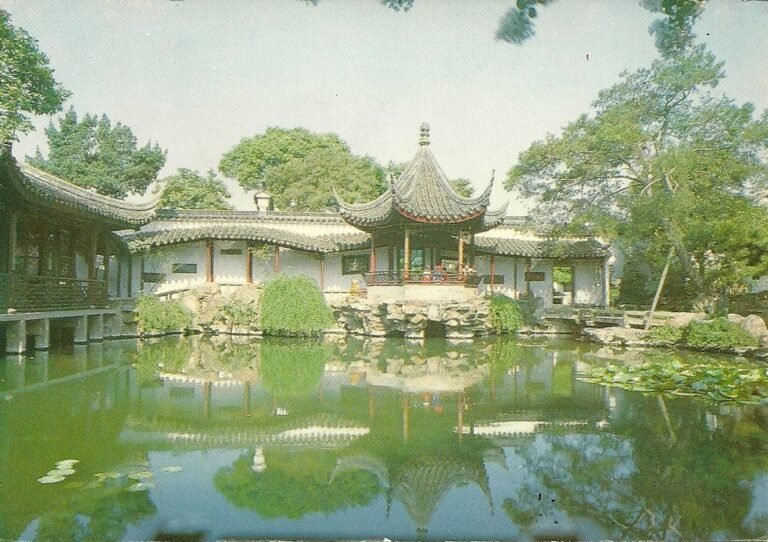
Pingjiang Road (平江路) runs about 1.6 kilometers along a canal in the northeast of the old town, stone bridges every hundred meters, whitewashed walls, and willow trees doing their job. It is the most photographed street in the city, and unlike most famous streets in China it survives the fame, because the lanes running parallel to it are still working neighborhoods.
Walk it in the early morning, before 8 a.m., when the water in the canal is black and still and the only sound is a shopkeeper washing the flagstones in front of his door. By 10 a.m. the street fills, and by afternoon it is a slow river of tourists holding cups of bubble tea. I still recommend the afternoon version once, for the teahouses and the boat departures, but the food is better elsewhere.
What to eat here: the Pingjiang version of 袜底酥, a flat, crisp, sesame-flecked cracker named after the sole of a sock, sold by weight for 10 to 20 yuan a bag. Look for 桂花糖粥, sweet osmanthus rice porridge served warm from a clay pot, at 6 to 10 yuan a bowl, and 酒酿饼 in early spring, a pan-fried cake leavened with rice wine lees that tastes faintly of fermentation and costs three or four yuan. The rose-flower cakes (鲜花饼) sold in pastry windows along the street are a Suzhou invention rather than a Yunnan import, and the good ones use real candied rose petal.
Two teahouses on the lane are worth a stop: one plays pingtan (评弹), the Suzhou storytelling ballad sung in soft local dialect, in the afternoon. A pot of tea plus the performance runs 40 to 80 yuan depending on how long you sit. I have spent entire rainy afternoons in these rooms, which is arguably the most Suzhou activity available. For the classic restaurant version of the city’s cooking, our Suzhou food guide covers the banquet side.
Shantang Street: seven li of lanterns
Shantang Street (山塘街) runs west from the Changmen gate area along the Shantang canal toward Tiger Hill, about seven li, or three and a half kilometers, hence the old name Qili Shantang, the “seven-li Shantang.” The section near the canal mouth has been restored into a lantern-lit food street; the western stretch toward Huqiu is quieter and more lived-in, with old women selling vegetables from baskets.
Go at dusk. The red lanterns come on, the canal boats start moving, and the whole street smells of fried dough and brown sugar. Eat as you walk: 生煎包 (shengjianbao), pan-fried pork buns with a crispy base, at 8 to 12 yuan for four; 海棠糕, a grid-iron cake stuffed with red bean and glazed with caramelized sugar, 5 to 8 yuan; and the local 糖粥, which in this neighborhood comes with a heavier hand on the osmanthus.
Shantang is also the best street in the city for a late dinner of Suzhou-style noodles, because the kitchens stay open later than the old-town shops. Order 焖肉面, a bowl of thin noodles in a slightly sweet broth with a braised pork belly slab the color of mahogany, for 20 to 35 yuan. The trick is to ask for the noodle “jian” (firm) rather than soft, and to eat it immediately; Suzhou noodles go from perfect to paste in about four minutes. For the full noodle taxonomy, our soup dumpling and noodle guide covers the regional families.
Guanqian Street: the classics under the arcade
Guanqian Street (观前街), south of the old town, has been Suzhou’s commercial main street for a century and a half, a covered arcade of shops, department stores, and restaurants. It is not atmospheric, and I am not going to pretend otherwise. It is, however, where the city’s three old-name restaurants sit, and the food is serious.
Songhelou (松鹤楼), founded in 1737, is the birthplace of the famous squirrel mandarin fish (松鼠鳜鱼), a whole fish scored into a diamond pattern, deep-fried so the flesh fans out like a squirrel’s tail, then flooded with a sweet-sour tomato sauce. A whole fish runs 150 to 250 yuan and needs two people. Deyulou (得月楼), a few doors down, does the same repertoire with slightly more polish and higher prices; it was a favorite of late-Qing literati and the room still trades on that. If you want one banquet dish in Suzhou, this is it: 响油鳝糊, stir-fried eel shreds thickened with a hot oil poured over garlic at the table, or 蟹粉豆腐, silken tofu with fresh crab roe in autumn.
For a cheaper classic, walk to Luchangxing (陆长兴), the local noodle chain founded in the 1930s, where a bowl of 枫镇大肉面, the summer specialty with ice-cold soup and a huge slice of pork, costs under 30 yuan. Between Guanqian and the smaller 太监弄 food lane behind it, a meal here is the best value in the old town. Our overview of Jiangsu cuisine explains the sweet-and-savory logic behind everything on these menus.
Where locals actually shop: Shiquan, Fengmen Hengjie, Shuangta
The tourist streets show you Suzhou’s food history. The working streets show you its food present, and they are a fifteen-minute walk from Pingjiang.
Shiquan Street (十全街), along the canal near Suzhou University, is where young Suzhounese eat on weeknights: small restaurants with no signage beyond a red lantern, selling 油爆虾 (quick-fried river shrimp, 60 to 90 yuan a plate in season), 酱汁肉 (soy-braised pork belly, 40 to 60 yuan), and the city’s best 汤团 in spring, glutinous rice balls with sesame or rose filling floating in sweet soup. The shops here do not have English menus, but the tanks by the door tell you what is fresh.
Fengmen Hengjie (葑门横街), east of the old town, is a wet market street with nothing restored about it: fish heads in basins, hand-cut noodles hanging from poles, and 100-year-old shops selling 枣泥麻饼, a date-paste sesame cake that travels well and costs 15 to 30 yuan a box. Come before 9 a.m. for the full version, with breakfast stalls grilling 油氽团子, fried glutinous balls with a meat center.
Shuangta Market (双塔市集), north of the old town, is the cross-over pick: a traditional market rebuilt in 2018 into a clean, photogenic food hall that kept its vendors. It sells 苏式糕点, the Suzhou pastries (green bean cake, pine-nut candy, salted egg-yolk mooncake in season), 糖粥, and 煎团 at honest prices, and it is the one market I send every first-time visitor to. Bring cash or a phone; the vendors are set up for both. For a deeper tour of markets, our wet market field guide explains what you are looking at.
The October table: Yangcheng Lake crabs
From roughly mid-October to late November, Suzhou’s food conversation narrows to one subject: hairy crab (大闸蟹) from Yangcheng Lake, 40 minutes northeast of the city. The crabs are graded by weight and sold in pairs, steamed with ginger, and eaten with a vinegar-and-ginger dip and a small set of metal picks that every restaurant hands out without being asked. Prices swing wildly: farmed lake crabs run 30 to 80 yuan each at market, the real Yangcheng ring-farmed ones two to five times that, and restaurants charge 200 to 500 yuan for a crab dinner for one.
My honest advice: eat crab at a mid-range restaurant rather than a banquet hall, because the crab is the same animal and the markup is not. Ask for 母蟹 (female) if you like roe, which peaks in late October, and 公蟹 (male) if you want the golden paste, which is better in November. A plate of 蟹粉小笼, crab-roe soup dumplings, is the other seasonal order and costs 40 to 70 yuan for a basket of six. If you are visiting in this window, our food festival calendar lists what else is in season.
A one-day Suzhou food walk, priced
| Time | Stop | Order | Cost |
|---|---|---|---|
| 7:00 a.m. | Pingjiang Road side lane | Sweet rice porridge, shengjianbao, fried dough stick | 15 to 25 yuan |
| 9:30 a.m. | Shuangta Market | Suzhou pastries by weight, soy milk | 20 to 40 yuan |
| 11:30 a.m. | Guanqian: Songhelou | Squirrel mandarin fish, a vegetable, rice | 150 to 250 yuan for two |
| 3:00 p.m. | Pingjiang teahouse | Pot of green tea with pingtan performance | 40 to 80 yuan |
| 6:00 p.m. | Shantang Street | Braised pork noodles, crab-roe dumplings (in season) | 50 to 120 yuan |
| 9:00 p.m. | Shiquan Street | Quick-fried river shrimp, soup, beer | 80 to 150 yuan for two |
That is a full day of the city’s range for roughly 350 to 675 yuan per person, depending on how fancy the lunch gets. Skip Songhelou for a bowl of Luchangxing noodles and the same day costs under 200 yuan.
When to eat your way through Suzhou
Spring, from late March through May, is the best season: willow green along the canals, wine-lees cakes in the shops, and river shrimp at its sweetest. Autumn, September through November, brings the crabs and cooler walking weather, and the osmanthus bloom in September scents the whole old town. Summer is hot and humid, though the city’s cold-noodle and 枫镇大肉面 season is a real consolation. Winter is grey and damp, good for noodles and hot pots, and the gardens are empty.
Avoid the first week of October and the Spring Festival week, when Pingjiang Road becomes impassable. Weekday mornings are always the quietest, and lunch is the meal I would never skip in Suzhou because the kitchens close early. For a route that pairs the food with the gardens, our guide to the Suzhou classical gardens and the Suzhou citywalk routes fits the same days together.
Frequently asked questions
What is the single must-eat dish in Suzhou?
Squirrel mandarin fish at Songhelou, if you want the famous one, or a bowl of 焖肉面 at any old noodle shop if you want the everyday one. The noodle teaches you more about how the city tastes.
Is Suzhou food too sweet for foreign visitors?
It is sweeter than most Chinese cuisines, but the sugar is a background note, closer to a Milanese sauce than a dessert. Start with braised pork and noodles rather than the sweetest pastries, and by the third day you will likely prefer it.
Do the famous food streets still have real food?
Yes, but unevenly. Pingjiang and Shantang have real stalls mixed with souvenir shops; Guanqian is restaurant country; Shiquan and Fengmen Hengjie are almost entirely local. I would spend mornings in the last two and evenings on Shantang.
Can I eat hairy crab if I only have a day in October?
Yes. Book a crab dinner at a mid-range restaurant near Guanqian or Shantang, order one male and one female, and let the staff bring the tools. Crab houses fill up fast in season, so reserve a day ahead.
Is Pingjiang Road worth it at all?
Yes, at the right hour. Before 8 a.m. or after the lanterns come on, it is one of the loveliest streets in China. At midday it is a queue. Same street, different city depending on the clock.
How do I pay at market stalls?
Phone payment is universal now; Alipay and WeChat QR codes work at market stalls and even with the oldest vendors. Link your foreign card before you travel, as our payment guide explains. A little cash is still polite for tiny purchases.
Is a day trip from Shanghai enough for the food streets?
Enough for one good day, not enough for the crab season or a proper dinner on Shiquan. If food is the point, stay one night in the old town so you can eat breakfast and dinner in Suzhou rather than on the train.
If you would like this built into a longer Shanghai-to-Suzhou route with the gardens and the crab houses booked around the season, send us a note through the contact page and we will draft a custom food-and-travel itinerary.
Written by the ChinaTravelFood editorial team.