The desert that China is greening
Drive south from Baotou and the land changes character. The Yellow River makes its great northward bend here, the famous “几” shape that wraps the Ordos plateau, and on the inner side of that bend lies the Kubuqi Desert, China’s seventh-largest, a sweep of sand and gravel about 16,000 square kilometers across. The name is usually translated from Mongolian as “bow,” a reference to the way the desert arcs along the river.
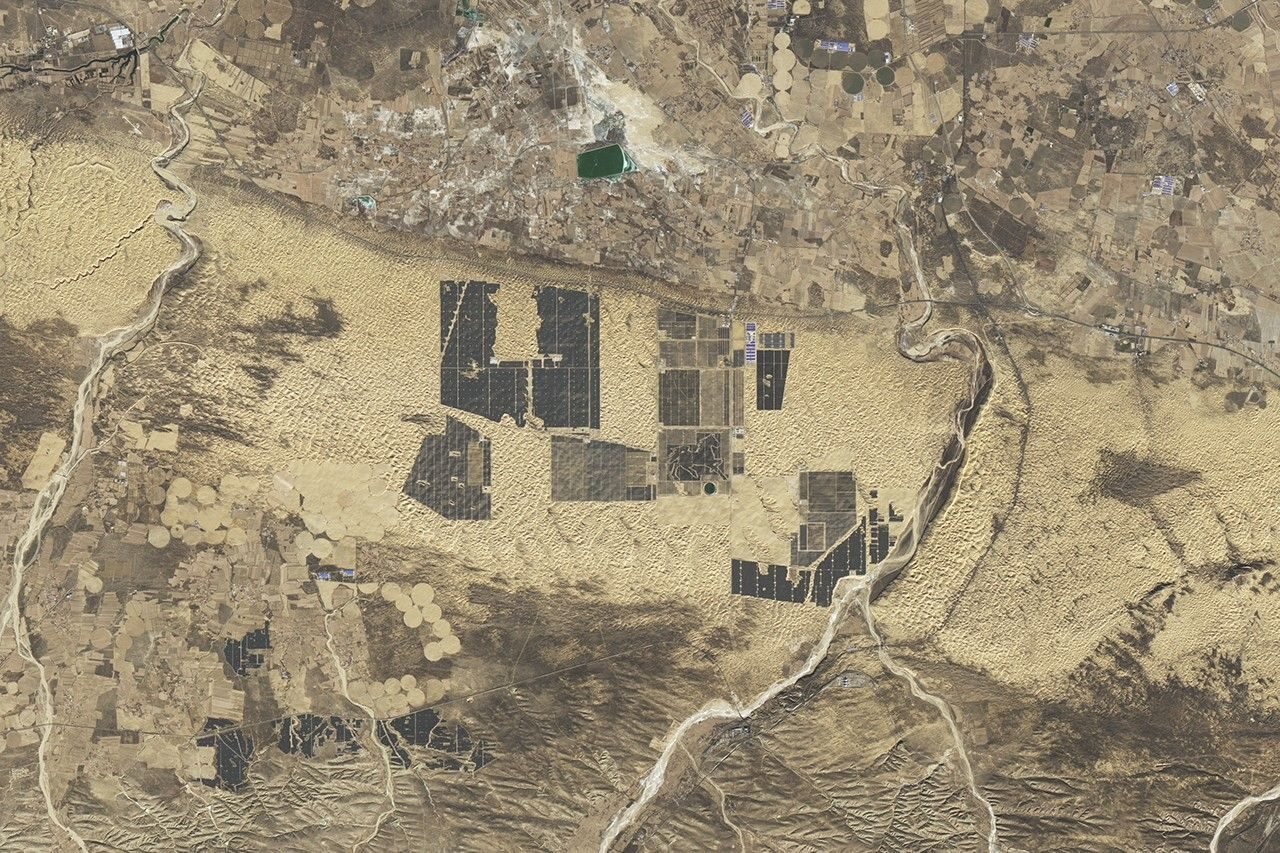
What makes the Kubuqi different from China’s other deserts is the trees. Since the late 1980s, a state-backed and corporate-led campaign has planted millions of drought-resistant species across its western half, and the desert has measurably shrunk. The story is a point of national pride, and it is the reason a desert an hour from a city can also host a resort with ropeways and water parks. This guide covers what to do in the Kubuqi, what it costs, and how to get there. Prices are from a 2024 check; confirm with the scenic area before you go, since resort pricing here changes seasonally.
Xiangshawan: the resort desert
The main attraction is 响沙湾 (Xiangshawan, “sounding sand bay”), a 5A resort in Dalad Banner (达拉特旗) where the sand sings. The singing is real: the dry, fine grains hum and boom underfoot on the steep faces, loudest when you slide, which is why sand sliding is the headline activity here. The same physics made the dunes famous as 响沙, and the resort is built around it.
Xiangshawan is organized as islands connected by ropeway over the sand, and which island you pick shapes your day.
The singing sand is worth a paragraph of its own. The dunes here are fine, dry, and loosely packed, and when you slide down a steep face the grains move together and set up a vibration that carries as a low hum or, on the biggest slopes, an outright boom. It is loudest in the afternoon when the surface is driest, and the resort’s boards are built for it: you sit, push off, and ride a wash of sand down a face maybe a hundred meters long. Wear long trousers if you care about your legs, close your shoes properly, and expect sand in every pocket you own. Veterans say the boom carries furthest right after a dry spell, which also happens to be when the sand burns hottest, so there is a trade-off between sound and comfort.
| Island | What is there | Best for |
|---|---|---|
| 仙沙岛 (Xiansha) | Desert sports: sand sliding, dune buggies, camels, ziplines | Adults and active teenagers |
| 悦沙岛 (Yuesha) | Water park, swimming pools, fountain shows | Families with young children, hot afternoons |
| 福沙岛 (Fusha) | Mongolian culture: yurts, horse shows, folk performances | A gentler, more cultural afternoon |
Entry plus the ropeway runs around 130 to 160 yuan per person depending on the season, with individual activities charged on top or bundled into higher-tier tickets. Two islands is a full day; one island plus the sand slides is a comfortable half day. The full guide to the area is in our Resonant Sand Bay article.
Qixing Lake and the ecological story
West of the resort, in Hanggin Banner (杭锦旗), the Kubuqi Desert Park around 七星湖 (Qixing Lake, “seven star lake”) shows the other face of the desert: seven connected lakes in a green basin, surrounded by the shelterbelts planted over three decades. It is quieter than Xiangshawan, aimed at desert camping, birdwatching, and slow walks rather than ropeways. The contrast between the lakes and the planted forests nearby is the point of the visit, and the park interprets the sand-control work for visitors who want the background.
The most moving site in that story is 恩格贝 (Engebei), a demonstration zone in Dalad Banner that became a tree-planting mecca in the 1990s, in part because of a Japanese agronomist named Onyama Masahide, who came to plant trees in the desert at the age of seventy and kept returning until his death in 2004. The museum and the planted hills tell the story better than any statistic, and the site is a pilgrimage of sorts for volunteers from both China and Japan. A visit is usually combined with Qixing Lake on a half-day drive.
The mechanics of the greening are simpler than you might expect. Sandy soil holds water badly, so the first step was building shelterbelts of fast-growing species like 沙蒿 (sand wormwood) and 梭梭 (saxaul) to slow the wind, then planting deeper-rooted trees behind them. Straw checkerboards, the grid of buried wheat straw you will see across every Chinese desert, hold the surface in place while the plants establish. Water is the constraint everywhere, which is why the desert shrinks where irrigation and shelter exist and stays put where it does not.
Getting there
Two base cities work. Ordos, whose seat is Dongsheng district (东胜区), is on the high-speed line: about two hours from Hohhot, one hour from Baotou, and it has a modern airport with domestic flights. Baotou is the closer practical base for Xiangshawan, roughly 50 minutes’ drive across the Yellow River bridge, and Baotou’s airport and rail connections make it the easier arrival from outside the region.
From either city, hire a car, join a tour, or take the tourist buses that run to Xiangshawan in summer. Independent driving is fine on the paved approach roads; the soft dunes themselves are for the resort’s vehicles and licensed drivers, not rental cars. More on the region’s routes is in the Inner Mongolia drive guide, and the wider picture of self-drive planning in the road trip in China article.
What a visit costs
- Xiangshawan entry and ropeway: 130 to 160 yuan per person, with activity packages on top.
- Kubuqi Desert Park (Qixing Lake): roughly 80 to 100 yuan, camping charged separately.
- Engebei: a modest entry fee, mostly a donation-style ticket supporting the planting work.
- Desert camp night: 200 to 400 yuan per person including a simple dinner and breakfast.
- Day tour from Ordos or Baotou: 300 to 500 yuan per person including transport, entry, and lunch.
- Hotels: Ordos has full-service hotels at mainland prices; the desert rim has basic guesthouses.
Ordos is a peculiar and unexpectedly interesting city, built new from the 2000s in a showcase of modern Mongolian-flavored architecture, with a huge Genghis Khan mausoleum complex an hour out at Ejin Horo. If you are already in the region, the mausoleum is worth the day it costs, even though it sits well outside this guide’s desert remit.
When to go
May through October. July, August, and early September are the resort’s high season, when the water islands and evening shows run at full capacity and the desert is warm but not vicious at 4 pm. Spring (March to May) is sandstorm season in Ordos and can shut down activities entirely. Autumn is the quietest and most photogenic window, with the planted forests turning gold against the sand.
Compare it with the other options before you commit: the Badain Jaran Desert is the serious multi-day wilderness to the west, the Tengger Desert is the Yellow River meeting-the-sand classic near Zhongwei, and the Kubuqi is the one that works as a day trip or a family weekend. If you are arriving via the provincial capital, the Hohhot travel guide covers the city and its monasteries.
Two honest caveats. The resort islands get crowded on summer weekends and during school holidays, when Chinese families arrive by the busload; go on a weekday if your schedule allows. And the Kubuqi’s planted west and the sandier east are different experiences, so tell your driver which one you want rather than saying “the desert.”
If you want help building an Ordos route that combines the Kubuqi with the grassland, the mausoleum, and the Yellow River bend, get in touch through our contact page and we can sketch something custom.
Frequently asked questions
Where is the Kubuqi Desert?
In Ordos, Inner Mongolia, along the inside of the Yellow River’s great northern bend. It sits roughly an hour from Baotou and an hour and a half from Ordos city, both of which have airports and high-speed rail.
What is Xiangshawan like?
A developed desert resort with ropeways linking islands for sand sliding, dune buggies, water parks, and Mongolian culture shows. It is busy and commercial, well run, and the right choice for families or a first desert experience.
How do I get to the Kubuqi without a car?
Take the high-speed train to Ordos or Baotou, then a tourist bus, Didi, or a day tour to Xiangshawan. In summer the buses run daily from both cities; outside season, a hired car is easier.
Is the Kubuqi good for kids?
Yes, it is the most child-friendly of China’s deserts. Sand sliding, camels, the water island, and short walks are all manageable for young children, and the ropeway means nobody has to climb a big dune.
What is the desert greening story about?
Since the late 1980s, tree planting with drought-resistant species has stabilized large parts of the western Kubuqi, shrinking the desert and creating shelterbelts. The Engebei zone and its Japanese volunteer history are the best place to understand the work in person.
When is the best time to visit?
May to October, with September and early October the quietest and clearest. Avoid March to May, which is sandstorm season, and expect crowds on summer weekends.
Can I trek across the Kubuqi?
Short guided walks of a few kilometers are common around the camps, and some operators run overnight treks with support vehicles. A full crossing on foot is a serious expedition and not something to improvise; hire a licensed guide if you want it.
Written by the ChinaTravelFood editorial team.