Why Hohhot is more than a train stop
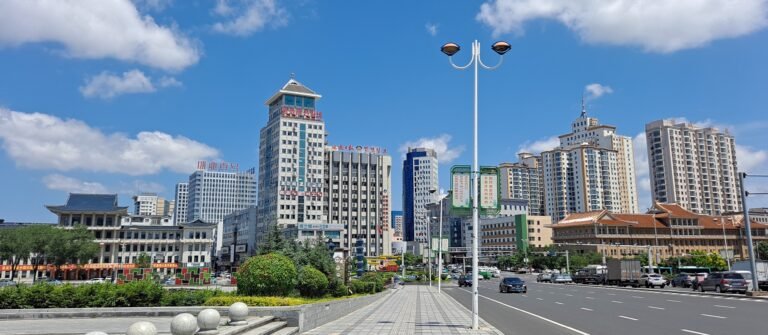
I landed in Hohhot expecting a dusty transfer point on the way to the grasslands, and I was wrong. The city is the capital of Inner Mongolia, sitting on the southern edge of the steppe where the farmland of North China gives way to open grazing country. Most travelers blow through it in a day, but I ended up staying three. There is a particular ease to the place that comes from being a real city rather than a tourist show. You eat well, you walk tree-lined boulevards, and the Mongolian character of the region is present without being staged.
Hohhot means “blue city” in Mongolian, and while the sky is more often a pale northern gray than blue, the name fits the mood. The population is a mix of Han Chinese, Mongolians, and Hui Muslims, and that blend shows up immediately in the food. You can have hand-pulled lamb noodles for breakfast, a Hui-style fried cake at noon, and a Mongolian hot pot at night without leaving the central districts.
Getting to Hohhot and getting around
Hohhot sits roughly 400 kilometers northwest of Beijing, and the easiest way in is the train. The high-speed line from Beijing North to Hohhot East takes about two and a half hours on the fastest services, while the older conventional trains run closer to six. Flights from Beijing, Xi’an, and Shanghai also land at Baita International Airport, but honestly the train is the better story. You watch the terrain flatten and the hills turn yellow as you approach.
Within the city, the metro has two lines that cover the main nodes, and taxis are cheap. I used DiDi the whole time and never paid more than 25 yuan for a cross-town ride. Buses exist but are slow and the signage is mostly Chinese, so I would not bother as a first-time visitor. For the grassland trips outside town you will want a driver, and your hotel can usually arrange one for the day.
If you are planning a wider loop, read up first on the best time to visit China and on how to buy China train tickets, because the northern regions have a short, intense summer and a punishing winter that changes everything about how you pack and what you see.
The temples and the museum
The headline sight is Dazhao Temple, also called the Silver Buddha Temple. It dates to 1580 and was the first Tibetan Buddhist temple built in the area. The silver Buddha inside is about three meters tall and the building keeps a working monastery feel rather than a museum hush. I arrived at 9 a.m. and caught the monks chanting, which is worth timing your visit around. Entry was 35 yuan when I went, though prices shift, so confirm at the gate.
A few streets away is the Five-Pagoda Temple, or Wuta Si. It is small and easy to skip, but the carved Buddhist statues on the base and the star map on the back wall are genuinely unusual. You will not spend more than forty minutes here, and that is fine. The Inner Mongolia Museum is the real sleeper. The Mongolian history halls explain the steppe empires better than any guidebook, and the dinosaur fossils from the region are enormous. Admission is free, but bring your passport, because they check ID at the door.
Xiaozhao Temple and the nearby Zhaojun Tomb round out the standard circuit. The tomb is a grassy mound said to hold a Han princess married off to a steppe chief in the Han dynasty. The history is murky, but the park is calm and the views back toward the city are pleasant.
Day trips to the grassland
The reason most people come is the grassland, and the closest organized spots are Xilamuren and Gegentala, both about ninety minutes to two hours by car. I went to Xilamuren. The reality is a mix of genuine herding culture and tourist infrastructure: you can ride a horse, watch an archery demo, and eat a whole lamb roasted in the ground. The performances can feel canned, and I would be lying if I said otherwise. But the openness of the land is real, and standing on a ridge with nothing but wind and distant horses is the thing you came for.
If you want something less packaged, ask your driver about smaller private pastures where families take a handful of guests. I paid 400 yuan for a half day that included transport, a meal, and a horse ride, versus the 280 yuan ticket at the big tourist camp. The trade-off is that nobody speaks English, which for me was part of the charm.
What to eat in Hohhot
Hohhot’s signature is shaomai, steamed open dumplings filled with lamb and scallion, served in little bamboo baskets and counted by the piece. A good breakfast spot will do them for around 1.5 yuan each, and you eat them with vinegar and a smear of chili. I became mildly obsessed and had them five mornings running. The local style is lighter than the Shanghai version and the lamb is never gamey if it is fresh.
Beyond shaomai, Mongolian hot pot here uses a clear or mild broth and a heavy emphasis on lamb slices, not the numbing Sichuan style. You dip in a sesame paste mixed with fermented tofu. For something sweet, suutei tsai, the salty milk tea, is an acquired taste that I came to like by the third cup. The Hui quarter near the temples sells fried dough and roasted seeds that make good walking snacks.
This is a good moment to mention the China high speed rail network if you are stringing Hohhot together with Beijing or Datong, and the China weather by region guide, because the food and the trips change a lot between July and January.
A practical spending picture
Hohhot is cheap by Chinese city standards, and that is part of its appeal. Here is a rough daily breakdown for a mid-range solo traveler, based on my 2023 trip. Remember these are guide figures, not quotes, and prices move.
| Expense | Low estimate (yuan) | Comfortable estimate (yuan) | Notes |
|---|---|---|---|
| Hostel dorm / budget room | 80 | 200 | Central double rooms start around 250 at chain hotels |
| Three meals | 60 | 150 | Shaomai breakfast under 20, hot pot dinner 80-120 |
| Local transport | 20 | 50 | Metro plus DiDi; grassland driver is extra |
| Grassland day trip | 280 | 500 | Ticketed camp vs private pasture with driver |
| Temple entries | 35 | 70 | Dazhao plus Wuta; museum free |
For a fuller sense of nationwide costs, the what a China trip actually costs breakdown is a useful anchor before you build your own budget.
When to go and what to pack
Summer, from late June to August, is the obvious window. The grasslands are green, the Naadam festival brings wrestling and horse racing, and the temperatures sit in the low twenties Celsius. I went in July and was comfortable in a t-shirt by day and a light jacket at night. Winters are severe, with temperatures that drop past minus twenty, and while the snow has its own beauty, many grassland operations close.
Pack for wind regardless of season. The steppe does not shelter you. Sunglasses, a windbreaker, and closed shoes for the horse rides are the non-negotiables. If you go in summer, bring something long-sleeved for the mosquitoes at dusk.
Quick facts
- Hohhot is the capital of the Inner Mongolia Autonomous Region in northern China.
- The high-speed train from Beijing takes about 2.5 hours; conventional trains take around 6.
- Dazhao Temple dates to 1580 and holds a three-meter silver Buddha.
- Local specialty shaomai are lamb dumplings counted and sold by the piece.
- The Inner Mongolia Museum is free but requires a passport for entry.
- Nearest grasslands, Xilamuren and Gegentala, are 90 minutes to 2 hours by car.
Frequently asked questions
Is Hohhot worth visiting on its own?
Yes, but two or three days is enough unless you are using it as a base for longer grassland or desert trips. The temples, museum, and food justify a short stop, and the city is relaxed compared with Beijing or Xi’an.
Do I need a guide for the grassland?
You do not need a formal guide, but you do need transport, because the grassland sites are not on the metro. A driver arranged through your hotel is the simplest approach, and most speak enough to handle the basics.
Can I see Mongolian culture without a tourist camp?
It is harder but possible. Private pasture visits arranged through drivers or guesthouses give you a more honest look at herding life, though you will trade English signage and staged shows for quiet and a language gap.
What is the food like for vegetarians?
Hohhot is lamb-heavy, and vegetarian options are thinner than in southern China. The Hui quarter has some fried vegetable breads and the museums-area restaurants do plain noodle dishes, but this is not an easy city for strict vegetarians.
Is Hohhot safe at night?
I walked the central boulevards and temple streets after dark without any trouble. It is a calm provincial capital. Standard city caution applies, but I never felt uneasy.
How cold does it get in winter?
Genuinely cold. Daytime highs in January often sit near minus ten Celsius and nights drop past minus twenty. Many grassland camps shut, so winter is better for city sights and museum time than steppe excursions.
Should I combine Hohhot with Datong?
Many people do, because the Yungang Grottoes near Datong are spectacular and the cities are a few hours apart by train. It makes a strong northern loop if you are already in Beijing.
Ready to build a route that strings Hohhot together with the grasslands and a city or two up north? Tell us your dates and pace through our contact page and we will sketch a food-and-travel plan that actually fits.
Written by the ChinaTravelFood editorial team.