Resonant Sand Bay Ordos: The Dunes That Hum
The sand that answers back
I had low expectations for a place billed as a “desert resort,” assuming a theme park with sand instead of rides. Resonant Sand Bay (响沙湾, Xiangshawan) surprised me. It sits in the Kubuqi Desert on the east bank of the Yellow River, a couple of hours from Baotou in Inner Mongolia, and the signature trick is real: slide down the dune face on a board and the sand emits a low hum, like a distant engine or a struck gong. The local Mongol name means “the bay that sings,” and on the right dry day you hear it clearly.
The science is simple enough: certain grains, dry and uniform, compress air as they shear and vibrate. The romance is in the setting. The dunes run to the river’s edge, and the resort has built a cable car that carries you from the green north bank across to the sand, so you watch the line between fertile farmland and desert snap shut in a few minutes. I went in September and the air was dry and the hum was strong; on a wet day it goes quiet, so the show depends on weather.
The science behind the hum
I promised the romance and the science, so here is the latter in plain terms. The singing happens when the sand grains are dry, similar in size, and coated with a thin film of silica or salt that lets them slip past each other without absorbing the vibration. When you slide or avalanche a sheet of them, the shearing compresses pockets of air that resonate in the gaps between grains, and the whole face of the dune acts like a badly tuned speaker. Different dunes “sing” at different pitches depending on grain size and slope, which is why some sing high and sharp and others low and hollow. It is not magic and not a trick; it is friction doing something unusual. The catch, repeated because it matters for your trip, is that any moisture kills it. A single wet night and the dunes go mute until they dry.
What you actually do there
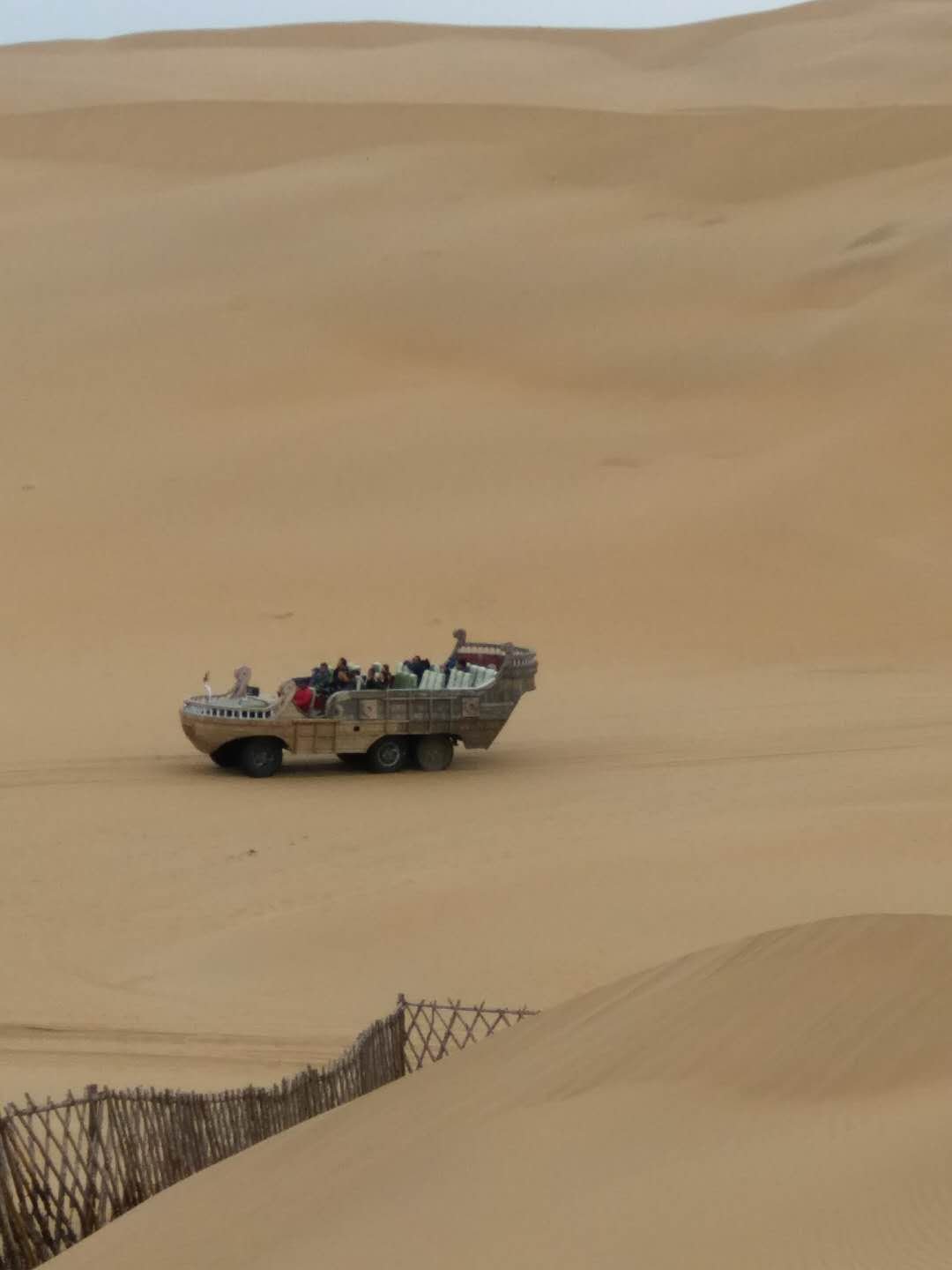
This is a developed site, so the activities are packaged. Beyond the singing slide, there are camel rides along the crest, a dune buggy track, a sand-sled run, and evening performances of Mongol song and dance in a tented theater. None of it is wilderness, but it is a clean, safe introduction to the desert for travelers who do not want to camp in the Gobi. I took the camel loop at sunset, which was the best part: the long shadows on the rippled sand, the handler humming along to the tourist music.
The resort side
Xiangshawan runs as a cluster of themed lodges, some shaped like yurts, some like curved shells, with prices that rise for the ones deeper in the sand. Staying inside means you catch the dunes at dawn and after the day-trippers leave, which is when the place is genuinely calm. I stayed one night and walked the ridge at first light with only a fox track for company. If you are on a solo trip through China, the resort’s fixed prices and English signage make it an easy stop.
A day and a night on the sand
If you stay inside the resort, the rhythm is the point. Mornings are for the empty dunes: climb the ridge at first light, watch the shadow line retreat, and have the singing slope to yourself before the day-trippers’ buses arrive around ten. Midday is the hot, busy window when the packaged activities run at full tilt and the shade is scarce, so that is when I hid in the lodge or did the camel loop in the cooler hours. Late afternoon to dusk is the pretty part: the camel train on the crest, the light going long and red, and the evening Mongol song-and-dance show in the tented theater after dark. On a clear night the stars are extravagant because there is no city light for an hour in any direction, and the resort’s own lighting is low.
One practical note: the activities are ticketed in bundles, and the bundle that includes the cable car, the slide, the camel, and the show is cheaper than buying piecemeal. I bought the small ticket once to “save money” and ended up paying more when I wanted the camel after all. Take the full bundle even if you think you will skip something; the swing value is real.
Getting to Ordos and the bay
The nearest city is Ordos, which has a high-speed rail station and an airport, both newer than you might expect for the region. From Ordos or Baotou you take a car or bus to the site, about an hour. Trains from Beijing reach Ordos in a few hours on the fast line, so the desert is more accessible than its remote feel suggests. Our high-speed rail guide explains booking and classes if you are building a northern route by train.
Food in the region
Inner Mongolia eats differently from the wheat-and-rice south: lamb is the centerpiece, often boiled or roasted whole, with dairy from the herds, such as milk tea and dried curds. The Xinjiang food guide on naan and laghman shares the nomadic-lamb kinship, though the seasoning here is plainer. At the resort the buffets lean tourist-friendly, so for real local food eat in Ordos or Baotou city, where the hot pot and lamb skewers are better and cheaper.
Pairing with other northern stops
Xiangshawan works as a desert break on a Beijing-ordered loop. The Mutianyu section of the Great Wall is a few hours east by rail and makes a natural first stop out of the capital. For a winter contrast, the Harbin Ice Festival is the other dramatic northern spectacle, though in a different season. If you want a second singing-dune experience, the singing sands of Dunhuang’s Mingsha are the famous Silk Road cousin, far to the west and far wilder.
Ordos as a base and the wider loop
Ordos city itself is a curiosity: a planned metropolis built on coal wealth, with wide avenues, a near-empty feeling in places, and a museum and library worth an hour if the weather traps you indoors. The more compelling add-on is the Genghis Khan Mausoleum (a ceremonial site rather than a grave) about an hour southeast, which pairs naturally with the dunes on a two-day loop. I treated Ordos as a one-night launch pad rather than a destination, which suited the dunes better, but the mausoleum gave the trip a cultural anchor beyond the sand.
For a longer northern route, the Mutianyu Great Wall and the Harbin Ice Festival bookend the seasons, and the Dunhuang singing dunes are the wilder cousin if you want true desert rather than a resort. Plan the Ordos stop for the dry shoulder seasons and you get the hum, the camels, and the stars without the summer crowd.
Best time to visit
Spring, summer, and early autumn are all workable, with warm days and cold nights. Summer is busiest; September was calm and dry when I went, ideal for the hum. Winter closes some activities and is bitterly cold, though the bare dunes have their own quiet. Our month-by-month guide has the national picture, and note the desert cools fast after dark regardless of season.
| Site | Region | Setting | Style |
|---|---|---|---|
| Resonant Sand Bay | Ordos, Inner Mongolia | Yellow River edge, resort | Developed, easy access |
| Mingsha (Dunhuang) | Gansu, Silk Road | True desert, oasis lake | Wilder, historic |
Quick facts
- Location: Kubuqi Desert, east bank of the Yellow River, near Ordos, Inner Mongolia.
- Signature: dunes that hum when you slide them; a cable car crosses to the sand.
- Activities: sand sliding, camels, dune buggies, evening Mongol shows.
- Access: high-speed rail or flights to Ordos, then car or bus (~1 hr).
- Best hum: dry days in spring through early autumn.
- Stay: on-site yurt lodges catch dawn and dusk alone.
- Tip: the sound fails after rain; check the weather before going.
Frequently asked questions
How long should I stay?
A day trip covers the activities, but one night inside lets you see the dunes empty at dawn and dusk, which is when the place earns its keep. I would give it a full day plus a night.
Is the singing sand guaranteed?
No. It needs dry, uniformly grained sand, so after rain or in high humidity the hum goes quiet. I got it on a dry September afternoon; a wet-day visitor might hear nothing. Treat it as a bonus.
Is it too commercial?
It is a resort, yes. If you want raw desert, this is not it. But the access, safety, and the cable-car-to-sand moment make it a good first desert for families and cautious travelers. The Dunhuang dunes option is the wilder alternative.
Can I reach it from Beijing in a day?
Not comfortably. Take the high-speed train to Ordos the day before, stay overnight, and do the bay the next morning. The rail guide covers the booking.
What should I wear?
Closed shoes for the hot sand, a hat, sunglasses, and sunscreen. A layer for the cold evening if you stay. The sand gets into everything, so leave good cameras loosely zipped.
Is it good for kids?
Yes. The packaged activities, the camels, and the shows are built for families, and the site is fenced and staffed. Just watch the little ones on the dune edges and bring more water than you think.
How does it compare with Harbin?
Different season, different drama. Harbin is a winter ice spectacle in the northeast; Xiangshawan is a warm-season sand escape in the north-center. Both are “easy spectacle” sites rather than deep cultural dives.
Want a northern China route that links the Ordos dunes, the Mutianyu Wall, and maybe a Harbin winter cap? Tell us your season and travel style on the contact page, and we will plan a food-and-travel itinerary.
Written by the ChinaTravelFood editorial team.