
Tarim Poplar Forest: Autumn Gold Along the Desert River
The desert turns gold for two weeks
There is a narrow window in the Tarim Basin when the whole floor of the world’s second-largest desert goes gold. The Populus euphratica, the Euphrates poplar, is a tree that survives where almost nothing else will: salt, drought, and sand. For most of the year it is a dusty green footnote in the Taklamakan. Then, for about two weeks in mid-to-late October, the leaves turn a hard yellow and the forest along the Tarim River becomes the photograph everyone chases.
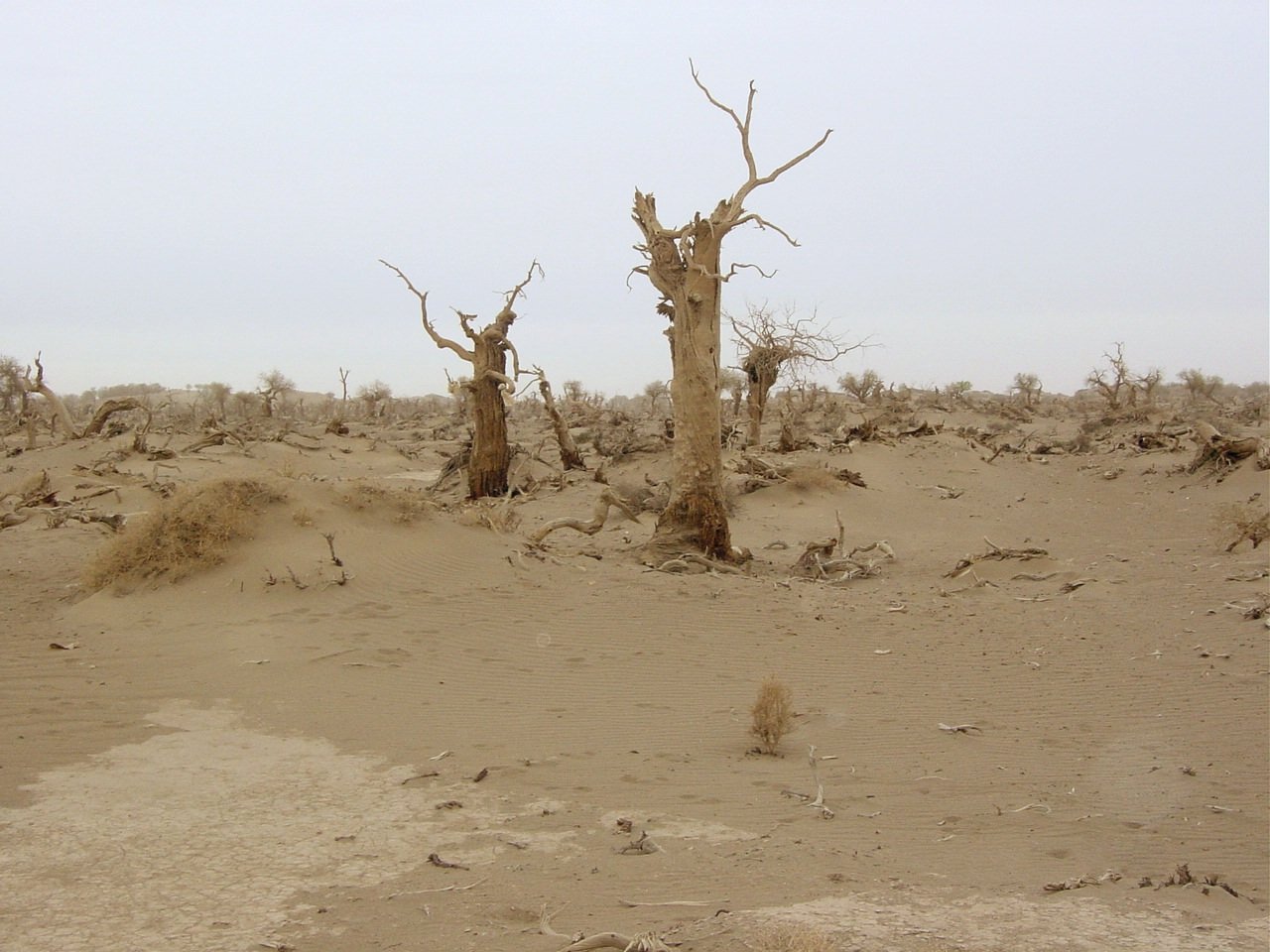
I planned a trip around that window and, for once, the planning paid off. I reached the forest near Luntai, in central Xinjiang, on a clear morning, and the poplars stood in water-fed groves with the bare dunes behind them, every leaf lit. The tree has a local saying attached to it: it lives a thousand years, dies and stands a thousand years, and falls and does not rot for a thousand years. I cannot vouch for the math, but the fallen trunks do last, bleached and twisted along the channels.
What the forest is actually like
The Tarim poplar reserve is one of the largest stands of Euphrates poplar left on earth. The trees grow in a ribbon along the river and its old channels, so the groves are linear rather than a solid wood. A narrow-gauge tourist train and a boardwalk let you go deeper than the car park, and the train is worth taking because the best light is at the far loop, where the water mirrors the yellow.
Why the tree matters here
Populus euphratica is a keystone of the desert edge. Its roots hold the soil against the wind, and where the river still reaches, the groves mark the only green for a hundred kilometers. Over-pumping and diverted water shrank these forests in the late 20th century, and recent releases of river water have brought some back. I am not an ecologist, but standing in a living grove after reading that history gave the gold a sharper edge. The forest is fragile, and the boardwalks exist so you do not crush the shallow roots.
Getting to the forest
The main access is near Luntai (轮台), on the road that runs along the northern edge of the Taklamakan, roughly between Korla and Aksu. Trains and flights reach Korla, the regional city, and from there a car or tour covers the remaining distance. Public transport to the forest gate is limited, so most visitors join a Xinjiang tour or hire a driver. As across the region, carry your passport for the routine checks; our Tibet and Xinjiang permit guide explains the standard visa and checkpoint situation.
Korla as your base
Korla is the practical hub: a regional city with flights from Urumqi and a rail link, plus a range of hotels from bare budget to decent business chains. I used it as a two-night base and found it more pleasant than its industrial reputation suggests, largely because of the pear markets. Korla pears (库尔勒香梨) are small, fragrant, and juicy, and in October the city smells of them. The night market by the river is where I ate best, with grilled mutton skewers and laghman at a fraction of resort prices.
From Korla you hire a car or join a tour for the roughly 90-minute drive north to the forest gate near Luntai. Public buses reach Luntai but not the forest entrance comfortably, and the last stretch is easier with a driver who waits. I arranged mine through the hotel and paid by the day, which cost more than a bus but removed the stress of the return in the dark. If you are already on a southern Xinjiang loop, the forest slots between Korla and Kuqa with little detour.
Food on the route
The towns of the Tarim edge eat southern Xinjiang food: naan, laghman, and mutton, with the addition of river fish where the water allows. Korla is known for its pears, sweet and juicy, sold in season at the markets. The Xinjiang food guide on naan, laghman, and Silk Road spice covers the table, and the Turpan guide on grapes and the Flaming Mountains adds the oasis angle. Pack water and a snack for the forest; the facilities at the gate are basic.
Pairing with other Xinjiang stops
The poplar forest is a seasonal add-on, not a standalone destination, so it works best attached to a southern route. The Kuqa Grand Canyon and its Kizil Caves are a few hours west and share the autumn timing. The Kashgar old city is farther west and worth the haul for the Sunday market. Our month-by-month guide stresses that October is the one month this forest justifies the trip, so build the rest of Xinjiang around it.
| Place | Peak | Location | Draw |
|---|---|---|---|
| Tarim poplar forest | Mid-late Oct | Tarim Basin (Luntai) | Golden desert groves |
| Kanas Lake | Late Sep-Oct | Altay, far north | Forest and mountain color |
Best time to visit
The window is tight: roughly the third and fourth weeks of October, shifting a little by weather each year. Go too early and the leaves are green; too late and they are on the ground. I would rather arrive a few days early and wait than miss it. Confirm the local bloom report before booking, because the dates are not fixed.
Reading the leaf report and booking around it
Because the window is so short, I treat the trip as a bet I hedge. A week before I plan to go, I start checking the local tourism bureau’s social posts and the weather forecast for Luntai, and I watch for travelers’ photos from the previous few days, which show the real color better than any calendar. The turn happens fast once the first cold nights arrive, sometimes within days, and a warm spell can hold the green longer. I would rather land in Xinjiang a few days early and wait in Korla, eating pears and walking the bazaar, than commit non-refundable hotels to a fixed date and miss the gold.
If you are on a tight schedule and cannot flex, go in the last week of October, which is the most reliable peak most years, and accept that you are betting on the average. Build a backup day into the route so a late turn does not sink the plan. The forest gate staff will tell you straight whether the color is on; a five-minute call or message to your driver saves a wasted two-hour drive.
What to shoot and when the light is best
The photography is the reason most people come, and the light decides it. Mid-morning and late afternoon are the winners; the noon sun flattens the gold and blows out the sky. The tourist train’s far loop ends at a wide stretch of water where the poplars reflect, and that mirror shot is the one everyone wants, so ride to the end and walk back slowly rather than rushing the near groves.
Mornings after a cold night sometimes lay a thin mist in the channels, and that is the image that sells the place as otherworldly rather than just pretty. A polarizing filter helps cut the glare on water. Drones are restricted in the reserve, and the staff will tell you where they are banned, so ask before launching one; I left mine in the bag. The fallen, bleached trunks along the old channels make strong foregrounds if you crouch low and let the dune behind go soft.
Quick facts
- Location: Tarim River basin near Luntai, central Xinjiang.
- Tree: Populus euphratica, the desert-adapted Euphrates poplar.
- Peak: roughly mid-to-late October, a ~2-week golden window.
- Access: tourist train and boardwalk through the groves.
- Status: one of the largest Euphrates poplar stands on earth.
- Region note: routine ID checks; carry your passport.
- Tip: time the trip to the local leaf report; the window is short.
Frequently asked questions
How long should I spend?
Half a day covers the train loop and a walk, but the long drive from Korla means a full day including travel. An early start gets you the calm light before the tour buses.
Is the golden window really that strict?
Yes. The color holds maybe two weeks, and weather can cut it shorter. I would not build a whole Xinjiang trip around a fixed date without a backup plan in case the leaves lag or drop early.
Can I visit outside autumn?
You can, but the forest is far less striking in green, and some services thin out. The spring is bare and the summer brutally hot. October is the reason to come.
Do I need a permit?
A standard Chinese visa is generally enough for this part of Xinjiang, with road checks. The permit guide explains the contrast with Tibet, where a separate permit is required.
What should I wear and bring?
A hat, sunglasses, sunscreen, and water; the open desert is exposed. Layers help because October mornings are cold and midday warm. Good shoes for the boardwalk and sand.
Is it crowded?
Domestic tour groups come for the gold, so the gate area gets busy on weekends in peak week. The train loop spreads them out, and a weekday visit is noticeably calmer.
How does it compare with Kanas?
Kanas is mountain-and-forest autumn in the far north; the Tarim poplars are flat desert gold in the basin. Different regions, different timing, both short. Pair the poplars with Kuqa if you are in the south in October.
Want a timed Xinjiang autumn route that catches the poplar gold and links Korla, Kuqa, and beyond? Tell us your October dates and permit status on the contact page, and we will build a food-and-travel itinerary.
Written by the ChinaTravelFood editorial team.


