The lake that hides behind the weather
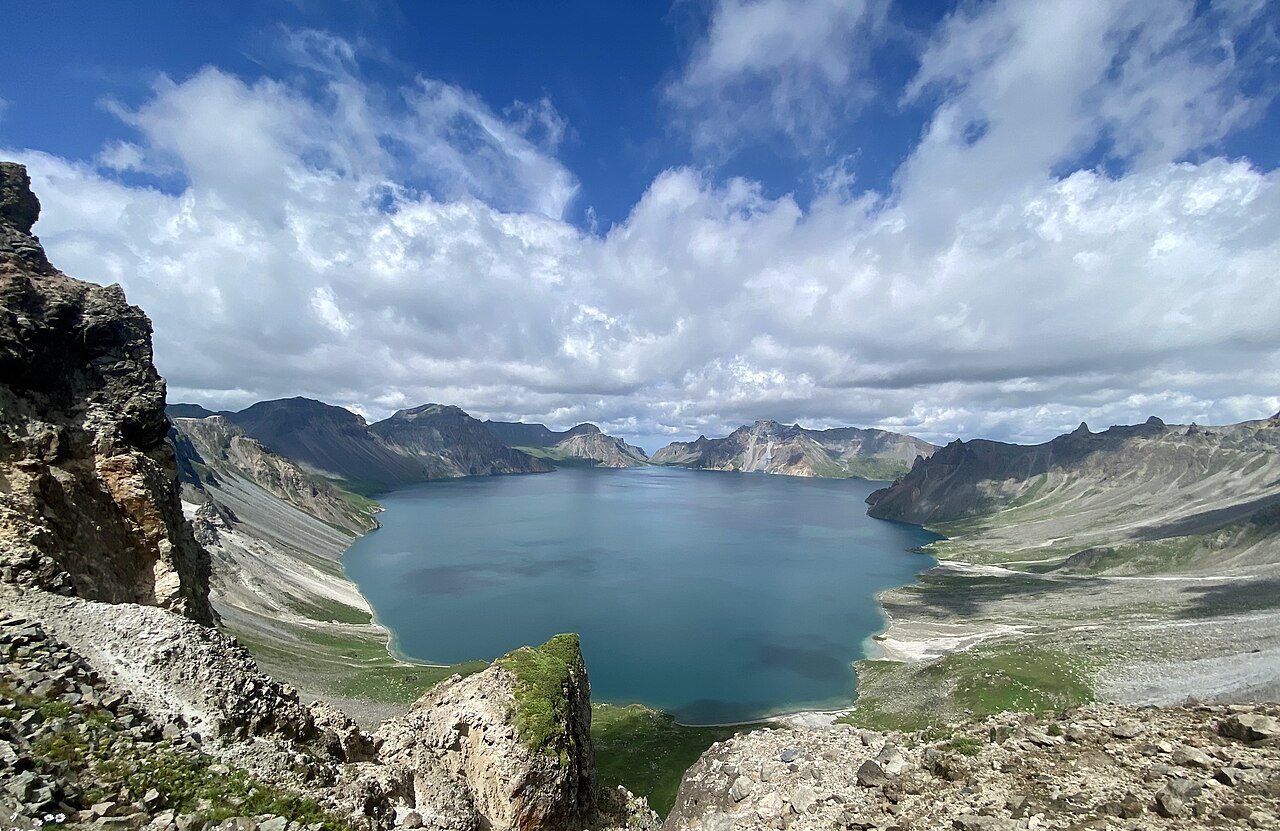
Changbai Mountain (长白山) sits on the border between China and North Korea, and the crater lake at its top, called Heavenly Lake or Tianchi (天池), is the prize. The first time I went, the mountain was socked in with cloud and I saw nothing but grey for an hour, then the wind shifted and the water opened below me like a blue eye. That is the deal with Tianchi: it is one of the most beautiful sights in China and one of the most frequently hidden. Locals say it shows itself to only about half the visitors who make the climb, and after three trips I believe them.
The mountain is a stratovolcano that last erupted in the early 20th century, and the caldera filled with rain and snowmelt to make a lake roughly nine kilometres across, sitting at about 2,180 metres above sea level. The far shore is North Korea. Standing at the rim, you are looking into a crater that could wake up again, which adds a slightly uneasy thrill to the view.
Which slope to climb
There are three main entrances, and the choice changes the whole day. The north slope is the classic route, the most developed, with the most bus transfers and the longest queues, but it also gives you the waterfall, the hot springs, and the broadest view of the lake. The west slope requires a lot of steps down to the viewing platform and back, which sounds backwards until you realise you descend to the rim and climb out again, but the view is wide and the crowds are lighter. The south slope is the newest and the most restricted, opening only on some days with limited tickets.
My own pick is the west slope if the weather forecast is good and my knees are willing, because the platform is high and the lake fills more of your frame. If it is my first time and I want the full set of side attractions, the north slope wins. The key is checking the lake-open status the morning you go, because high wind closes the summit road even when the lower mountain is clear.
The weather is the real boss
Altitude and topography make Tianchi its own climate. It can be sunny at the base and a whiteout at the top, and the temperature drops hard as you rise. I have stood at the rim in late September wearing every layer I brought and still been cold in the wind. The lake is also often clouded over by late morning, so the early buses matter. Get to the entrance before it opens, take the first shuttle, and you improve your odds of a clear window.
Do not trust a blue sky at the village. The summit makes its own weather, and rangers close the top road for wind without much notice. Build a flexible day around it rather than a fixed plan.
Beyond the lake: hot springs and forest
The north slope pays off even when the lake hides. The Changbai waterfall tumbles out of the caldera, the hot-spring river runs warm through snow in winter, and the lower mountain is thick Korean pine forest with boardwalks that are lovely on their own. There is a famous “green pool” and “blue pool” fed by the springs, smaller versions of the main lake with fewer people.
I spent a cold morning in the open-air hot springs at the foot of the mountain while snow fell on my shoulders, which is a memory worth the ticket. The mineral water is hot enough to cook an egg in the designated spot, and someone usually does.
| Slope | Effort | View and extras | Crowd |
|---|---|---|---|
| North | Bus transfers, little walking | Lake plus waterfall, hot springs, pools | Heaviest |
| West | Many steps down and up | Wide high platform, fewer extras | Medium |
| South | Limited access, fewer facilities | Quiet, restricted ticket days | Lightest |
Getting there
The nearest city is Yanji, the centre of China’s Korean minority culture and a superb food town in its own right, or Baishan and the resort town of Erdao Baihe at the north base. There is an airport at Changbaishan serving both slopes, and high-speed rail now reaches the area, which has cut the old long bus slog from Jilin or Changchun. For the rail side, China’s high-speed rail is the comfortable way in if you are coming from farther afield, and booking Chinese train tickets ahead matters in peak season.
Once at the base, you must use the scenic-area buses to the summit; private cars cannot drive the upper road. Budget the better part of a day, because the transfers and the queue eat time even when the lake cooperates.
When to go
Autumn, roughly mid-September to early October, is the sweet spot: cold, clear, and the forest turns red and gold. The sky is most likely to be blue then, which is the whole point. Summer is green and busy, with afternoon clouds that often hide the lake. Winter is stark and very cold but dramatic, and the hot springs are at their best.
For timing across the country, the best months to travel in China usually point at spring and autumn, and Changbai fits the autumn half perfectly. Because the summit is its own cold zone, read up on regional weather patterns before you pack, and bring more warm layers than the village forecast suggests.
Eating at the base
The towns around the mountain lean on northern and Korean-Chinese cooking: cold noodles, kimchi, and hearty broths that suit the climate. Yanji, if you route through it, is one of the better eating cities in the northeast and worth a day on its own. Closer to the slopes, the resort restaurants are pricey and mediocre; eat in town before you go up, and carry water and a snack for the summit wait, because the top has little and charges a lot.
Quick facts
- Changbai Mountain is a volcano on the China-North Korea border
- Heavenly Lake (Tianchi) sits at about 2,180 m, roughly 9 km across
- The summit is often clouded; early arrival improves your odds
- Three slopes: north (full amenities), west (steps, wide view), south (limited)
- Wind closes the summit road even on clear lower days
- Hot springs at the base are open year round
- Nearest hubs: Yanji and Erdao Baihe; airport and rail nearby
- Best season: mid-September to early October for clear skies
- Scenic buses only to the top; no private cars on the upper road
- Bring warm layers regardless of the village weather
Frequently asked questions
Will I actually see the lake?
No guarantee. Tianchi is hidden by cloud much of the time, and the summit road closes in high wind. Go early, pick a clear forecast day, and accept that some visitors leave without the view. The lower mountain is still worth the trip.
Which slope is best for a first visit?
The north slope gives the most complete day with the lake, waterfall, and hot springs, at the cost of the biggest crowds. The west slope offers a cleaner lake view with fewer people if you can manage the steps.
How cold is it at the top?
Much colder than the base, often by ten degrees or more, with hard wind. Even in summer bring a jacket. In autumn and winter you need real cold-weather gear for the rim.
Can I visit in one day from Yanji?
Yes, but it is a long day with buses and queues. Staying at the base the night before lets you catch the first shuttle and better weather. I would not try to rush it from a distant city and back the same day.
Are there altitude problems?
At just over 2,000 metres, serious altitude sickness is rare, but the climb and thin cold air can leave you winded if you are unfit. Take the buses, move slowly at the rim, and hydrate.
Is the hot spring worth it?
For me, yes, especially in cold months. The outdoor pools at the foot of the mountain, with snow around, are a strong finish to the day. Bring your own swimwear; rentals are available but basic.
Do I need to book tickets in advance?
In peak season and holidays, yes. The scenic area limits daily entries and the slopes sell out. Book through the official platform or your hotel, and confirm the slope you want is open that day.
Changbai rewards patience more than planning, because the lake decides whether your day is ordinary or unforgettable. The trick is to build a flexible route, pick the slope for your fitness and the forecast, and not stake the whole trip on a clear summit. If you want help choosing the slope, the base town, and the rail or flight approach that fits your dates, write to us through the contact page. We plan custom food-and-travel routes across China, and the northeast in autumn is a trip we are happy to stitch together.
Written by the ChinaTravelFood editorial team.