Chinese desserts: not too sweet, often warm, and rarely at the end
The first surprise for most travelers is that Chinese desserts do not work like Western ones. There is no course called dessert at a Chinese meal, no slice of cake to close a banquet. Sweet things exist in abundance, but they show up as breakfast, as a between-meal snack, as a festival food, or as the warm bowl that ends a dinner in a Cantonese or Jiangnan household. The second surprise is the sugar level: Chinese desserts are far less sweet than Western ones, often by half, because sugar is one flavor among several rather than the main event. A good tanghshui (sweet soup) tastes of red bean and a hint of osmanthus, not of syrup.
I have chased sweet things through Chengdu, Guangzhou, Suzhou, and Taipei, and the range is enormous: warm soups, chilled jellies, glutinous rice cakes, egg tarts, sesame balls, shaved ice, and a shelf of sugary confections that belong to specific festivals. This guide maps the categories, tells you when to eat them, and names the ones worth your time.
Quick facts
- Chinese desserts skew warm in the north and in winter, chilled in the south and in summer
- Red bean, sesame, peanut, and lotus seed are the base flavors; sugar is a supporting actor, not the star
- Many desserts use glutinous rice flour for a chewy texture rather than wheat flour for a crumbly one
- Cantonese tanghshui (sweet soups) shops are the classic dessert institution of the south, open late
- Festival desserts are fixed by the calendar: mooncakes at Mid-Autumn, tangyuan at Lantern Festival, zongzi at Dragon Boat
- A typical sweet soup bowl runs 8 to 25 yuan in a city shop as of 2025
The families of Chinese desserts
If you want to navigate a dessert menu, start with the six families below. Everything on a Chinese dessert counter fits one of them.
Tanghshui: sweet soups
Literally “sugar water,” tanghshui are warm or chilled soups with a sweet base. Mung bean soup, red bean soup with tangerine peel, black sesame paste, and sweet potato and ginger soup are the classics. In Guangzhou and Hong Kong, tanghshui shops open in the evening and serve bowls until midnight; the shop is a neighborhood institution, and the regulars order the same bowl every time. A warm black sesame paste in winter is one of the great cheap comforts of Chinese eating.
Glutinous rice cakes
Nuomi (glutinous rice) gives Chinese desserts their characteristic chew. The family runs from Shanghainese qingtuan, green rice balls eaten in spring, to Cantonese lo mai gai, to the endless family of nian gao (year cakes), which in the south means a sweet steamed cake and in the north a stir-fried savory slice. Radish cake and taro cake are the savory end of the same texture family and appear at dim sum, covered in the dim sum guide.
Jellies and puddings
Grass jelly (xiancaobing), a dark herbal jelly served with syrup, is the southern summer standard. Almond tofu, a set almond milk pudding, and tofu pudding (douhua) served sweet or savory depending on region, round out the category. Douhua is a regional argument: in the north it is often eaten savory with soy sauce and chili, in the south sweet with ginger syrup.
Fried and baked sweets
Sesame balls (jian dui), hollow and crisp, are a dim sum and street staple. Egg tarts, a Cantonese inheritance from Portuguese Macau, are now standard across southern China. Wife cakes (laopo bing) with winter melon filling, and flaky Suzhou-style pastries, cover the baked end.
Shaved ice and cold sweets
Summer in the south runs on shaved ice with red bean, condensed milk, fruit, and mango. Taiwan pushed this into an art form, and the modern mainland versions with fresh fruit and cheese foam are a direct inheritance. Bubble tea belongs to this cold-sweet family too, and the story is in the bubble tea guide.
Festival sweets
Some desserts only exist on certain dates, which is why they feel special. The full calendar is in the guide to festival food; the key sweets are mooncakes, tangyuan, and the northern yuanxiao, plus zongzi at Dragon Boat Festival and a long list of regional specialties tied to specific dates.
The regional table
| Region | Signature dessert | Temperature | When to eat | Typical price (2025) |
|---|---|---|---|---|
| Guangdong / Hong Kong | Tanghshui sweet soups, egg tarts | Warm or cold | Evening, after dinner | 15-30 yuan |
| Suzhou / Shanghai | Qingtuan, wife cakes | Room temp | Spring, breakfast | 10-25 yuan |
| Beijing | Wandouhuang pea cake, aiwowo | Cold | Spring and summer | 10-20 yuan |
| Sichuan / Chengdu | San dam pao, ice jelly with brown sugar | Cold | Summer afternoons | 8-15 yuan |
| Yunnan | Rose cakes, mixian-adjacent sweet rice | Room temp | Any time | 10-20 yuan |
| Taiwan | Shaved ice, bubble tea | Cold | Summer afternoons | 20-50 yuan |
| North generally | Red bean soup, sesame candy | Warm | Winter | 6-15 yuan |
Two entries on that table deserve a warning. Beijing’s wandouhuang, a pale yellow pea cake, was an imperial court snack and is now a tourist souvenir; the good versions are subtle and barely sweet, and the airport versions are chalk. Chengdu’s san dam pao, three rice balls slammed against a metal drum of sesame coins, is theater as much as dessert, and the performance is worth the 6 yuan.
Where the sweet tooth goes: city notes
Guangzhou and Hong Kong: the dessert shop culture
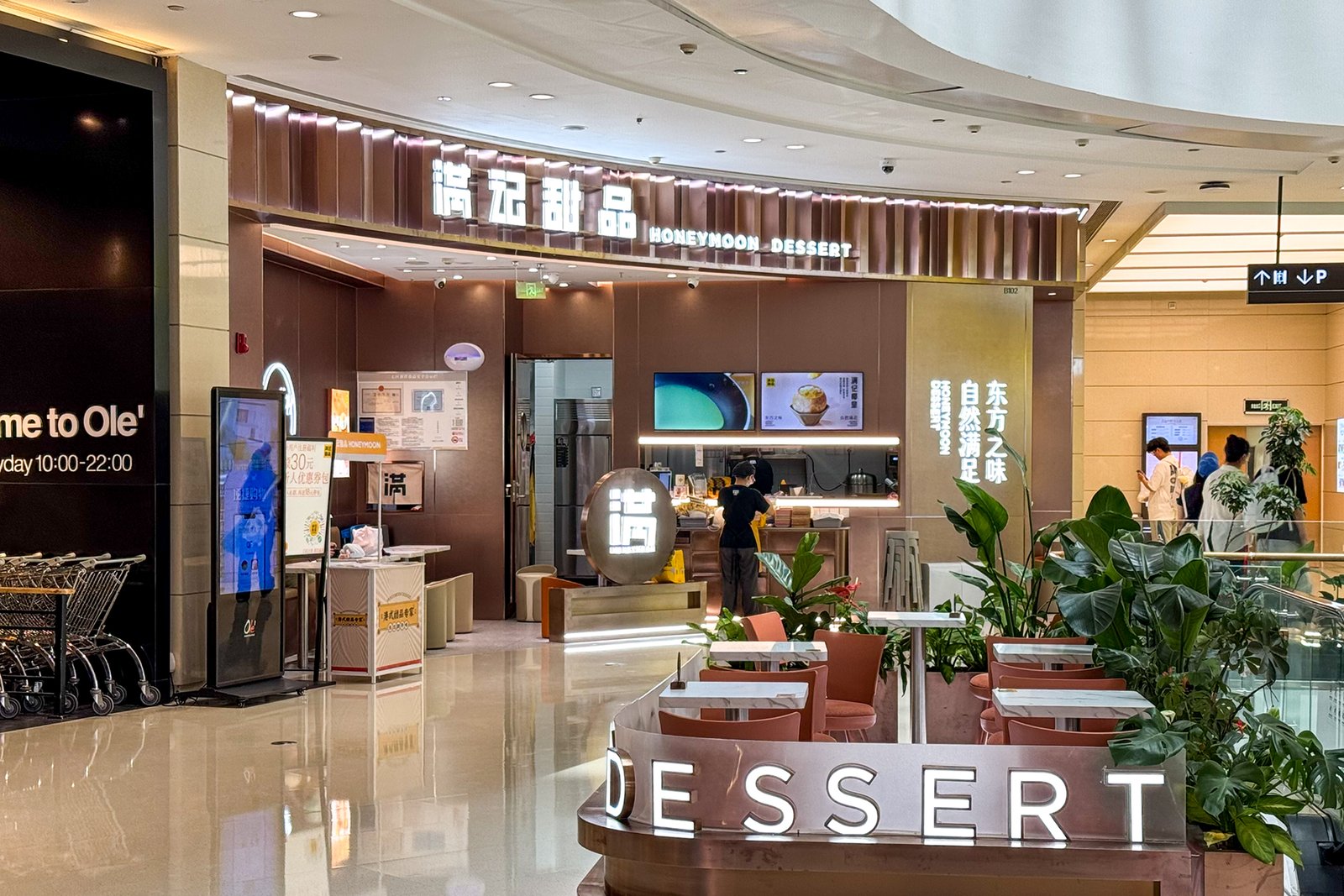
The tanghshui shop is the fullest expression of Chinese dessert as a social institution. You sit at a formica table, order a warm soup and maybe an egg tart, and stay an hour. The best shops have a laminated menu of forty bowls and a queue at 10 p.m. If you are building a trip around the south, the Guangzhou dim sum morning pairs naturally with a tanghshui evening, and Hong Kong’s version is covered in the Hong Kong food tour.
Suzhou and the Jiangnan: refined and restrained
Jiangnan desserts are the most delicate in China, matching the region’s cuisine, covered in the Jiangsu cuisine guide. Osmanthus syrup, lotus root stuffed with glutinous rice in a sweet soup, and pine-nut candies define the style: light sugar, floral notes, and a texture built on glutinous rice. The city’s wider food scene is in the Suzhou food guide.
Chengdu: cold, brown-sugar sweet
Sichuan desserts run cold and lean on brown sugar. Ice jelly (bingfen), a translucent chilled jelly with brown sugar syrup, peanuts, and raisins, is the summer classic, and it pairs with the region’s spicy food in a way that makes sense once you try it: the sugar and cold reset your mouth between bites of chili. Chengdu’s full sweet side sits inside the Chengdu food coverage.
Yunnan: roses and cheese
Yunnan uses flowers, especially rose, in sweet cakes and pastries, and the region’s cheese tradition, inherited from Mongolian and Tibetan influence, shows up in dessert-adjacent dishes like rushan cheese. The regional table is covered in the Yunnan cuisine guide, and rose cakes are the souvenir to bring home.
Ordering and eating etiquette
- Dessert is not automatic; if you want it, ask for “tiandian” (dessert) or order a specific bowl by name
- Warm bowls come with the soup; eat with a spoon, and drink the liquid as you go, not after
- Sweet soups are shared at the table in a casual setting; one bowl per person is normal at a dessert shop
- If you are watching sugar, say “shao tian” (less sweet); most shops can adjust syrup
- Glutinous rice desserts fill you up fast; order fewer bowls than you think you need
One habit worth copying from locals: order a savory-sweet combination. A bowl of hot dry noodles followed by a cold bowl of ice jelly is a standard Chengdu afternoon, and the logic of pairing cooling sweets with heavy savory food runs through all of southern Chinese dessert culture. If you want to see how these dishes fit into the wider meal, the guide on order Chinese food covers the sequencing.
Souvenirs: what to bring home
The reliable Chinese dessert souvenirs are rose cakes from Yunnan, pine-nut candy from Suzhou, osmanthus cake from Hangzhou, and wife cakes from Guangdong. Avoid anything with a long ingredient list and a short shelf life, and check customs rules before buying large quantities of bean paste or dairy-containing items; the general limits are in the China customs guide. A broader rundown of edible souvenirs is in the food souvenirs piece.
Frequently asked questions
What is a typical Chinese dessert?
A warm or chilled sweet soup with red bean, sesame, or glutinous rice balls, or a chewy rice cake. Examples include black sesame paste, red bean soup, tangyuan, egg tarts, and grass jelly with syrup. Sugar levels are much lower than Western desserts.
Do Chinese restaurants serve dessert at the end of a meal?
Usually not. Dessert is a separate occasion, eaten at a dessert shop, as a snack, or during a festival. At banquets, sweet dishes sometimes appear as one of the final courses, but there is no dessert course in the Western sense.
Why are Chinese desserts less sweet than Western ones?
Chinese dessert tradition treats sugar as one flavor among several, alongside bean paste, sesame, floral notes, and glutinous rice texture. The goal is balance and warmth rather than intensity, which is why a Chinese sweet soup tastes mild to a Western palate.
Are Chinese desserts vegan or vegetarian?
Many are naturally vegetarian, especially those made from beans, rice, sugar, and flowers. Watch for lard in traditional fillings, egg in tarts and cakes, and dairy in modern and Tibetan-influenced dishes. Grass jelly, most sweet soups, and plain rice cakes are usually safe.
What is the best Chinese dessert for a first-timer?
A warm bowl of black sesame paste or a Cantonese tanghshui shop sampler with egg tart. Both are mild, widely available, and give you the texture range of Chinese sweets without committing to something unfamiliar like century egg or herbal jelly.
When is the best time to eat Chinese desserts?
Warm soups in cold weather, cold jellies and shaved ice in summer, and festival sweets on their calendar dates. Dessert shops in the south open in the evening, so the natural time is after dinner, between 8 p.m. and midnight.
What is tanghshui?
Tanghshui means “sugar water” and refers to the sweet soups of southern China, served warm or cold, with bases like red bean, mung bean, black sesame, or lotus seed. In Guangzhou and Hong Kong, tanghshui shops are the neighborhood dessert institution, open late and serving dozens of bowls.
Can I find Chinese desserts outside China?
Yes. Tanghshui shops and bakeries exist in most major Chinatowns, and egg tarts, sesame balls, and rice cakes are common in Asian supermarkets. The range is narrower, and sweet soups are the hardest to find done properly, so eat them while you are in China.
Plan your own dessert and food trip
If you want a route that strings together tanghshui shops, dim sum mornings, night markets, and the festival sweets on their calendar dates, we can build it. Tell us your travel window and which cities you want to anchor the trip through the contact page, and we will draft a custom food-and-travel itinerary around the sweet side of China.
Written by the ChinaTravelFood editorial team.