
I came for Nanjing Road and stayed on Anfu Road
Nanjing East Road was the first thing I did in Shanghai, because that is what the guidebooks said, and it was fine in the way a large illuminated pedestrian street is fine: a hundred metres of department stores, two hundred metres of phone accessory shops, and a noodle bowl at the end. Then a friend who has lived here for years walked me down Anfu Road on a Sunday afternoon and I understood the city. Two blocks of small shopfronts, a woman selling avocados out of a shop the width of a hallway with a queue down the pavement, a ceramics studio with the kiln visible from the door, a bookshop with four tables and a cat. Shanghai’s shopping is small-scale and street-level, and almost none of it happens in the places visitors are sent to.
There is a genuinely useful version of this city for anyone who likes buying things, but it is split across four or five disconnected areas, and the famous ones are mostly the wrong ones. Below is what I would actually do with two days, with street names and rough money. If you are still planning the trip itself, our Shanghai travel guide covers the basics.
The areas, side by side
| Area | Best for | Price level | Nearest metro | Bargaining |
|---|---|---|---|---|
| Anfu Road, Wukang Road, Wuyuan Road | Independent boutiques, ceramics, books | Mid to high | Changshu Road, Line 1 and 7 | No |
| South Bund fabric market | Tailored suits, dresses, silk by the metre | Mid | Xiaonanmen area, short taxi ride | Yes, expected |
| Tianshan Tea City | Tea and teaware, huge selection | Low to mid | Loushanguan Road, Line 2 | Gentle |
| Nanjing West Road and Jing’an | Malls, luxury, the coffee roastery | Mid to very high | Jing’an Temple, Line 2 and 7 | No |
| Qipu Road | Cheap clothing, wholesale, accessories | Very low | Tiantong Road area | Yes |
| Tianzifang and M50 | Studios, prints, art, small design goods | Mid | Dapuqiao, Line 9 / Jiangning Road, Line 13 | Light |
| Yuyuan and the old city | Sightseeing, not shopping | Inflated | Yuyuan Garden, Line 10 | Not worth it |
The former French Concession streets
This is the heart of it. Anfu Road, Wukang Road, Wuyuan Road, Julu Road, Changle Road, and Middle Urumqi Road form a walkable grid of low-rise streets shaded by plane trees, and they carry the density of small independent shops that makes Shanghai unusual in China. You will find Chinese designers showing their own labels, small ceramics studios, homeware shops, vintage clothing, and a scatter of very good bakeries.
Middle Urumqi Road is where the famous avocado shop is, a few metres wide, run by a woman who has become a local institution and sells produce and imported groceries to a queue that forms most afternoons. It is a good indicator of what this neighbourhood is: local, slightly expensive, and completely un-touristy. Wukang Road has the flatiron-shaped Wukang Mansion at its junction with Huaihai Road, which every visiting photographer shoots, and behind it a long run of boutiques and cafes.
Prices are honest and fixed here. Nothing is cheap, but nothing is a scam either, and the design quality is well above what you find in the malls. This is where I buy gifts. Our Shanghai citywalk routes thread these streets into a proper walk, and if you need to sit down halfway, Shanghai coffee culture covers where to stop.
The fabric market, and getting things made
The South Bund fabric market off Zhongshan South Road is the one place in Shanghai where bargaining is fully expected and where a visitor can get something genuinely made. It is a couple of floors of fabric stalls and tailors: silk, wool, cashmere blends, linen, and a row of tailors who will measure you and produce a suit or dress in three to seven days.
Realistic numbers as of 2025: a two-piece suit in a mid-grade wool blend runs 800 to 2,000 RMB; a silk dress 400 to 900 RMB; a tailored shirt 200 to 400 RMB. Insist on at least two fittings and do not collect on your last day. The fabric stall will quote high, so open at roughly half and settle around 60 to 70 percent for fabric, and treat the tailoring fee as less negotiable because it is actual labour. Bring a photograph of what you want and, if you have one, a garment that fits you well, because pointing at a picture beats describing it in English.
Tea: Tianshan and the other tea cities
Shanghai has several enormous indoor tea markets, and Tianshan Tea City in Changning is the one I go to, closely followed by Daning International Tea City in the north of Jing’an. They work like the Beijing tea street: dozens of small family shops, low tasting tables, and an expectation that you will sit and drink through several samples before choosing.
Budget 150 to 500 RMB for 250 g of good everyday tea, more for famous-origin greens. Shanghai’s own local tea is not a thing in the way Hangzhou’s is, but the markets stock the whole country, and prices are competitive because the shops sell to each other. Ask for the current year’s harvest on greens specifically. For grades, fakes, and what the price jumps actually mean, read our tea buying guide, and for the wider country picture, souvenirs from China.
Malls, and where the money is not well spent
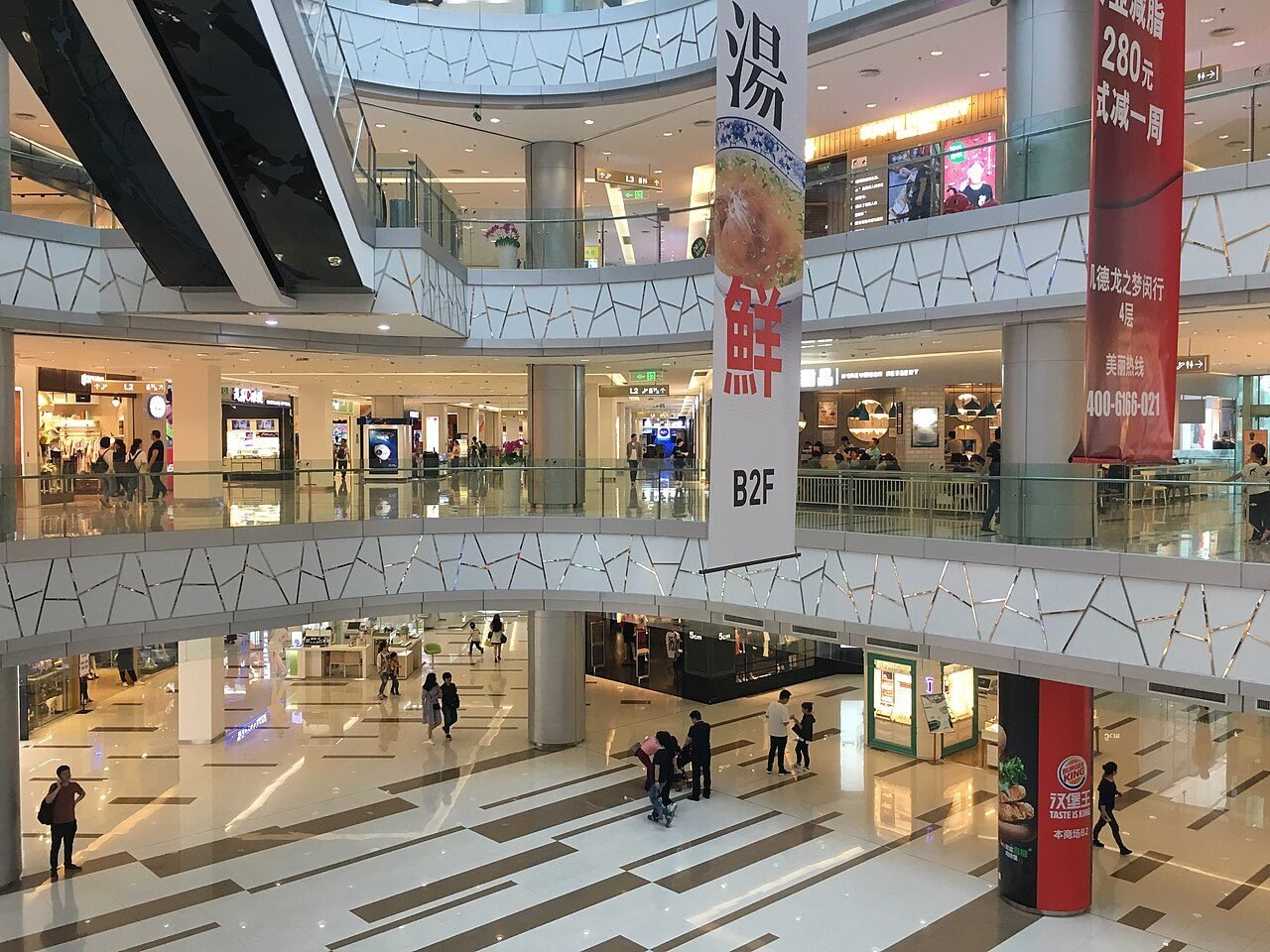
Nanjing West Road has the highest concentration. HKRI Taikoo Hui is the one I would send someone to, mostly because it houses the Shanghai Starbucks Reserve Roastery, a 2,700-square-metre operation with a copper cask and its own bar, which is worth twenty minutes even if you do not care about the brand. Jing’an Kerry Centre next door is a strong mid-to-high mall with a good supermarket in the basement. Further east, Lujiazui in Pudong holds IFC and the Shanghai outpost of Galeries Lafayette, both firmly luxury, both with prices at or above home.
Huaihai Middle Road is a long, older shopping spine with mid-range international chains and the iapm mall, and Xujiahui in the southwest is the family-oriented cluster. If you only do one mall, do Taikoo Hui in an hour and spend the rest of the day on the concession streets.
Where the money is not well spent
Yuyuan Garden and the bazaar around it are worth visiting for the Ming garden and the architecture of the rebuilt shopping complex. They are not worth shopping in. Prices for tea, silk, and trinkets in the bazaar are two to four times what the tea cities and concession boutiques charge, and the goods are aimed at tour groups. Buy a postcard, look at the gold and jade if you like the theatre, and do the actual buying elsewhere. The garden itself is covered in our Yu Garden Shanghai guide.
Nanjing East Road is worth one evening walk for the neon and the crowd, and the old department stores at its eastern end are a piece of Shanghai retail history. Do not buy electronics or luggage there. Tianzifang, the lane complex in the former French Concession, has become heavily touristy but still holds some real design studios on the upper levels and in the back lanes, so it is worth thirty minutes rather than the two hours a tour operator will give it.
Practicalities
- Shanghai is a fixed-price city. Bargaining belongs at the fabric market, Qipu Road, and tea stalls, and nowhere else.
- Malls open at 10 a.m. and close at 10 p.m. Independent shops in the concession keep shorter and more idiosyncratic hours, often opening around 11 a.m. and some closing on Mondays.
- Alipay and WeChat Pay are the default. Almost no independent boutique takes a foreign card, and cash is an inconvenience rather than a help.
- Sizes run small, and Chinese shoe sizing uses a different scale. Try things on; independent boutiques rarely accept returns.
- The departure tax refund scheme exists but the participating store network in Shanghai is thin, and the airport paperwork is slow. Treat any refund as a bonus, not a plan.
- Same-day hotel delivery from JD or Tmall works well for bulky purchases and gives you a return policy you will not get in a market.
- Qipu Road is a wholesale market: cheap, chaotic, minimum quantities sometimes apply, and the quality control is entirely yours.
Quick facts
- Anfu Road, Wukang Road and Middle Urumqi Road are the independent-shop streets
- South Bund fabric market: suits 800 to 2,000 RMB, silk dresses 400 to 900 RMB, three to seven days with fittings
- Tianshan Tea City: 150 to 500 RMB for 250 g of good tea, sit and taste first
- Shanghai is mostly fixed price; bargain only at fabric, tea, and wholesale stalls
- HKRI Taikoo Hui holds the Starbucks Reserve Roastery, worth a stop even if you skip the mall
- Malls 10 a.m. to 10 p.m.; independent shops often open later and some close Mondays
- Yuyuan bazaar is for looking, not buying; prices run two to four times the city norm
- Phone payment is essential; foreign cards are largely useless outside hotels and luxury malls
Frequently asked questions
How many days should I allow for shopping in Shanghai?
Two, split apart. One morning on the concession streets, one morning at the fabric market with a fitting a few days later, and one afternoon at a tea city. Anything more and you are fighting the city rather than enjoying it.
Is Shanghai good for tailoring?
Yes, and it is one of the better tailoring cities in Asia for value. The constraint is time, not quality: you need three to seven days and two fittings. There are established tailors on Maoming Road and in the fabric market; the market is cheaper, the standalone tailors are easier to communicate with.
What is the best single souvenir from Shanghai?
Tea bought at a tea city after tasting, or something from a concession boutique. Shanghai is not a handicraft city in the way Jingdezhen or Suzhou are, so it is a good place to buy design and consumables rather than folk craft.
Can I ship purchases home?
Yes. Couriers will pack and ship internationally from most malls, and tea shops ship regularly. For anything ceramic, pay for proper packing. Sea freight for large items takes two to three months and usually costs more than the item is worth.
Are the markets open on Mondays?
The big indoor tea cities and Qipu Road generally are, though with reduced trade. Many independent boutiques in the concession close on Monday, which is the main reason to avoid scheduling a shopping day then.
Where can I buy Chinese designer clothing?
The concession streets first, particularly Changle Road and Julu Road, and the concept stores around Anfu Road. There are also Chinese-label floors in the larger malls, but the selection is safer and less interesting.
Is it worth going to Pudong for shopping?
Only if you specifically want luxury flagships or the Galeries Lafayette building. Pudong’s retail is mall-based and corporate, and the crossing eats an hour. Most visitors are better served staying west of the river.
Do I need cash?
A small amount, a few hundred RMB, for a market stall with a broken reader or a taxi that will not take the app. Beyond that, no. Set up phone payment before you fly; it is the single biggest friction-reducer in Chinese retail.
If you want a Shanghai plan where the shopping, the coffee, and the food land in the right order across the same few streets, send your dates through the contact page. The city rewards staying in one neighbourhood for a morning rather than crossing it three times, and a badly sequenced day here is mostly metro.
Written by the ChinaTravelFood editorial team.
