What Chinese BBQ skewers are
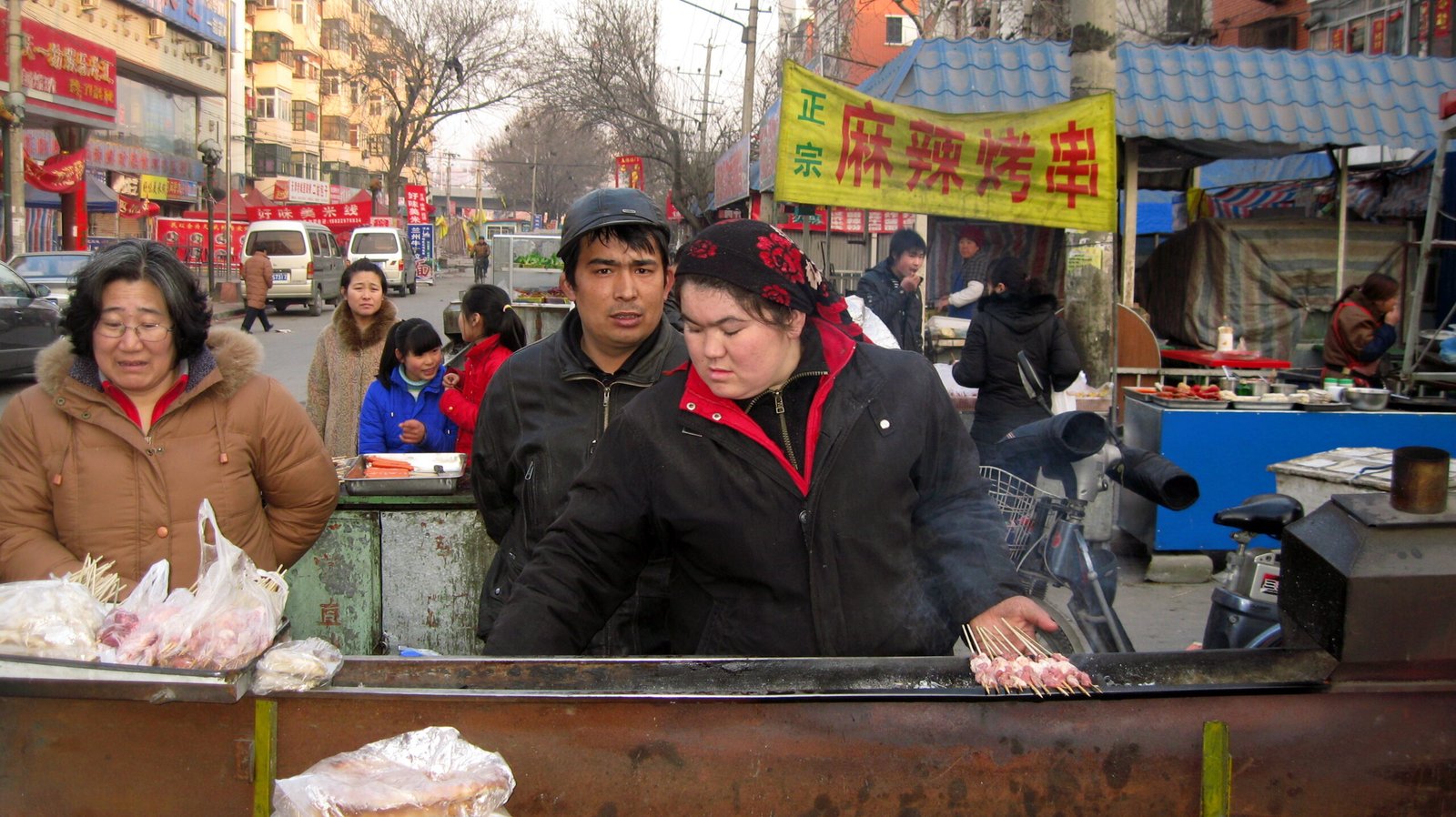
Chinese BBQ skewers, known as yangrouchuan when made with lamb, are small cubes of meat threaded on a stick, dusted with cumin and chili, and grilled over charcoal until the edges char. They are the backbone of the night market across much of the country, eaten standing up with a cold beer in hand. The format is simple: a bite-sized cube, a lot of smoke, and a heavy hand with spice.
The first time I sat at a sidewalk grill in Xi’an, the cook fanned the coals and the whole street filled with that cumin-and-fat smell. We ordered twenty sticks and a couple of beers, and within minutes the plate was empty and we were ordering more. It is food built for grazing, not for a seated four-course dinner.
The broader Chinese barbecue family runs from these small skewers to whole lambs and racks, but the stick is the entry point most travelers meet first. It is also one of the easiest Chinese street food dishes to love, because the format needs no explanation.
Where the skewer came from
The lamb skewer as eaten in China traces to the northwest, to Xinjiang and the Uyghur and Kazakh grill tradition. Cumin, chili, and mutton are the markers of that Silk Road kitchen, and the style spread east along trade and migration routes until it became a national late-night habit.
You can still taste the origin in the spice mix. The cumin is the giveaway: it is rare in the Han Chinese kitchen outside this dish, which tells you the skewer was borrowed, not invented, in the interior. The Xinjiang food of today keeps the purest version, with larger cubes and a more aggressive rub.
As the skewer moved east it picked up local habits. In Sichuan it meets chili oil; in the northeast it meets sweet glazes; in coastal cities it meets seafood. The lamb stayed central, but the edges bent to local taste.
The grill and the rub
A proper skewer stall runs on a rectangular charcoal box with a rotating cage or a flat rack. The cook turns the sticks by hand, brushing them with oil and shaking on spice from a perforated can. The whole operation is loud, hot, and fast.
| Element | Role | Notes |
|---|---|---|
| Lamb or mutton | The classic protein | Fatty cuts grill better than lean |
| Cumin | The signature spice | Ground, shaken on twice |
| Chili flakes | Heat and color | Adjust to taste at the stall |
| Salt and pepper | Base seasoning | Added near the end |
| Charcoal smoke | The aroma | Hard to fake with gas |
| Flat metal skewer | Holds the cube | Long, reused, washed between rounds |
The fat is not optional. Lean lamb dries to leather on a hot grill; a cube with a stripe of fat stays juicy and carries the spice. I always pick sticks with visible fat, and I avoid the suspiciously cheap ones that are all rubbery meat.
Charcoal matters more than cooks admit. Gas grills run cleaner but miss the smoke that defines the dish, so a stall still lit by coal is usually the better bet. You can smell the difference from half a street away, and the best cooks guard their fire like a secret, adjusting the coals between every round so the cubes char instead of steam.
Beyond lamb: the full stick menu
Meat and offal
Besides lamb, stalls run beef, chicken wing, chicken heart, and pork (where local rules allow). In the northwest you will see lamb liver and tail; in the northeast, chicken cartilage for the crunch. Offal is where regulars eat, and a good stall treats it with care rather than as scraps.
Vegetables and tofu
Button mushrooms, eggplant, green peppers, and firm tofu all take the rub well. The mushroom, especially, soaks smoke like a sponge and is my default vegetable order. Potatoes sliced thin and crisped on the edge are a sleeper hit.
Seafood at the coast
In seaside cities the same grill handles squid, shrimp, and clams. The spice stays, the protein changes, and the beer stays. It is the same ritual with a different catch.
If you want the purest西北 version, the Urumqi food stalls in Xinjiang run bigger, fattier cubes with a heavier cumin hand than anywhere inland. The night markets of the big eastern cities are where the format gets most creative.
How to order and eat without fuss
Skewers are sold by the stick, often in bundles of ten. Point at what you want, or just say “shi chuan” (ten sticks) and let the cook choose. Spice level is usually “wei la” (mild), “zhong la” (medium), or “te la” (hot); most travelers are fine at mild or medium.
Eat them hot. The cube firms as it cools and the fat sets, so the best bite is the one off the grill. Use the provided paper sleeve to hold the stick, and stack finished sticks in a cup or on a plate; some stalls tally your bill by the empty sticks, which is part of the fun.
A cold beer is the standard partner, though in Muslim areas the drink is more likely black tea or a soda. In Xi’an the Xi’an food night scene pairs these skewers with the city’s noodles and breads for a full wheat-and-fire meal.
The social side of the grill
Skewers are rarely a solo meal. They are the food of groups, of friends stacking empty sticks and arguing about the next round. The grill cook is part of the party, calling out orders and flipping sticks in time with the music from the stall next door. I have had some of my best conversations in China standing at a grill with strangers who became acquaintances over a shared plate of lamb, and that is part of why the format travels so well with travelers.
The late hour matters. These stalls wake up after dinner and run past midnight, which is why they suit travelers with shifted sleep or a long day behind them. In big cities the grill rows line whole streets, each stall with its own regulars, and the competition keeps the cubes honest. Walk the row once before you sit; the busiest stall is usually the right one, because high turnover means fresh meat and a hot fire.
A few practical notes
Stick to busy stalls with high turnover, ask for meat cooked through if you are unsure, and skip any cube that looks grey or smells off. Tap water is not for drinking in most of China, so buy a sealed bottle rather than a glass of unknown origin. These are habits, not fears, and they let you eat the street without worry.
Quick facts
- Classic protein is lamb; cumin is the defining spice.
- Style traces to Xinjiang and the Silk Road grill tradition.
- Sold by the stick, often in bundles of ten.
- Best eaten hot off the charcoal, not after it cools.
- Spice levels run mild to extra hot; ask if unsure.
- Pair with a cold beer where local custom allows.
Frequently asked questions
Is the lamb gamey?
Good stall lamb has a mild, grassy note, not a strong gamey smell. The cumin and charcoal cover most of what remains. If you dislike lamb, chicken and mushroom sticks follow the same method and taste clean.
Are the skewers safe to eat?
Busy stalls that turn over stock fast are the safe bet. Look for high heat, a crowd, and meat that is cooked through with charred edges. I avoid near-empty grills where cubes may have sat. When in doubt, order well-done.
How much do they cost?
Prices vary by city and meat. Lamb runs roughly 3 to 8 RMB a stick in most places, less in the northwest, more in tourist cores. A full graze for two with beer often lands between 80 and 150 RMB, but check the menu or ask before ordering.
Can I find vegetarian skewers?
Yes. Mushroom, tofu, eggplant, and potato are common and take the rub well. Tell the cook you want them cooked on a clean part of the grill if cross-contact matters to you.
What is the difference from Japanese yakitori?
Yakitori is salt or tare on small chicken pieces, subtle and precise. The Chinese skewer is cumin-chili and louder, built for street noise rather than quiet bars. Both are great; they just speak different dialects of fire.
Is it the same as Korean BBQ?
No. Korean BBQ is tabletop grilling of larger cuts you cook yourself with sauces. The Chinese skewer is a vendor grilling small spiced cubes for a quick street bite. The only overlap is meat and fire.
Where should a first-timer go?
Any busy night market in a big city works. For the source style, Xinjiang and the northwest are purest. For variety, the eastern night markets stack the most options on one rack.
Plan a night-market route
Skewers are best eaten as part of a longer evening crawl. If you want us to map the best night markets, grill streets, and food neighborhoods across China for your trip, tell us your route on our contact page and we will build a custom food-and-travel plan.
Written by the ChinaTravelFood editorial team.