Twenty words and the whole trip changes
I spent my first week in China saying “ni hao” and “xie xie” and nothing else, and it went fine. Then I learned the word for “how much is this”, pointed at a plastic bag of persimmons on a Beijing pavement, and got an answer I understood. The woman selling them laughed, corrected my tone, sold me the persimmons, and threw in two extra because I had tried. That has happened to me more or less every trip since.
You do not need Mandarin in China. Beijing, Shanghai, and any big hotel run on English, payment apps, and translation software. But the country is at its best a few layers below that surface, and the difference between a trip where you eat the same eight dishes and a trip where somebody’s grandmother explains a pickle to you is usually about twenty words. This guide is those twenty words, plus the pronunciation that makes them recognisable, plus what to do when it all fails anyway.
For the technology side of the problem, our guide to translation apps in China covers which ones actually work without a VPN, and the apps guide for China covers everything else you will want installed before you land.
The four tones, and why you can relax about them
Mandarin has four main tones plus a neutral one, and English speakers are told this is the hardest part. It is not, and fixating on it is the fastest way to give up. Here is the realistic version:
- First tone: high and flat. ma means mother. Hold it like a note.
- Second tone: rising, like the “huh?” of someone who did not hear you. ma means hemp.
- Third tone: starts low, dips, comes up a little. ma means horse. In fast speech it is usually just low.
- Fourth tone: sharp and falling, like an impatient “no”. ma means to scold.
- Neutral: short and light, attached to the syllable before it.
Now the practical part. Chinese listeners are extremely good at using context, and a foreigner saying “wo yao yi ge” with wrong tones will be understood almost every time, because nobody expects a foreigner to say “I want one of those” with anything other than one of those words in it. Aim for the right consonant and vowel and roughly the right pitch direction, and you will be fine.
Two tone rules worth knowing because they make your speech sound instantly better. When two third tones come together, the first becomes a second tone: ni hao is actually spoken closer to ni with a rising tone, then hao. And bu, meaning not, becomes second tone before a fourth tone syllable: bu yao is spoken bu with a rise, then yao falling. Say it that way and people will assume you have been studying.
Sounds that English speakers get wrong
This table is where the real work is. Getting these right does more for being understood than any amount of tone practice.
| Written | Actually sounds like | Example | Common mistake |
|---|---|---|---|
| x | A hissed “sh” with the tongue flat and forward, almost smiling | xie xie (thanks), xiao (small) | Saying “sh” or “ks”. Say “she” with a wide grin |
| q | “ch” with the tongue forward, like “cheese” said sharply | qian (money), qing (please) | Saying “k” or “kw”. It is never a hard k |
| j | “j” as in jeep, unaspirated, tongue forward | jiu (nine), jia (home) | Saying the Spanish j or a hard g |
| zh / ch / sh | Tongue curled back, heavier than English | zhi dao (know), chi (eat) | Using the flat English versions. Acceptable, but slightly off |
| z | “dz” as in “kids” | zao (early), zou (go) | Saying “z” as in zoo |
| c | “ts” as in “cats” | cai (vegetable / dish) | Saying “k” or “s” |
| r | Somewhere between English r, French j, and a buzzed zh | rou (meat), re (hot) | Using a strong English r, which is understandable but odd |
| ü (written u after j, q, x, y) | Lips rounded like “oo” while the tongue says “ee” | yu (fish), lü (green) | Saying plain “oo”. Try saying “ee” with pursed lips |
| -i after z, c, s, zh, ch, sh, r | Not “ee”. A buzzed, almost swallowed vowel | chi (eat), si (four) | Saying “chi” like “chee”. It is closer to “chr” |
| -ong / -ng | Nasal, held in the back of the mouth | dong (east), zhong (middle) | Dropping the nasal entirely |
| er | An American “er” with the tongue curled back | er (two), dianr (a little) | Saying a flat “air” |
| iu / ui | “yo” and “way” | liu (six), shui (water) | Saying each letter separately |
If you only fix one thing from that table, fix x and q. They appear constantly, in xie xie and qing and duoshao qian, which are three of the most useful phrases you will learn.
Twenty phrases that do most of the work
Not a phrasebook. These are the ones I actually use.
| Pinyin | Means | When |
|---|---|---|
| Ni hao | Hello | Anywhere, any time. Safe default |
| Xie xie | Thanks | Constantly |
| Dui bu qi | Sorry | Bumping into people, which happens a lot |
| Duoshao qian? | How much? | Markets, taxis, anything without a price tag |
| Zai nali? | Where is it? | Directions. Add a place name in front |
| Yao / Bu yao | Want / don’t want | The most flexible pair in the language |
| You meiyou…? | Do you have…? | Insert any noun |
| Wo yao yi ge | I’ll have one of those | Pointing at food, at fruit, at anything |
| Hao chi | Delicious | Say it to the cook. It lands well |
| Mai dan (or jie zhang) | The bill, please | End of a meal. Catch the server’s eye |
| Bu yao la | No chili, please | Sichuan and Hunan. Say it early and clearly |
| Ting bu dong | I don’t understand | Honest, and usually met with patience |
| Ni hui shuo yingyu ma? | Do you speak English? | Hotels, big restaurants, museums |
| Qing bang wo | Please help me | When stuck. Works better than you expect |
| Qing man yidian | Please speak more slowly | Only needed with very chatty people |
| Ke yi ma? | Is it OK? / May I? | Photos, seating, opening hours |
| Wo jiao… | My name is… | Introductions |
| Tai gui le | Too expensive | Market bargaining, said with a smile |
| Pianyi yidianr | A bit cheaper | The polite version of the above |
| Zai jian | Goodbye | Leaving a shop, a taxi, a table |
Numbers: the part people forget to practise
You can survive without numbers by pointing at a price display, and in China most places have one. But the moment you are in a market with a woman holding up four fingers shouting prices at you, you will wish you had spent twenty minutes on this.
The basics: yi, er, san, si, wu, liu, qi, ba, jiu, shi. Eleven through nineteen are shi plus the digit, so shiyi is eleven, shiwu is fifteen. Twenty is ershi, twenty-one ershiyi, ninety-nine jiushijiu. A hundred is yibai, a thousand yiqian.
Three traps. First, si (four) and shi (ten) sound similar to an English ear and are distinguished mostly by tone, so when money is involved, hold up fingers or check the display. Second, when Chinese people recite phone numbers, room numbers, and floor numbers, they often say yao for one instead of yi, because it is clearer than yi against qi (seven). Third, for two of something with a measure word, liang is often used instead of er: liang ge ren is two people, not er ge ren.
Prices: a price like thirty-eight is sanshiba, spoken as three-ten-eight. Get used to that structure and numbers stop being scary within a day.
Ordering, and the two words that fix most meals
Bu yao is the highest-value phrase in Chinese travel after xie xie. It means “don’t want”, and you can attach it to anything: bu yao la means no chili, bu yao rou means no meat, bu yao bing means no ice. Say it at the moment of ordering, and repeat it, because the person taking your order may be passing it to someone else.
The second is mai dan, which gets you the bill. In many Chinese restaurants nobody brings it, because asking for the bill mid-meal would be rude if you were still eating. You have to ask, and you often have to catch a server’s eye or walk to the counter.
For the rest of the meal, our Chinese food phrases guide is the deeper cut, with the words for specific textures, cooking methods, and the things you will actually want to request. And for reading what is in front of you, reading a Chinese menu covers the character patterns that let you guess at a dish before you order it.
When it all fails, and it will
Three fallback layers, and you will use all of them.
The phone
A translation app with a camera and a voice mode solves perhaps 95 percent of situations. The other 5 percent are the ones where you have no signal, your battery is dead, or the person in front of you is from a part of China where the local dialect is not Mandarin and they are speaking it. Screenshot key phrases and addresses before you go out.
Pointing
Far more effective than elaborate mime. Point at the thing, hold up fingers for the number, nod. This is not a comedown from speaking, it is what everybody does.
Finding an English speaker
Ask at a hotel desk, at a Starbucks, at a university gate, or look for anyone under about 25. English education is universal in Chinese schools, and young people are usually both willing and pleased to help. I have had a teenager walk me four blocks to a pharmacy because I asked badly.
Quick facts
- Mandarin has four tones plus a neutral one. Aim for vowels and direction, not perfection.
- Fix x and q first. They are in xie xie and duoshao qian.
- Bu yao (“don’t want”) and mai dan (“the bill”) are the two highest-value phrases for eating.
- Numbers are built from ten: twenty-eight is ershiba, literally two-ten-eight.
- Si (four) and shi (ten) are easy to confuse. Check the display or fingers.
- Younger Chinese speakers usually have some English and are happy to help.
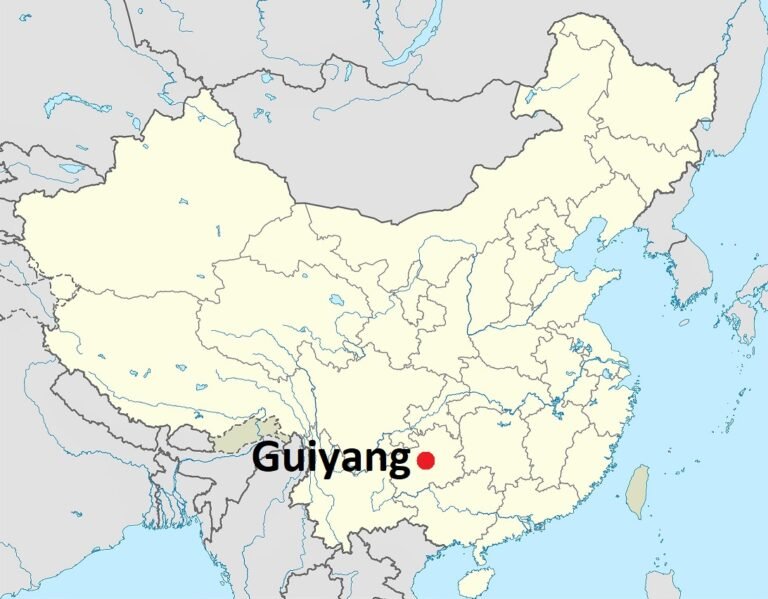
- Dialects are real. In Guangzhou, Xiamen, and Shanghai, the local language is not Mandarin, though everyone speaks Mandarin too.
- Nobody is offended by bad Mandarin. Attempts land much better than silence.
Frequently asked questions
Do I need to learn Mandarin before visiting China?
No. Major cities, hotels, airports, and tourist sites work in English, and translation apps handle most of the rest. What changes the trip is knowing enough to handle a market, a small restaurant, and a taxi driver, which is maybe thirty words and the numbers. That amount takes an evening to learn and pays back all trip.
Is Mandarin the same everywhere in China?
Mandarin, or Putonghua, is the national standard and is taught everywhere, so you can use it anywhere. But large parts of the south and east have their own languages, not dialects: Cantonese in Guangdong, Hokkien in Fujian, Shanghainese in Shanghai. Locals speak their own language among themselves and switch to Mandarin for you. Nobody will be annoyed that you are speaking Mandarin.
Will people laugh at my pronunciation?
Not unkindly. Being corrected is common and is offered as help. I have been openly praised for saying xie xie with a decent third tone, which is a low bar and worth clearing.
What is the most useful phrase I can learn?
Duoshao qian, how much is this, because it closes the one gap that apps do not: a market stall with no price tags and no menu. After that, bu yao, don’t want, which lets you modify anything you are being sold.
How do I say I can’t eat something?
Wo bu chi plus the thing: wo bu chi rou is I don’t eat meat, wo bu chi la is I don’t eat spicy food. For allergies, say wo dui zhege guomin, I’m allergic to this, and point. Carry a written card as well. Our vegetarian guide for China has printable cards for this, which matters more than pronunciation when the kitchen is not in front of you.
Should I learn to read characters?
Not before a trip. Learn a handful of signs instead: the exit sign, the characters for men and women on toilets, and the shop signs you care about. Our public toilets guide covers the toilet signage specifically, which is the one place where reading really does save you.
How do I ask someone to take my photo?
Hold up the phone, smile, and say qing bang wo pai zhang zhaopian, or just qing bang wo. It works, and people are extremely obliging about it. Offer to take one back.
Is Google Translate enough?
For text and camera it is fine, though you need it working offline and you may need a VPN connection to get it running at all, which is a real friction point in China. Chinese apps handle the job better and are covered in our translation apps guide. Install and test everything before you fly, not at the airport.
Learn ni hao, xie xie, duoshao qian, zai nali, bu yao, mai dan, hao chi, ting bu dong, qing bang wo, and the numbers one to ten. Say them out loud badly for an hour. That is the whole assignment, and it will change how every day of your trip goes.
If you are planning a trip and want the language and logistics handled for you, reach out through the contact page and tell us where you are headed.
Written by the ChinaTravelFood editorial team.