Hangzhou eats slowly
Hangzhou is the city of West Lake and, just as important to a hungry visitor, the city of Longjing tea (龙井). The local cooking is the refined, slightly sweet style of the old Jiangnan region, built around freshwater fish, bamboo shoots, and the light hand of the imperial kitchens that once summered here. When I first sat down to a Hangzhou meal I expected the heaviness of the north and got something closer to fine dining at home-economy prices. The city rewards a slow table, and the tea rewards a slow walk.
This guide pairs the food with the tea, because in Hangzhou you cannot have one without the other. For the lake itself, our West Lake Hangzhou piece maps the walking routes; this is the part you eat.
The dish everyone orders: West Lake vinegar fish
The headline plate is Xi Hu Cu Yu (西湖醋鱼), a river carp poached and dressed in a sweet-sour vinegar sauce. It is a love-it-or-shrug dish; the fish is deliberately soft, almost custardy, and the sauce is sweeter than a Western palate expects. I tried it at a lakeside restaurant and understood why locals defend it even as travelers scratch their heads. Order it once for the experience, then move to the dishes that show Hangzhou at its best.
Better, in my view, is Longjing shrimp (龙井虾仁), river shrimp quickly stir-fried with tender young tea leaves. The tea is not a garnish; it is the seasoning, and the faint bitterness cuts the sweetness of the shellfish. A plate runs about 60 to 90 yuan and is the dish I would repeat.
Dongpo pork and the scholar’s recipe
Dongpo rou (东坡肉) is the braised pork belly named for the poet Su Dongpo, who was posted here and wrote about his love of slow cooking. The Hangzhou version is square-cut, red-cooked in soy and wine until it is translucent and trembling, served as a single rich cube. It is one of the great pork dishes of China, and a small portion is plenty alongside vegetables. I ate it at a modest canteen near the lake and it beat the version I had later at a fancy hotel.
Vegetables, bamboo, and the Jiangnan lightness
Around Hangzhou the cooking leans on what grows: spring bamboo shoots, river spinach, lotus root, and the small “cat’s ear” noodles (mao er duo) in a light broth. The flavors are gentle compared with Sichuan or Hunan, and the point is freshness, not heat. Our Chinese New Year food piece notes how these river-and-garden ingredients show up in the festival table across the region, because Jiangnan cooking is the quiet anchor of the holiday spread.
The tea: Longjing and how to drink it
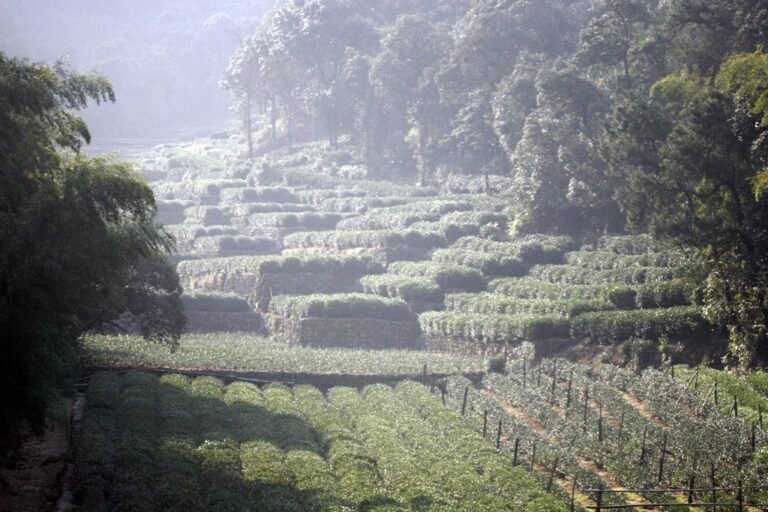
Longjing, or Dragon Well, is the green tea grown in the hills west of the lake, and the early spring pickings (before the Qingming festival) are the prized ones, priced like a fine wine. A proper cup is made with water around 80 Celsius, not boiling, and the leaves should stand upright. I bought a small tin from a hillside farm for about 200 yuan and it made forty cups; the tourist-shop tins at the lake are often blends, so go to the plantations or a trusted seller.
For the broader picture, our Chinese tea types guide explains green, oolong, and pu-erh, and the China tea tours piece plans a route through the plantations if you want to pick and roast your own.
Where to eat and drink
| Spot | What for | Note | Price |
|---|---|---|---|
| Lakeside old restaurants | Vinegar fish, Dongpo pork | Tourist prices, classic setting | Mid to high |
| Tea village cafes (Meijiawu) | Fresh Longjing, light meals | Buy leaves direct | Mid |
| Hefang Street | Snacks, sesame cakes | Crowded, fun graze | Low |
| Canalside small eateries | Noodles, home cooking | Local, cheap | Low to mid |
| Grand Canal district | Evening food, slower pace | See below | Low to mid |
The canal and a slow evening
The Hangzhou Grand Canal is the older, calmer waterway on the city’s north side, lined with small eateries and evening strollers. I spent a night there eating river snails and drinking tea while the boats went by, and it was the most relaxed meal of my trip. The canal connects Hangzhou to Suzhou and Beijing historically, and it makes a good food walk when the lake is packed with tour groups.
A day trip to the garden city
An hour north by high-speed rail, Suzhou classical gardens offer a different but related table, the same Jiangnan lightness with a sweeter, river-fish tilt. I pair the two cities on most itineraries: lake and tea in Hangzhou, gardens and noodles in Suzhou. The train is frequent and cheap, and the food contrast is worth the hop.
Seasonal eating around the lake
Hangzhou cooks by the calendar. In spring it is the young bamboo shoots and the first Longjing leaves; in summer, the river fish and lotus root; in autumn, the hairy crabs from the nearby lakes and the fragrant osmanthus that perfumes the city’s sweet soups; in winter, the slow-braised dishes and preserved vegetables. I planned one trip for April specifically for the tea and the shoots, and the menus were built around exactly those two things. If you want a single rule, ask what is in season rather than ordering from memory, because the kitchen will steer you to the best bite of the month. The West Lake itself is gentler on the legs in spring and autumn, which is when the lakeside tables are liveliest.
The tea experience, not just the cup
Buying Longjing is one thing; sitting for a proper gongfu session is another. In the tea villages you can book a short ceremony where the host washes the leaves, wakes them with a first quick pour, and serves small cups in several rounds, each a little different as the leaf opens. The first infusion is often the most aromatic, the later ones the roundest. I found the slow pacing a relief after days of rushing sights, and it reframed the tea from a souvenir to a skill. Our tea tours guide explains how to arrange a half-day in the terraces, including the spring window when you can watch the pan-firing that sets the leaf’s flat shape.
The scholar’s pork, closer up
Dongpo rou rewards patience and a small appetite. The proper version is a single square of pork belly, skin on, red-cooked for hours until a chopstick slides through without resistance, then rested so the fat sets into a trembling, almost jelly layer. It is served with a steamed bun or a spoonful of the reduced sauce over rice. The dish is rich by design, a festival and banquet piece rather than an everyday bowl, which is why I order it as the one indulgence of a Hangzhou meal and let the lighter shrimp and vegetables carry the rest of the table.
Quick facts
- Hangzhou cooking is Jiangnan style: light, slightly sweet, freshwater-forward.
- Signature dishes: West Lake vinegar fish, Longjing shrimp, Dongpo pork.
- Longjing (Dragon Well) green tea grows in the hills west of the lake.
- Brew green tea at ~80C; boiling water ruins the leaf.
- Best tea buy: hill plantations like Meijiawu, not lakefront tins.
- Pair the city with Suzhou by train for a garden-and-food loop.
- Prices: snacks low, a proper lake meal mid to high.
Frequently asked questions
Is West Lake vinegar fish worth ordering?
Once, for the cultural experience. The soft texture splits opinion, and the sweet sauce is unusual. If you only have one fish dish, I would pick the Longjing shrimp instead, which shows the tea-in-cooking idea better.
Where do I buy real Longjing tea?
Go to the tea villages west of the lake, such as Meijiawu, and buy from a grower. The pre-Qingming pickings are best and cost most. Lakefront souvenir tins are often blends of lower grades, so ask the harvest date and taste before you buy.
How do I drink it properly?
Use water at about 80 Celsius, a small glass, and a teaspoon or two of leaves. Do not steep green tea in boiling water. The leaves should open and stand; refill two or three times. Our tea types guide has the full method for green, oolong, and pu-erh.
Is Hangzhou expensive to eat in?
The lakeside restaurants are priced for tourists, but step a few streets back and the canteens and noodle shops are cheap, 20 to 40 yuan a meal. The tea is the one place to spend up, and even then a tin lasts for weeks.
What vegetarian options exist?
Many: bamboo shoots, lotus root, river vegetables, and tofu dishes are staples of Jiangnan cooking. Monastery restaurants near the hills do vegetable banquets. Tell your server you skip meat and point at the green dishes.
Can I visit a tea plantation?
Yes, and it is the best part of a Hangzhou trip. The villages offer tastings and, in spring, you can watch the pan-firing. Our tea tours guide explains how to arrange a half-day among the terraces.
How long should I spend eating in Hangzhou?
Two days covers the lake meal, a tea village, the canal evening, and a Suzhou day trip. I would not do Hangzhou as a food stop in under a day and a half, because the tea alone deserves an afternoon.
Plan a Hangzhou food-and-tea route
Hangzhou is best taken slowly: a lake lunch, a tea-hill afternoon, a canal dinner. If you want a custom food-and-travel plan that times the tea harvest and links to Suzhou, tell us your dates through our contact page.
Written by the ChinaTravelFood editorial team.