Guilin as the karst base camp
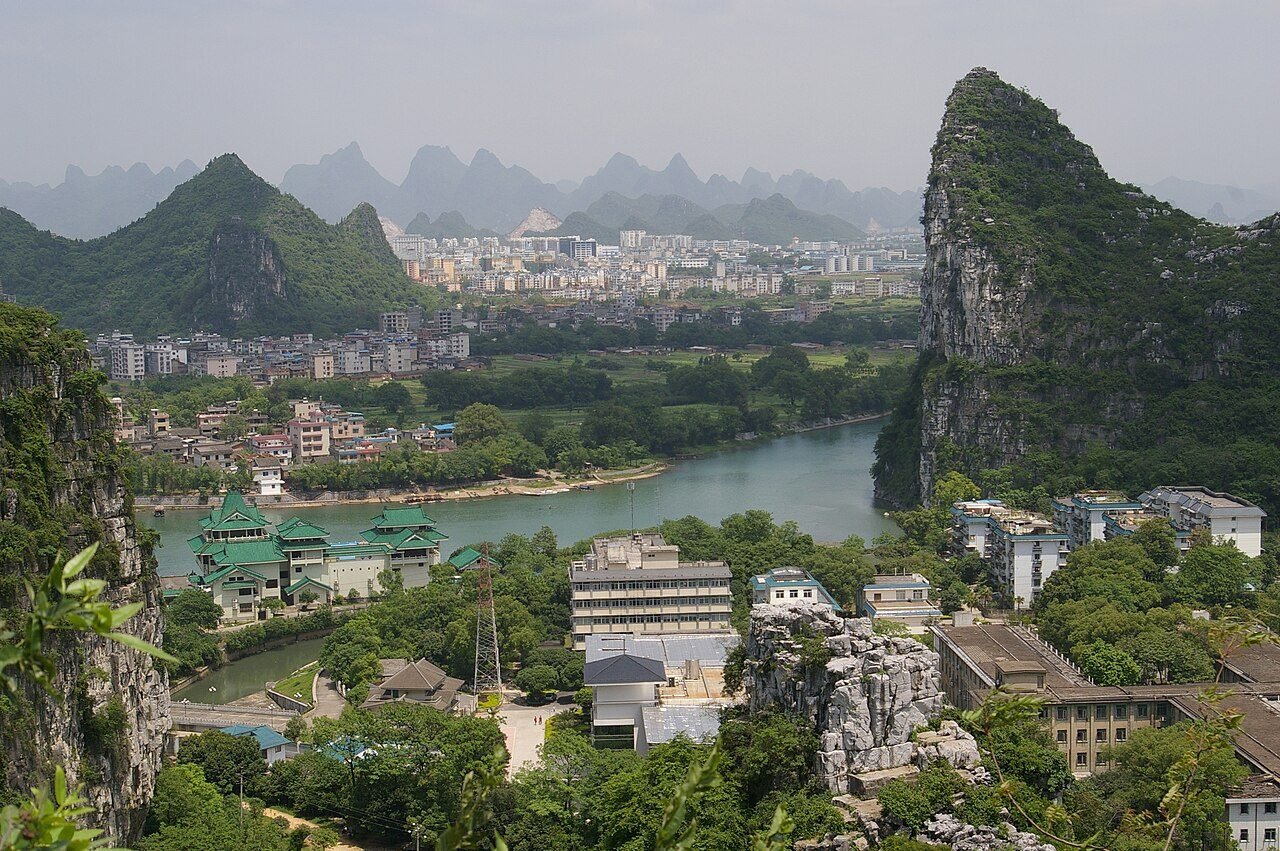
Guilin gets sold as a single postcard: the Li River, the karst peaks, the fisherman with the cormorant. The postcard is real, but it undersells the region, because Guilin is also the best base for a ring of day trips that most visitors skip in favor of the boat ride. I spent four days in the city and found the day trips more memorable than the cruise itself, which is a sentence I did not expect to write. The karst countryside, the rice terraces, and the cave systems around Guilin are the reason to stay longer than one night.
The city and the river cruise are covered in our Guilin Li River cruise guide, and the eating is in our Guilin food guide. This page is the ring of day trips beyond the standard boat.
Guilin is also a rail hub on the line from Guangzhou and Kunming, and our China high-speed rail guide covers the routes that make these day trips easy to reach. Getting around the region itself is mostly bus and scooter, as our public transport guide explains, and the scooter is the right call in Yangshuo.
Yangshuo: the obvious and the right one
Yangshuo (阳朔) is the day trip everyone does, and it is the one to do. About an hour south of Guilin by bus or by the slower river boat, it is where the karst peaks crowd the river into a corridor of green hills and still water. The town itself is touristy, but the countryside around it, rented on an electric scooter or a bike, is the real prize: rice paddies framed by peaks, quiet villages, and the Yulong River where you can drift on a bamboo raft.
The Li River bend at Xingping (兴坪), twenty minutes from Yangshuo, is the view on the back of the 20-yuan note, and it is worth the trip for the photograph and the short walk along the old riverside street. A scooter rental runs 30 to 60 RMB a day, and the loop from Yangshuo to Xingping and back is the best half-day in the region. Our Yangshuo guide has the route and the raft details.
Longsheng rice terraces: the stairway to the sky
The Longji rice terraces (龙脊梯田), the Dragon’s Backbone, are the most spectacular day trip from Guilin and the farthest. About two to three hours northwest by bus, they are terraced fields carved into steep mountainsides over centuries by the Zhuang and Yao minorities, and from April to early June they are flooded and mirror the sky, while from September to early October they turn gold with the harvest. Either window is worth the drive; the in-between months are green and fine but less striking.
Entry is around 80 to 100 RMB, and you need a few hours to walk the terrace ridges at Ping’an or the larger Jinkeng (Dazhai) area. The Yao women with long hair are a known local sight, and the hair-combing performances are touristy but mildly interesting. Wear good shoes; the terrace paths are stone and steep. This is a full day, and an overnight lets you catch the terraces at dawn, which is when they are best.
The caves: Reed Flute and beyond
If the weather is poor, Guilin’s caves are the plan. Reed Flute Cave (芦笛岩) is the famous one, a limestone cavern lit in colors, with formations given names like “Crystal Palace,” and it is about 20 minutes from the city. Entry is around 90 RMB. It is busy and a bit theme-park in its lighting, but the scale of the stalactites is real. The Seven Star Cave inside the city’s Seven Star Park is the lower-key alternative. I liked Reed Flute for the spectacle and found the lighting silly; your call based on whether you enjoy lit caves.
City sights and old towns
In the city itself, Elephant Trunk Hill (象鼻山) is the symbol of Guilin, a karst outcrop shaped like a trunk drinking the river, and it is a short walk from the center, entry around 55 RMB. Daxu (大圩古镇), about 40 minutes out, is an old riverside town with a stone street and a working market, far less restored than the famous water towns of the east, and a good half-day if you want old China without the ticket gates. The Lingqu Canal, an ancient Qin-era waterway near Xing’an, is a quiet historical stop for engineering buffs.
Choosing the day
| Destination | Travel time from Guilin | Rough cost | Best for |
|---|---|---|---|
| Yangshuo and Xingping | 1 hour by bus or boat | 80 to 200 RMB | Karst scenery, scooter loops |
| Longji terraces | 2 to 3 hours by bus | 120 to 220 RMB | Terrace photos, minority culture |
| Reed Flute Cave | 20 min from city | 90 to 120 RMB | Rainy-day plan, families |
| Elephant Trunk Hill | Within city | 50 to 60 RMB | Quick symbol photo |
| Daxu old town | 40 min by bus | Free to low | Unrestored old China |
| Lingqu Canal | 1 hour to Xing’an | 40 to 70 RMB | History, quiet stop |
Quick facts
- Yangshuo is one hour south; the Xingping bend is on the 20-yuan note
- Longji terraces flood in spring and turn gold at the September-October harvest
- Reed Flute Cave is 20 minutes from the city and lit in color
- Elephant Trunk Hill is Guilin’s symbol, entry about 55 RMB
- Daxu is an unreconstructed riverside old town, free to wander
- A scooter rental in Yangshuo runs 30 to 60 RMB per day
- Longji needs a full day; an overnight catches the dawn light
How to sequence the days
If you have three days, I would do the Li River or Yangshuo on day one, the Longji terraces as an overnight on day two, and the caves or Daxu on day three if the weather turns. Trying to cram the terraces and Yangshuo into one day means a long drive and a short look at both, which is the classic Guilin mistake. The region rewards a slower pace; the karst does not hurry, and neither should you. Many travelers actually stay in Yangshuo and day-trip back into Guilin for the caves and the city hill, which flips the usual plan and works well because Yangshuo’s riverside is the pleasanter place to sleep.
What to expect inside the caves
Inside Reed Flute, the path loops past a dozen named formations, the Tower of the Jade Emperor and the Crystal Palace among them, lit in shifting color that some find magical and some find tacky; I am in the middle, glad to have seen the scale but ready to leave when the group arrives. Bring a light jacket because the cave stays cool and damp year round, and wear shoes with grip because the walkways are wet. It is an easy, low-effort outing, which is exactly why it works as a rainy-day fallback rather than a headline. The Seven Star Cave in the city is lower key and less lit, and a better choice if you want the geology without the theater.
Frequently asked questions
Which day trip is best if I have one day?
Yangshuo, for the karst and the river, or Longji if you want the terraces and do not mind the long drive. The Li River cruise itself, covered in our Li River guide, is often done as the day trip, but Yangshuo gives you more freedom on the ground.
How do I get to Yangshuo and Xingping?
Buses run from Guilin to Yangshuo in about an hour; the slower, prettier option is the Li River boat itself. From Yangshuo, local buses or a scooter reach Xingping in twenty minutes. Our Yangshuo guide has the transport and the raft bookings.
When are the rice terraces at their best?
Late April to early June for the flooded mirrors, and late September to early October for the gold harvest. Both windows draw crowds, so go early in the day. The terraces are green and pleasant but less dramatic from July to March. The Guilin food guide pairs well with a terrace overnight.
Are the caves worth it in good weather?
Not as a priority; they are a rainy-day fallback. If the sun is out, be outside on the river or the terraces. Reed Flute is the most famous and the most lit; Seven Star Cave is lower key. Families with small children often appreciate the caves as an easy, cool outing.
Can I do Longji and Yangshuo in one day?
No, and trying means rushing both. Longji is a full day with the drive; Yangshuo deserves half a day minimum. Pick one per day, or stay overnight at the terraces. The region rewards slowness, not checklist speed.
What food should I look for on these trips?
Yangshuo’s beer fish (啤酒鱼), the river fish braised in beer and tomato, is the local signature; the terraces area has minority smoked pork and sticky rice; Guilin city has rice noodles (桂林米粉) for breakfast. Our Guilin food guide lists the dishes and where to find them.
Is Guilin a better base than Yangshuo?
For day trips, Guilin has the transport hub and the caves; Yangshuo has the scenery and the scooter loops. Many travelers stay in Yangshuo and day-trip back to Guilin, or split the stay. If your plan is terraces plus river, Guilin as the hub is practical.
If you want these Guilin day trips built into a Guangxi route with the food stops, we can plan it through the contact page. The region rewards a traveler who stays put and radiates out, because the best of Guilin is not the postcard but the countryside an hour beyond it.
Written by the ChinaTravelFood editorial team.