Solo female travel in China, the honest answer
I have traveled alone through China on five separate trips, including two where I covered four cities by train with no companion, and the question I get asked most is some version of “is it safe?” The honest answer is that China is one of the lower-risk countries I have traveled through alone, with real caveats. Violent crime against travelers is rare, the streets are busy at night, and public transport is monitored and orderly. What you will actually deal with is different: staring, unsolicited attention, language friction, and the occasional drunk man on a night bus. This guide separates the genuine risks from the annoying ones so you can plan with clear eyes. Everything below reflects my trips through 2025 and early 2026.
If you want the broader safety picture, my general guide to China safety covers crime, health, and emergency numbers for all travelers. This piece is specifically about the experience of moving through the country as a woman by herself.
What “safe” actually means here
Let me put numbers around the feeling. On my longest solo stretch, three weeks across the southwest, I had exactly one incident I would report to police: a man who followed me for two blocks in a Kunming night market and would not stop when I said no in English. Shouting “bu yao” loudly and walking into a crowded stall ended it. No touching, no weapon, no threat beyond persistence. Compare that with solo trips I have taken in parts of Europe and Latin America, where I have had more genuinely frightening moments. The baseline in China is good.
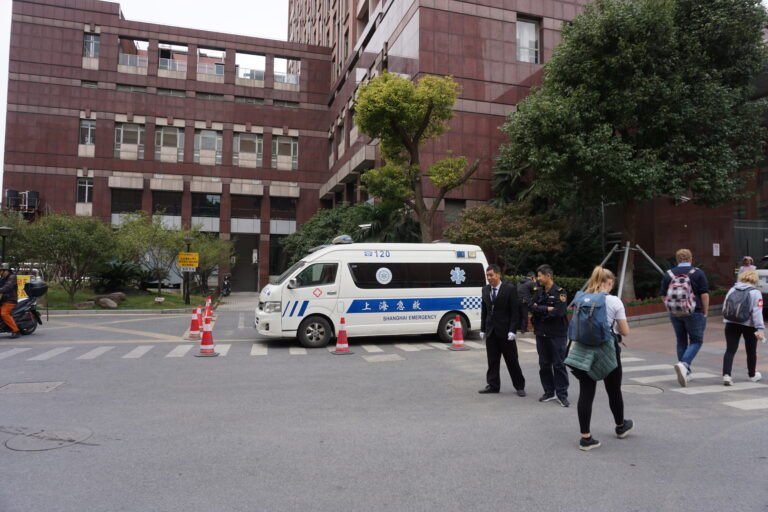
The reasons are structural. Streets stay populated late because dense residential living means shops and food stalls operate until midnight. Cameras are everywhere, and while that raises privacy questions I address elsewhere, it also means street crime is a bad bet. Police boxes sit at major intersections, and the emergency number 110 gets a fast response in cities. Women walk alone at night in every Chinese city I have visited, including 2 a.m. walks back to hotels in Chengdu and Xi’an, without incident.
The things that do happen
Honesty requires the flip side. Solo female travelers in China mostly report three categories of trouble, none of them violent but all of them wearing.
Persistent attention. Men occasionally approach solo foreign women with more confidence than a tired traveler wants to field. It is usually a group of young men wanting a photo, sometimes a lone man wanting conversation that outlasts your interest. The cultural script around saying no is different, so a polite “no thank you” can be read as negotiable. What works: a flat “bu yao”, no smile, and physically walking into a shop or crowd. Chinese bystanders will help if you make it clear you want out of the interaction.
Staring and photography. In smaller cities and the west, a solo foreign woman draws attention. People take photos, sometimes openly, sometimes pretending. Most is curiosity, not malice. I keep sunglasses on, headphones in when I want to be left alone, and a polite shake of the head when a camera points at me. If a group asks for a photo with you, decide quickly; a quick yes ends it faster than a hesitation that reads as a maybe.
Drunks late at night. Chinese drinking culture is intense, and a drunk man on a late train or a quiet street is the closest thing to a recurring problem. I avoid the last sleeper car when it is mostly male groups, sit near families or other women when I can, and use ride-hail rather than walking the last kilometer after midnight in unfamiliar neighborhoods.
Hotels, hostels, and where to sleep
Accommodation is where solo women overpay for peace of mind, so choose deliberately. Mid-range business hotels are my default: 24-hour front desk, keycard elevators, and staff who notice if you do not come back. Hostels in China are real hostels with female dorms, and they are the fastest way to find travel companions for day trips, which solves half the problems in this article. What I avoid alone: budget walk-up guesthouses where the desk is a family apartment and anyone can wander in.
Two practical hotel habits. First, ask for a room not facing the street on a high floor; night markets and karaoke bars are loud and light sleepers suffer. Second, keep the deadbolt on at night and use the chain too; some hotel doors in older buildings have weak latches. The hotels China guide covers the categories in detail, from business chains to capsule hotels.
Getting around alone
Trains are the backbone of solo female travel here, and they are safe in a way that surprises people. Daytime high-speed carriages are family-heavy, well lit, and staffed; I have napped on daytime runs with my bag stowed overhead. Book through the usual channels, which my China trains guide walks through, and pick aisle seats near the middle of the car where there is always someone within earshot.
Night trains need one adjustment: book a berth in a female-designated sleeper compartment if the route offers it, which many overnight lines now do, or at least a compartment with other women. Keep your phone and wallet in an inside pocket, not the shelf by your berth. The overnight trains piece covers the sleeper classes and booking.
In cities, the metro is the safest option after dark: crowded, lit, and patrolled. Buses are fine during the day but thin out late, and I skip them after 10 p.m. Taxis are cheap and I have never had a problem, but the language gap means you cannot negotiate a route change mid-ride, so use the meter or a ride-hail app. DiDi, the main ride-hail app, has trip sharing and works with an international card; my guide to Alipay China and the apps explain setup before you land.
Eating alone
Eating alone is more normal in China than in many countries, because the food culture runs on small plates and solo diners are common. Hot pot is the exception: the big shared pot is a group food, and a solo woman at a nine-person table draws looks. The fix is the single-portion hot pot houses, now common in Chengdu and Chongqing, with a personal pot at every seat. Noodle shops, dumpling counters, and breakfast stalls are built for one person, and I have had some of my best meals alone at a counter, pointing at what the next table ordered. The night markets roundup lists the ones that are comfortable for solo grazing.
One more habit: keep a photo of your hotel’s Chinese name and address on your phone, or a business card from the front desk. Showing a taxi driver a screenshot beats miming every time.
Staying reachable and in control
Three things make solo travel here work smoothly, and all three happen before arrival. Get a working phone: an eSIM or a local SIM at the airport, because hotel WiFi will not help you navigate. Get a payment app working: WeChat Pay or Alipay with your foreign card, since most places will not take your card and cash is increasingly awkward. Get a translation app with offline Chinese: station staff and taxi drivers do not need English, they need you to show them a screen.
Then share your movement. I message a friend my train times when I change cities, and the train-number-plus-carriage format on your ticket makes that genuinely useful. Check in every couple of days, not because something is likely to go wrong, but because it makes your family calm and costs you two minutes.
Quick facts
- Violent crime against travelers is rare; the realistic problems are persistent attention and late-night drunks.
- Streets stay busy late and police response is fast in cities; night walking is common for local women too.
- Mid-range hotels with 24-hour desks beat guesthouses for solo stays; ask for a high floor away from the street.
- Daytime high-speed trains are very safe; on night trains pick female-designated compartments when available.
- Metro after dark, buses only during the day, ride-hail for late returns.
- Set up SIM, payment app, and offline translation before arrival; all three are hard to sort on day one.
- A flat “bu yao” plus walking into a crowd ends unwanted approaches reliably.
Frequently asked questions
Is China safe for a woman traveling completely alone?
Statistically and in my experience, yes, with the caveat that verbal attention and the occasional drunk are part of the texture. Take the normal precautions you would in a big city anywhere, add a translation app, and the risk stays low.
Do I need to dress conservatively?
No, but modest dress attracts less attention outside the big cosmopolitan cities. In Shanghai and Beijing, wear what you like. In smaller towns and the west, shoulders and knees covered reduces staring, and I found the trade-off worth it on long bus rides.
What is the best region for a first solo trip?
The southwest: Chengdu, Chongqing, Kunming, Dali. The cities are relaxed, the food is cheap and solo-friendly, the rail links are short, and English signage is decent in the tourist zones. Save Tibet and Xinjiang for a second trip, when you have more road experience.
How do I handle being followed?
Walk into a shop or restaurant and tell the staff, or approach a family group. Do not go home first. Chinese shopkeepers take this seriously and will usually sit you down and sort it out. I have used this tactic once and it worked in under a minute.
Is the language barrier worse alone?
Yes, but it is a solvable problem. Download offline translation, keep screenshots of addresses, and learn ten words: hello, thank you, no, how much, where is, help, station, hotel, spicy, delicious. Those ten carried me through a week in rural Yunnan.
Should I join group tours as a solo traveler?
For transport and permits in restricted areas, yes; for city sightseeing, no. Small-group day tours are a good way to see the countryside without hiring a private driver.
What about dating apps and meeting people?
Use them if you want, with the same caution as anywhere: meet in public, tell someone the plan, and keep your hotel private. Chinese social apps are walled gardens that need a local number, so most travelers end up on the international apps with a small expat and student user base.
Plan your route with confidence
Solo travel in China rewards a plan that keeps the logistics boring and the days flexible. Tell us your dates and the regions you are curious about through the contact page, and we will sketch a food-and-travel route with safe, well-located hotels and train times that avoid the late-night arrivals.
Written by the ChinaTravelFood editorial team.