Mogao Caves in brief
The Mogao Caves are a cluster of nearly 500 Buddhist cave temples cut into a cliff face about 25 kilometers southeast of Dunhuang, a town in western Gansu on the old Silk Road. Work began here in 366 AD and continued for a thousand years, leaving wall paintings and sculptures across chambers large and small. When I first stepped into a lit cave after the desert glare, the shift was total: cool air, a low ceiling, and walls covered floor to ceiling with figures in reds and greens that have stayed bright for over a millennium. The short answer for visitors: you do not walk through freely; you buy a shuttle-and-ticket combo, join a guided group that opens a rotating set of about eight caves, and you book ahead because daily numbers are capped. Treat it as a museum you reach through sand, not as a site you explore alone.
Why these caves matter
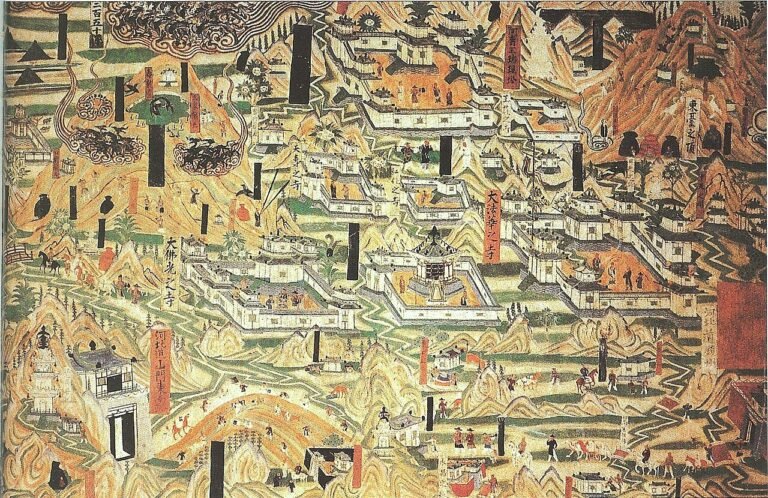
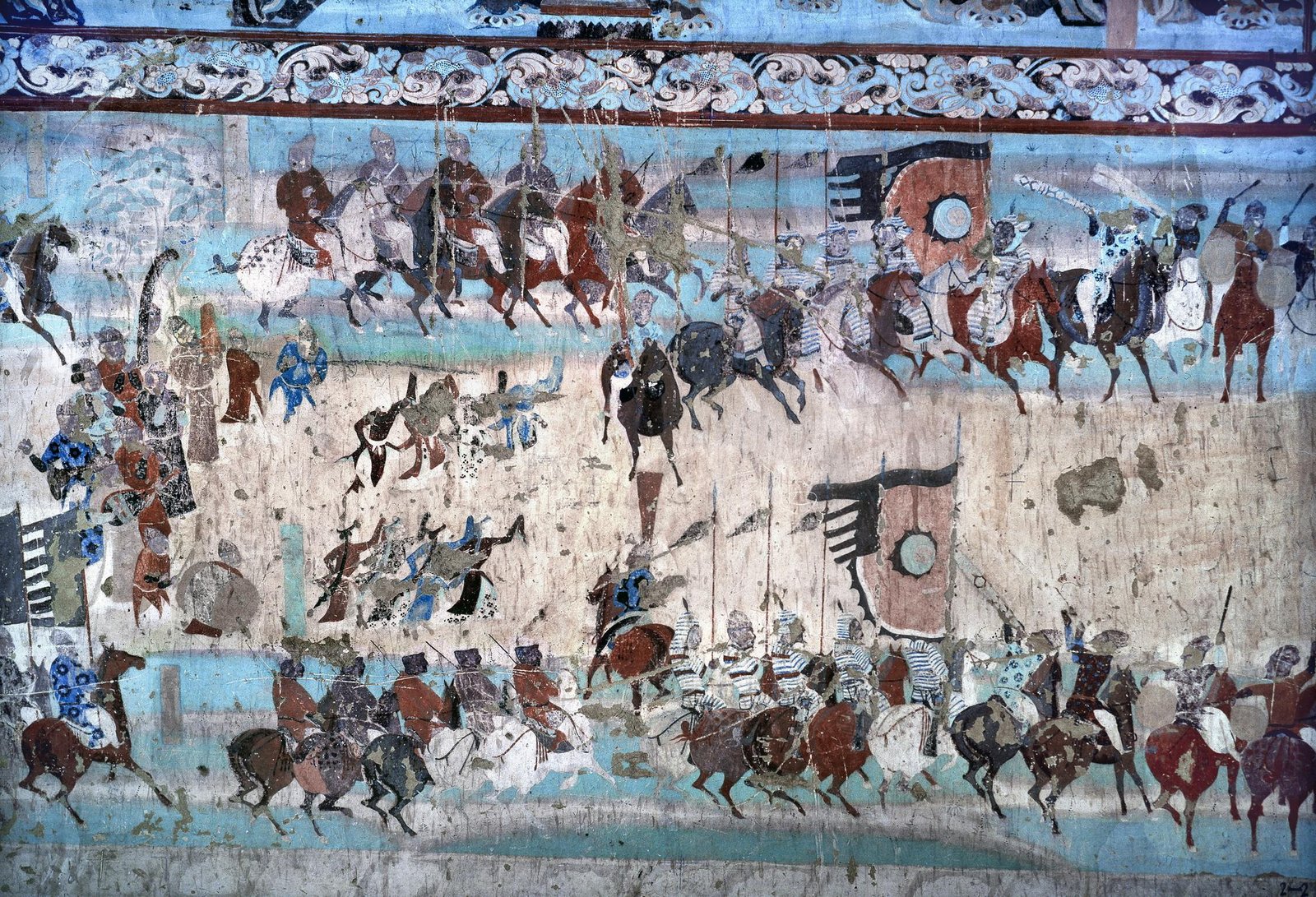
Dunhuang sat where the northern and southern Silk Road branches met, a water stop in the desert where merchants, monks, and armies crossed. The caves were a pious project funded by rulers, traders, and pilgrims who wanted merit and safe passage, and the art layers those donors, their clothes, and their gods into a record of a thousand years of contact between China, India, Central Asia, and Tibet. The paintings show changing styles, from the angular figures of the early period to the plump, calm Buddhas of the Tang. No single museum elsewhere holds that continuous visual timeline of the Silk Road in one place.
The site is also where the Dunhuang manuscripts were found in 1900, sealed in a hidden library cave (Cave 17) with tens of thousands of documents in many languages. Most of that cache left China in the early 1900s with foreign expeditions and is now split between London, Paris, and Beijing. The loss is a sore point locally and a reason the site is guarded tightly today. The paintings you see on the cliff are the part that stayed.
The painting method is worth understanding before you go. Artists laid a clay and straw base over the rock, then painted in mineral pigments: azurite and malachite for blues and greens, lead white, cinnabar and red ochre for the warm tones, and gold leaf for highlights on the later, richer caves. The blues and greens survive remarkably because the minerals do not fade the way organic dyes do, which is why a Tang cave still reads as bright while a painted silk scroll from the same century has gone brown. The line work, the shading of robes, and the crowded celestial crowds called apsaras (flying figures) are the details to look for once your eye adjusts to the dimness.
How a visit actually works
Access is controlled. You buy a ticket that includes a bus from the visitor center to the cliff, a short film, and a guided walk through a set of caves that the administration rotates. You cannot choose which caves you see; the rotation protects the fragile interiors from constant exposure, and the best-known chambers such as the big Buddha cave and the Nine-Story Pagoda are usually included. Special-ticket programs open a few extra caves for a higher price, but these sell out and the list changes, so check the official site.
Photography inside the caves is forbidden, and the guards mean it. The low light is deliberate: flash and breath both damage pigment. Bring nothing you plan to lean on; the paths are narrow and the floors uneven. The whole visited circuit takes two to three hours including the film and the walk, and the desert sun between the cliff and the bus is strong, so a hat and water matter.
There is also a digital exhibition at the visitor center that projects full-size replicas of caves you cannot enter on the standard tour, including some of the most famous chambers. I recommend arriving early for the film and the digital show before the shuttle, because the replicas let you study details the dim real caves hide. Think of it as the explanation that makes the cliff afterward legible. Conservation is the reason for all the restraint: the caves are not air-conditioned, and every visitor adds moisture and carbon dioxide, so the rotation and the caps are about keeping the paint on the wall for another thousand years rather than about crowding.
Tickets and the numbers to know
| Item | Standard visit | Notes |
|---|---|---|
| Normal ticket | about 238 yuan (recent years) | film plus ~8 caves, guided |
| Peak / low | prices and caps shift by season | confirm before travel |
| Daily cap | limited entries | book ahead in summer |
| Special caves | extra fee, separate | limited and rotating |
The figures above are a planning range. The administration has changed the ticketing model more than once, moving toward timed entry and online booking, so confirm the current price and the cap through the official channel before you build the day. Our China trains guide helps if you are arriving in Dunhuang by rail from Lanzhou or Xi’an, which is the usual approach.
Dunhuang beyond the caves
Most people come for Mogao and stay for the town. Crescent Lake and the Singing Sand Dunes sit inside the city and are an easy half day of climbing a dune for the sunset and a camel ride in between. The Dunhuang Museum in town holds replicas and context that make the cave visit land harder. And the desert itself, the stretch of Gobi between the oasis and the horizon, is the real attraction once the caves close.
Dunhuang is a Silk Road hinge, which makes it a natural pairing with the rest of the route. To the west, the oasis towns of Turpan and the old Uyghur heart of Kashgar extend the same trade-route story into Xinjiang. Our Silk Road food guide follows that arc from Xi’an to Kashgar if you want the eating to match the history, and our Xinjiang food guide covers the grills and naan you will meet as you go west.
Back in town, the night market by the main drag is where the route’s food becomes concrete: lamb skewers, hand-pulled noodles, and the local melon that the desert grows remarkably well. The market is tourist-facing but the grills are real, and it is the easy place to try the northwestern flavors that the museum only describes. Eat there once and you will understand why an oasis town ate so well despite the sand.
When to go
Dunhuang is dry and extreme: hot in summer, cold in winter, pleasant in between. Spring and autumn are the comfortable windows, with April to May and September to October being the safe bets. Summer brings the most tourists and the most heat; winter is quiet and very cold but the caves are calm. Our best time to visit China page maps the national pattern if you are linking regions.
Quick facts
- Location: 25 km southeast of Dunhuang, Gansu.
- Founded: 366 AD; used for about a thousand years.
- Scale: nearly 500 caves, thousands of murals and statues.
- Access: guided, rotating cave set, no independent entry.
- UNESCO: World Heritage since 1987.
- Photography: not allowed inside the caves.
Frequently asked questions
Can I choose which caves to see?
No. The administration rotates the open set to protect the art, and the guided walk determines your route. The headline caves are usually included, but the specific list changes.
How far ahead should I book?
In summer and on holidays, as early as possible, because entries are capped and sell out. In the low season, a day or two is often enough. Book through the official site or a verified reseller.
Is the library cave open?
Cave 17, the sealed manuscript room, is shown from the outside on the standard tour but the contents are long gone to foreign collections. The story is explained at the site and the museum.
Is it worth the special-cave ticket?
If you are serious about the art, yes; the extra caves are less crowded and often finer. They cost more and sell out, so decide early in your planning.
How do I get to Dunhuang?
Flights from major hubs and a high-speed rail link from Lanzhou and Xi’an both reach the town. The rail approach lets you string Dunhuang into a Gansu or Silk Road route.
What else is in town?
Crescent Lake and the singing dunes, the city museum, and a night market with good northwestern food. Plan a full day for Mogao plus a half day for the dunes.
Is it family friendly?
Older children who like history will enjoy it; very young kids may tire of the no-photo, no-touch rules and the heat. Bring water and a hat for the outdoor stretches.
Making Mogao part of a Silk Road trip
Mogao is the anchor of any western Gansu or Silk Road plan, and it pairs naturally with Turpan, Kashgar, and the food trail that runs between them. Give it a morning, keep the afternoon for the dunes, and let the desert set the pace. If you want a route that links the caves, the right trains, and the grills of the oasis towns into one itinerary, send us your dates and we will sketch a custom food-and-travel plan. The caves are best seen with the road that brought them to life still in mind.
Written by the ChinaTravelFood editorial team.