The coast everyone skips
Every tour bus on Hainan takes the same line down the island: airport to Sanya Bay, Yalong Bay if the budget allows, maybe Dadonghai for a night of grilled seafood. The east coast gets ignored, which has always struck me as strange, because the east coast is where the island actually lives. Coconut groves instead of hotel towers. Surf shops instead of duty-free malls. A high-speed rail line that runs the whole shoreline, so you can do the entire coast in a week with nothing but a backpack and a phone map.
I have driven the east coast twice and ridden the rail along it once. This guide covers the four stops that matter: Wenchang, Qionghai with Bo’ao, Wanning, and Lingshui. It is the version of Hainan where breakfast is a bowl of Baoluo rice noodles at a plastic table, not a hotel buffet.
How the coast is laid out
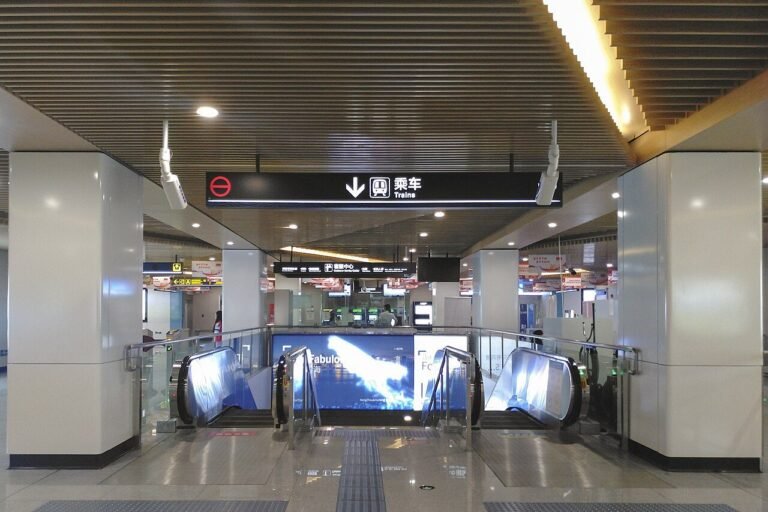
Hainan’s east coast runs roughly 300 kilometers from Haikou in the north to Sanya in the south, and the whole thing is served by the island’s ring railway. The eastern section of the Hainan intercity line opened in 2010, the western ring in 2015, and together they mean you can travel the coast without renting anything. Trains from Haikou to Sanya take about two hours along the east line, with stops at Wenchang, Qionghai, Bo’ao, Wanning, and Lingshui. Fares are modest: Haikou to Wanning runs about 40 to 60 RMB in second class.
The character of the coast shifts as you go south. The north is agricultural and Chinese-old: fishing villages, space centers, chicken farms. The middle is the overseas Chinese belt around Qionghai and Wanning, where returned emigrants from Southeast Asia planted coffee and built towns that feel faintly Nanyang. The south turns resort-y, though it never quite becomes Sanya. If you are planning the whole island, the Hainan island loop guide shows how the east and west halves fit together.
Wenchang: chickens, rockets, and coconut shade
Wenchang is the first real stop south of Haikou, about 20 minutes by train, and it is the hometown of the most famous chicken in China. Wenchang chicken is a small, free-range bird fed on coconut and rice, boiled and served in pieces with a dipping sauce of ginger, garlic, and salt. It is the base of Hainanese chicken rice, which traveled to Singapore and Malaysia generations ago and became one of the world’s great dishes. In Wenchang itself, the chicken comes with rice fried in chicken fat, and a whole bird at a local restaurant costs 70 to 100 RMB, enough for two hungry people.
The town’s other claim is the Wenchang Spacecraft Launch Site, the newest of China’s four launch centers, built from 2009 and first used in 2014. Public viewing areas opened later, and on launch days the headland at Tongguling fills with buses. Check the launch calendar if a rocket is part of your plan; the scenic area itself, with its views over the moon-shaped bay and the coconut groves of Dongjiao, is worth the climb even without one.
Breakfast here is Baoluo fen, a rice noodle soup from the town of Baoluo, thick with beef or pork and a ladle of local vinegar. A bowl costs 8 to 12 RMB and the shops empty by 9 a.m.
Qionghai and Bo’ao: forum town and sandbar
Qionghai is a working town with a pretty riverfront, but most people stop at Bo’ao, twenty minutes east, because of the Boao Forum for Asia, the regional summit held here every spring since 2001. The permanent convention buildings sit on the edge of the Wanquan River, and the stretch of beach next to them, Yudai Beach, is a narrow sandbar running between river and sea that you can walk in ten minutes.
The town of Tanmen, on the coast north of Bo’ao, is the better stop for travelers who like fishing ports: boat-building yards, dried seafood shops, and boats that still sail to the Paracels. Jiaji town, Qionghai’s center, is where you eat Jiaji duck, the other famous Hainan bird, braised until the fat renders and the skin goes dark and lacquered. Hele crab, from the town of Hele further east, is the local shellfish specialty, usually steamed with ginger and eaten with your hands in season.
If you want one village stop, Beireng, a few kilometers inland from Jiaji, is a restored rural village with coffee shops and rice paddies, and it shows what the inland countryside looks like away from the beaches. It gets domestic tour groups on weekends; go on a weekday.
Wanning: surf, coffee, and the bay nobody talks about
Wanning is the east coast’s surprise. Two bays here matter. Shimei Bay, in the south of the county, is a broad crescent of sand with hills running down to the water, and it stays quiet because the big hotel chains never got their hooks in. Riyue Bay, further north, is a different animal entirely: it is China’s surfing capital, with the national team training here and a row of surf schools along the beach.
I took a two-hour lesson at Riyue Bay in December for 380 RMB, board and rash guard included, and stood up on my third try, which the instructor assured me was above average. Board rental runs about 100 RMB an hour, and the swell season is November through April when winter storms send consistent waves. In summer the bay goes flat and the surf shops turn into coffee bars.
The coffee part is not an accident. Xinglong, the town in the hills above Wanning, was settled in the 1950s by returned overseas Chinese from Malaysia and Indonesia, and they brought coffee seedlings with them. The plantations are still there, and the town brews thick, sugary, charcoal-roasted coffee in a style you will not find elsewhere in China. A cup at a Xinglong shop costs 10 to 20 RMB, and the coffee museum and old farm plots near the tropical botanical garden make a half-day trip. If coffee in China interests you beyond Hainan, the Chinese coffee culture guide covers the modern scene.
Lingshui: the last stop before Sanya
Lingshui county marks the point where the coast starts angling toward Sanya, and it holds two of the island’s stranger attractions. Nanwan Monkey Island is reached by a long cable car over the fishing flats: the macaque reserve on the island holds several hundred monkeys, and the boat-and-cable-car combination ticket runs about 160 RMB. The monkeys are the reason to come, and the reason to hide your sunglasses.
Fenjiezhou, just offshore, is a small island reserve with a marine park and clear water; ferries take about fifteen minutes. Clear Water Bay, on the mainland side, has the sand that squeaks underfoot when you walk it dry, which locals call a singing beach. Neither place is as developed as anything around Sanya, which keeps the prices sane: a beachfront room at Clear Water Bay in shoulder season runs 250 to 450 RMB, roughly half what an equivalent room in Yalong Bay would cost.
When to go, and what it costs
| Stop | From Haikou by train | Reason to stop | Budget guesthouse |
|---|---|---|---|
| Wenchang | ~25 min | Wenchang chicken, launch site, coconut groves | 120-200 RMB |
| Qionghai and Bo’ao | ~45 min | Forum town, Yudai sandbar, Jiaji duck | 130-220 RMB |
| Wanning | ~1 hr | Riyue Bay surfing, Xinglong coffee, Shimei Bay | 180-350 RMB |
| Lingshui | ~1 hr 20 min | Monkey Island, Fenjiezhou, Clear Water Bay | 250-450 RMB |
Come between October and April. The dry season brings lower humidity and no typhoons, and the surf arrives with the winter swells. Summer is hot, wet, and occasionally dangerous, with August and September the peak typhoon months. Prices along this coast swing less than in Sanya, but rooms near Riyue Bay still fill up in December when the surfing competitions run.
Quick facts
- The island ring railway links the whole coast; Haikou to Sanya is about two hours along the eastern line
- Wenchang chicken, Jiaji duck, and Hele crab are the three local classics, all named for their home towns
- Riyue Bay surf lessons run about 380 RMB for two hours, with gear included, and swell season is November to April
- Xinglong coffee is a Nanyang tradition planted by returned overseas Chinese in the 1950s
- Yudai Beach at Bo’ao is a narrow sandbar between river and sea, walkable end to end in ten minutes
- Typhoon season peaks in August and September; check forecasts before booking island transport
How to combine this with Sanya
The cleanest plan is a one-way trip: fly into Haikou, take the train south along the coast, stopping two or three nights, then leave from Sanya. You get the whole island without backtracking, and you arrive in Sanya with your beach expectations already satisfied by quieter sand. For the meals along the way, the Hainan food guide covers what to order in each town, and if you do end up in Sanya, our guides to the Sanya area and its beaches pick up where this coast ends. The east coast is not the postcard version of Hainan. It is the version with chickens in the road, and that is why I keep going back.
Frequently asked questions
Is the east coast worth it if I only have a week?
Yes, and I would argue it is the better use of a week than Sanya alone. Give it three or four nights on the coast, then two in Sanya at the end. You get surfing, coffee towns, and local food for a fraction of the resort prices.
Do I need to rent a car?
No. The ring railway covers the main towns, and taxis or ride-hailing handle the last few kilometers. A car helps for Xinglang plantations and the Tongguling headland, where services are thin, but buses and local taxis fill the gap.
Can I learn to surf at Riyue Bay?
Yes. The surf schools there cater to complete beginners, with English-speaking instructors at the bigger shops, and lessons include board and gear. Book for the morning when the wind is calmer, and expect to stand up within a couple of hours if you are reasonably fit.
What is the best month to visit?
December through February for comfortable weather and reliable surf, though Chinese holiday periods bring domestic crowds. April and May are quieter and still dry. Avoid September, which combines heat, rain, and the peak typhoon risk.
Is the food different from Sanya’s?
The dishes are the same Hainanese ones, but the cooking is local rather than tourist-facing. Chicken rice shops, noodle stalls, and cheng bu liang dessert stands serve the towns on this coast, and prices run a third of what the Sanya strip charges.
How much should I budget per day?
For 2024 prices, 400 to 600 RMB a day covers a mid-range guesthouse, three meals, local transport, and one activity like a surf lesson or a boat ticket. Surfing days push that to 800 RMB or more.
Is it easy to travel here without Chinese?
The train stations have English signage, and hotel staff in the surf towns speak basic English. Smaller towns like Xinglong and Tanmen are harder, so keep a translation app ready for menus and bus stops, and use your phone to show destination names to taxi drivers.
Written by the ChinaTravelFood editorial team.