Rice is the quiet center of the southern table
Northern visitors to Guangdong are often surprised by how little the meal is about the dish and how much it is about the rice. A Cantonese dinner is built so that the fan (饭), the plain steamed rice, sits under everything, soaking up the sauce from the steamed fish, catching the gravy from the braised pork, and filling the space when the richer plates run out. I did not appreciate this until I spent a week in a small Jiangmen town where every lunch was three shared dishes and a mountain of rice, and the rice was treated as seriously as the meat.
This page is about the dishes where rice stops being a side and becomes the star. Fried rice, congee, claypot rice, rice noodles, sticky rice parcels, rice cakes, and the Hainan chicken rice that tourists fight over. These are the forms rice takes when Chinese cooks decide the grain deserves the spotlight. Our Chinese rice types guide explains the grains themselves; here we cook them.
Fried rice and the wok myth
The dish everyone knows is fried rice, and the version most foreigners meet first is Yangzhou fried rice (扬州炒饭), with egg, shrimp, peas, and diced ham. The real trick, which I learned watching a cook in a Chengdu alley, is day-old rice. Fresh rice is too moist and clumps; rice that sat in the fridge overnight fries into separate, slightly chewy grains that take on the wok’s smoky note, the wok hei. The cook used a scoop of oil, a handful of cold rice, and thirty seconds of violent tossing, and that was the whole secret.
At home you can fake it with leftover rice and a hot pan. In China you can eat a plate for 12 to 25 RMB from a street stall, or pay 60 RMB for a version with crab and Yunnan ham in a hotel. Both are valid. The point is that fried rice is not a leftover dump; done well it is a test of heat control. Our fried rice recipe lays out the steps if you want to try it on a travel-stained burner.
Congee: the breakfast that heals
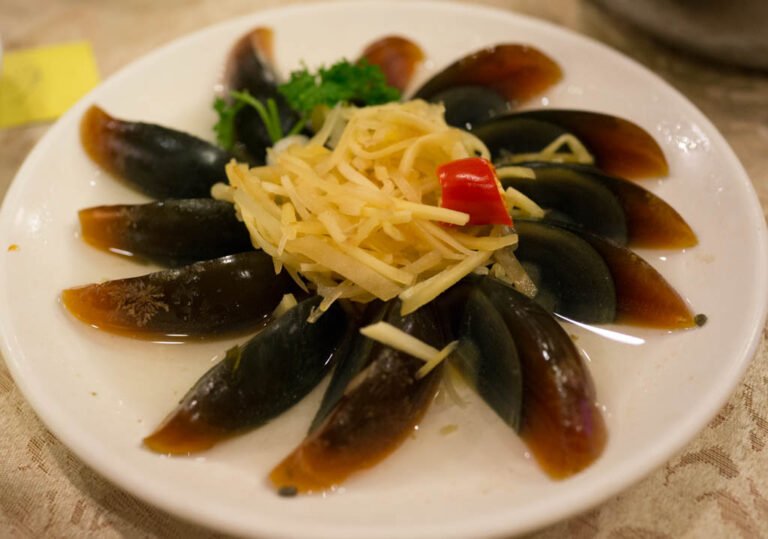
Congee, zhou (粥), is rice boiled until it breaks down into a thin porridge, and in the south it is the default breakfast and the food of the sick and the hungover. A Cantonese congee shop opens at six and serves it plain, with century egg and pork, with fish slices, or with beef and ginger, each bowl about 8 to 15 RMB. The texture ranges from watery to spoon-standing depending on the shop, and the best versions have a sweetness from the rice itself, no sugar added.
I ate congee almost every morning in Guangzhou and came to prefer the plain version with a you tiao (fried dough stick) torn in. It is the most forgiving meal in China for a traveler with a cautious stomach, which is why our food safety guide quietly recommends it as a safe first breakfast. The recipe side of this is in our congee recipe page, but the travel version is: find the shop with the oldest customers and the most steam.
Claypot rice and the crust
Claypot rice, bao zai fan (煲仔饭), is the dish I miss most when I leave Guangdong. Rice and meat, often lap cheong sausage or chicken with mushroom, cook together in a small clay pot over a flame until the bottom forms a browned crust called guo ba (锅巴). You pour dark soy sauce and oil into the pot, scrape the crust loose, and eat it all from the pot it cooked in. A good one runs 25 to 45 RMB and arrives sizzling, and the wait is part of the deal, twenty minutes minimum.
The crust is the point. Tourists sometimes leave it, which is like ordering a steak and skipping the seared edge. Scrape it, mix it with the saucy rice, and you understand why Cantonese people queue for this in winter. It pairs naturally with a bowl of the slow soup described elsewhere, and it is the most satisfying rice dish for a cold evening.
Rice noodles and the border regions
Once you move west, rice becomes noodles. Rice noodles, mi fen (米粉) in the south, he fen (河粉) the wide flat version, and the famous Yunnan mixian (米线) are all rice, just ground, pressed, and cut. The wide he fen shows up in Cantonese beef chow fun (干炒牛河), stir-fried with soy and bean sprouts, a dish that separates a good wok from a bad one by how the noodles char without breaking.
Yunnan’s crossing-the-bridge noodles are the spectacle: a bowl of near-boiling broth brought to the table with a tray of raw slices, which you slide in to cook at the table. It is rice, egg, meat, and herbs in one bowl, and our Chinese noodle soups guide covers the regional versions. The takeaway for a rice-focused eater is that the noodle map and the rice map overlap, and the line between them is just how finely you grind the grain.
Sticky rice and the festival table
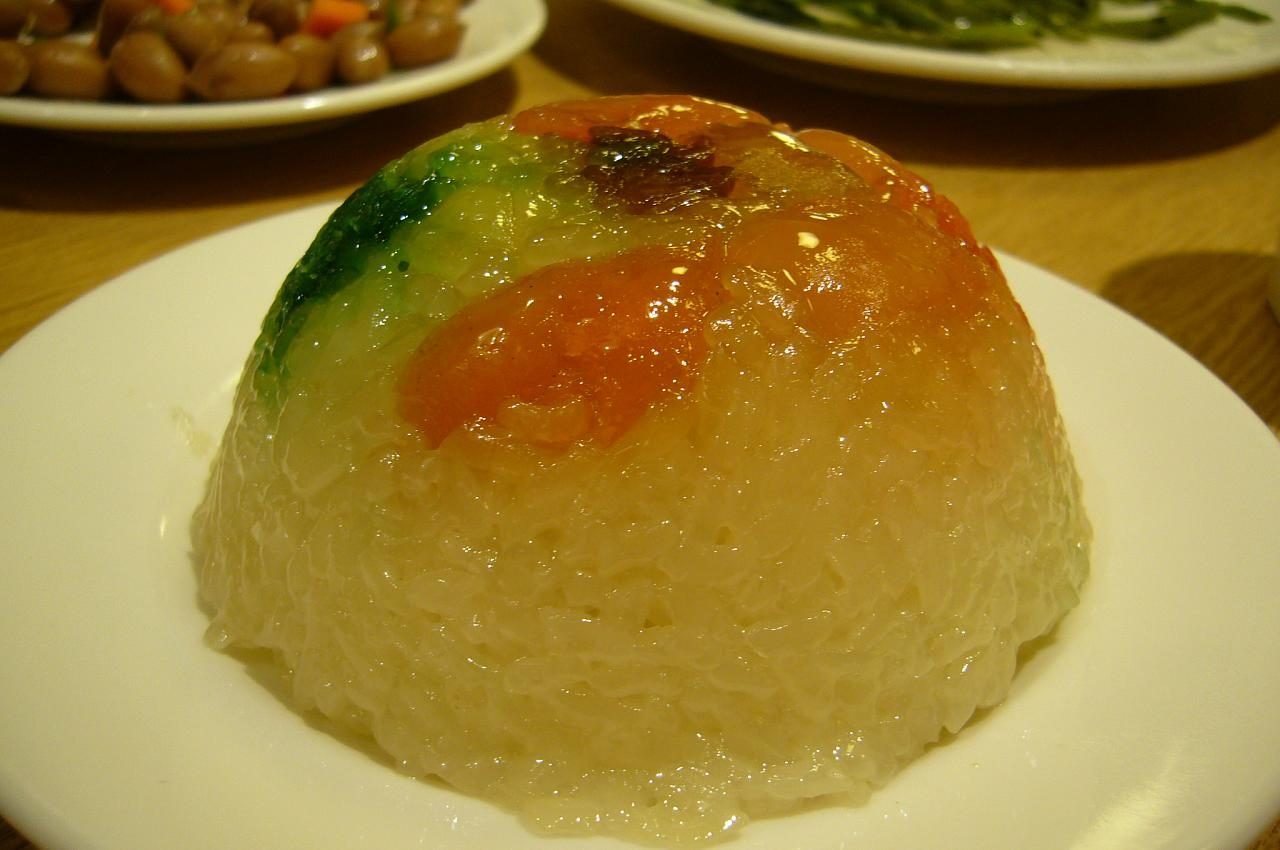
Glutinous rice, nuo mi (糯米), is stickier and used in parcels and sweets rather than as plain steamed fan. Zongzi (粽子) are the best-known: triangle or rectangle packets of sticky rice with pork, bean, or egg yolk, wrapped in bamboo or reed leaves and boiled, eaten at the Dragon Boat Festival. Lo mai gai (糯米鸡) are the dim sum cousin, sticky rice with chicken and mushroom steamed in a lotus leaf. Eight-treasure rice (八宝饭) is the festival dessert, a molded dome of sticky rice with red dates, lotus seeds, and sweet bean paste, turned out and glazed.
None of these are everyday rice. They are occasion food, and eating one at the right festival is a small lesson in how Chinese food marks time. The zongzi recipe is covered separately if you want the folding method.
Hainan chicken rice and the regional split
Hainan chicken rice deserves a mention because it is the one rice dish that became a whole cuisine’s calling card abroad. Poached chicken, fragrant rice cooked in chicken fat and stock, and three dipping sauces. In China it is a Hainan and Guangdong staple; in Singapore and Malaysia it is a national dish. The rice is the quiet genius, oily, salty, and chicken-scented, and a plate runs 20 to 40 RMB. Order it where the chickens are clearly poached that day, never from a display that has sat.
The rice dishes at a glance
| Dish | Form of rice | Region | Typical price |
|---|---|---|---|
| Yangzhou fried rice | Day-old grains, fried | Yangzhou, nationwide | 12 to 25 RMB |
| Congee (zhou) | Boiled to porridge | Guangdong, nationwide | 8 to 15 RMB |
| Claypot rice (bao zai fan) | Steamed in pot with crust | Guangdong | 25 to 45 RMB |
| Beef chow fun (he fen) | Wide rice noodles | Guangdong | 20 to 40 RMB |
| Crossing-the-bridge noodles | Yunnan rice threads | Yunnan | 18 to 35 RMB |
| Zongzi | Glutinous, leaf-wrapped | Nationwide, festival | 5 to 12 RMB each |
| Hainan chicken rice | Fat-cooked grains | Hainan, Guangdong | 20 to 40 RMB |
Quick facts
- Fan is plain steamed rice and the base of most southern meals
- Fried rice works best with cold, day-old rice for separate grains
- Congee is rice boiled to a porridge; century egg and pork is the classic
- Claypot rice’s prized part is the crust, guo ba, scraped from the pot
- He fen are wide rice noodles; mixian are Yunnan rice threads
- Zongzi and lo mai gai use glutinous rice and are festival or dim sum food
- Hainan chicken rice builds flavor into the grain with chicken fat and stock
Frequently asked questions
Is rice eaten all over China?
No, and this trips up first-time visitors. South of the Qinling-Huaihe line rice is the staple; north of it wheat rules, and you will see noodles, mantou, and dumplings instead. Our wheat and rice guide maps the divide. In the far northeast, despite the cold, they grow excellent rice and eat both.
What is the safest rice dish for a weak stomach?
Plain congee, with no heavy toppings, is the gentlest. It is also what Chinese families feed someone who is ill. Pair it with steamed fish rather than fried food, and skip the preserved egg version if you are unsure. The broader safety notes are in our food safety guide.
Why does restaurant fried rice taste better than mine?
Heat. A home stove cannot match a restaurant wok over a fierce burner, and the high, dry heat is what gives fried rice its toasted edge. Use cold rice, a smoking pan, and cook in small batches. Our recipe has the technique.
Are rice noodles gluten free?
The noodles themselves, made from rice, are gluten free, but watch the sauces, which sometimes contain soy with wheat, and the shared wok in a busy kitchen. If you have celiac disease, ask specifically and expect cross-contact risk in small stalls.
Where do I find the best claypot rice?
Guangdong, especially smaller cities and late-night shops, is the heartland. Look for places with stacked clay pots by the door and a wait of twenty minutes, which means they cook to order. The sausage-and-chicken version is the standard to beat.
Can I eat zongzi any time, not just the festival?
Yes, though they are most available in the weeks around the Dragon Boat Festival (fifth lunar month, usually June). Shops in Guangdong and the south sell them year round, and the sweet red-bean version makes a fine breakfast. The savory pork ones are heavier and best shared.
What rice dish should I try first in China?
If you are in the south, claypot rice for the experience and congee for the comfort. If you are in Yunnan, the crossing-the-bridge noodles. If you only remember one thing, make it that the plain rice under your meal matters as much as the dish on top of it.
If you want a rice-focused eating route through Guangdong and Yunnan, we can plan one through the contact page. The pleasure of Chinese rice dishes is that they look humble and reward attention, which is most of what good travel eating is about.
Written by the ChinaTravelFood editorial team.