The cuisine the mountains made
I went to Anhui for the villages, not the food. Hongcun and Xidi, the Huizhou old towns with their horse-head walls reflected in still ponds, were the plan. The cooking was a surprise: a fermented mandarin fish that smelled like trouble and tasted like the best thing I ate that month, and a slab of “hairy” tofu that a street cook fried until it turned nutty and crisp. Anhui (安徽, Hui cuisine) is one of China’s eight great regional kitchens, but almost no foreign visitor comes for it, which is a mistake I want to correct.
This guide covers what Anhui food is, the signature dishes you should hunt, where to eat them around the Huangshan region, and how it fits beside the more famous Jiangsu cuisine to the east. If you are already doing the village-and-mountain trip, the food is the free upgrade you did not know you booked.
What Anhui food is
Hui cuisine (徽菜) comes from the mountainous Huizhou region in southern Anhui, where farming was hard and preservation was survival. The result is a kitchen built on salted, smoked, and fermented ingredients, wild mountain vegetables, and slow braises. It is less oily than Hunan, less sweet than Jiangsu, and more “forest” than almost any coastal Chinese food. The signature flavor is the deep, almost gamey umami of aged and cured things.
Two techniques define it. One is fermentation: fish and tofu are left to develop a funk that scares first-timers and rewards the brave. The other is the use of wild greens, bamboo shoots, and mushrooms foraged from the Huangshan slopes. When I asked a village cook what made his food special, he pointed at the hill behind the house. “The mountain puts it in the pot,” he said. That is the whole philosophy.
The dishes to find
| Dish | What it is | First-timer note |
|---|---|---|
| Chou gui yu (stinky mandarin fish) | Fermented fish, braised | Smells strong, tastes rich |
| Mao doufu (hairy tofu) | Mold-aged tofu, fried | Order from a street master |
| Yi pin guo (layered hot pot) | Stacked meats and veg, simmered | Shared, comforting |
| Wensi tofu (shredded tofu soup) | Tofu cut hair-thin in broth | Quiet skill, not funky |
| Xun rou (smoked pork) | Wood-smoked belly | With bamboo shoots |
| Qingming guo (green dumpling) | Herb-filled, spring only | Seasonal, sweet-savory |
The stinky mandarin fish (臭鳜鱼) is the headline and the test. The fish is salted and lightly fermented for a few days, then braised with pork and chili. The aroma on arrival is aggressive; the flesh is tender and deeply savory, nothing like the smell. I resisted for two days, then ordered it and immediately understood why it is the region’s proudest dish. The hairy tofu (毛豆腐) is aged until a white mold coat forms, then pan-fried and brushed with chili sauce; the texture turns from fuzzy to creamy inside a crisp shell.
Street food and the village kitchen
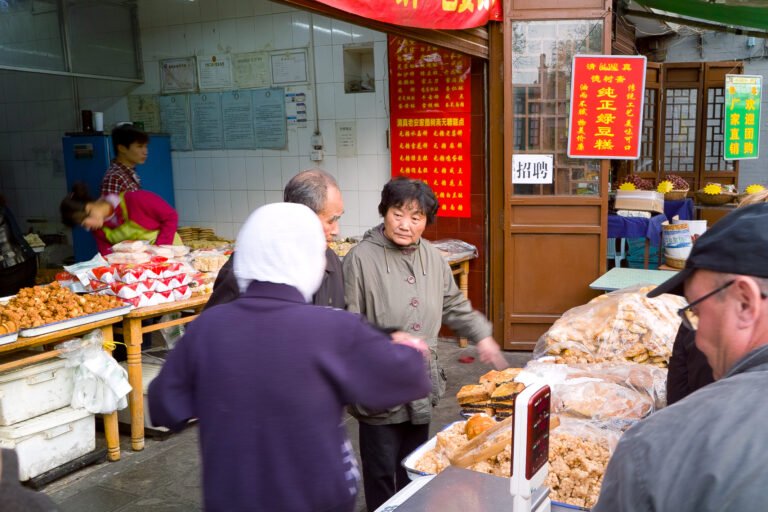
Around Huangshan and the old towns, the Chinese street food takes an Anhui shape: the hairy tofu stalls with their small charcoal griddles, the baked huimo biscuits (徽墨酥, ink-shaped sesame sweets named for the famous Huizhou ink), and the stalls selling dried bamboo and wild mushroom by the bag. The fermented and pickled notes run through all of it; the Chinese pickles here are often wild greens from the slope, salted and kept through winter.
Eat the hairy tofu from a stall, not a restaurant, because the street masters age it best and fry it to order. I watched one cook flip the squares with a quick wrist and brush them with a sauce that was mostly chili oil and patience. A portion runs 10-20 yuan and is the best snack on the mountain.
Pairing the food with the trip
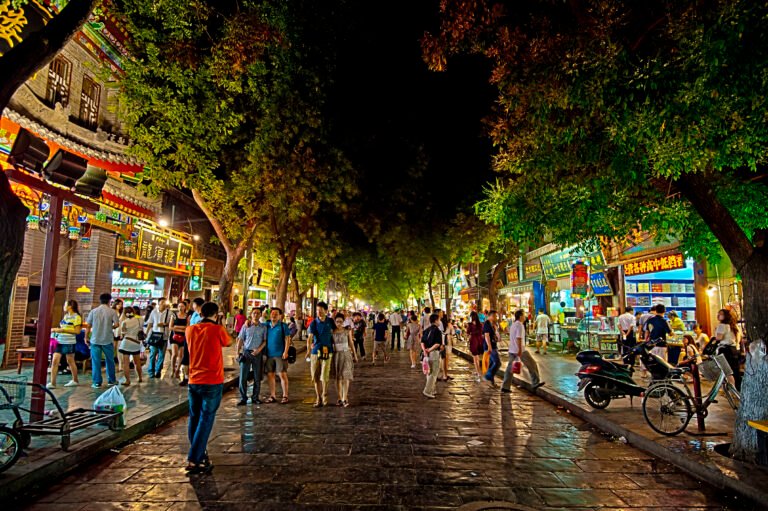
Anhui’s food makes most sense in place. The Hongcun village and nearby Xidi are the classic base, with guesthouses that serve family-style Hui dinners for 60-120 yuan a head if you join the table. Tunxi, the old quarter of Huangshan city, has the best range of dedicated Hui restaurants and the liveliest night market. The mountain itself (Huangshan scenic area) has overpriced cafeterias at the top, so eat well in the town before you climb and carry snacks.
If you are building a China food tour around regional kitchens, Anhui slots between the Jiangsu refinement to the east and the Jiangxi spice to the south: more rustic than either, more interesting than its quiet reputation suggests. A week covering Huangshan, the villages, and a stop in the provincial capital Hefei gives you the full range.
Tea, the other Anhui export
Anhui grows two famous teas: Huangshan Maofeng, a green tea from the mountain slopes, and Keemun (祁门红茶), a black tea that built the old export trade. A tea tour in China could easily include the terraces around Huangshan, where you can taste Maofeng at the source for a fraction of the export price. I bought a small bag from a hillside farmer for 60 yuan that outperformed any tins I had bought abroad, and the walk up to his plot was the morning’s real attraction.
How to order and what to expect
Menus in the tourist towns often have photos, and the staff are used to nervous foreigners pointing at the stinky fish. Say “我要尝尝” (I want to try it) and commit. Portions are share-style; a table of two eating well spends 120-200 yuan in a proper Hui restaurant, less at a guesthouse table. The fermented dishes are an acquired taste, so order one bold item and one safe (the Wensi tofu soup is delicate and approachable) to keep the meal balanced.
A sample Anhui dinner to order
If you sit down at a Hui restaurant and do not know where to start, here is a table that worked for me: one stinky mandarin fish for the brave (or the curious), one plate of fried hairy tofu as the shared appetizer, a Yi pin guo layered hot pot for the centerpiece, a side of smoked pork with bamboo shoots, a delicate Wensi tofu soup to cool the palate, and a plate of seasonal wild greens. That is a feast for three or four at 250-400 yuan total, and it walks through every signature note of the cuisine: funk, smoke, forest, and skill.
Order the fish and the hot pot first, because both take time; the tofu soup and greens come fast. Ask the cook to go light on sugar in the braises if you find Jiangsu-style sweetness creeping in, though true Hui cooking is not sweet. Pair it with a local Huangshan beer or, better, a pot of Maofeng tea, which cuts the cured flavors cleanly. For a lighter solo meal, the guesthouse set dinner is the move: a small spread of four or five dishes, often including a fermented vegetable, a tofu, a smoke-meat slice, and a green, for 60-100 yuan. It is less theatrical than the restaurant order but more honest, and you eat what the family eats, which in Anhui means what the mountain provides that week.
Quick facts
- Anhui (Hui) cuisine is one of China’s eight great kitchens.
- Stinky mandarin fish (chou gui yu) is the signature dish.
- Hairy tofu (mao doufu) is mold-aged, then fried.
- The food leans on cured, smoked, and wild mountain ingredients.
- Huangshan Maofeng and Keemun teas are both from Anhui.
- Best base: Tunxi old town and the Hongcun/Xidi villages.
Frequently asked questions
Is the stinky fish actually safe to eat?
Yes. It is salted and fermented under controlled conditions, then cooked hot, and it is a staple, not a dare. The smell is stronger than the risk. If you have a compromised immune system, as with any fermented food, be a little cautious, but healthy travelers eat it daily in the region without issue.
What if I can’t handle fermented flavors?
Start with Wensi tofu soup and the smoked pork with bamboo, both mild and approachable. The hairy tofu can be ordered lightly fried with less sauce. Tell the cook “我不太习惯” (I am not used to it) and they will steer you to the gentler dishes. Anhui has plenty beyond the funk.
Where is the best place to eat Anhui food?
Tunxi (Huangshan city old town) for range and the night market, and the village guesthouses around Hongcun for home-style cooking. The mountain-top food is tourist-priced and bland, so eat in town. Hefei, the capital, has refined Hui restaurants if you pass through.
Is Anhui food vegetarian-friendly?
Partly. The wild vegetables, bamboo, mushrooms, and Wensi tofu are excellent, but many braises use pork or chicken stock. Ask for “素” (vegetarian) dishes and confirm the broth. The mountain monasteries near Jiuhua Shan serve proper Buddhist vegetarian meals if you want a guaranteed meat-free option.
Can I visit a tea farm?
Yes, around Huangshan there are family plots that welcome visitors for a tasting and a short walk. Ask at your guesthouse to arrange one; the small ones are more genuine than the commercial ones on the tour bus route. Spring (April-May) is when the new Maofeng is picked.
How does Anhui food differ from Jiangsu?
Jiangsu is refined, sweet, and river-focused, built for the lowland cities. Anhui is mountain rustic, salty, and preservation-driven, built for hard country. They sit next to each other but taste like different countries. If Jiangsu is a silk robe, Anhui is a smoked jacket.
When is the best time to visit for food?
Spring (April-May) for new tea and wild greens, and autumn (Sept-Oct) for clear mountain weather and the harvest flavors. Summer is green but humid and crowded at the Peak. Winter is quiet and cold, with hearty braises at their best and few tourists.
Written by the ChinaTravelFood editorial team.