Tianjin in a short answer
Tianjin is the port city a half hour from Beijing by train, and it wears its history as a patchwork of European concession architecture along the Hai River, a contrast to the capital’s imperial grid. When I stepped off the bullet train and walked the Italian-style piazza by the water, I expected a faded copy of Shanghai and found instead a city that is quieter, cheaper, and more liveable than its fame suggests. The short advice: go as a day trip or an overnight from Beijing, walk the concession quarter and the river at night, eat the local snacks, and skip the theme-park edges. It is the easiest interesting escape from the capital you can make, and the high-speed rail makes it a no-brainer.
Why Tianjin exists
The city grew as the sea outlet for Beijing and as a treaty port after the Opium Wars, which is why a stretch of the riverbank holds buildings that could be Genoa or Cologne. The concessions, leased to several foreign powers in the late nineteenth century, left a layer of European street plans and facades that the city has kept and restored. The result is a walkable district where the architecture tells the story of China’s forced opening better than any museum, and the Hai River ties it together with bridges and night lights. You come for that blend, plus the food, not for ancient monuments, because Tianjin has few.
The neighborhoods worth walking
The concession quarter
The area around the former Italian and French concessions, now the “Five Great Avenues” (Wudadao) and the Hai River bend, is the core. The Italian-style piazza, the old legation buildings, and the tree-lined avenues make a flat, pleasant walk, and the cafes that have moved into the old houses are a good place to rest. The contrast with the Beijing hutongs is the point: here the grid is European, there it is courtyard Chinese, and both are old in different ways. Wudadao alone holds more than two thousand preserved villas in a dozen styles, and the quietest streets, the ones away from the main roads, are where you hear the city instead of the tour buses.
The Hai River and the eye
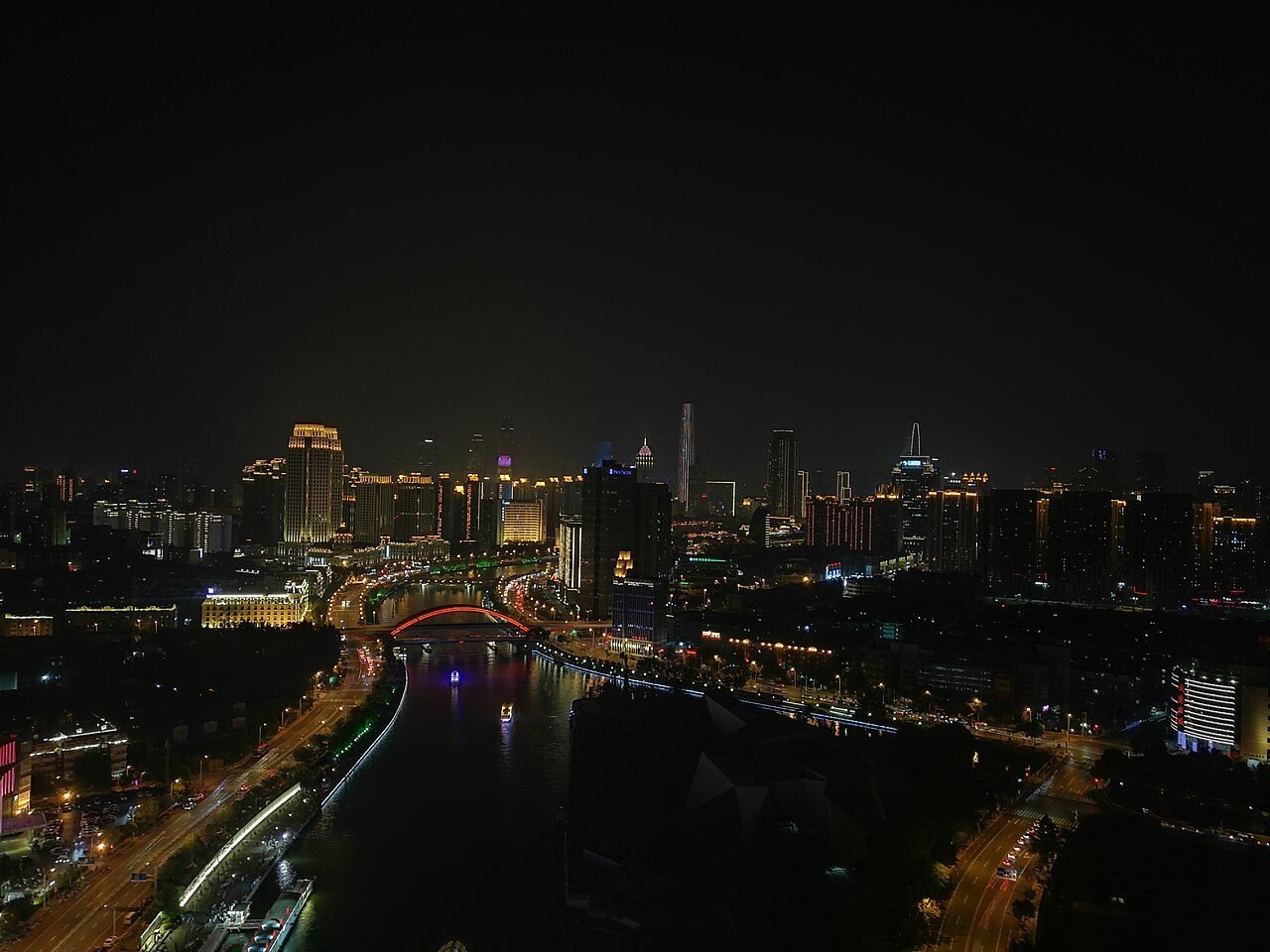
The river is the city’s spine, and a walk along it at night, when the bridges and the Tianjin Eye ferris wheel light up, is the move. The Eye, a giant wheel on a bridge, is touristy but fun for one ride, and the riverside promenade is free and lively. The older public at dawn does tai chi on the banks, which is the real city showing through the lights. A short river cruise boat runs in the evening if you would rather sit than walk, and it threads under the lit bridges for a different angle on the same spectacle.
Ancient Culture Street and the Porcelain House
The rebuilt Ancient Culture Street near the old city sells folk crafts, the local Yangliuqing prints, and the snacks Tianjin is known for. It is commercial, but the food is the genuine article, and you should judge it as a market, not an imperial monument. The nearby Porcelain House, a mansion entirely clad in broken porcelain and seashells by a private collector, is the one offbeat sight worth the ticket, equal parts jaw-dropping and baffling. The old temple and gate on the street give it a little history under the new paint.
Getting there and around
The Beijing-Tianjin intercity train is the headline: every few minutes, about thirty minutes, and you clear no border, just a station change. Book through the apps or the China train tickets system, and aim for the early train so you get a full day. Most visitors arrive at Tianjin Railway Station, which sits right on the Hai River and within walking distance of the riverfront, rather than Tianjin South, which is farther out and needs a metro hop. Inside Tianjin the metro is new and limited but covers the river and the stations, and the riverfront is best on foot. A taxi between the train station and the concession quarter is cheap and short.
What to eat
Tianjin claims a few foods the rest of the country argues about. The jianbing, the egg crepe, is said to have been born here, and the street version at breakfast is the real thing: a chickpea-and-mung batter spread on a hot griddle, an egg cracked over it, a crisp sheet and a sweet-savory sauce folded in, eaten standing up in two minutes. Goubuli, the famous steamed baozi, is more reputation than revelatory, and the tourists queue while locals shrug, but try one out of duty. The mahua, the fried dough twist, is the honest local snack, sweet and keeping for days, and the best souvenir. The ear-hole fried cake (erduoan zhaogao), a glutinous rice cake with red-bean filling, is the breakfast sweet I went back for. The river fish and the small cold dishes round out a cheap, filling table that beats the capital’s prices.
A Tianjin plan table
| Stop | Time | Best hour | Note |
|---|---|---|---|
| Concession quarter (Wudadao) | 2 hours | Afternoon | Walk the avenues |
| Hai River | 1-2 hours | Night | Lights, the Eye |
| Culture Street | 1 hour | Morning | Snacks, crafts |
| Porcelain House | 45 min | Any | Offbeat ticket |
| Tianjin Eye | 30 min | Dusk | One ride |
| Local food | As long as hungry | Any | Jianbing, mahua |
When to go
Tianjin has the northern climate, hot and wet in summer, cold and grey in winter, with spring and autumn the comfortable windows. The river walk is best in the cool months when the air is clear, and the winter light on the European facades is a photographer’s treat if you do not mind the chill. Avoid the national holiday weeks, when the capital’s crowds spill over. For a wider sense of timing, our best time to visit China overview lays the seasons out, and Tianjin tracks Beijing closely because they share the same plain.
Pairing it with Beijing
The natural plan is a Beijing base with a Tianjin day, or a night if you want the river after dark without rushing. If you are building a first China route, our best cities for first-time visitors ranks Tianjin as a strong add-on rather than a standalone, and a Beijing stay with a Mutianyu Great Wall day and a Tianjin evening makes a tight, varied week. The train makes it frictionless, which is the whole point.
A one-day Beijing-to-Tianjin loop
Take the 8 a.m. intercity from Beijing South and you are in Tianjin before breakfast ends. Walk Wudadao before the tour groups, graze Culture Street and the Porcelain House mid-morning, eat jianbing and mahua through lunch, then claim the riverfront for the late afternoon and the Eye at dusk. The last trains back leave past ten at night, so you do not have to bolt. I have done this loop twice and the second time I added the overnight, which I now prefer, because the river at night is the memory and a day trip rushes it.
Quick facts
- What: port city and former treaty port near Beijing.
- See: concession architecture, Hai River, the Eye, Porcelain House.
- From Beijing: 30 min by intercity rail, departures every few minutes.
- Eat: jianbing, mahua, Goubuli baozi, ear-hole fried cake.
- Time: a day trip, or one night for the river.
- Walk: flat, riverfront best on foot; arrive at Tianjin Railway Station.
- Season: spring and autumn most comfortable; winter light is good.
- Cost: cheap snacks, modest museum tickets, free riverfront.
Frequently asked questions
Is Tianjin worth a separate trip?
As a standalone, no, unless you like river cities and European architecture. As a Beijing add-on, yes, easily, because the train is short and the change of feel is real.
How long from Beijing?
About thirty minutes on the intercity train, with departures every few minutes. Book ahead in peak season, because the popular morning slots sell, and confirm whether you are landing at Tianjin Railway Station or the farther South station.
What is the food I should not miss?
The jianbing at a street breakfast stall and the mahua as a take-home snack. Goubuli baozi is for the check-box, not the craving, and the ear-hole fried cake is the sleeper hit.
Is the Tianjin Eye worth riding?
Once, for the view over the river and the wheel lit at night. The line can be long on weekends, so ride on a weekday evening or skip it for the free riverside walk.
Can I walk the whole city?
The interesting parts, the river and the concessions, are walkable and flat. The outskirts are sprawling and dull, so stay near the water and use the metro for the rest.
Is it safe at night?
The riverfront and the central districts are well lit and busy into the evening, and Tianjin is a low-crime city by regional standards. Use normal caution in the crowded markets, where pickpockets are the only real risk.
What should I buy?
Mahua as a snack souvenir, and the Yangliuqing New Year prints if you like folk art. Skip the mass-produced trinkets on Culture Street and buy from the working studios.
Making Tianjin part of a Beijing week
Tianjin is the easiest change of scene you can add to a Beijing trip, a river-and-buildings counterpoint to the imperial capital a half hour away. If you want the train timed, the river walk planned for dusk, and the Beijing sights strung around it, send us your dates through the contact page and we will sketch a custom food-and-travel itinerary. The intercity train leaves every few minutes, so you have no excuse not to go.
Written by the ChinaTravelFood editorial team.