Central Street is the spine of old Harbin
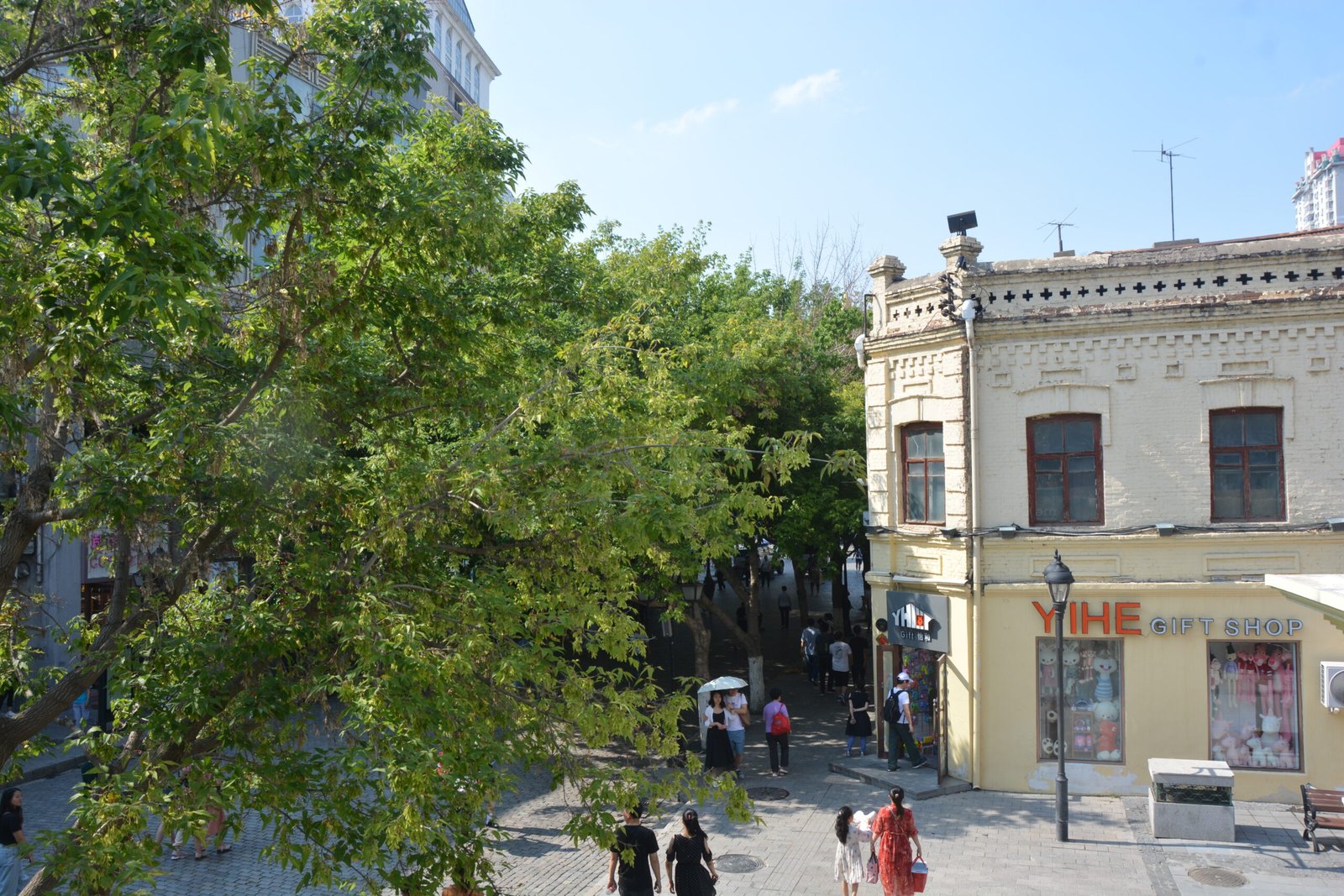
Central Street, or Zhongyang Dajie (中央大街), is the pedestrian artery that runs about 1.4 kilometres from the Songhua River south into the old Russian quarter of Harbin. I walked it the first evening I was in the city and kept walking it every night after, because it is the one place where the strange double identity of Harbin makes sense. The buildings are European, the signs are Chinese, the smell coming off the food stalls is a mix of Russian sausage and northern Chinese noodles, and the pavement under your feet is made of square granite blocks laid more than a century ago.
The street was built up at the turn of the 20th century when the Chinese Eastern Railway brought Russians, Jews, Poles, and a dozen other groups to this spot on the river. What you see now is a protected stretch of that architecture: Baroque facades, Art Nouveau corners, a couple of solid stone banks and department stores that have been standing since before the First World War. It is not a museum piece. It is a working shopping street, and that is the point.
What to eat as you walk
The food is the reason I send people here even if they do not care about architecture. The headline stop is Madie’er, the ice cream brand with a century-old storefront that sells a vanilla cone for a few yuan and a queue that never fully empties, even in minus twenty weather. Locals eat it with bare hands and red ears, and you should too at least once.
Beyond ice cream, Central Street is where Harbin’s Russian inheritance is most edible. Red sausage (hongchang) from the old meat factories, dark rye bread, and cream-filled cakes show up in shops along the route. For a fuller picture of where the good versions hide, Harbin’s food guide walks through the stalls and rooms worth the detour. I would skip the big sit-down “Russian restaurant” on the main drag and look for the smaller places a block off it.
The architecture worth slowing for
Most people power through looking at their phones, but a few facades reward a pause. The sprawling stone building at the south end that used to be a department store is the most photographed, with rounded corners and carved detailing that has survived a hundred Harbin winters. Smaller wins are the tiled entryways and the old bank fronts with their carved stone frames. The street’s protects a mix of styles, so the pleasure is in the variety rather than any single monument.
If you want the city’s signature monument, the Saint Sophia Cathedral is a few minutes’ walk east of the street’s mid-section, and the two make a natural pair: Russian commerce on Central Street, Russian faith at the cathedral.
Where the street meets the river
At the north end, Central Street opens onto the Songhua River and the Flood Control Monument, a tall column put up after the disastrous 1957 flood. In winter the river freezes solid and becomes a vast public space, with ice slides, sledges, and fishing holes cut through a metre of ice. In summer it is a normal riverside promenade with ferries. Either way, this is the natural turnaround point of the walk.
I like to start at the river in the late afternoon, walk south as the light fades, and let the street’s lights come up. The granite blocks underfoot take on a wet shine after snow, and the whole corridor turns photogenic without any effort on your part.
| Stop | What you get | Best time |
|---|---|---|
| River end and Flood Control Monument | Open space, winter ice activities | Late afternoon |
| Madie’er ice cream front | The classic cone, cheap, always busy | Any time, try it cold |
| Side streets off the main drag | Better Russian food, fewer tourists | Evening |
| Southern stone facades | Best preserved European buildings | Daylight for detail |
| Link to Saint Sophia | The city’s other Russian icon | After sunset for lights |
Crowds, scams, and comfort
Central Street is crowded every evening and packed during the Harbin Ice Festival in January. The crowd is friendly and mostly domestic tourists, but the usual big-city rules apply: watch your phone, agree on prices for any costume photo before you pose, and treat the “free tasting” shops with the understanding that they want a sale. None of it is dangerous, just persistent.
Comfort matters more here than at most sights because you are outside for a long time in winter. The wind funnels down the street from the river, so a windproof layer beats a thick coat. Boots with grip help on the icy granite. I learned this the hard way the first night in smooth-soled shoes, and spent the walk back shuffling.
How to get there and stay online
The street is central, so any metro line or taxi that reaches the old quarter puts you within a short walk. Hotels in the Daoli district put it at your door. As with the rest of the city, sort your connectivity before you arrive because the usual Western apps misbehave in China; the Chinese SIM and eSIM guide covers the practical options. If you are arriving by train from Beijing or Shenyang, the high-speed rail is the comfortable choice and drops you close enough for a taxi hop.
When to visit
Winter is the headline, and the street dressed in snow with steam off the food stalls is the postcard. Summer is easier walking and the river is open, but you lose the ice drama. For a wider view, the best months to travel in China favours spring and autumn elsewhere, while Harbin flips the script and rewards deep winter. Bring layers either way; the river wind does not care what the calendar says.
Side streets and what to bring home
The lanes peeling off Central Street are where the real shopping hides. Antique-ish Soviet badges, carved wooden boxes, and nested dolls show up in the stalls, and while most are new-made, a few honest shops sell genuinely old pieces if you like the look. I bought a heavy brass samovar keyring that I still use, and a bag of the local dried cranberry that grows wild up north. For edible souvenirs, the red sausage travels poorly, but the boxed Russian chocolate and the rye-cracker tins make it home intact.
If you want a calmer version of the same walk, come on a weekday morning in the shoulder seasons, when the tour groups are at the palaces and the street belongs to locals walking to work. The granite underfoot is the same, the buildings are the same, and you finally hear the city instead of the crowd. That is the Central Street I tell people not to miss.
Quick facts
- Central Street (Zhongyang Dajie) is a 1.4 km pedestrian street in Harbin
- Paved with granite blocks laid in the early 1900s
- Lined with preserved Russian and European architecture
- Runs from the Songhua River south into the old quarter
- Madie’er ice cream is the famous cheap stop, busy year round
- Russian sausage, rye bread, and cream cakes along the route
- North end meets the river and the Flood Control Monument
- A few minutes’ walk to Saint Sophia Cathedral
- Busiest in January during the Ice Festival
- Wear grippy boots; the granite gets icy in winter
Frequently asked questions
How long is Central Street and how long does it take?
It runs about 1.4 kilometres end to end. A straight walk is twenty minutes, but with food stops and photos plan an hour or two, and more if you explore the side streets.
Is the food on the street any good?
The ice cream and the Russian snacks are good and cheap. The sit-down “Russian” restaurants on the main strip are tourist-priced; the smaller places a block away are better value. Read our Harbin food guide for specifics.
Is it wheelchair accessible?
Largely yes, the street is flat and paved, though the granite can be uneven and icy in winter. Side streets and some shops have steps. Go in daylight and dry weather for the easiest time.
What time does it get busy?
Evenings every day, and all day during the January ice festival. Mornings are quiet if you want empty photos, though many shops open late.
Can I walk here from the train station?
From Harbin Station it is a taxi or a metro ride of roughly fifteen to twenty minutes. The street is central but not next to the main station, so plan a short transfer.
Is it worth visiting in summer?
Yes, for the architecture and the river without the ice crowds. You miss the winter spectacle, but the walking is more pleasant and the food is the same.
Are there public toilets nearby?
Yes, shopping malls and the metro stations along the route have them. In winter the street-side public facilities are basic, so use a mall if you want warmth and cleanliness.
Central Street is best treated as a slow meal and a long look rather than a checkpoint. Pair it with Saint Sophia at night and a river walk, and you have the core of old Harbin in one evening. If you want the winter festivals, the food stops, and the transport knitted into a plan that fits your dates, reach out through the contact page. We plan custom food-and-travel routes across China, and Harbin in its cold season is one we know how to handle.
Written by the ChinaTravelFood editorial team.