Short answer: three to five days, base yourself somewhere quiet on the lake, and do one long day out
Dali is the soft centre of northern Yunnan. Old town walls and Bai courtyard architecture at the foot of the Cangshan range, Erhai Lake spread out to the east, mild weather most of the year, and a pace that suits travellers who have just come off the Lantern-and-crowd circuit. It sits at roughly 1,900 metres, high enough that the light is sharp and the evenings cool, low enough that nobody gets altitude trouble.
The mistake visitors make is treating it as a two-night stop between Kunming and Lijiang travel guide territory. That gives you one evening in a souvenir street and one ride on a lakefront bike path, and it misses everything that actually makes Dali worth it: the villages, the market mornings, and a stretch of lakeside that has no ticket booth on it.
Getting in, and where the station actually is
Rail is now the default way in. High-speed services connect Dali with Kunming in roughly two to two and a half hours, and the continuation north to Lijiang runs in something like 90 minutes. There is also an airport, but its domestic reach is limited and rail usually wins on reliability. Our high-speed rail page covers how to book and what classes mean.
One thing people get wrong: the train station is not in the old town. It sits down by Xiaguan, the modern city at the southern end of the lake, roughly 20 to 30 minutes by road from the old town depending on traffic. Budget for a Didi or a taxi on arrival, or take one of the shuttle buses that run to the tourist centre. Do not assume you can walk it.
Where to stay: four options with real trade-offs
| Base | What it is | Good for | Downside |
|---|---|---|---|
| Dali old town (inside the walls) | Paved lanes, guesthouses in old courtyards, bars and souvenir shops | First night, walking to dinner, arriving without a plan | Noisy until late on the main streets; the busiest part of the whole basin |
| Caicun or Longkan (west shore) | Village lanes running down to the water, small guesthouses | Sunrise over the lake, cycling, quiet evenings | Fewer dinner options; you are 15 minutes from everything else |
| Xizhou | Bai merchant village with real courtyard houses and a working market | Architecture, market mornings, seeing ordinary life | Half an hour north; evening options thin out early |
| Shuanglang / east shore | The fashionable lakefront strip, newer hotels, restaurant clusters | Lake views, better coffee, sitting on a terrace | The priciest part of Dali and the most built-up |
Note that much of the Erhai waterfront went through an ecological cleanup a few years ago, which closed a large number of guesthouses built too close to the water and returned some of the shore to fields. The practical effect is that lakefront accommodation is scarcer than old blog posts suggest, and the surviving names get booked out. Book ahead for spring and autumn.
For something completely different, consider a village homestay. Our homestay China guide explains how those work and what a reasonable price looks like.
The Erhai Lake loop
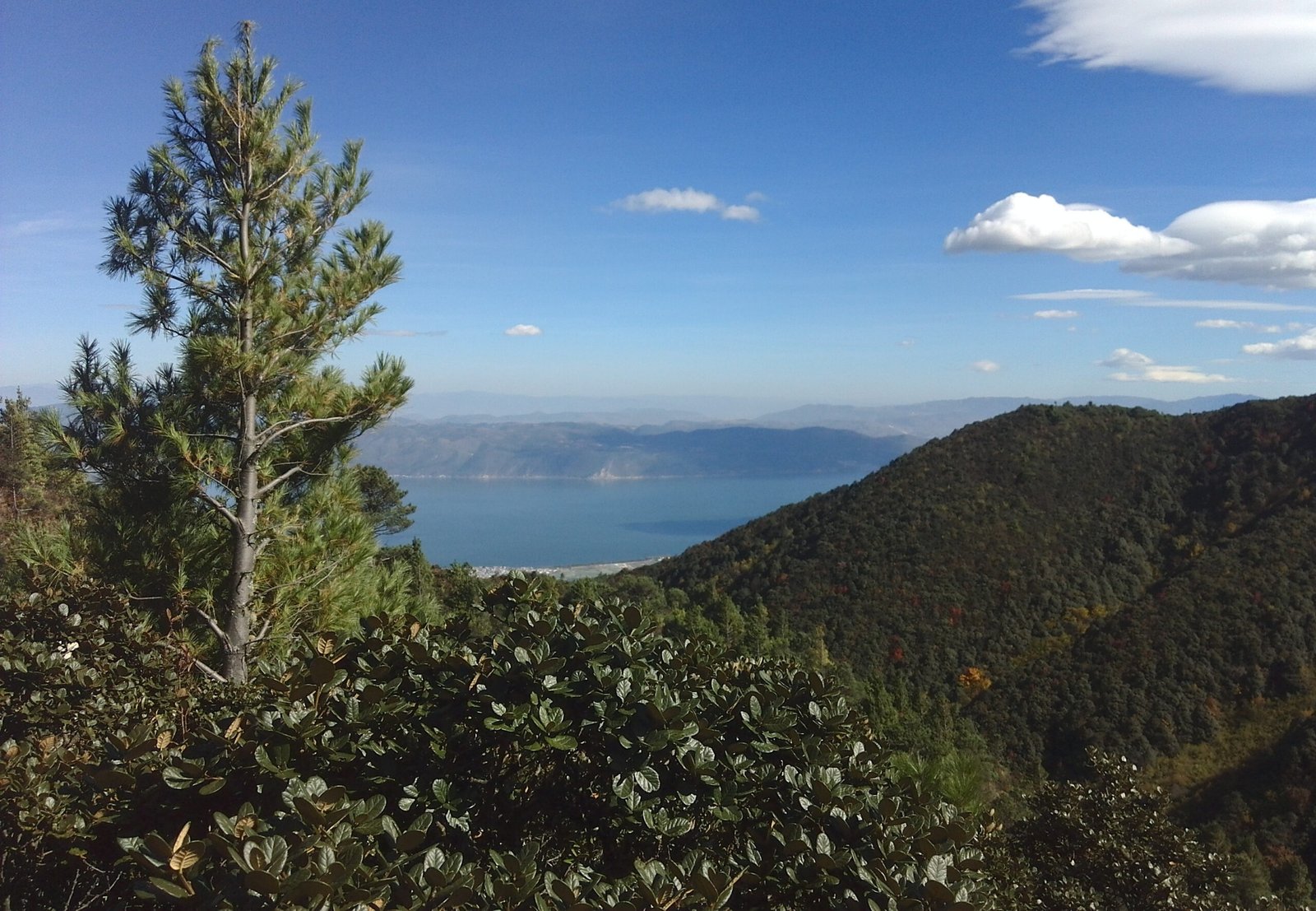
Erhai is a tectonic lake roughly 40 kilometres long, ringed by a road that makes a loop of about 120 kilometres. Doing the whole circuit is a genuine day out, and the mode you choose changes the day completely.
- Electric scooter. The lazy answer and the one most visitors take. Around 80 to 120 yuan a day from any guesthouse, enough range for the loop, and you can stop whenever the view changes. Downside: no exercise, and you are competing with hundreds of other tourists doing exactly this in the same direction.
- Bicycle. Very doable for anyone who rides a bit, roughly six to eight hours with stops. The northern half is flat and scenic; the eastern segment has more traffic and less shade.
- Private car with driver. The right call for families or for anyone who wants to be taken to the far corners. Roughly 400 to 700 yuan for a day, and every hotel can arrange one.
Small enticements worth stopping for: the western ecological corridor closed to private cars, the fishing platforms at Haidong, the small temples on the north shore, and the S-shaped causeways where people queue for the same photograph. My own preference is to go counterclockwise early, before everyone else leaves.
Xizhou and the villages that are still villages
Xizhou, about 20 kilometres north of the old town, is the settlement I would prioritise over most of the natural highlights. It has a genuine morning market where Bai women sell vegetables, cured pork and live poultry from baskets on the ground; a set of substantial courtyard houses built by trading families in the late Qing and Republic eras; and a density of ordinary life that the old town lost years ago.
The food here is the reason to come early. Grilled milk fan, a stretched cheese made from cow’s milk, comes off griddles with rose jam or sugar, and the local wheat pancakes are sold folded and hot. Dali cooking is covered plate by plate in Dali food and in the wider Yunnan cuisine survey.
Further north, Shaxi old town sits on a surviving stretch of the Tea Horse Road and is worth an overnight rather than a day visit. Weishan, to the south, was the Nanzhao kingdom’s origin point and is almost entirely untouristed. Both are better with a car than with a bus timetable.
Cangshan: the range behind everything
Nineteen peaks, eighteen streams, and a skyline you will stare at for your entire stay. There are three ways up:
- Gantong cable car on the lower slopes, which puts you near temples and the Jade Belt Cloud Road trailhead.
- Zhonghe cable car from beside the old town, going higher with a middle station.
- The Ximatan route to the summit ridge, the highest and coldest option, which is a full commitment with proper clothing required.
The Jade Belt Cloud Road is the one to walk if you can: a contour path running north to south along the flank at around 2,600 metres, roughly 12 kilometres at its full length, with streams dropping past you and the whole lake below. It is not difficult walking, but it is long, the weather turns quickly, and cloud can roll in and cut visibility to twenty metres within half an hour. Start early, carry a shell, and check whether any section is closed for maintenance before committing.
Details on the range and the lake itself are in our Dali page, which covers the natural geography separately from this city guide.
A realistic five days
| Day | Plan | Note |
|---|---|---|
| 1 | Old town lanes, south gate, dinner inside the walls | Arrive midday or earlier; do not schedule much |
| 2 | Erhai loop by e-bike or bicycle | Start at 8:00; counter-clockwise; long lunch |
| 3 | Xizhou morning market, then Cangshan cable car | Market before 10:00 or it is over |
| 4 | Overnight in Shaxi or Weishan | The best single addition most people leave out |
| 5 | Jade Belt Cloud Road in the morning, rail out in the afternoon | Only if the weather is clear |
Season, weather and what to pack
Dali has one of the mildest climates in China and little seasonal extremity.
- March to May. Clear skies, wildflowers, comfortable layers. The best overall window and also the busiest after April.
- June to September. Monsoon season. Warm, wet, spectacular cloud, poor visibility for viewpoints, and the mud deters hiking. If you come in this window, build flexibility rather than a mountain schedule.
- October and November. Dry and clear, warm days, thin crowds. This would be my pick over spring.
- December to February. Sunny days around 15 degrees and cold nights, occasionally below freezing. Locals are in padded jackets. Everything is cheaper and far fewer people.
Bring sun protection whatever the month. The altitude makes the sun considerably stronger than the temperature suggests, and I have watched people burn badly on a cloudy April afternoon. A light rain shell earns its place even outside monsoon season.
Practical notes that save time
- Payment is almost entirely by QR code. Set up Alipay or WeChat Pay before you arrive, and carry some cash for village markets.
- ATMs exist in the old town and Xiaguan; smaller villages may not have one.
- Buses connect the main towns but timetables are loose. Drivers and Didi are the practical options for anything off the main road.
- Nights get quiet early outside the old town. Plan dinner accordingly.
- English is common in guesthouses and almost absent in village markets, which is part of the appeal.
Quick facts
- Altitude: roughly 1,900 metres in town, around 2,600 on the Cangshan contour path.
- Getting there: high-speed rail from Kunming in about 2 to 2.5 hours, from Lijiang in about 90 minutes.
- Station location: Xiaguan, 20 to 30 minutes by road from the old town.
- Lake loop by road: about 120 kilometres.
- Erhai Lake itself is covered in a separate article alongside the broader regional context.
- Main local minority group: Bai, with Yi and Hui communities in the surrounding county.
- Typical guesthouse rates: 150 to 400 yuan for a decent double outside peak season.
FAQ
How many days does Dali deserve?
Three minimum, five comfortably, a week if you want to add Shaxi and some walking. Two nights is a teaser and usually leaves people wishing they had switched something out of their itinerary.
Is Dali better than Lijiang?
They are different rather than better or worse. Dali is lakeside, open, slower and cheaper. Lijiang travel guide territory is denser, higher, colder and more theatrical in the old town. Most people who see both prefer Dali for staying put and Lijiang for looking at.
Can I swim in Erhai Lake?
Generally no in practice. The lake is a protected drinking-water resource and shore access is managed, so do not plan around it. People wade in places, but there are no swimming beaches worth building a day around.
Is it safe to cycle the loop?
Yes, with the caution that the eastern side mixes heavy local traffic including trucks on parts of the road. Wear a helmet if the rental offers one, and avoid doing it after dark.
Do I need to speak Chinese?
In the old town and tourist areas, no. In Xizhou market or a village tea stop, pointing and smiling carry you a long way, and you will get further if you learn hello and thank you.
What should I eat and where?
Sour fish from the lake, erkuai rice cakes, milk fan grilled on a griddle, and anything involving local cured pork. Start with the market rather than a restaurant. Our Dali food write-up lists specific dishes and where they come from.
Is altitude going to be a problem?
At 1,900 metres, no. Take the usual care if you go immediately onward to Shangri-La or the Tibetan plateau, where our altitude notes apply.
When should I avoid it entirely?
Chinese public holidays, particularly the first days of October and the Spring Festival week, when every guesthouse in the basin is full and prices roughly double. Check our Golden Week page for the specific dates.
If Dali sounds like the right pace for you and you want it stitched together with the rest of Yunnan in the right order, including which nights belong by the lake and which belong up in Cangshan or out in Shaxi, reach us through the contact page and we will build the route around how you like to travel.
Written by the ChinaTravelFood editorial team.