Altitude sickness in China: the short answer
Altitude sickness is the one health problem in China that can ruin a trip in an afternoon. It is not a myth, it is not weakness, and it is not reserved for Everest. Above roughly 2,500 meters, every breath pulls in less oxygen than your body is used to, and if you climb faster than you can adapt, the symptoms arrive: headache, nausea, a strange tiredness that sleep does not fix. I have crossed the Tibetan Plateau four times since 2016, guided friends up to Namtso, and watched two of them make the same mistake, arriving by train, going straight to a 5,000-meter pass, and paying for it by midnight. The rule that keeps coming up in every clinic I have visited in Lhasa and Shangri-La is boringly simple: go up slowly, sleep low, and come down when symptoms get worse. This guide covers where in China the air actually gets thin, an acclimatization schedule that has worked for me, what medications local doctors prescribe, and the warning signs that mean you need to descend immediately rather than wait it out.
What altitude sickness is (and what it is not)
Doctors call it acute mountain sickness, or AMS, and it is really a plumbing problem. At sea level, oxygen passes easily from your lungs into your blood. At 3,600 meters, the pressure pushing oxygen across is lower, so your blood carries less of it, and your brain, which is greedy for oxygen, swells slightly. That swelling is the headache. More fluid leaks into tissues, you feel nauseated, and sleep turns fragmented and strange.
What it is not: a fitness problem. I have watched ultra-marathon runners vomit at 4,300 meters while a slow, chain-smoking grandmother from Chongqing walked past them smiling. Your fitness at sea level tells doctors almost nothing about how you will handle altitude. Age matters a little, genetics matter a lot, and previous exposure helps somewhat. If you have been high before without trouble, you are somewhat more likely to be fine again, but nobody is immune. On my second trip to Lhasa I had no symptoms at all; on my third, with the same fitness and the same itinerary, I had a splitting headache for one night. The plateau does not care about your track record.
There is also a numbers game nobody tells you about. The air at 3,650 meters holds about 65 percent of the oxygen available at sea level. At 5,000 meters it is closer to 53 percent. Your body compensates by breathing faster and making more red blood cells, a process that takes days, not hours. Anyone who promises you a pill that fixes this in twenty minutes is selling something.
Where in China the air actually gets thin
Altitude sickness in China is mostly a western story. Everything east of a line drawn roughly from Chengdu to Xining sits at manageable elevations. Everything west and southwest of it climbs fast.
Lhasa and central Tibet
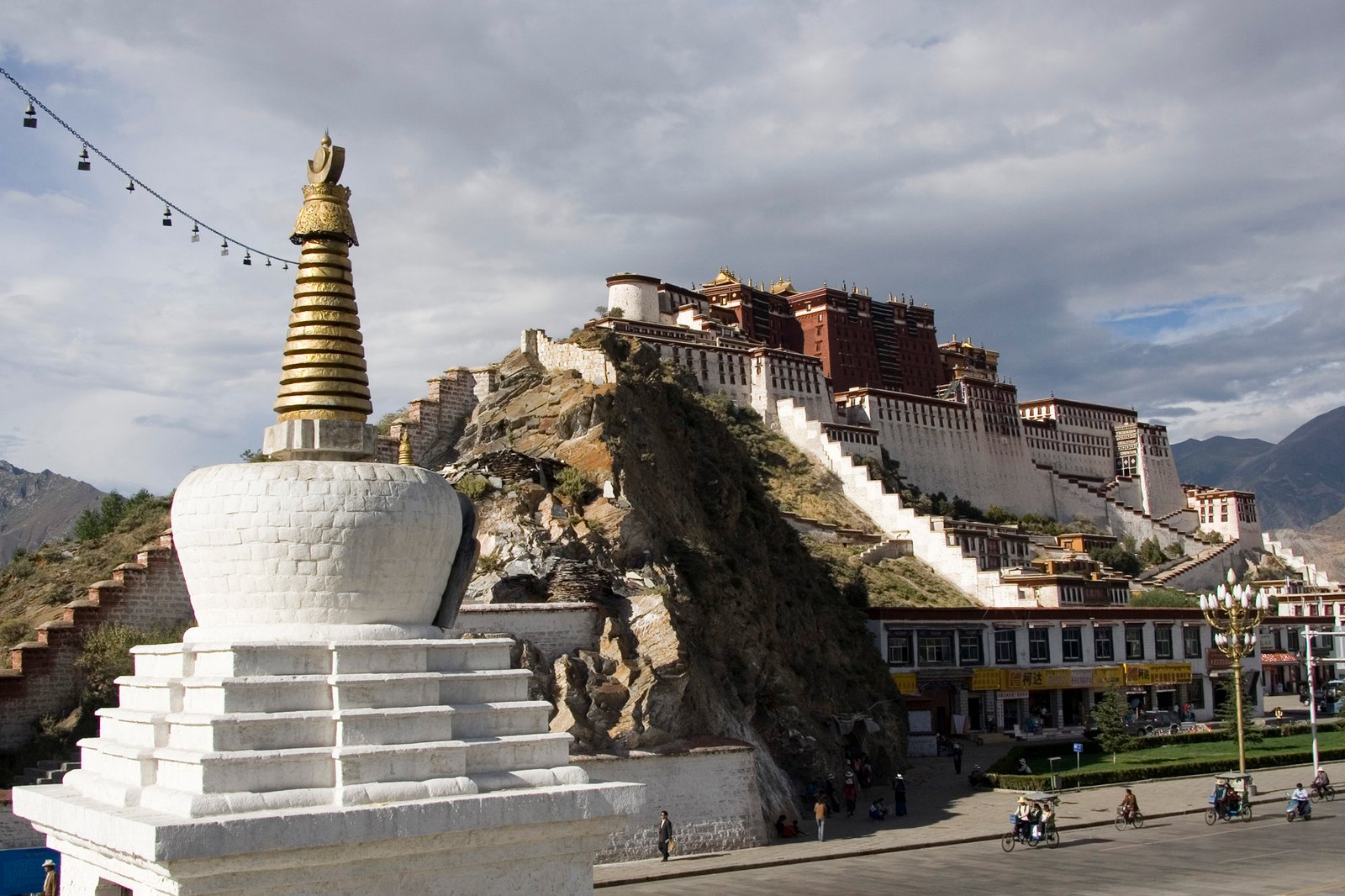
Lhasa sits at 3,650 meters, high enough to feel, low enough that most people adapt in two or three days. The city has a real hospital with an altitude ward, oxygen is cheap and everywhere, and the surrounding valleys offer lower sleeping options. When I take friends to the Potala Palace, I make them walk the slow circle first, not the stairs, and I book the ticket for day three, never day one. The monastery hotels near the Jokhang run oxygen concentrators in the corridors, and a night with a cannula costs very little. It is the gentlest introduction to serious altitude in China, which is why every sensible itinerary starts here.
Everest Base Camp and the Friendship Highway
The Tibetan side of Everest Base Camp sits at about 5,200 meters, with the Rongbuk Monastery guesthouse just below it. The road out of Lhasa crosses passes above 5,000 meters within the first two days, which is the fastest altitude gain most tourists will ever attempt. The tent camp at base camp has oxygen for rent, but the real protection is sleeping in Shigatse at 3,800 meters and taking two days to reach base camp. Build in the acclimatization nights before you commit to the drive, and check the current permit rules, because the whole area sits inside a restricted travel zone.
Yunnan’s high northwest
Shangri-La town sits at 3,300 meters and catches people off guard because they arrive from Lijiang at 2,400 meters by road, a gentle climb that still leaves some travelers headachy on the first night. Higher up, Yading puts hikers at 4,700-meter passes with basic guesthouses at 4,000 meters, a combination that has produced more altitude evacuations than any trail in Yunnan. In September 2023 I met a German hiker at the Chonggu Monastery guesthouse who had skipped rest in Shangri-La and could not finish the loop. He was not unfit. He was just early.
Qinghai, Sichuan, and Xinjiang edges
The Qinghai-Tibet Railway corridor runs above 4,000 meters for hours, which is why the trains have oxygen outlets and sealed windows. Qinghai Lake itself is a mild 3,200 meters. Western Sichuan is the sneaky one: the road from Chengdu to Mount Siguniang and Kangding climbs from 500 to 4,000 meters in a single day by bus, and the mountain passes around Litang exceed 4,000 meters. In Xinjiang, the high spots are fewer but real, with the Karakoram Highway climbing past 4,700 meters toward Hunza. If your China itinerary mixes these regions, treat every transfer day as an altitude day.
My acclimatization schedule, tested on friends
This is the plan I have run with travelers who had never been above 2,000 meters, and it has kept everyone out of trouble except the two who ignored it.
Day one: fly into Lhasa, walk nothing higher than the Jokhang, sleep at 3,650 meters. No alcohol, no hot shower longer than ten minutes, eat light. Day two: flat walking around the old quarter, maybe the Summer Palace side of town, still no climbing. Day three: the Potala Palace stairs, slowly, with breaks. Day four: a valley day trip to Namtso at 4,700 meters, returning to Lhasa to sleep. The pattern matters more than the list: sleep no more than about 300 to 400 meters higher than the previous night, and any day trip can go higher as long as you come back down to sleep.
If someone only has a week and wants the Friendship Highway to Everest, I insist on the two-night Shigatse stop. If they only have three days, I talk them out of base camp entirely and send them to Shangri-La instead, where the altitude is lower and the Tibetan food is just as good.
Symptoms and when to stop
The Lake Louise score is the standard doctors use, but you do not need a scoring system. You need a decision tree.
| Severity | What it feels like | What to do |
|---|---|---|
| Mild | Headache at altitude, tiredness, poor sleep, mild nausea | Stop climbing, rest at the same elevation, drink water, take paracetamol for the headache, no alcohol |
| Moderate | Persistent headache despite painkillers, vomiting, breathlessness at rest, unsteady walking | Descend at least 500 meters today, seek a clinic, do not sleep higher tonight |
| Severe | Confusion, drowsiness, coughing up fluid, blue lips, cannot walk a straight line | Emergency descent immediately, oxygen, hospital. This is HACE or HAPE and it kills |
Two rules save lives. First, if symptoms are getting worse at the same altitude, altitude is the problem, and more altitude is never the cure. Second, never let a sick person sleep alone. The dangerous forms of altitude illness, fluid in the lungs and fluid in the brain, get worse overnight, and a companion is the only early warning system that works at 2 a.m. in a guesthouse with no nurse.
Medication: what doctors actually prescribe
I am not a doctor, and nothing here replaces a consultation. But I can tell you what I have been prescribed in Lhasa and Kangding, and what the travel clinics in my home city recommended before my first trip in 2016.
Acetazolamide (Diamox) is the standard preventive. The typical travel-clinic regimen I was given is 125 to 250 mg twice daily starting one day before ascent and continuing for two days at the highest sleeping altitude. It makes your fingertips tingle and your fizzy drinks taste strange. It is not a license to climb stupidly fast; it just buys you some adaptation time. Dexamethasone is the emergency brain-swelling drug, used under medical supervision, and ibuprofen helps headaches for some people better than paracetamol.
Nifedipine and sildenafil appear in some protocols for the lung form of the illness, but those are prescription-only hospital decisions. Herbal “altitude tablets” sold in Kangding and Lhasa are mostly ginkgo and vitamin cocktails; the evidence is thin, and I would not rely on them for a 5,000-meter night. Ask your own doctor before you fly, especially if you take blood-pressure medication, because altitude changes the whole equation.
Who should not go high
Some people should plan a China trip that never crosses 3,000 meters, and that is not a failure. Unstable heart disease, severe COPD, sickle-cell disease, and pregnancy are the standard no-go list, but the gray zone is bigger: poorly controlled high blood pressure, recent surgery, sleep apnea with a machine at home, or a bad chest infection you have been carrying for a week. One friend flew to Lhasa with a cold that turned into pneumonia at 3,600 meters. She spent four days on the hospital’s oxygen line and missed the base camp trip entirely. If you are getting over a respiratory illness, postpone the plateau by a week.
Children handle altitude reasonably well but hide symptoms badly, and older travelers adapt more slowly but often more gracefully. In both cases, the same rules apply: slower schedule, lower sleeping elevations, and honest conversations about how everyone actually feels each morning.
Quick facts
- Symptoms can start above about 2,500 meters; serious risk climbs past 3,500 meters, especially with fast ascent.
- Lhasa sits at 3,650 meters; most people adapt in two to three days there.
- Everest Base Camp on the Tibetan side is about 5,200 meters; Namtso is about 4,700 meters.
- Climb slow, sleep low: limit sleeping-altitude gains to roughly 300 to 400 meters per night.
- Worsening headache, vomiting, confusion, or breathlessness at rest means descend now.
- Qinghai-Tibet trains have oxygen outlets; ask the attendant if you feel unwell.
- Prices and rules cited here reflect 2025 conditions; confirm current clinic and permit details with official sources before you travel.
- Fitness does not protect you. Speed of ascent is the biggest risk factor you control.
Frequently asked questions
Can I fly into Lhasa instead of taking the train?
Yes, and most travel doctors now consider it the safer option. The old advice to train in for acclimatization has weakened because the Qinghai-Tibet Railway crosses 4,000-plus meters for hours without letting you sleep lower, while flying puts you in Lhasa at 3,650 meters with a hospital twenty minutes away. The train is the better experience; the plane is the better medicine.
How many days do I need in Lhasa before heading west?
Two full days minimum, three if you have never been above 3,000 meters before. If you feel fine on day three and slept reasonably on both nights, you are probably adapting. If you still have a headache on the morning of day three, stay another day. Nobody ever regretted a slow start in Tibet.
Is altitude sickness dangerous for children?
It is possible, and children are worse at describing how they feel. Watch for unusual crankiness, poor appetite, and sleep problems rather than taking their word for it. Keep their ascent slow, and if a child becomes lethargic or confused, descend and find a doctor the same day.
Does drinking more water prevent altitude sickness?
Hydration helps you feel better overall, and altitude plus dry mountain air plus exertion dehydrates you fast, but water alone does not prevent the illness. Over-drinking is its own problem, since it washes out sodium. Drink to thirst plus a little more, skip alcohol for the first two nights, and treat water as support, not as treatment.
Are oxygen cans enough if symptoms start?
They buy time, nothing more. A few minutes of supplemental oxygen can settle a mild headache, and Tibetan hotels sell cans for a few yuan. But if symptoms are moderate or worse, the only real treatment is descent, and a can that masks the warning signs can delay the decision that matters. Use cans on the way down, not instead of going down.
Do I need special permits for high-altitude areas?
For Tibet proper, yes. Independent travel is not permitted; you need a Tibet Travel Permit plus, for areas like Everest Base Camp and Namtso, additional permits arranged through a licensed agency. Yunnan’s high areas and western Sichuan do not require these permits. Rules change, so confirm current Tibet permits requirements with your agency or official sources before booking.
What is the best season for a high-altitude trip?
Late spring through early autumn, with April to June and September to October the sweet spots. Winter is clear and cold, with minus temperatures at base camp, and the July to August monsoon brings cloud and muddy roads. If you are combining the plateau with the rest of the country, time your arrival so the high sections land in the calmer weeks, and check festival dates, because domestic travel peaks close roads and fill guesthouses from Lhasa to Kangding.
Planning a route across the plateau takes local knowledge about roads, permits, oxygen, and where to sleep at what elevation. If you want help building a trip that treats altitude seriously, reach out through our contact page and we will help you design a custom food-and-travel route that acclimatizes as carefully as it eats.
Written by the ChinaTravelFood editorial team.