Yuanyang Rice Terraces: Hani Mirrors in the Ailao Mountains
The Yuanyang Rice Terraces (元阳梯田) in southern Yunnan are the kind of place that breaks the “photos never match reality” rule in the other direction. The Hani people carved these terraces into the Ailao Mountains over more than a thousand years, and when the fields are flooded in winter they become thousands of mirrors that catch the sunrise and turn the whole hillside into layered fire. I went for two mornings and the second one, with low cloud burning off, was the most beautiful thing I saw in a year of travelling China. The catch is the timing and the remote drive, which is why so many people skip it and why you should not.
Why the terraces exist
The Hani are rice farmers, and the terraces are a water-management system as much as a farm. The mountains are too steep to flood flat, so the Hani built tiered fields that hold a thin sheet of water, fed by mountain streams and by the mist that rolls in off the forests above. The system moves water downhill field by field, and it has held for centuries because it is maintained communally. That is the part most visitors miss: these are not a relic, they are worked land, and the people you see bending in the water at dawn are farming, not performing.
The best light is when the terraces are full of water but not yet planted, roughly November to April, so the surface reflects the sky instead of hiding under green rice.
The main viewpoints
There are three terrace areas, and each has its moment. Duoyishu (多依树) faces east and is the sunrise spot: the light comes up behind you and lights the water in front. Bada (坝达) is the big panorama, best in the late afternoon when the sun drops behind the layers. Laohuzui (老虎嘴, Tiger Mouth) is the dramatic one, a deep curved terrace that photographs like a coiled dragon, best at sunset. Most visitors base in the town of Xinjie and shuttle between them.
Get to the sunrise point before first light and you will share it with tripods, but the crowd thins fast once the sun is up. I preferred Laohuzui at sunset for the solitude.
The Hani villages and what daily life looks like
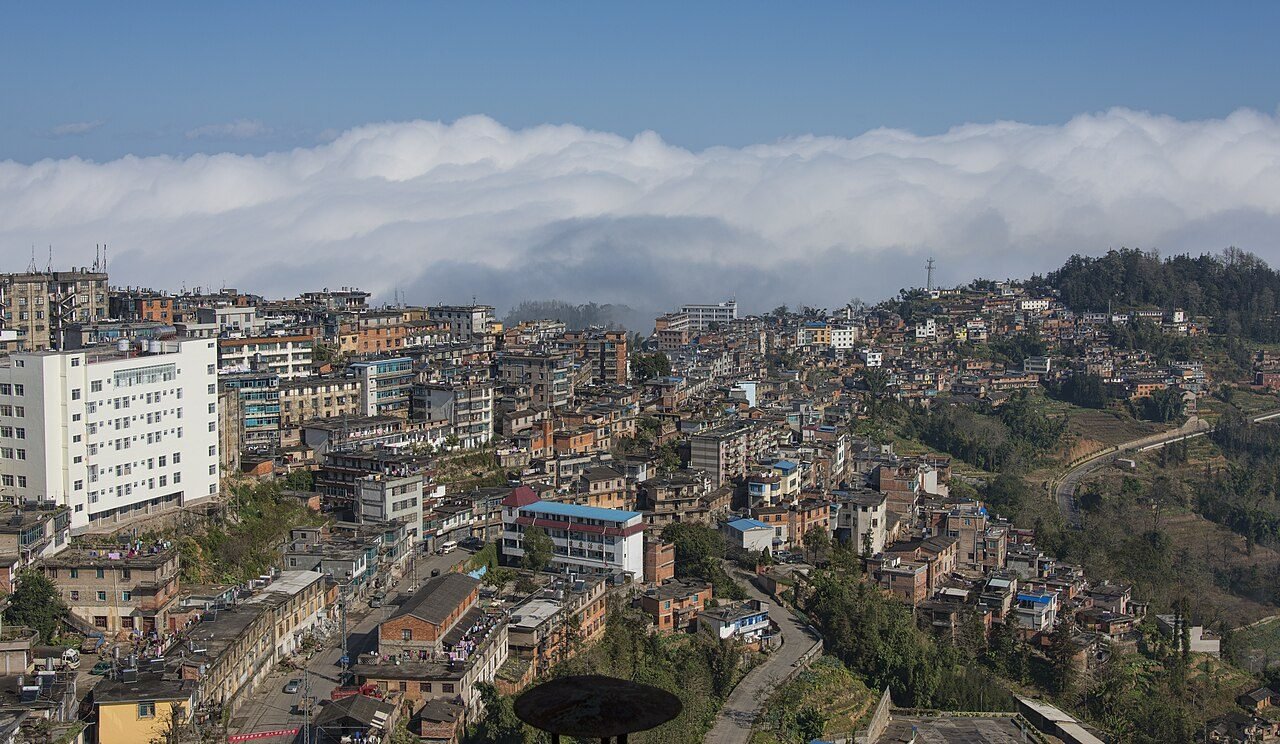
The terraces are ringed by Hani villages of mud-brick and stone, with thatched or tiled roofs and livestock penned below the sleeping lofts. A typical morning starts before light: smoke from cooking fires, the clack of a water buffalo being led out, and women in embroidered leggings heading to the fields with hoes balanced on shoulders. I walked through one village on a misty afternoon and was invited, wordlessly, to sit by a hearth where a grandmother was toasting rice; the gesture needed no translation. This is the consolation when the weather fails: the human landscape is as old and as carefully tended as the water one, and it asks nothing of you but a little respect for the thresholds you cross.
The Hani keep buffalo, ducks, and the purple rice that gives the region its name, and the terrace streams hold small fish that end up in the evening soup. If you stay in a homestay, the rhythm of the house becomes your schedule, and that is the better way to see the place than any viewpoint.
Staying in the terraces
The practical base is Xinjie Town (新街镇), which has guesthouses and the shuttle hub, or one of the village homestays nearer the fields for a quieter stay and a walk to the terraces at first light. A homestay with a Hani family is the better experience: you eat with them, you hear the language, and you are already at the viewpoint when the buses arrive. The homestay guide covers the wider picture of staying in minority villages, and this is one of the best places to do it.
Getting there and the road
Yuanyang is reached from Kunming, the Yunnan capital, by a long bus or car ride of four to six hours depending on the road and the final climb into the mountains. There is no useful train to the terraces themselves, so it is a road trip, and the last stretch is winding mountain road. Many people combine it with the Stone Forest near Kunming on the way in or out. Plan the transfer as a half-day, not an afterthought.
When to go
The terraces are flooded and reflective from about November to April, which is the window for the mirror effect and the sunrise colour. February and March are the sweet spot: full water, flowering rapeseed along the edges, and decent weather. By late April the rice is planted and the water is gone under green. Summer is the rainy, cloudy, leech-y season and the views are poor. The national timing guide lines this up against the rest of the country.
| Viewpoint | Best light | Character |
|---|---|---|
| Duoyishu | Sunrise | East-facing, classic reflection |
| Bada | Late afternoon | Big panorama, depth |
| Laohuzui (Tiger Mouth) | Sunset | Dramatic coiled terrace |
Eating in the terraces
This is Hani and Yi minority country, and the food is distinct from the Han Yunnan table: smoky cured pork, bitter bamboo shoots, river fish from the terrace streams, and the purple rice grown locally. A homestay dinner is usually the best meal you will have. For the broader regional picture, the Yunnan cuisine guide explains the minority influences, and the crossing-the-bridge noodles are the famous dish you will eat on the way through Kunming.
Photography, the weather, and the gamble
The terraces are a photographer’s destination, and the honest advice is that the light is a gamble you improve by staying, not by arriving once. A clear sunrise after a cold night is the prize, but the mist can either make the shot or bury it, and you cannot know which until you are there. I stayed two nights and got one good morning and one washed-out one, about the expected rate. A tripod, a wide lens for the panoramas, and a telephoto for the layered detail cover most frames, and a polariser helps cut glare on the flooded fields.
The other variable is the water level, which farmers manage, so the exact pattern of the terraces shifts year to year and even month to month. Do not expect the postcard to match the field; expect something different and often better. The best light is low sun raking across the water, brief at dawn and dusk, so the viewpoint crowds are worst exactly then, and arriving early is the only way to claim a spot. If the weather fails you, the Hani villages are the consolation: mud-walled houses, cooking-fire smoke, and a way of life little changed in generations, and I spent a rainy afternoon walking one and ate better than at any viewpoint.
Bring layers even in warm months; the pre-dawn viewpoint wait is cold and damp, and you will stand still for an hour. A small flashlight helps on the path before light, and a dry bag protects the camera if the mist is heavy.
Quick facts
- The Yuanyang terraces were built by the Hani people over more than 1,000 years
- They are a working water-management system, not a relic
- Best reflection light is when the fields are flooded, roughly November to April
- Duoyishu is the sunrise spot; Laohuzui (Tiger Mouth) is the sunset one
- Xinjie Town is the base and shuttle hub; village homestays are quieter
- Reached by road from Kunming in 4 to 6 hours
- February and March are the sweet spot for water and weather
- Stay in a Hani homestay for the best experience
- Summer is rainy, cloudy, and poor for views
- Pair with the Stone Forest near Kunming on the transfer
Frequently asked questions
When is the best time to see the terraces?
November to April when they are flooded and reflective, with February and March the sweet spot for weather and the rapeseed blooms on the banks. Avoid summer, when the rice is up and the clouds dominate.
Which viewpoint is best?
For sunrise, Duoyishu. For sunset drama, Laohuzui. Bada gives the widest panorama at late afternoon. Do at least two; they are different enough to justify it.
How do I get there?
Road from Kunming, four to six hours, or a long day with a driver. No train reaches the terraces. The Kunming guide covers the start point.
Should I stay in a homestay?
Yes, if you can. A Hani family homestay puts you at the viewpoint at first light and gives you the best food. The homestay guide explains the etiquette.
Is it crowded?
The main sunrise and sunset points get tripods, but the area is large and the crowd thins fast. Off-season weekdays are near-empty at Laohuzui.
How long do I need?
Two nights lets you catch both a sunrise and a sunset, which the weather often denies you on a single morning. One night is a gamble on the sky.
What is the food like?
Hani and Yi minority cooking: cured pork, bamboo shoots, river fish, purple rice. Different from Han Yunnan. The Yunnan guide has the detail, and the Dali guide covers another minority table nearby.
Are the terraces hard to walk?
The viewpoint paths are moderate; the fields themselves are steep and slippery when flooded. Wear grippy shoes and stay on the paths. The shuttle handles the distances between viewpoints.
Planning a Yunnan south circuit
Yuanyang is the reward at the end of a long mountain drive, and the timing is everything: miss the flooded window and you miss the point. If you want a custom food-and-travel route that times the water, books the Kunming transfer, and adds a Hani homestay, reach out through the contact page. We build China routes into the minority highlands.
Written by the ChinaTravelFood editorial team.