What Tiger Leaping Gorge is
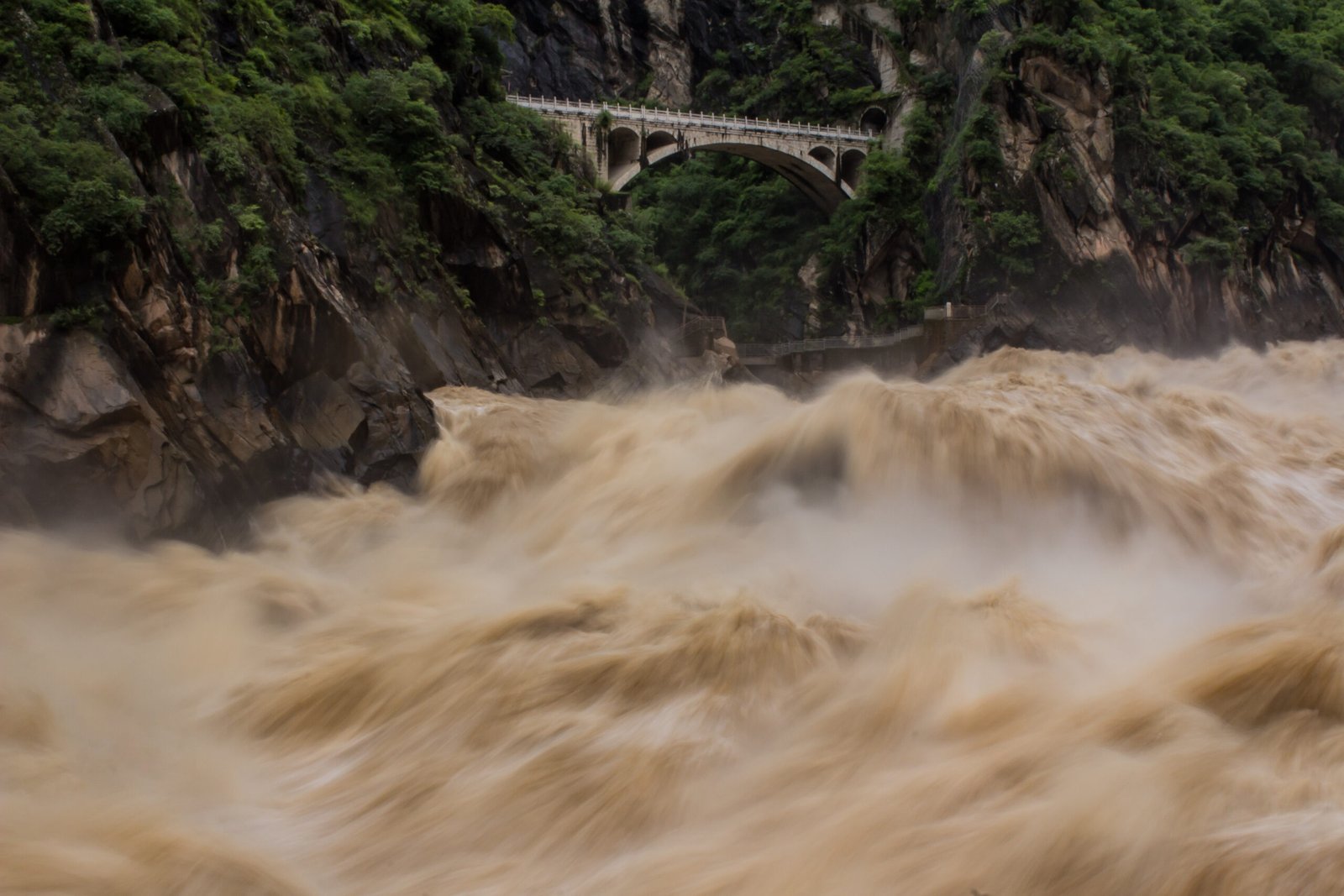
Tiger Leaping Gorge is a slot where the Jinsha River, the upper Yangtze, has cut between two mountains, Jade Dragon Snow Mountain on one side and Haba Snow Mountain on the other, dropping more than two kilometers from rim to water over a short distance. It is one of the deepest river gorges on the planet, and the trek along its northern wall is the classic Yunnan walk: two days, a string of family-run guesthouses, and a path that clings to the cliff with the river roaring far below. I did it in late March 2017, carrying a daypack and a mild fear of heights, and it remains the hike I recommend most often to people who say they do not really hike.
The name comes from a legend of a tiger that leapt across the narrowest point, where a boulder sits mid-river. You can see that boulder from the lower trail. The gorge is about an hour from Lijiang by road, and almost everyone who walks it uses Lijiang or nearby Shangri-La as a base at one end. It is not remote in the sense of empty, but the trail itself is quiet enough that you hear the river more than the people.
The two trails
There is an upper trail and a lower trail, and most walkers combine them. The lower trail is the older, easier path near the road and the river, good for a half-day look at the Tiger Leaping Stone itself. The upper trail is the famous one: a narrow ledge cut into the cliff face, with the best views and the best guesthouses. The full upper route runs from the trailhead at Qiaotou to the village of Walnut Garden, about 25 to 28 kilometers, usually split over two days with a night at a halfway guesthouse like the famous Tina’s or one of the newer places up the hill.
| Trail | Difficulty | Time | Use it for |
|---|---|---|---|
| Lower trail | Easy | 2-3 hours | The Tiger Leaping Stone, a short visit |
| Upper trail, full | Moderate to hard | 2 days | The classic trek and the views |
| Upper, half | Moderate | 1 day | If you are short on time or legs |
| Drive and look | None | Half day | People who will not walk |
A realistic two-day plan
Day one: Qiaotou to the halfway guesthouses
You start at Qiaotou, cross the bridge, and begin the long climb to the high ledge. The first stretch is the hardest, a steady uphill on a wide switchback road, before the path narrows onto the cliff. By mid-afternoon you reach the cluster of guesthouses at the 28-bend area or just past it, where you sleep, eat a huge noodle dinner, and watch the stars over Haba. I arrived tired and happy and spent the evening on a rooftop with a Belgian traveler and a thermos of tea.
Day two: the cliff ledge to Walnut Garden
The second morning is the highlight: the section called the Sky Ladder and the long traverse with the river a kilometer below on your right and the snow peak on your left. You end at Walnut Garden, where a bus or your prearranged driver takes you on to Shangri-La or back to Lijiang. The whole thing is doable for anyone who walks regularly; it is long, not technical.
Where to sleep and eat
The guesthouses are simple: a bed, a shared bathroom, and a kitchen that turns out fried rice, noodles, and the local cured pork. Prices run 80 to 150 yuan a night depending on the season and the view. The food is filling rather than memorable, so think of it as fuel. I ate the same plate of tomato-and-egg noodles three times and was grateful each time. Book the popular places ahead in spring and autumn, when the trail is busy; in winter you may have a whole guesthouse to yourself with the water frozen.
Getting there and onward
Most people reach the trailhead from Lijiang by bus or hired car, about an hour and a half. From Shangri-La it is similar in the other direction. The region sits on the Yunnan circuit that also includes Dali to the south and the provincial capital Kunming to the east, all reachable by bus or the growing rail network. If food is part of your plan, the Yunnan cuisine of this corridor is built on mushrooms, sour notes, and the cooking of the minority groups who live in these valleys, and it is worth structuring a few meals around.
When to go
The walking season runs roughly March to May and September to November. Summer brings rain that can wash out the lower path and muddy the upper one; winter is cold and sometimes snowed shut at the top but stunningly clear. Avoid the wettest weeks of July and August. I went in March and had dry paths, cool air, and snow still on the peaks, which is close to ideal.
Safety and what to watch
The upper trail is exposed in places, with drop-offs and, after rain, slick stone. Walk poles help. Mules offer rides on the worst climbs if your legs give out, for a negotiated price. There is no real danger if you keep to the path and do not rush the narrow bits, but do not walk it in a storm. Altitude is mild here, lower than Shangri-La, so altitude sickness is rarely an issue, though the climb still works the lungs.
The people and the villages
The gorge is Naxi and Lisu country, and the guesthouse families are mostly local, running their own kitchens and mule teams across generations. You will pass small settlements where old women in blue aprons tend terraces of corn and barley and children wave from the school bus stop. The Naxi, who also define the culture of Lijiang, have a written script few now read and a matrilineal strain in some villages that surprises visitors. I stopped at a roadside house for tea and was shown the family altar and the dried chilies hung like garlands; no one wanted anything, they were just hospitable. That kind of unforced contact is the quiet dividend of walking instead of driving the gorge.
The Sky Ladder and the view points
The named highlight of day two is the Sky Ladder, a steep section of steps cut into the open face that climbs away from the river before the long traverse begins. It is the one part that makes walkers pause, but the reward is the first full view of the Tiger Leaping Stone far below and the whitewater between the walls. Later on, the path opens at several unmarked spots where you can sit on a rock with nothing between you and the drop but air. I ate lunch at one of these and watched a hawk ride the updraft; it was better than any paid viewpoint. Photographers should shoot in the morning on day two, when the sun clears the east rim and lights the snow on Jade Dragon.
Packing and small mistakes
The errors people make are few but repeatable. They carry too much, expecting wilderness, when guesthouses cover beds and meals. They underestimate the climb on day one and start late, then walk the exposed ledge in the afternoon wind. They wear smooth-soled shoes and regret it by the Sky Ladder. And they skip travel insurance that covers evacuation, which matters more on a cliff path than in a city. A daypack, poles, and a start before nine solve most of it. The gorge is forgiving if you respect the edges and the weather, and unforgiving only if you do not.
Quick facts
- The gorge is about 25 to 28 km end to end on the upper trail.
- Jade Dragon Snow Mountain rises to over 5,500 meters on the far rim.
- The Tiger Leaping Stone sits in the river at the narrowest point.
- Guesthouses take cash; cards and apps are unreliable on the trail.
- The trek is long but non-technical; no ropes or gear needed.
Frequently asked questions
Do I need a guide?
No. The trail is clear and well used. A guide helps with logistics and language but is not required for safety.
Can I do it in one day?
A fit walker can, but two days is far better and lets you enjoy the views instead of racing them.
Is it dangerous?
Only if you are careless near the edges or walk in bad weather. The path is wide enough except in a few spots.
What do I carry?
Water, a layer, sunscreen, and cash. The guesthouses cover food and beds; you do not need a tent.
How do I get back to Lijiang?
Prearrange a driver or take the shared bus from Walnut Garden. Confirm the pickup the night before.
Is it crowded?
In spring and autumn, yes at the popular guesthouses, but the trail never feels packed. Winter is empty.
What about the lower trail?
It is an easy half-day to see the stone. Do it if you will not commit to the upper walk.
Building a Yunnan trek route
Tiger Leaping Gorge fits a Yunnan loop of Lijiang, Shangri-La, and Dali, with the gorge as the active centerpiece and the old towns as the recovery. Tell us your fitness, your dates, and whether you want the guesthouse comfort or the tent-and-trust version, and we will line up the drivers and the rest days so the walk does not become a march. The gorge is best taken slow, with stops to listen to the river.
Written by the ChinaTravelFood editorial team.