Urumqi After Dark Is a Meat-and-Bread Affair
Urumqi sits at the far northwest of China, closer to Central Asia than to Beijing, and its nights taste like it. The city goes quiet in winter by 8 p.m., but in the warmer months the night markets roar until midnight with sizzling lamb, fresh naan, and the smell of cumin that follows you home on your coat. If you only eat one regional cuisine in China, and you like grilled meat, make it this one.
The food here is overwhelmingly halal, shaped by the Uyghur, Kazakh, Hui, and Kyrgyz communities who call Xinjiang home. That means no pork anywhere, lots of lamb, hand-pulled noodles, and flatbreads baked in domed ovens. The Urumqi food scene is built for grazing, and the night market is where grazing becomes a sport.
I will walk you through the main night spots, the dishes to point at, and what to pay. Pair this with the wider Xinjiang food map if you travel beyond the capital.
The Night Markets Worth Your Evening
The headline spot is the Wuyi Xingguang Night Market, often just called the “Starlight” market, near the center of town. Rows of stalls line a long pedestrian strip, each with its own grill, and the whole place glows under strings of lights. It was rebuilt and secured after a troubled period, so expect bag checks at the entrance, but inside it is friendly and busy.
The other anchor is the International Bazaar, or Erdaoqiao Grand Bazaar, a sprawling complex of shops topped by a giant minaret-style tower. The food court inside runs day and night, and it is the easiest place to sample many dishes under one roof. Prices there run a touch higher than the street markets, but the variety is unbeatable.
Away from tourists, the Miyan district and smaller neighborhood night streets feed locals at lower prices. Ask your hotel which one is lively during your dates; markets open and close with the seasons and the police schedule.
What to Eat: The Grill
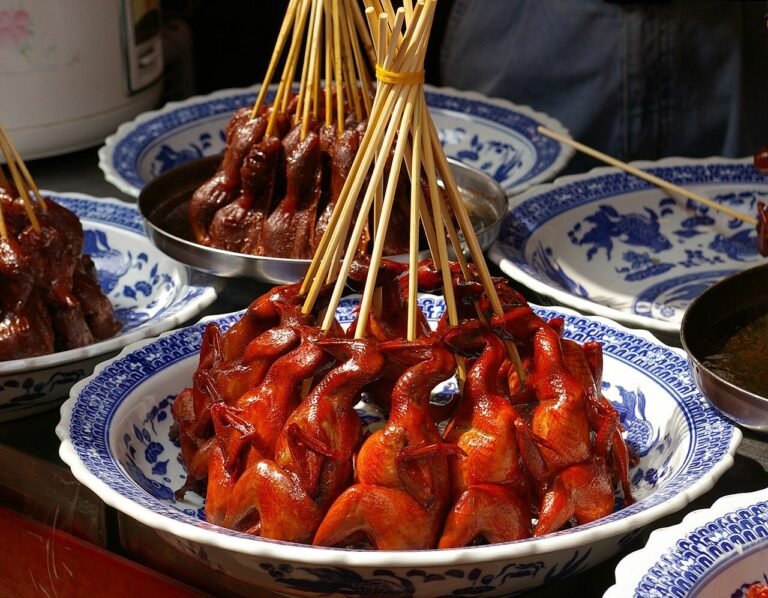
Start with yangrou chuanr, lamb skewers dusted with cumin and chili. They are small, so order by the dozen. At a night market you pay roughly 3 to 6 yuan per skewer depending on the cut and the year, with fatty tail meat the most prized. Watch the grill master; the best ones flip fast and pull the skewers the second the edges crisp.
Then try kao baozi, baked buns with lamb and onion folded inside, and samsa, the Central Asian cousin baked in the tandoor-style oven. Both come hot and blistered. Round it out with grilled chicken wings, whole trout from local rivers, and the surprising kaorou of tomatoes and peppers for anyone avoiding meat that round.
Big Plate Chicken and the Rest
The dish everyone photographs is dapanji, big plate chicken: chunks of chicken braised with potatoes, bell peppers, and a heavy hand of chili, served under a nest of hand-pulled belt noodles. A plate for two runs about 60 to 90 yuan. It is communal, messy, and the best value on the menu. The noodles soaked in the sauce at the bottom are the prize.
Other staples: polo, a carrot and raisin rice pilaf with lamb; lagman, pulled noodles in a savory vegetable and meat sauce; and naan, the round flatbread that accompanies everything. A bowl of polo costs around 20 to 30 yuan, and a fresh naan is 3 to 5 yuan. The Silk Road food tradition runs straight through all of these.
Sweets, Drinks, and Dairy
Save room. Urumqi does dairy desserts that surprise visitors. Suutei tsai-style salty milk tea shows up at Kazakh stalls, and sweet yogurt drinks, often called kumis when fermented, are sold by the cup for a few yuan. The yogurt is thick and tart, nothing like the sweet Western kind.
Frontier fruit is excellent. Xinjiang’s grapes, melons, and figs are among the best in China because of the dry heat and big day-night temperature swing. A plate of cut melon at a night market is the perfect cooler after all that cumin. The Heavenly Lake Xinjiang day trip supplies the same fruit at source if you head out of town.
Prices and Etiquette
| Dish | Typical price | Notes |
|---|---|---|
| Lamb skewers (each) | 3-6 yuan | Order by the dozen |
| Baked lamb bun | 5-8 yuan | Eat immediately |
| Big plate chicken (2) | 60-90 yuan | Shares with 2-3 |
| Polo pilaf | 20-30 yuan | Often with lamb rib |
| Hand-pulled noodles | 18-28 yuan | Lagman or banmian |
| Fresh naan | 3-5 yuan | One per person |
| Yogurt cup | 5-10 yuan | Tart, not sweet |
Prices shift with tourism and inflation, so treat these as 2024 ballparks. Bargaining is light at established stalls; the posted price is usually the price.
Staying Safe and Respectful
The markets have security checks, which can feel unusual but are routine. Carry your passport, since hotels and some venues log foreign visitors. Dress modestly out of respect for the local Muslim culture; covering shoulders and knees is appreciated though not enforced on tourists.
Everything is halal, so do not bring pork or alcohol into the market areas. Beer is available at separate venues but not at the religiously run stalls. The halal route across western China follows the same rules, so what you learn in Urumqi applies in Xi’an and Kashgar too.
Beyond the Capital
If Urumqi’s night food hooks you, the Kashgar old city takes it further west, with Sunday markets and mulberry-based sweets. The flavors get more Central Asian the farther you go. But for a first taste of Xinjiang after dark, Urumqi’s markets are accessible, safe, and genuinely delicious.
How to Navigate the Market Like a Local
A few habits make the night market smoother. First, scan for the busiest grill and join it; high turnover means fresh meat and a cook in rhythm. Second, order in waves rather than everything at once. Skewers come fast and cool fast, so a second round after the first keeps the meal hot. Third, carry small bills. Stalls price by the stick and a stack of skewers adds up; counting change in the crowd is easier with notes than with a phone that wants a signal.
The language gap is smaller than you fear. Most stall holders know the words for lamb, noodle, and beer in English, and pointing at a neighbor’s plate works everywhere. A translation app handles the rest, though the useful phrases are few: “how much,” “no spicy,” and “one more.” Payment is mostly mobile, so if you rely on cash, warn the vendor before ordering so they can total it. The markets are used to domestic tourists who pay the same way, so a foreign face paying cash is a mild novelty, not a problem.
One more thing: pace the drinking. Xinjiang’s beer is stronger than the southern lagers and the night air fools you into drinking more. A couple of bottles with food is the local rhythm; the market is for grazing, not a binge. Eat something with every round and you will enjoy the walk back to the hotel instead of regretting it.
When the Market Closes and What to Do Then
The open-air night markets follow the seasons. In summer they run past midnight; in deep winter many stalls pack up by 10 p.m. because the cold empties the streets. The indoor food court at the International Bazaar keeps longer hours year-round, so if you arrive off-season or late, head there rather than betting on the street. The grills inside are the same cooks, just warmer.
A practical reminder on money: the prices in this guide are 2024 ballparks and will drift with inflation and tourism. Treat them as planning ranges, not quotes, and confirm the sticker at the stall before you commit to a big plate of dapanji. The Urumqi food scene is friendly about clarifying, so a quick point at the price board solves most confusion. When in doubt, ask first and eat second.
Quick Facts
- Urumqi night food is halal, lamb-forward, and cumin-heavy.
- Top spots: Wuyi Xingguang Night Market and the International Bazaar food court.
- Lamb skewers run 3-6 yuan each; big plate chicken feeds 2-3 for 60-90 yuan.
- Expect security bag checks at market entrances; carry your passport.
- No pork or alcohol in the halal stalls; dress modestly.
- Best season is May to October when markets run late.
Frequently Asked Questions
Is Urumqi night food safe for tourists?
Yes. The markets are well policed and popular with domestic tourists. The main hazard is the grill heat and the crowds, not crime. Keep your phone secure in busy lanes.
Can vegetarians eat here?
Partly. There are grilled vegetables, naan, polo without meat on request, and fruit, but the cuisine centers on lamb. Strict vegetarians should flag it clearly; cross-contact on shared grills is common.
Do they take foreign cards or only mobile pay?
Mobile pay dominates. Bring some cash in yuan as backup, and check whether your hotel can help set up a local payment method. Small stalls especially may be cash or WeChat only.
What time do the markets get busy?
Peak is 9 to 11 p.m. in summer. Arrive around 8:30 to grab a seat at popular grills. Winter markets thin out early, often closing by 10 p.m.
Is the food very spicy?
Not as fiery as Sichuan. Cumin and mild chili dominate; you can ask for less spice. Big plate chicken has heat but it is buildable, so request “wei la” for mild.
How do I get to the night market from the station?
A taxi or ride app from Urumqi station takes 20-30 minutes depending on the market. The bazaar is central; the Starlight market is a bit north. Both are metro-accessible with a walk.
Should I visit Kashgar too?
If you have the time, yes. Kashgar is more traditional and farther west, with a famous Sunday market. It deepens what Urumqi introduces. Plan extra days and check the permit rules for the region.
Written by the ChinaTravelFood editorial team.