The island the bridge changed
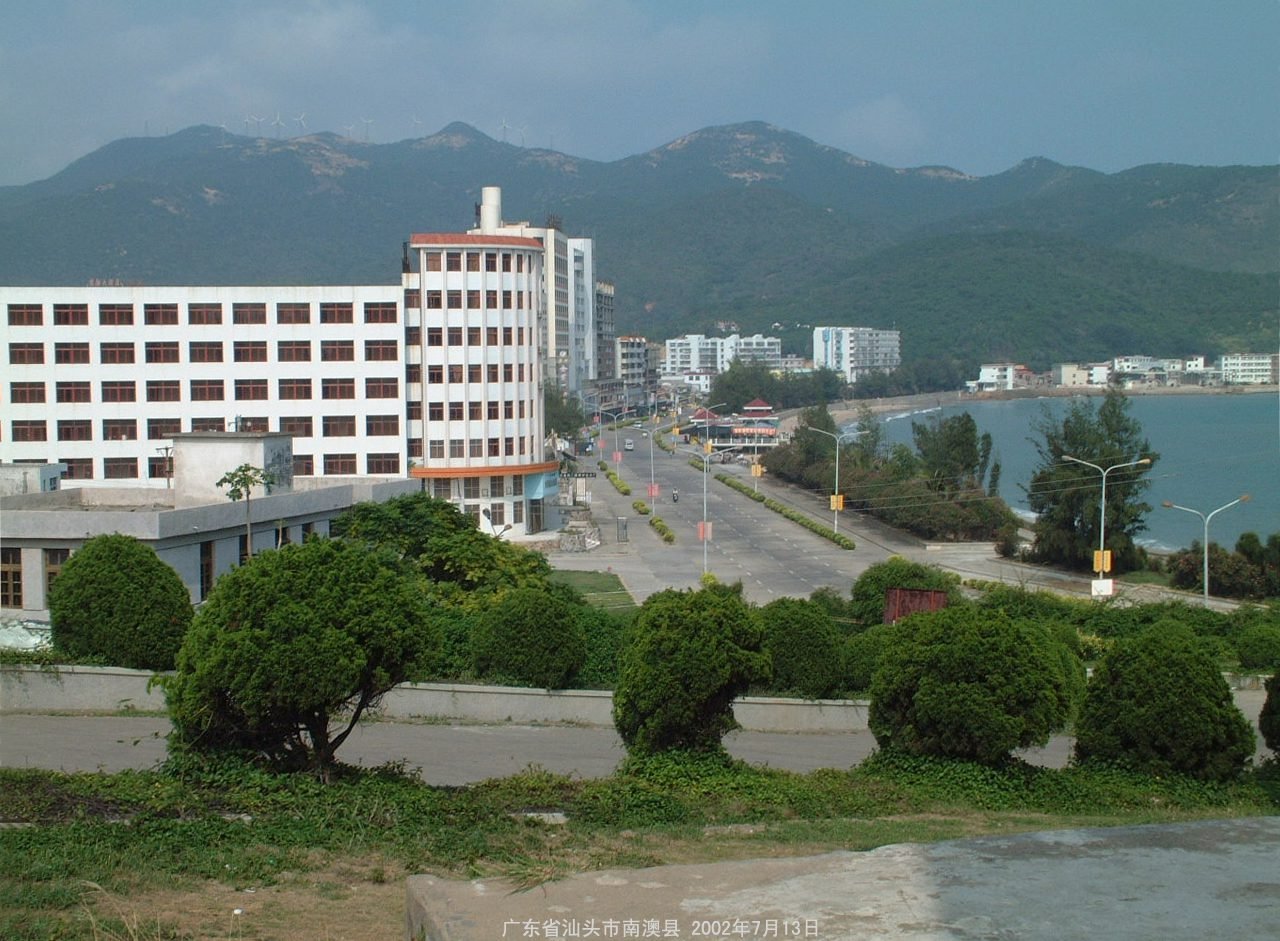
For most of its history, Nan’ao could only be reached by ferry, and the island lived at its own pace: fishing boats, army garrisons, and a main town of two streets. Then, in January 2015, the Nan’ao Bridge opened, 11 kilometers of concrete across the strait from the mainland, and the island became a weekend destination for half of Guangdong. The traffic arrives now: scooters on the coastal loop, seafood restaurants along the harbor, and queues at the oyster farms in the right season. Some of the island’s residents are philosophical about it. Others miss the ferry. Both have a point.
Nan’ao (南澳岛) is a county-level island off the coast of Shantou in eastern Guangdong, just over 100 square kilometers of hills ringed by a coast road, and it is the only island county in the province. The draw is specific: the clearest water on this stretch of the South China Sea coast at Qing’ao Bay, a working fishing fleet that supplies some of the best Chaoshan seafood anywhere, and a landscape of wind turbines, pine ridge, and lighthouse that photographs like a movie set. The food is Chaoshan food, which is a serious claim, and the best of it is sold from the boats.
This guide covers the crossing, the loop, the beaches, the food, and the seasons. Prices and tolls are from 2024 and 2025 visits; confirm current rates before you drive. For the mainland base, our Shantou citywalk guide and Chaozhou food guide cover the two cities that bracket the island.
Quick facts
- Reached by the Nan’ao Bridge from Chenghai, opened January 2015; before that, ferry only
- The island is Guangdong’s only island county, just over 100 square kilometers, with a loop road of about 60 kilometers
- Shantou’s high-speed rail station connects to Guangzhou (about 3 h) and Xiamen (about 2.5 h)
- Qing’ao Bay, on the east coast, is the swimming beach; the west coast is rockier and better for sunsets
- Local specialties: oysters from Shen’ao, Nan’ao nori, yellowtail scad, and the full Chaoshan menu
- Scooter rental runs 60 to 100 yuan a day and is the default way to do the loop
Getting to the island
Take the high-speed rail to Shantou Station, in the Chenghai district on the mainland side. From the station square, buses run across the bridge to the island’s main town, Houzhai (后宅镇), roughly hourly and cheap, a few yuan; taxis cross the bridge for 80 to 120 yuan depending on where on the island you are going. If you drive, the bridge toll for a standard car has run in the region of 90 to 100 yuan, and there is no other charge to enter the island. Check the current toll before you rent, because it has been adjusted before.
The nearest airport is Jieyang Chaoshan, about 40 kilometers from Shantou city, with domestic flights from most Chinese cities. From the airport, a taxi to the island is 150 to 200 yuan, and there are airport buses into Shantou that connect to the island buses.
Once you are on the island, the loop road is the only real artery. It runs the coast for roughly 60 kilometers, flat on the east and hilly in the interior, and the whole circuit takes two to three hours by scooter with stops. There is a public bus system, loose and infrequent, and taxis, few and metered, but the scooter is the honest answer; every guesthouse rents them, charged overnight.
Qing’ao Bay and the east coast
Qing’ao Bay (青澳湾), on the southeast corner of the island, is the beach: a 2-kilometer crescent of fine sand facing east, with water that is genuinely clear for this coast and a bay shape that keeps the swell down. It is the best swimming on the eastern Guangdong shoreline, which is not a crowded category, and it gets busy in summer with families from Shantou and Chaozhou.
Go at sunrise. The bay faces the open sea, the Tropic of Cancer marker tower, the “Gate of Nature” (自然之门), stands at the north end of the sand where the sun crosses directly overhead at the June solstice, and the light on the water at 6 a.m. is the reason to be on this side of the island early. The beach is free, the sun loungers cost 20 to 50 yuan, and the swim sheds along the road rent gear. In July and August the water is warm enough to spend the day in; in October it is refreshing, which is the polite word.
The east coast also holds the 三囱崖 (Sanyia) lighthouse, the white tower on the point at the island’s southeast, and the start of the ridge road where the wind turbines stand in lines along the hilltop. The turbines are the island’s signature image, and the road that runs beneath them, the climb from Qing’ao toward the interior, is the best ride on the island.
The west coast and the history stops
The west coast, facing the mainland strait, is rockier and built up, and it holds most of the island’s history. The Admiral’s Mansion (总兵府), inland from the Houzhai waterfront, was the headquarters of the Nan’ao naval command, established in the Ming dynasty in the late 1500s and held, across the Ming and Qing, by well over a hundred successive commanders, because Nan’ao sat at the seam where the coast trade met the pirate routes. In 1647 Zheng Chenggong, the Ming loyalist better known in the west as Koxinga, mustered troops on this island before the campaigns that eventually took him to Taiwan, and the museum inside the mansion tells that story with the restraint of a local institution. Entry is a small fee, about 10 to 20 yuan.
Down on the shore at Yun’ao, the Song Well (宋井) sits a few steps from the beach, and the legend says the Song court, fleeing the Mongols south in 1277, dug it by the sea and found fresh water, which the island’s fresh water table still supplies. It is a small site with a big story, and the tea stalls around it sell the local nori.
Off the southwest point, Jinyin Island (金银岛), a rock islet you can walk to at low tide, carries the island’s pirate legend: the hoard of Wu Ping, a Ming-era smuggler who supposedly buried his treasure in a cave there. Kids climb the rocks looking for it. The cave is real; the gold, so far, is not.
Eating on Nan’ao: oysters, nori, and the boats
The island’s food culture is Chaoshan culture, and the Chaoshan approach to seafood is the most ingredient-respecting in China: fish is served cold and plain (鱼饭), oysters are fried in thin omelets (蚝烙), and everything is dipped in the local soybean vinegar. The ingredients here are farmed in the bays: the oyster farms of Shen’ao (深澳镇) on the northeast coast, the nori racks in the shallow bays, and the day boats that land yellowtail scad, grouper, and mantis shrimp at the Houzhai harbor.
Where to eat: the waterfront restaurants around Houzhai and the oyster village of Shen’ao are the two centers. At Shen’ao in season, restaurants cook oysters pulled from the racks in front of the door; a pot of oyster congee or a plate of steamed oysters runs 50 to 120 yuan depending on the size of the party. Along the Houzhai harbor, the dai pai dong-style restaurants sell the day’s catch at market price plus a cooking fee, the same model as Qingdao’s Yingkou Road: a fish dinner for two lands at 150 to 300 yuan. Nan’ao nori (南澳紫菜) is the souvenir, sold in sealed sheets for 20 to 60 yuan a pack, and it is genuinely the island’s signature, better than the nori you buy elsewhere in China.
The other local plate is 巴浪鱼, the yellowtail scad, a small, oily, cheap fish that the Chaoshan treat two ways: as fish rice, chilled and plain with ginger, or dried and grilled as a beer snack. Add a Chaoshan beef hot pot dinner on a cool evening, and you have eaten the island properly. For the food traditions behind the plates, our Chaozhou food guide and the wider Fujian food trail cover the regional family. And for the city on the mainland, our Shantou guide connects the two ends of the same cuisine.
The loop, hour by hour
| Stop | Where on the island | Why it stops the scooter | Time needed |
|---|---|---|---|
| Qing’ao Bay and Tropic of Cancer tower | Southeast | Sunrise swim, the clearest water, the marker tower | 1.5 to 2 hours |
| Wind farm ridge road | Central east | Turbines in lines above the road, the island’s signature view | 30 minutes |
| Admiral’s Mansion | Inland above Houzhai | Ming-Qing naval command, Koxinga’s mustering point | 1 hour |
| Song Well | Yun’ao, southwest | The Song court’s fresh water well by the sea | 30 minutes |
| Jinyin Island | Southwest point | Pirate treasure cave, low-tide rock walk | 1 hour |
| Shen’ao oyster village | Northeast | Oyster farms, seafood lunch, nori shops | 1.5 hours |
| Houzhai harbor sunset | West | Fishing boats, dai pai dong dinner, the mainland across the water | Evening |
Do it in that order counterclockwise from the bridge, and finish the day on the west side for the sunset over the strait. The whole loop with stops is a full day; without stops it is a two-hour ride.
When to go
May through October is the island’s season. Summer, June through August, is beach weather, hot and bright, with the Qing’ao Bay crowds and the scooter traffic at their peak. September and October are the connoisseur’s window: the water is still swimmable, the oysters and nori are at their best, the heat drops, and the domestic tourists thin out. Winter is quiet and cool, good for the food and the loop ride, too cold for the beach for most people.
July through September is typhoon season. The island gets hit or sideswiped a few times most years, and a typhoon closes the roads, the bridge, and the restaurants for a day or two. Check the forecast if you are driving the loop, because the ridge road is exposed and the scooters are not built for storm winds.
Frequently asked questions
Do I need a whole day for the island loop?
A full day with stops, yes. If you only have half a day, do the east: the bridge, the wind farm road, Qing’ao Bay, and back. The west coast’s history stops are the second visit.
Can I do Nan’ao as a day trip from Shantou?
You can, and many people do, but the island rewards a night: the empty Qing’ao Bay at sunrise and the harbor at sunset are the two moments the day-trippers miss. One night is enough; two is generous.
Is the bridge toll included in any ticket?
No, it is a separate road toll for vehicles, pedestrians and buses cross free or with the bus fare. Budget roughly 90 to 100 yuan for a car, and confirm the current rate.
Is the island food different from Shantou food?
It is the same Chaoshan tradition with a stronger seafood base, because the island is a working fishing port. The oysters, the nori, and the day-boat fish are the local edge, and the beef hot pot comes straight from the mainland’s tradition.
How is the traffic on the loop in summer?
Busy, and scooters are the main cause of it. The road is two lanes in places, with blind corners on the ridge. If you are not confident on a scooter, hire a driver for the day; the guesthouses arrange it for 300 to 500 yuan.
What should I bring?
A light jacket for the ridge wind, sunscreen for the exposed loop, reef shoes for the Jinyin rocks at low tide, and a rain shell in typhoon season. Bring some cash for the village stalls, though phone payment works almost everywhere now.
Is Nan’ao worth it compared with the Hainan beaches?
If you want resort infrastructure and warm water, no; go to Sanya. If you want a working fishing island with serious Chaoshan food and a coastal road, yes, it is one of the better island trips in the south. Our Hainan island loop guide covers the alternative.
If you want the island folded into an eastern Guangdong route, with the Shantou old town, the Chaozhou food streets, and the coastal loop mapped to your dates, send us a note through the contact page and we will draft a custom food-and-travel itinerary.
Written by the ChinaTravelFood editorial team.